GoConqr hat ein neues Design! Sag uns, wie es dir gefällt.

Karteikarten

Art History 102 Midterm Review
Maddy . Englisch 5,0Durchschnittliche Bewertung 5,0 von 5 (1 Bewertung) 104 Karten

Art History 102 Midterm Review

Karten in diesem Stapel (104)

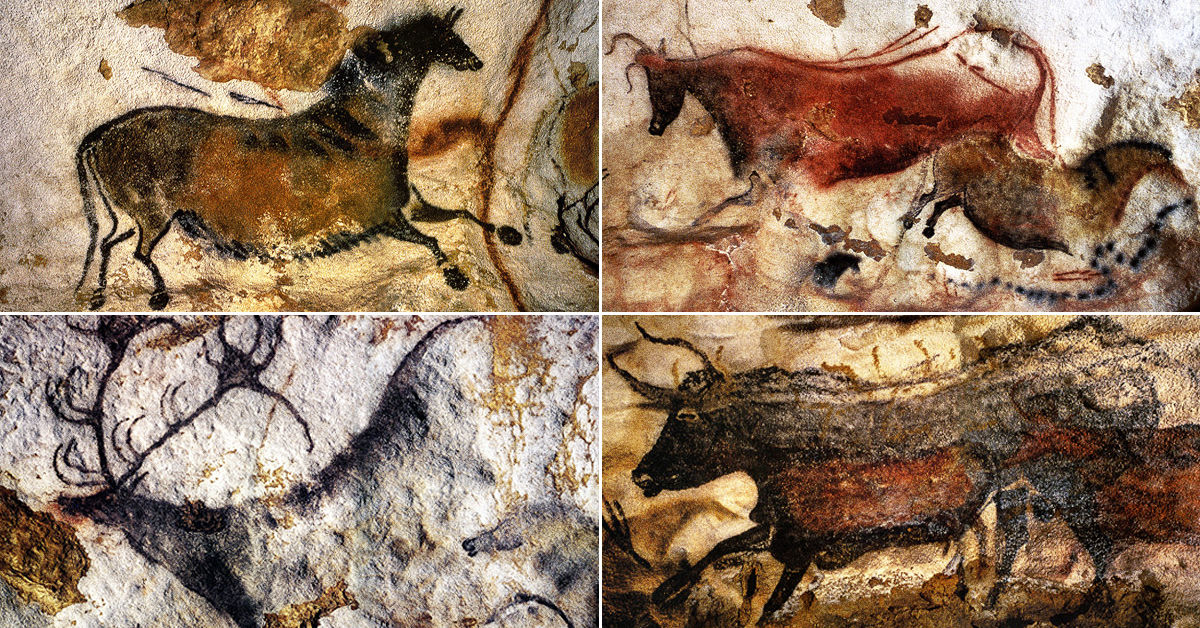
  1. 1—Lasaux Cave
    -15,000 BC-13,000 BC
    -deep inside the caves-promotes idea that the paintings were sacrificial
    Lasaux Cave -15,000 BC-13,000 BC -deep inside the caves-promotes idea that the paintings were sacrificial
  2. 2—Woman of Willendorf
    -25,000 BC- 20,000 BC
    -rare human figure
    -shown to be well-fed
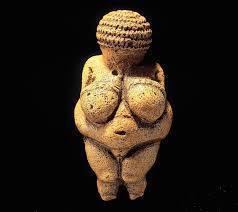
    Woman of Willendorf -25,000 BC- 20,000 BC -rare human figure -shown to be well-fed
  3. 3—Stonehenge
    -2000 BC
    -huge sun dial
    -megalithic (huge stone)
    -post and lintel
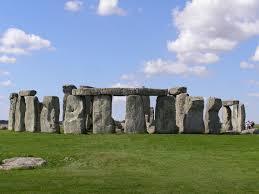
    Stonehenge -2000 BC -huge sun dial -megalithic (huge stone) -post and lintel
  4. 4—Ziggurat at Ur
    -Sumerian
    -2500 BC- 2050 BC
    -sun baked mud brick
    -battered walls (sloped inward)
    -weeper holes (drain water)
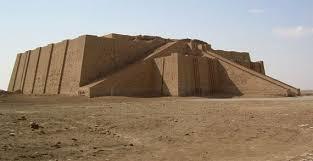
    Ziggurat at Ur -Sumerian -2500 BC- 2050 BC -sun baked mud brick -battered walls (sloped inward) -weeper holes (drain water)
  5. 5—Sumerian Statue
    -simple
    -distinctive big eyes
    -statues take the place of people at church
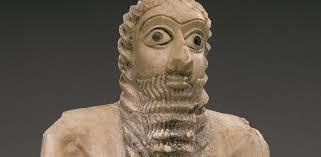
    Sumerian Statue -simple -distinctive big eyes -statues take the place of people at church
  6. 6—Code of Hammurabi
    -Assyrian
    -1760 BC
    -stele
    -laws written on it, so it's a legal document, historically important, and art
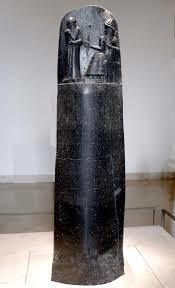
    Code of Hammurabi -Assyrian -1760 BC -stele -laws written on it, so it's a legal document, historically important, and art
  7. 7—Nergal
    -Assyrian
    -god of summer/heat and war
    -guard outside of a palace, but the real purpose is unknown
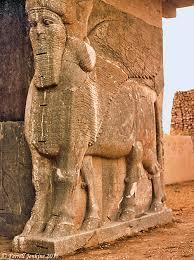
    Nergal -Assyrian -god of summer/heat and war -guard outside of a palace, but the real purpose is unknown
  8. 8—Great Pyramids of Giza
    -Egyptian
    -4th dynasty, Old Kingdom
    -4 corners point in the 4 directions
    -often looted
    -Cheops, Chefron, Mycerinus buried in them
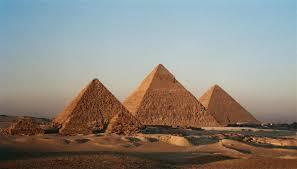
    Great Pyramids of Giza -Egyptian -4th dynasty, Old Kingdom -4 corners point in the 4 directions -often looted -Cheops, Chefron, Mycerinus...
  9. 9—Temple of Queen Hatshepsut
    -Egyptian
    -1478 BC- 1458 BC, 18th dynasty
    -built by Senmut
    -built with passages and terraces to confuse looters
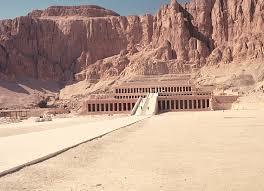
    Temple of Queen Hatshepsut -Egyptian -1478 BC- 1458 BC, 18th dynasty -built by Senmut -built with passages and terraces to confuse looters
  10. 10—Temple of Amen-Mut-Khansu
    -Egyptian
    -father-mother-son (gods)
    -Pylon (massive gateway)
    -has the same layout of a home
    -columns decorated with plants (maybe for fertility)
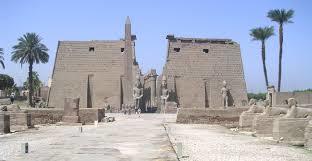
    Temple of Amen-Mut-Khansu -Egyptian -father-mother-son (gods) -Pylon (massive gateway) -has the same layout of a home -columns decorated ...
  11. 11—Rahotep and Nofret
    -2580 BC
    -sitting pose (1/4 poses)
    -shown in physical prime (idealized)
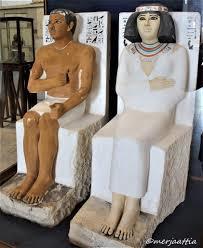
    Rahotep and Nofret -2580 BC -sitting pose (1/4 poses) -shown in physical prime (idealized)
  12. 12—Mycerinus and His Queen
    -2490 BC- 2472 BC
    -standing with one foot forward (2/4 poses), shows royalty and power
    -wearing ceremonial clothes and false beards
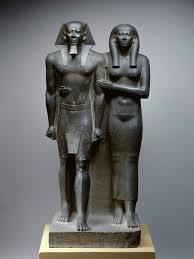
    Mycerinus and His Queen -2490 BC- 2472 BC -standing with one foot forward (2/4 poses), shows royalty and power -wearing ceremonial clothe...
  13. 13—Seated Scribe
    -sitting cross-legged (3/4 sculpture pose), a pose only for scribes
    -only type of statues that are realistic and show physical flaws and personality
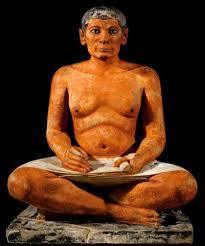
    Seated Scribe -sitting cross-legged (3/4 sculpture pose), a pose only for scribes -only type of statues that are realistic and show physi...
  14. 14—Kneeling Hatshepsut
    -kneeling (4/4 sculpture pose), very rare pose
    -she wears false beards and mens ceremonial clothes even as a woman, showing that she was a king
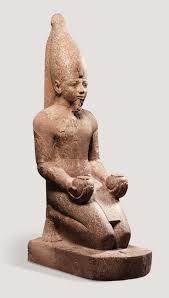
    Kneeling Hatshepsut -kneeling (4/4 sculpture pose), very rare pose -she wears false beards and mens ceremonial clothes even as a woman, s...
  15. 15—Ti at Saqquara
    -2500 BC- 2400 BC
    -Ti is larger to show importance
    -boat sits on top of the water
    -low relief: the images stay attached to the background
    -shows natural observation with the plants and animals
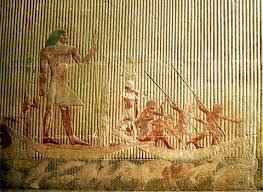
    Ti at Saqquara -2500 BC- 2400 BC -Ti is larger to show importance -boat sits on top of the water -low relief: the images stay attached to...
  16. 16—Tomb of Nakht
    -18th dynasty
    -size=importance again
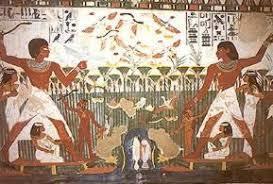
    Tomb of Nakht -18th dynasty -size=importance again
  17. 17—Amenhotep and Nefertiti (worship the sun god)
    -only break in Egyptian tradition, Ankhenaten/Amenhotep moved the capitol and made Egypt worship 1 god (Aten) : Amarna Period
    -sunken relief
    -rare depiction of a whole family
    -shown with possibly real deformities
    -size=importance
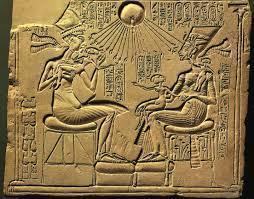
    Amenhotep and Nefertiti (worship the sun god) -only break in Egyptian tradition, Ankhenaten/Amenhotep moved the capitol and made Egypt wo...
  18. 18—Nefertiti Bust
    -very recognizable and realistic
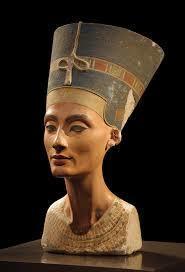
    Nefertiti Bust -very recognizable and realistic
  19. 19—Cycladic Woman
    -2nd and 3rd milennia BC
    -stylized and generic
    -fertility statue
    -cant stand, meant to lay flat (fertility)
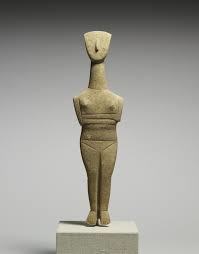
    Cycladic Woman -2nd and 3rd milennia BC -stylized and generic -fertility statue -cant stand, meant to lay flat (fertility)
  20. 20—Palace of Minos, Knossos, Crete
    -Minoan
    -1700 BC-1300 BC
    -gypsum and wooden beams
    -Throne Room: oldest surviving throne, 2 painted griffens "guarding" the throne
    -Queens Megaron: painted dolphins and fish on the walls
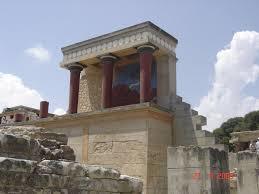
    Palace of Minos, Knossos, Crete -Minoan -1700 BC-1300 BC -gypsum and wooden beams -Throne Room: oldest surviving throne, 2 painted griffe...
  21. 21—Inverted Column
    -Minoan style column with a larger top than bottom, no base
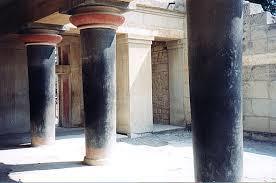
    Inverted Column -Minoan style column with a larger top than bottom, no base
  22. 22—Toreador Fresco
    -Minoan
    -1550 BC- 1450 BC
    -restoration debate
    -lively movement
    -differing skin tones (not representative of anything)
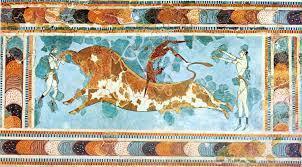
    Toreador Fresco -Minoan -1550 BC- 1450 BC -restoration debate -lively movement -differing skin tones (not representative of anything)
  23. 23—Snake Goddess
    -1700 BC- 1500 BC
    -Minoan
    -made of gold and faience (pale ceramic clay)
    -snakes were connected to the underworld and thought to cure disease, restore life, and promote fertility
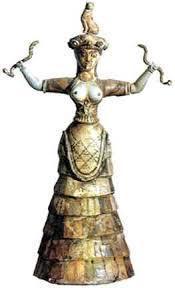
    Snake Goddess -1700 BC- 1500 BC -Minoan -made of gold and faience (pale ceramic clay) -snakes were connected to the underworld and though...
  24. 24—Lion Gate
    -Mycenean
    -1300 BC- 1200 BC
    -relieving triangle to take weight off the arch
    -made of stone
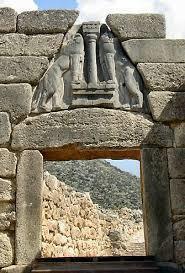
    Lion Gate -Mycenean -1300 BC- 1200 BC -relieving triangle to take weight off the arch -made of stone
  25. 25—Treasury of Atrius, Mycenae
    -1300 BC- 1200 BC
    -dromos (entryway) with asnlar masonry (stones with right angled corners)
    -thoros (round building) with a corbelled dome (stones decreasing size as the dome goes up)
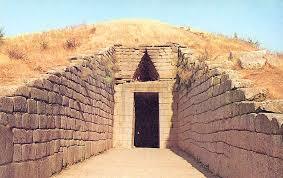
    Treasury of Atrius, Mycenae -1300 BC- 1200 BC -dromos (entryway) with asnlar masonry (stones with right angled corners) -thoros (round bu...
  26. 26—Gold Death Mask
    -Mycenean
    -1550 BC- 1500 BC
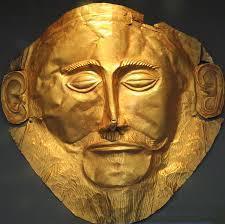
    Gold Death Mask -Mycenean -1550 BC- 1500 BC
  27. 27—Geometric Period Funerary Vase
    -style from Athens and Attica
    -features checkers, zigzags, and blocks and simplified humans and animals (starting in 850 BC)
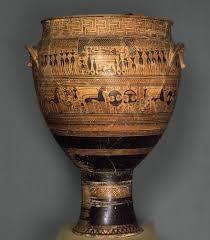
    Geometric Period Funerary Vase -style from Athens and Attica -features checkers, zigzags, and blocks and simplified humans and animals (s...
  28. 28—Corinthian Ware
    -700 BC- 500 BC
    -dark on light style with all the space filled in
    -from the city of Corinth (top vase producers until Athens)
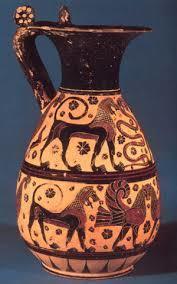
    Corinthian Ware -700 BC- 500 BC -dark on light style with all the space filled in -from the city of Corinth (top vase producers until Ath...
  29. 29—Black Figure Pottery
    -white details on black background
    -details make by small incisions scraped in
    -invented in Corinth
    -most famous artist was Exekias
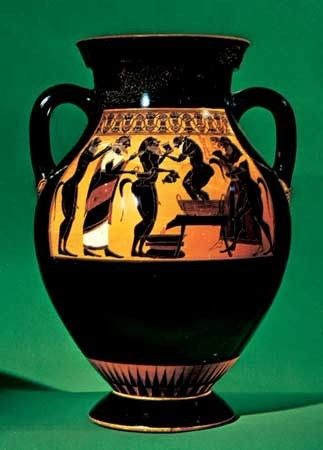
    Black Figure Pottery -white details on black background -details make by small incisions scraped in -invented in Corinth -most famous art...
  30. 30—Red Figure Pottery
    -530 BC- 525 BC
    -red/orange clay with black painted over it
    -details made with a paintbrush (easier than incising)
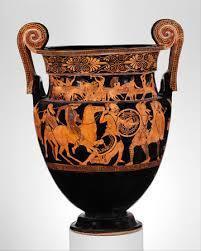
    Red Figure Pottery -530 BC- 525 BC -red/orange clay with black painted over it -details made with a paintbrush (easier than incising)
  31. 31—Horse
    -sacrificial
    -8th century BC
    -simplified and abstract
    -pinched waist, common for the geometric period
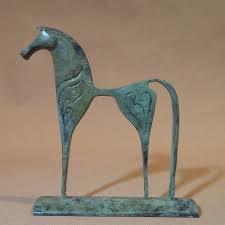
    Horse -sacrificial -8th century BC -simplified and abstract -pinched waist, common for the geometric period
  32. 32—Archaic Kouros
    -basic anatomy, stylized body parts
    -archaic grin: smiling (but not meant to be)
    -one foot forward
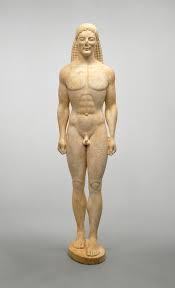
    Archaic Kouros -basic anatomy, stylized body parts -archaic grin: smiling (but not meant to be) -one foot forward
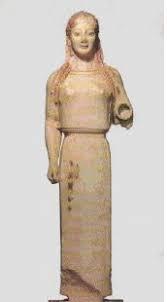
  33. 33—Kore
    -archaic grin
    -fashionable
    Kore -archaic grin -fashionable
  34. 34—Doric
    -no base
    -alternating triglyphs and metopes on the frieze
    -cushion-shaped echnius and abacus
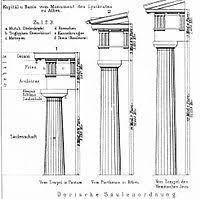
    Doric -no base -alternating triglyphs and metopes on the frieze -cushion-shaped echnius and abacus
  35. 35—Ionic
    -known for the scrolls (volute)
    -has a base
    -continuous freize
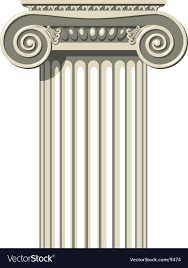
    Ionic -known for the scrolls (volute) -has a base -continuous freize
  36. 36—Corinthian
    -curly acanthus (plants and flowers)
    -least popular order
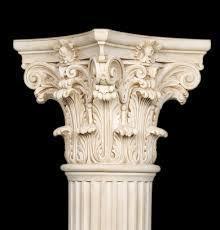
    Corinthian -curly acanthus (plants and flowers) -least popular order
  37. 37—Acroplis
    -acro=high polis=city
    -rock hill with the top flattened
    -all buildings on it are sacred
    -includes the Propylaia, Temple of Nike, Parthenon, and Erechteon
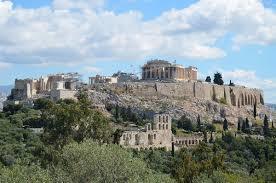
    Acroplis -acro=high polis=city -rock hill with the top flattened -all buildings on it are sacred -includes the Propylaia, Temple of Nike,...
  38. 38—Propylaia
    -437 BC
    -Doric
    -unfinished
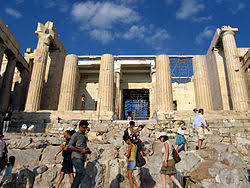
    Propylaia -437 BC -Doric -unfinished
  39. 39—Parthenon
    -temple for all the gods
    - peristyle:columns all the way around
    -refinements (imperfections): columns are at an angle, no straight lines, most likely meant to be for aesthetics
    -made by Iktinos and Kallikrates
    -Doric
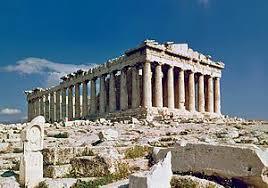
    Parthenon -temple for all the gods - peristyle:columns all the way around -refinements (imperfections): columns are at an angle, no strai...
  40. 40—Erechtheion
    -437/421 BC -406/405 BC
    -irregular and unfinished
    -olive tree outside (symbol of Athena) and 3 trident marks (Poseidon)
    -Kekropium (grave of Kekrops, 1st king of Athens)
    -Salt Sea of Erecneteus (resevoir)
    -Porch of the Maidens: has 6 caryatids (women in place of columns)
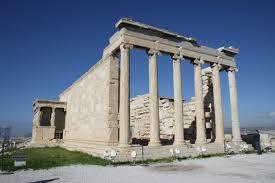
    Erechtheion -437/421 BC -406/405 BC -irregular and unfinished -olive tree outside (symbol of Athena) and 3 trident marks (Poseidon) -Kekr...
  41. 41—Temple of Nike
    -427 BC- 424 BC
    -by Kallikrates or Mnesikles
    -Ionic
    -miniature monument
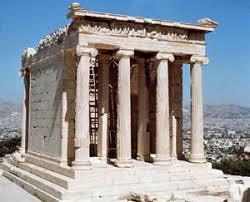
    Temple of Nike -427 BC- 424 BC -by Kallikrates or Mnesikles -Ionic -miniature monument
  42. 42—Kritios Boy
    -480 BC
    -in the style of Kritios of Athens
    -transition from traditional kouros to more modern ones
    -severe style (early Greek style popular from 480 BC-450 BC)
    -Contrapassto Pose (weight on one leg, arched spine, natural)
    -still has a basic anatomy
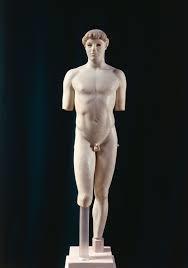
    Kritios Boy -480 BC -in the style of Kritios of Athens -transition from traditional kouros to more modern ones -severe style (early Greek...
  43. 43—Doryphoros ("Spear Bearer")
    -440 BC
    -made by Polykleitos of Argos
    -beginning of Classical Era
    -Roman copy
    -ideal male figure
    -head is 1/8 of the statue
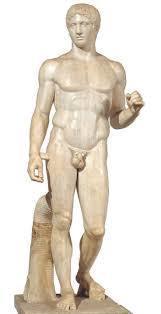
    Doryphoros ("Spear Bearer") -440 BC -made by Polykleitos of Argos -beginning of Classical Era -Roman copy -ideal male figure -head is 1/8...
  44. 44—Discobolus ("Discus Thrower")
    -450 BC
    -made by Myron of Athens
    -perfect anatomy
    -shows movement: statue is at the point where his direction of movement is changing
    -advanced naturalism
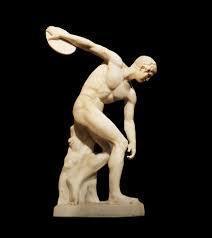
    Discobolus ("Discus Thrower") -450 BC -made by Myron of Athens -perfect anatomy -shows movement: statue is at the point where his directi...
  45. 45—Capitoline Aphrodite
    -2nd or 3rd century BC
    -idealized female body type
    -more "modest" than other female nudes
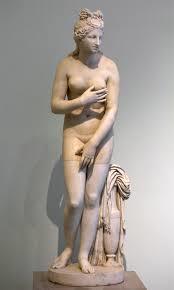
    Capitoline Aphrodite -2nd or 3rd century BC -idealized female body type -more "modest" than other female nudes
  46. 46—Nike of Samothrace
    -200 BC- 190 BC
    -movement: it moves forward into wind and extends the wings
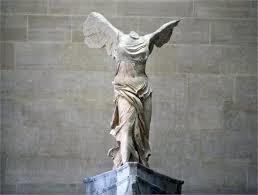
    Nike of Samothrace -200 BC- 190 BC -movement: it moves forward into wind and extends the wings
  47. 47—Laocoon and His Sons
    -anywhere from 2nd century BC- 100 AD
    -by Hagesandros, Athanodoros, and Polydoros of Rhodes
    -example of emotion in sculpture
    -laocoon and his sons being attacked by snakes, showing pain and emotion
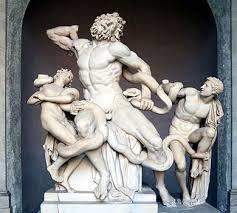
    Laocoon and His Sons -anywhere from 2nd century BC- 100 AD -by Hagesandros, Athanodoros, and Polydoros of Rhodes -example of emotion in s...
  48. 48—White Ground Pottery
    -first half of the 5th century BC
    -white background with a white matte slip and details painted on
    -figures were outlines only
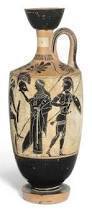
    White Ground Pottery -first half of the 5th century BC -white background with a white matte slip and details painted on -figures were out...
  49. 49—Tomb of the Reliefs
    -4th-3rd century BC
    -made of tufa (white stone that hardens when exposed to air)
    -nicer tomb with all the items from a house, even pillows
    -filled with reliefs of household items and has space for many family members
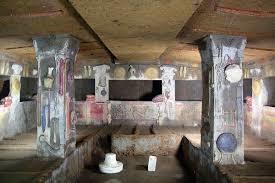
    Tomb of the Reliefs -4th-3rd century BC -made of tufa (white stone that hardens when exposed to air) -nicer tomb with all the items from ...
  50. 50—Tomb of Hunting and Fishing
    -520 BC
    -reliefs of different animals, hence the name of the tomb
    -the animals have personality and seem to mock the hunters
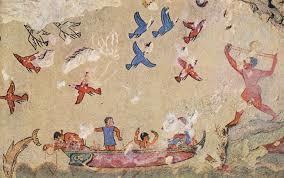
    Tomb of Hunting and Fishing -520 BC -reliefs of different animals, hence the name of the tomb -the animals have personality and seem to m...
  51. 51—Husband and Wife Sarcophogus
    -520 BC + 510 BC
    -shown alive and happy, relaxing
    -not individualized, just a generic couple
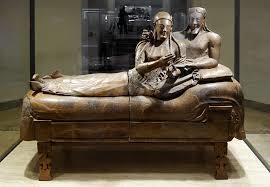
    Husband and Wife Sarcophogus -520 BC + 510 BC -shown alive and happy, relaxing -not individualized, just a generic couple
  52. 52—Sarcophagus of Lars Pulena
    -2nd century BC
    -individualized, shows him as a stoic old man
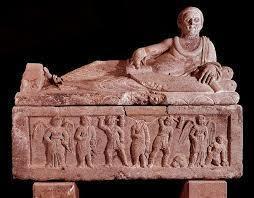
    Sarcophagus of Lars Pulena -2nd century BC -individualized, shows him as a stoic old man
  53. 53—Capitoline Wolf (+ Romulus and Remus)
    -actually Etruscan, but a symbol of Roman art
    -shows differing textures on the fur of the wolf
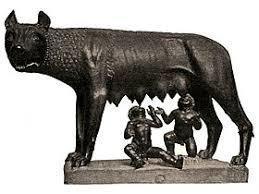
    Capitoline Wolf (+ Romulus and Remus) -actually Etruscan, but a symbol of Roman art -shows differing textures on the fur of the wolf
  54. 54—Etruscan Model Temple
    -built based on Vitruvius' writings and descriptions of the temple
    -Doric
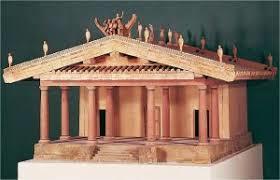
    Etruscan Model Temple -built based on Vitruvius' writings and descriptions of the temple -Doric
  55. 55—Pantheon
    -118 AD- 125 AD
    -dedicated to all the gods
    -16 Corinthian columns on the porch
    -built by Apollodorus of Damascus
    -oculus (eye at the top of the dome)
    -coffers (square indents in the dome to relieve weight)
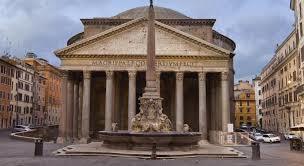
    Pantheon -118 AD- 125 AD -dedicated to all the gods -16 Corinthian columns on the porch -built by Apollodorus of Damascus -oculus (eye at...
  56. 56—Colosseum
    -double amphitheater
    -80 arches on the first level
    -columns go from Doric-Ionic-Corinthian as the levels go up---> Masculine-Feminine Theory of how the column styles are increasingly feminine and need to be "protected" by the masculine one at the bottom
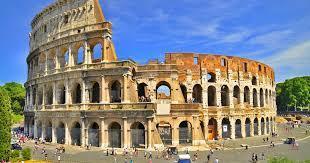
    Colosseum -double amphitheater -80 arches on the first level -columns go from Doric-Ionic-Corinthian as the levels go up---> Masculine...
  57. 57—Augustus of Primaporta
    -20 BC
    -life sized marble statue
    -meant to glorify Augustus and Rome
    -used to hold a spear
    -arm extended, talking to his subjects
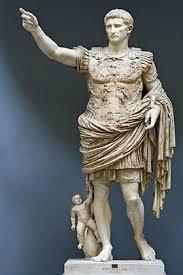
    Augustus of Primaporta -20 BC -life sized marble statue -meant to glorify Augustus and Rome -used to hold a spear -arm extended, talking ...
  58. 58—Tellus Relief
    -Tellus = earth goddess
    -shown with babies and plants to promote fertility
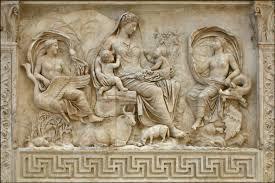
    Tellus Relief -Tellus = earth goddess -shown with babies and plants to promote fertility
  59. 59—Column of Trajan
    -113 AD
    -Trajan-a practical ruler who focused on infrastructure
    -designed by Apollodorus of Damascus
    -contains a stairway in it
    -tells a story through reliefs going up the column (150 scenes)
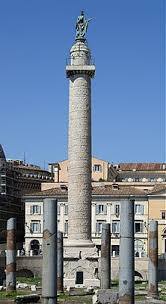
    Column of Trajan -113 AD -Trajan-a practical ruler who focused on infrastructure -designed by Apollodorus of Damascus -contains a stairwa...
  60. 60—Marcus Aurelius
    -ruled from 161 AD-180 AD
    -oversized bronze statue
    -used to show the horse stomping someone, but it is now just the horse and Marcus Aurelius
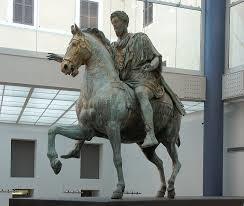
    Marcus Aurelius -ruled from 161 AD-180 AD -oversized bronze statue -used to show the horse stomping someone, but it is now just the horse...
  61. 61—Julius Caesar Statue
    -44 BC
    -realistic marble sculpture that shows what he really looked like
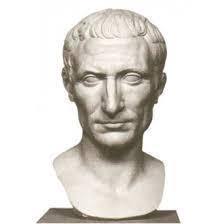
    Julius Caesar Statue -44 BC -realistic marble sculpture that shows what he really looked like
  62. 62—Caracalla
    -ruled 211 AD-217 AD
    -he is shown with an angry expression that reflects the tension of the time
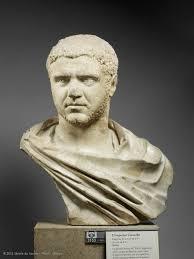
    Caracalla -ruled 211 AD-217 AD -he is shown with an angry expression that reflects the tension of the time
  63. 63—Constantine
    -307 AD- 337 AD
    -oversized
    -huge eyes
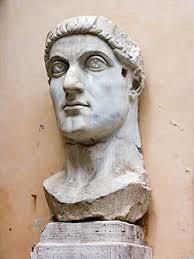
    Constantine -307 AD- 337 AD -oversized -huge eyes
  64. 64—Roman Man Holding Lineage Busts
    -late 1st century BC
    -wears a toga (status symbol)
    -importance placed on ancestors
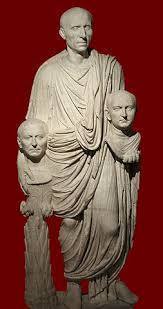
    Roman Man Holding Lineage Busts -late 1st century BC -wears a toga (status symbol) -importance placed on ancestors
  65. 65—Santa Costanza
    -350 AD
    -clerestory windows
    -central plan
    -filled with mosaics (biblical)
    -ambulatory goes around first floor
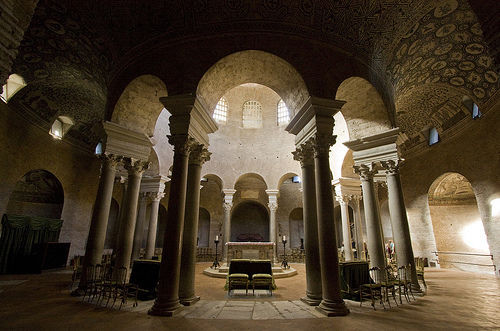
    Santa Costanza -350 AD -clerestory windows -central plan -filled with mosaics (biblical) -ambulatory goes around first floor
  66. 66—Good Shepard Sarcophagus
    -late 3rd-early 4th century
    -jesus surrounded by sheep and goats
    -accepts sheep, rejects goats
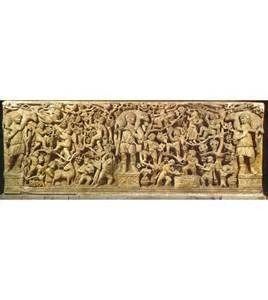
    Good Shepard Sarcophagus -late 3rd-early 4th century -jesus surrounded by sheep and goats -accepts sheep, rejects goats
  67. 67—Catacombs of Saints Pietro and Marcellino, Rome
    -4th century
    -jesus as a shepherd again
    -dome showing people in orant pose (hands raised in prayer)
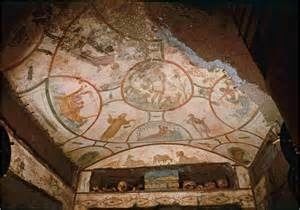
    Catacombs of Saints Pietro and Marcellino, Rome -4th century -jesus as a shepherd again -dome showing people in orant pose (hands raised ...
  68. 68—San Vitale, Ravenna
    -526-547
    -octagon shaped
    -plain brick exterior
    -filled with mosaics inside of Justinian praying (Byzantine style, long)
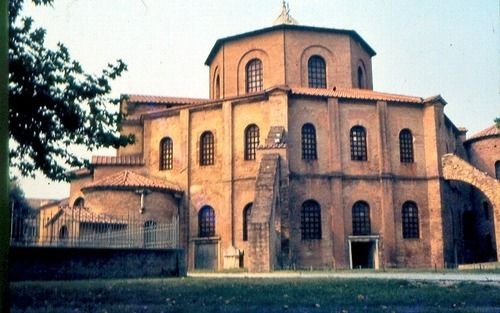
    San Vitale, Ravenna -526-547 -octagon shaped -plain brick exterior -filled with mosaics inside of Justinian praying (Byzantine style, long)
  69. 69—Hagia Sophia, Istanbul
    -532
    -Anthremius of Tralles and Isidorus of Miletus for Justinian
    -dome on pendentives: circular dome on a square base with transition pendentives
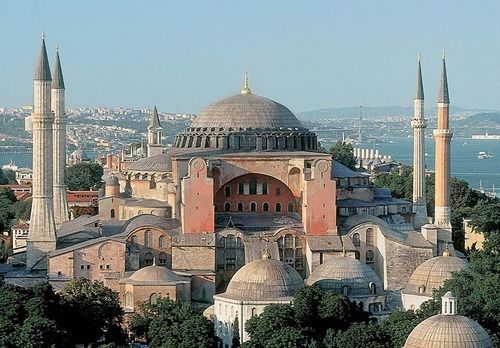
    Hagia Sophia, Istanbul -532 -Anthremius of Tralles and Isidorus of Miletus for Justinian -dome on pendentives: circular dome on a square ...
  70. 70—San Marco, Venice
    -1063
    -largest, most important church
    -Greek cross plan: all 4 "arms" are the same size
    -narthex contains Creation Dome (1200) covered in mosaics
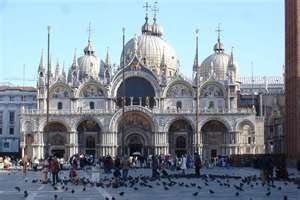
    San Marco, Venice -1063 -largest, most important church -Greek cross plan: all 4 "arms" are the same size -narthex contains Creation Dome...
  71. 71—Madonna and Child Enthroned
    -1270
    -tempera on wood panels
    -yellow/white highlights on the clothing
    -mean to look otherworldly
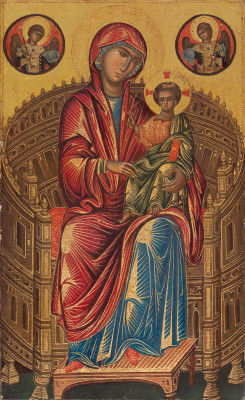
    Madonna and Child Enthroned -1270 -tempera on wood panels -yellow/white highlights on the clothing -mean to look otherworldly
  72. 72—Purse Cover, Sutton-Hoo, England
    -625-633
    -found in a ship burial
    -"animal style": the pattern is made of distorted animal images
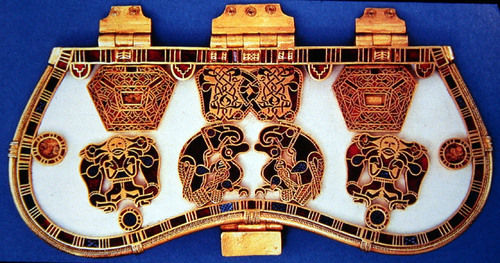
    Purse Cover, Sutton-Hoo, England -625-633 -found in a ship burial -"animal style": the pattern is made of distorted animal images
  73. 73—Book of Kells
    -800
    -manuscripts
    -written/illustrated by Irish monks
    -contains gospels and stories
    -small in size
    -accurate human portrayals
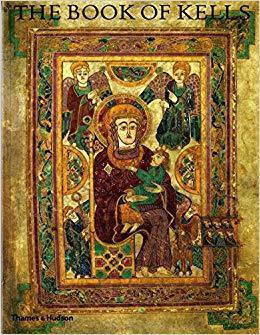
    Book of Kells -800 -manuscripts -written/illustrated by Irish monks -contains gospels and stories -small in size -accurate human portrayals
  74. 74—Charlemagne's Palace Chapel, Aachen, Germany
    -designed by Otto of Metz
    -8 sided interior
    -semi circular arch
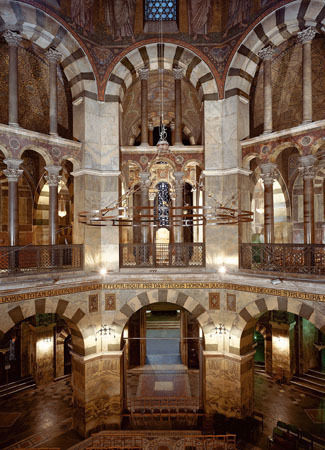
    Charlemagne's Palace Chapel, Aachen, Germany -designed by Otto of Metz -8 sided interior -semi circular arch
  75. 75—Plan of St. Gaul
    -816-817
    -never actually built
    -basic monastery meant to be customized
    -apse on both sides (abnormal)
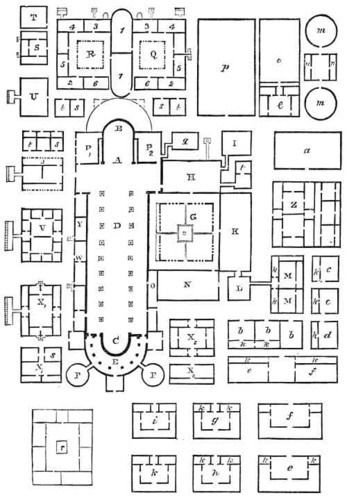
    Plan of St. Gaul -816-817 -never actually built -basic monastery meant to be customized -apse on both sides (abnormal)
  76. 76—Gospel Book of Charlemagne
    -800-810
    -illuminated folios
    -from Charlemagne's tomb
    -shows saints John and Matthew
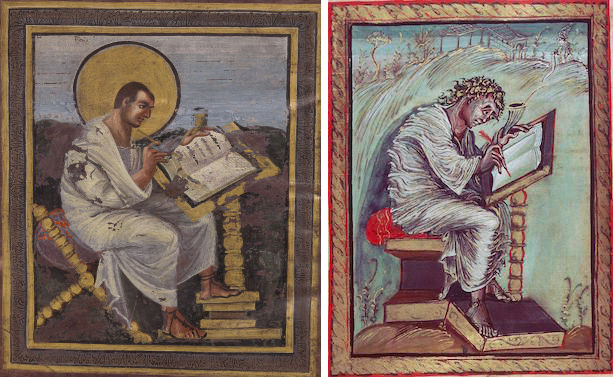
    Gospel Book of Charlemagne -800-810 -illuminated folios -from Charlemagne's tomb -shows saints John and Matthew
  77. 77—Saint-Sernin, Toulouse, France
    -1070-1077
    -unfinished
    -crossing tower=tallest part
    -barrel vaults
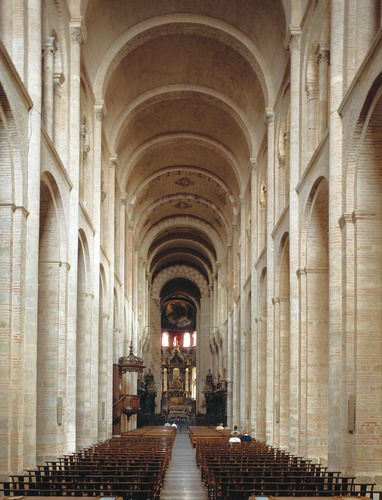
    Saint-Sernin, Toulouse, France -1070-1077 -unfinished -crossing tower=tallest part -barrel vaults
  78. 78—Saint-Madeline, Vezelay
    -1096-1132
    -Romanesque/Gothic/Over-Restoration
    -voussiors: wedge-shaped stone bigger on the outside of the arch than the inside
    -cross vaults: intersecting barrel vaults that make an arch
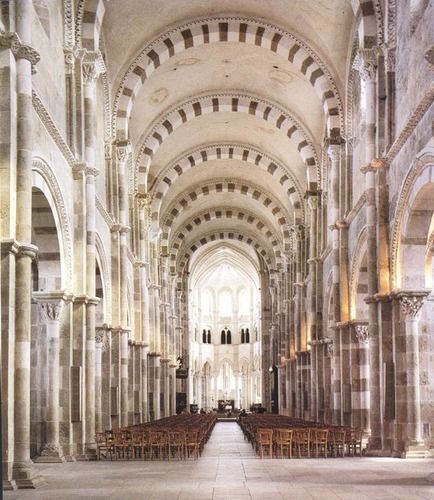
    Saint-Madeline, Vezelay -1096-1132 -Romanesque/Gothic/Over-Restoration -voussiors: wedge-shaped stone bigger on the outside of the arch t...
  79. 79—Durham Cathedral, Durham, England
    -1093-1133
    -lumbard bands: row of blind arches
    -alternating structure with stone ribs to support the vaults
    -simple geometric patterns
    -complex 7 part vaults
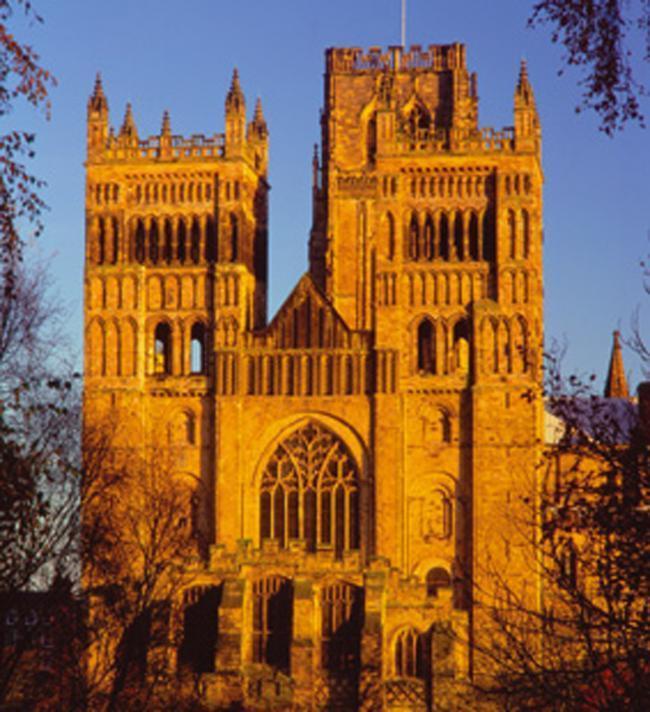
    Durham Cathedral, Durham, England -1093-1133 -lumbard bands: row of blind arches -alternating structure with stone ribs to support the va...
  80. 80—Bayeux Tapestry
    -1066-1082
    -Battle of Hastings (1066)
    -200 ft. embroidered linen scroll
    -King Edward of England shown larger=importance
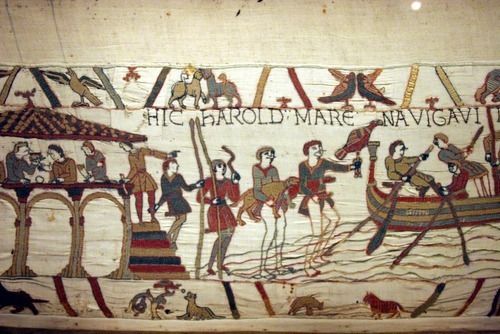
    Bayeux Tapestry -1066-1082 -Battle of Hastings (1066) -200 ft. embroidered linen scroll -King Edward of England shown larger=importance
  81. 81—Pisa Cathedral
    -1063
    -Buscheto and Rainaldo
    -"zebra work": alternating light and dark decorations
    -latin cross plan
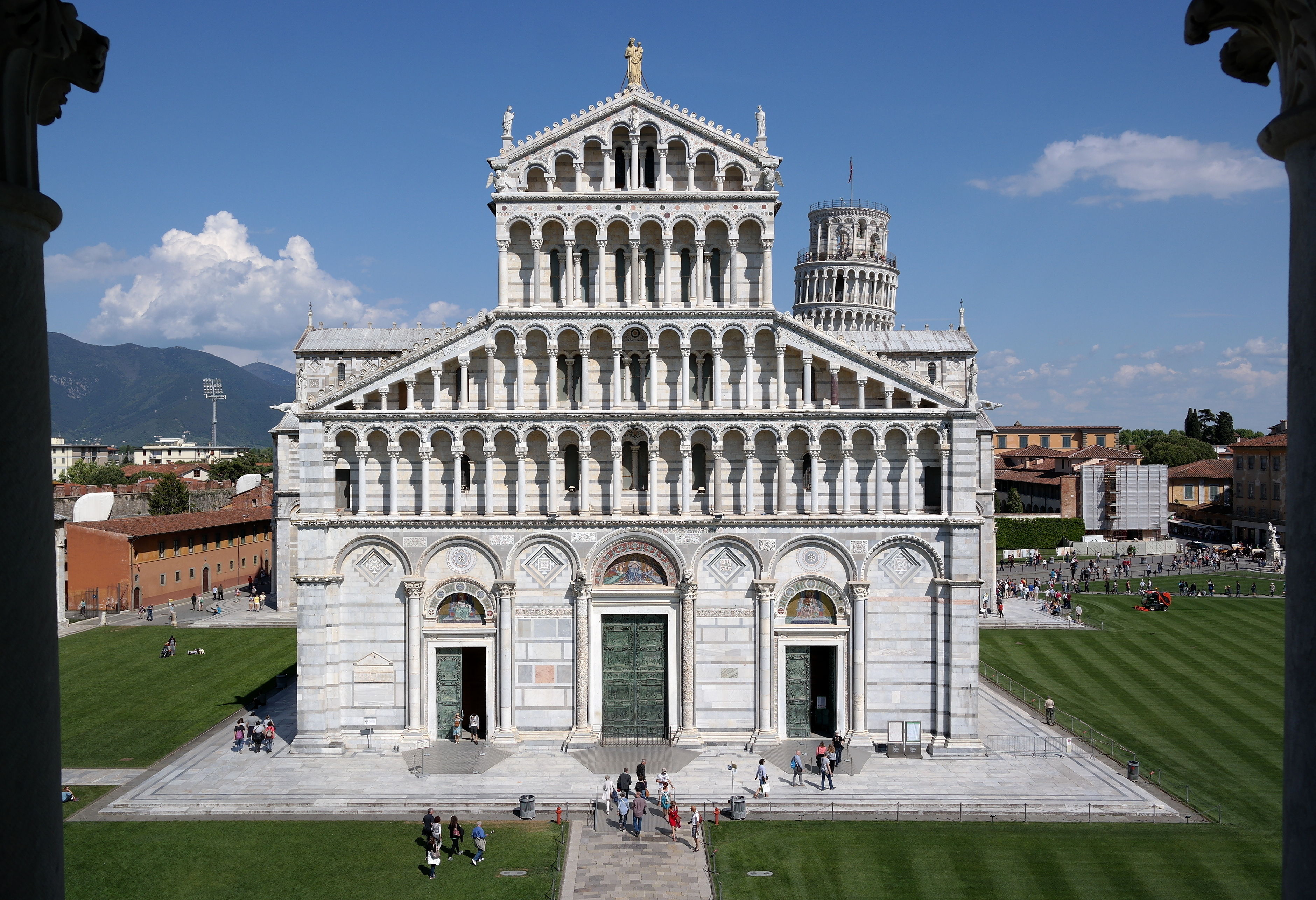
    Pisa Cathedral -1063 -Buscheto and Rainaldo -"zebra work": alternating light and dark decorations -latin cross plan
  82. 82—Pisa Bell Tower (Leaning Tower of Pisa)
    -1174
    -Bonanno Pisano
    -16 ft. out of place because of poor foundation
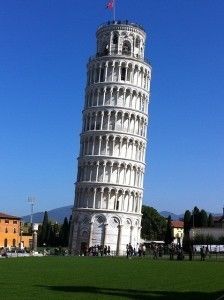
    Pisa Bell Tower (Leaning Tower of Pisa) -1174 -Bonanno Pisano -16 ft. out of place because of poor foundation
  83. 83—Tympanum at Autun Cathedral
    -artist is Gislebertus
    -shows apostles mission
    -zodiac signs shown=all the pictures are for illiterate audiences
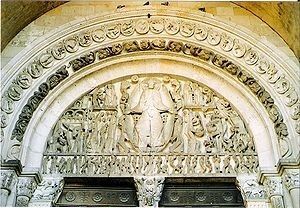
    Tympanum at Autun Cathedral -artist is Gislebertus -shows apostles mission -zodiac signs shown=all the pictures are for illiterate audiences
  84. 84No picture/not sureMadonna and Child
    -12th century
    -Mary with Jesus on her lap
    -Jesus shown as a small man
    -perfect lines and folds in the drapery
  85. 85—Klosterneuburg Abbey Altarpiece, Vienna
    -1181
    -Nicholas of Verdun
    -45 plaques showing bible scenes
    -engraved enamel on wooden supports
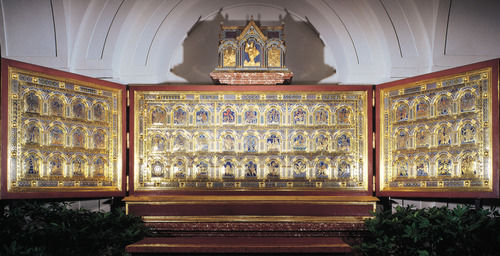
    Klosterneuburg Abbey Altarpiece, Vienna -1181 -Nicholas of Verdun -45 plaques showing bible scenes -engraved enamel on wooden supports
  86. 86—Saint-Denis
    -1137-1140
    -Abbot Suger: put himself in the artwork
    -early gothic
    -pointed arches with reinforcing ribs
    -stained glass supported by flying buttresses
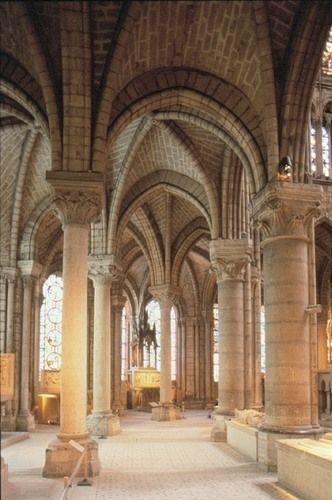
    Saint-Denis -1137-1140 -Abbot Suger: put himself in the artwork -early gothic -pointed arches with reinforcing ribs -stained glass suppor...
  87. 87—Notre Dame Cathedral, Paris
    -13th century
    -balance of horizontal and vertical lines on the facade
    -3 portals, 2 towers, 1 rose window
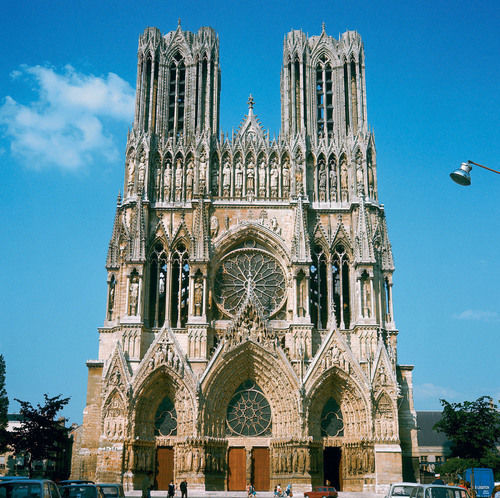
    Notre Dame Cathedral, Paris -13th century -balance of horizontal and vertical lines on the facade -3 portals, 2 towers, 1 rose window
  88. 88—Notre Dame at Chartres
    -1145-1220
    -ugly ass
    -high gothic
    -asymmetrical towers
    -emphasis on vertical
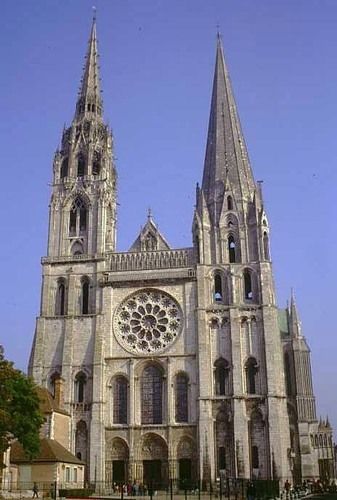
    Notre Dame at Chartres -1145-1220 -ugly ass -high gothic -asymmetrical towers -emphasis on vertical
  89. 89—Saint-Pierre, Beauvais
    -1225-1272
    -"too refined" collapsed twice
    -only apse and chapel remain
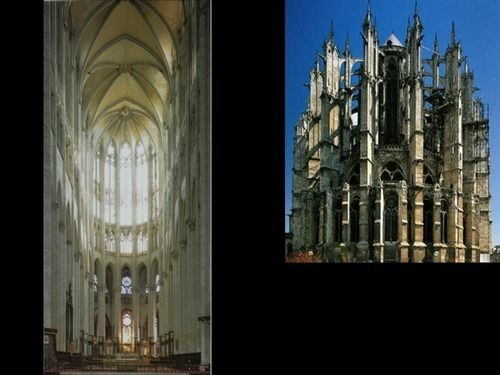
    Saint-Pierre, Beauvais -1225-1272 -"too refined" collapsed twice -only apse and chapel remain
  90. 90—Saint-Chapelle, Paris
    -1243-1248
    -built by Pierre de Montreuil for Louis IX
    -Rayonant Gothic
    -cage of stained glass
    -held relics
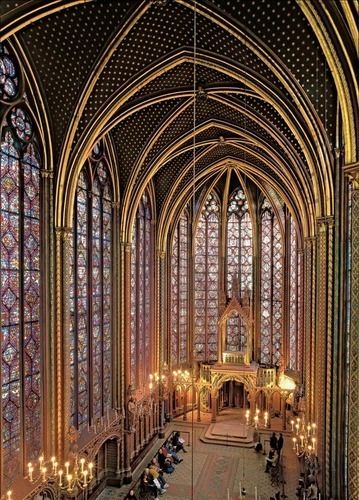
    Saint-Chapelle, Paris -1243-1248 -built by Pierre de Montreuil for Louis IX -Rayonant Gothic -cage of stained glass -held relics
  91. 91—Saint Maclou, Rouen
    -designed by Pierre Robin and Ambroise Havel
    -intricate stone tracery bars
    -no chapel in east end (rare)
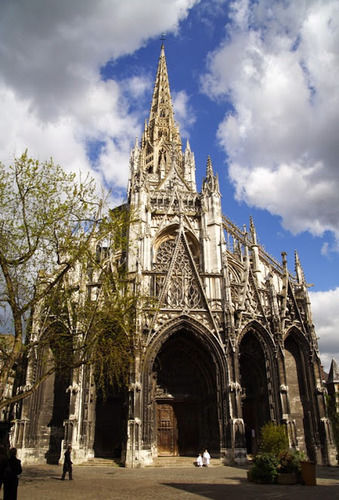
    Saint Maclou, Rouen -designed by Pierre Robin and Ambroise Havel -intricate stone tracery bars -no chapel in east end (rare)
  92. 92—Salisbury Cathedral, England
    -1220-1258
    -Nicholas of Ely
    -double transepts
    -horizontals stressed
    -unusual plan
    -thin buttresses
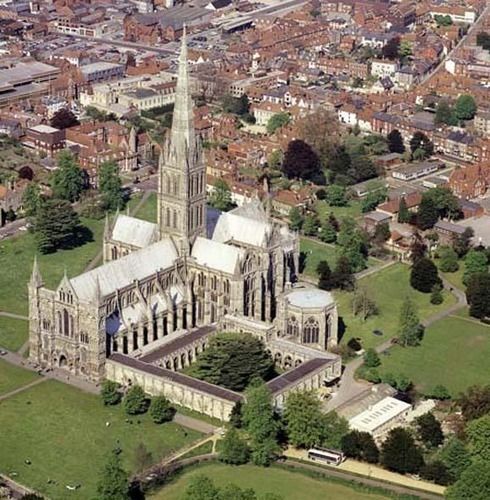
    Salisbury Cathedral, England -1220-1258 -Nicholas of Ely -double transepts -horizontals stressed -unusual plan -thin buttresses
  93. 93—Westminster Abbey
    -1503-1519
    - built by Robert and William Vertue
    -perpendicular vaults hang down
    -fan vaulting: vaults rotate out of the center
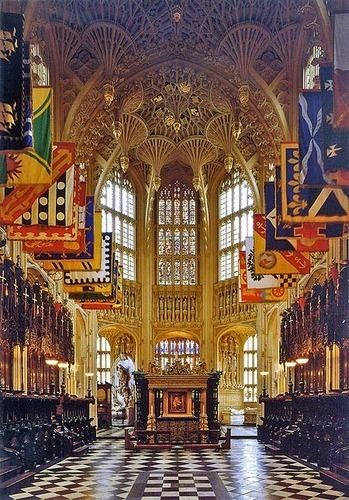
    Westminster Abbey -1503-1519 - built by Robert and William Vertue -perpendicular vaults hang down -fan vaulting: vaults rotate out of the...
  94. 94—Florence Cathedral
    -1296
    -Giotto
    -iconic dome
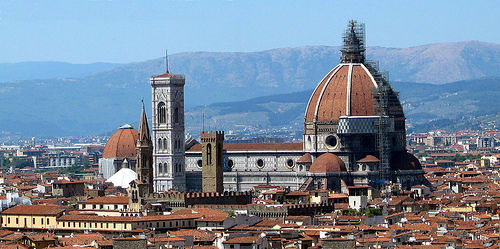
    Florence Cathedral -1296 -Giotto -iconic dome
  95. 95—Column Figures at Reims
    -1230-1245
    -interact with each other
    -detailed drapery
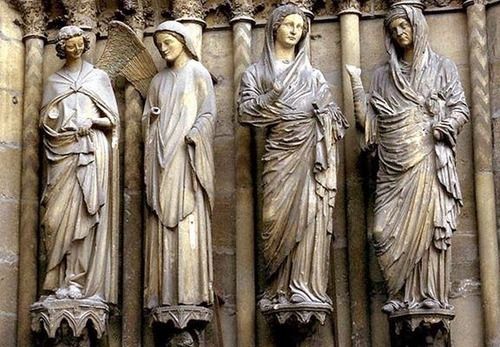
    Column Figures at Reims -1230-1245 -interact with each other -detailed drapery
  96. 96—Notre Dame de Paris
    -early 14th century
    -made of marble
    -hip-shot pose: baby on hip
    -shows movement
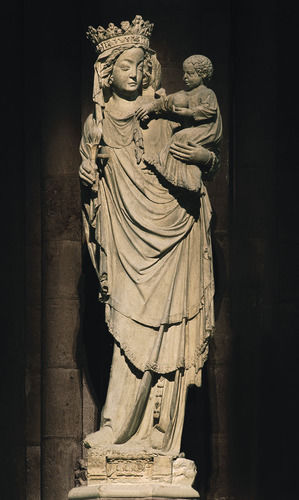
    Notre Dame de Paris -early 14th century -made of marble -hip-shot pose: baby on hip -shows movement
  97. 97—Psalter of Saint-Louis
    -1260
    -commissioned by Louis IX
    -Joshua fighting the sun
    -flat and colorful painting
    -current architecture in the background
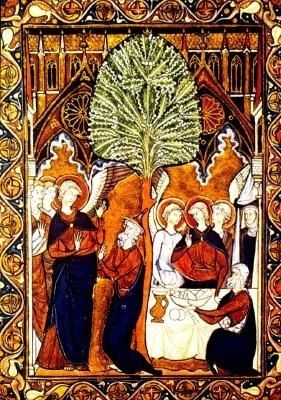
    Psalter of Saint-Louis -1260 -commissioned by Louis IX -Joshua fighting the sun -flat and colorful painting -current architecture in the ...
  98. 98—Les Tres Riche Heures du Duc Berry
    -Pol, Herman and Jean Limbourg
    -private prayer book
    -one folio for each month
    -depicts lifestyle of different social classes (historical importance)
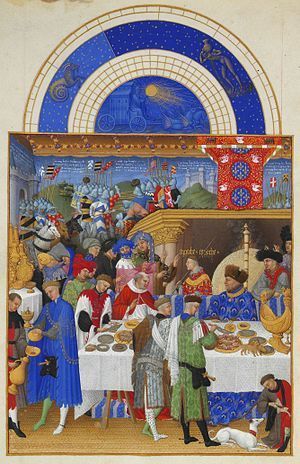
    Les Tres Riche Heures du Duc Berry -Pol, Herman and Jean Limbourg -private prayer book -one folio for each month -depicts lifestyle of di...
  99. 99—Chartres Stained Glass
    -1150
    -Jesus' life chronologically from the bottom up
    -colorful paint over grisaille
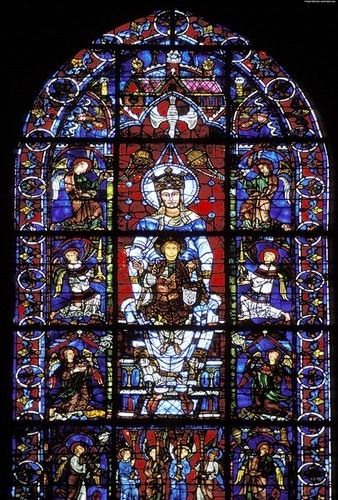
    Chartres Stained Glass -1150 -Jesus' life chronologically from the bottom up -colorful paint over grisaille
  100. 100—Baptistery Pulpit
    -1259-1260
    -Nicola Pisano
    -hexagonal structure
    -Nativity scene
    -identifying attributes for illiterate people
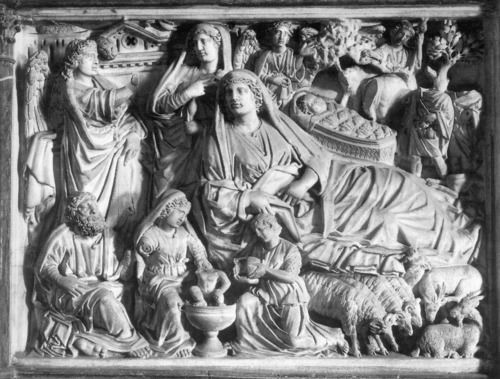
    Baptistery Pulpit -1259-1260 -Nicola Pisano -hexagonal structure -Nativity scene -identifying attributes for illiterate people
  101. 101—Cathedral Pulpit
    -1302-1310
    -Giovanni Pisano
    -rounded structure
    -Nativity scene
    -slim figures, flowing drapery, more mood
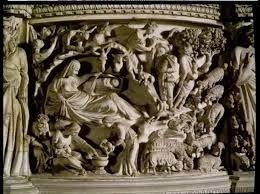
    Cathedral Pulpit -1302-1310 -Giovanni Pisano -rounded structure -Nativity scene -slim figures, flowing drapery, more mood
  102. 102—Duccio's Madonna and Child
    -symmetrical composition
    -Mary large to show importance
    -no depth
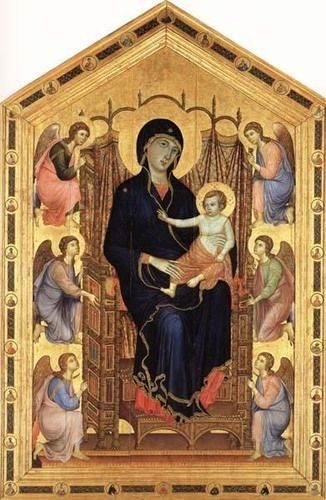
    Duccio's Madonna and Child -symmetrical composition -Mary large to show importance -no depth
  103. 103—Giotto's Madonna and Child
    -1310
    -more realistic
    -3d and emotional
    -shows depth
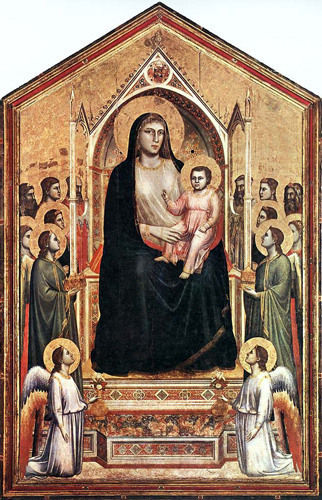
    Giotto's Madonna and Child -1310 -more realistic -3d and emotional -shows depth
  104. 104—Arena Chapel, Padua
    -1306
    -Giotto of Florence
    -death of Jesus, saints look on
    -very emotional
    -use of space draws attention to Jesus
    -large figures
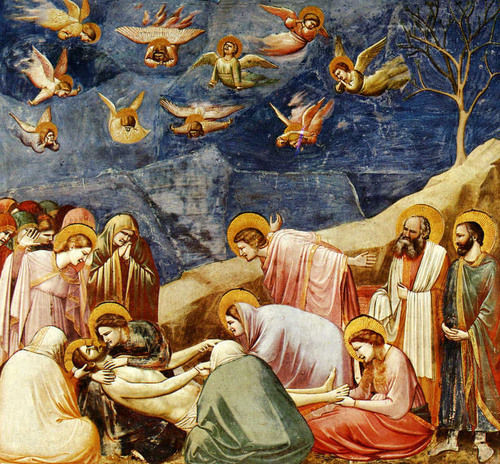
    Arena Chapel, Padua -1306 -Giotto of Florence -death of Jesus, saints look on -very emotional -use of space draws attention to Jesus -lar...

Informationen

Beschreibung
Karteikarten am Art History 102 Midterm Review , erstellt von Maddy . am 12/10/2018.
Erstellt von
Maddy .
Aufrufe
216
Bewertung
Durchschnittliche Bewertung 5,0 von 5 (1 Bewertung)

Feedback

Worum geht es?

Wie gefällt dir das neue Design?

Dein Eindruck