
Karteikarten
Cognition
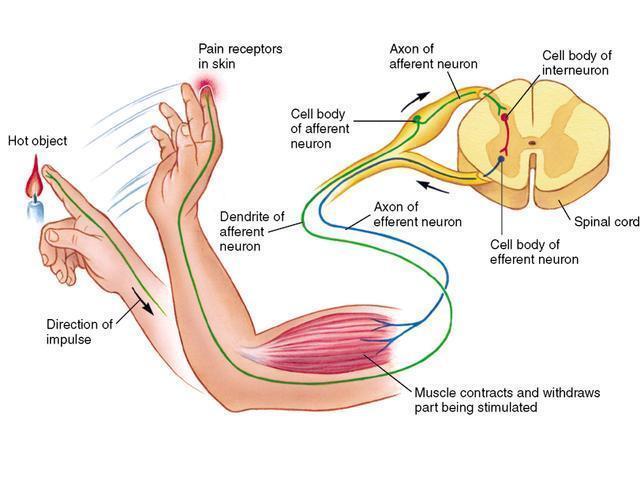
Karten in diesem Stapel (18)
- 1CognitionThe act or process of knowing
i.e. perceiving, recognizing, reasoning
Separate from an experience of feeling (happy) or of willing (hope) - 24 Approaches to Cognition1) experimental cognitive psychology
2) cognitive neuroscience
3) cognitive neuropsychology
4) computational computer science - 3Experimental Cognitive PsychologyRunning experiments studying cognitive processes
- 4Cognitive NeuroscienceStudying the brain at work
- 5Cognitive NeuropsychologyStudying the effects that brain damage (from any source) has on people
- 6Computational Computer ScienceComputer modeling of human thought processes
- 7Different sources of brain damageTBI, infection, stroke, tumors, neurodegenerative disorders (Parkinson's, Huntington's, etc.)
Events that cause brain damage that are not a result of an external force (TBI) are commonly referred to as Acquired Brain Injuries (ABI) - 8Types of Processing1) Serial Processing
2) Cascade Processing
3) Parallel Processing - 9Serial ProcessingOne process follows another. The first must finish before the second can begin
- 10Cascade ProcessingOne process after another, where a following process can occur before the first terminates
Think of Wheel of Fortune. Contestants will continuously try and think of what the answer is as, and before, new letters are put on the board. - 11Parallel ProcessingTwo or more processes are active at the same time (visual processing)
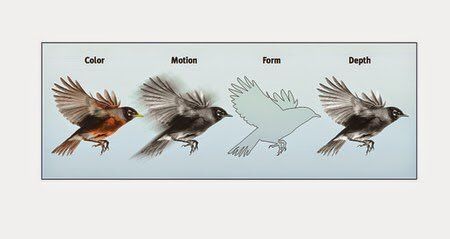
- 12Types of stimulus processingTop-Down Processing
Bottom-Up Processing - 13Top-Down ProcessingProcessing stimuli based off of your prior experiences and expectations
Driven by cognition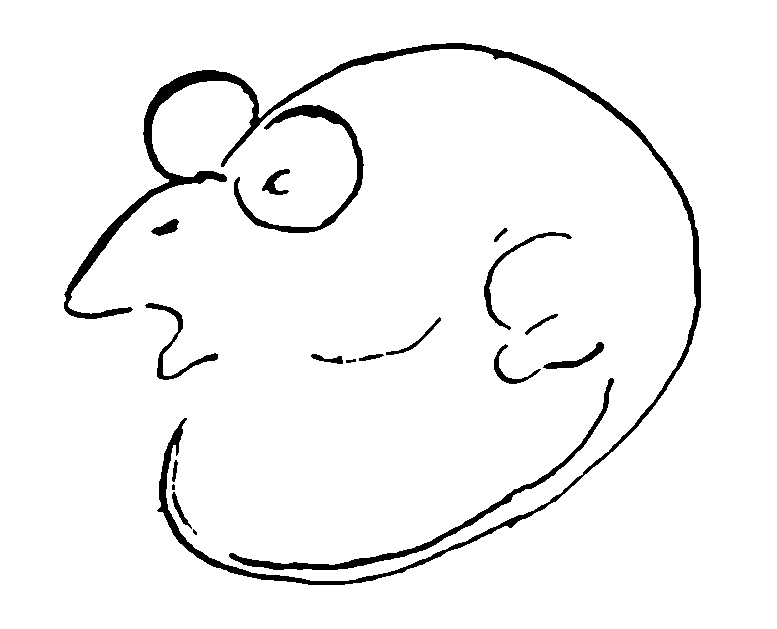
- 14Bottom-Up ProcessingProcessing stimuli based directly on the environmental stimuli themselves
Driven by parallel processing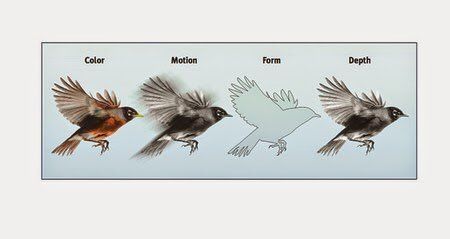
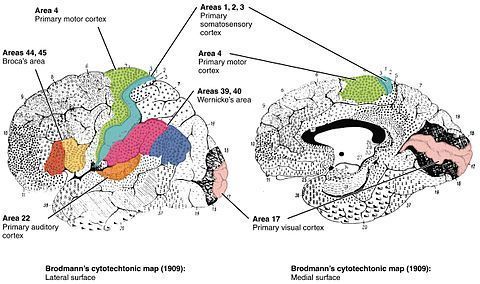
- 15Theory of Modularity/Functional SpecializationTheory that the cognitive system consists of a collection of parts - that there are stand-alone modules in the brain designed for one function
- 16Theory of Distributed Processing/ConnectionismTheory that brain areas are highly interconnected and process information in a distributed manner
This results from experiences and learning strengthening and weakening neural interconnections - 17DissociationImpaired performance on one task and normal performance on another following a lesion shows that brain structure A affects task X, but not task Y. Such a demonstration allows one to infer that task X and task Y are independent of each other in some way.
- 18Double DissociationIf a lesion in brain structure A impairs task X but not Y, and a lesion to brain structure B impairs task Y but not X, one can make more specific inferences about brain function and function localization.
Not only are Tasks X and Y independent of each other, but brain areas A and B are too (at least to the specific task being measured).
Informationen
- Beschreibung
- Der Nutzer hat seine Fachbereichs-Information gelöscht. Karteikarten am Cognition, erstellt von Gelöschter Nutzer am 01/07/2019.
- Erstellt von
- Gelöschter Nutzer
- Aufrufe
- 18
- Verlauf
-
- Erstellt von Thomas Davis · 1 Jul 2019
- Kopiert von Thomas Davis · 1 Jul 2019
- Kopiert von Thomas Davis · 1 Jul 2019
- Bewertung