
4193457
Beschreibung

Erzeugt von Jade Dickey

|
Erstellt von Jade Dickey
vor fast 11 Jahre
|
|
| Frage | Antworten |
| Solids | ● Solids have definite shape and definite volume. ● Solids have mass. ● Solids take up space. |
| Particles in Solids | ● Are packed tightly together ● Have very little energy ● Vibrate in place |
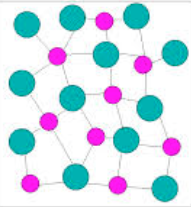
| Amorphous | A solid in which the particles are not organized into a fixed pattern. Ex. glass, plastic and gel  |
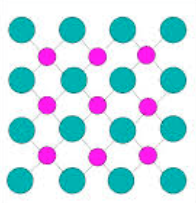
| Crystalline | A solid in which the particles are organized into a specific arraignment. Ex. Diamond |
| Liquids | ● Liquids take the shape of their container and have definite volume. ● Liquids have mass. ● Liquids take up space. |
| Particles in Liquids | ● Are loosely packed ● Have medium energy levels ● Particles flow around each other |
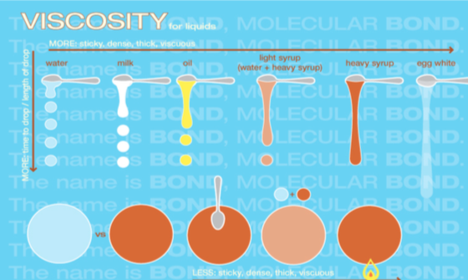
| Viscosity | A liquids resistance to flow. |
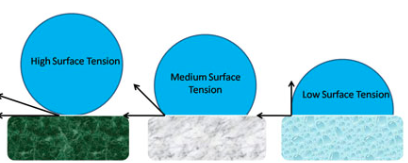
| Surface Tension | The force at the surface of a liquid that causes it to form droplets. |
| Gases | Gases spread out to fill the entire space given and do not have definite volume. Gases have mass. Gases take up space. |
| Particles in Gases | ● Move freely ● Have LOTS of energy |
| Plasma | ● Lightning is a plasma. ● Used in fluorescent light bulbs and Neon lights. ● Plasma is a lot like a gas, but the particles are electrically charged. |
| Particles in Plasma | ● Are electrically charged ● Have EXTREMELY high energy levels |
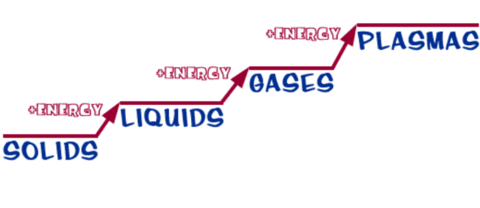
| Energy (photo) | |
| Solid + Energy = ? | ● When energy is added to solids, they become liquids! |
| Liquid + Energy = ? | ● When energy is added to liquids, they become gases! |
| Changing States | ● There are several names for matter changing states: ● State change ● Phase change ● Physical change  |
Möchten Sie mit GoConqr kostenlos Ihre eigenen Karteikarten erstellen? Mehr erfahren.