Karteikarten
P3 Edexcel Further Additional Topic 1
Karten in diesem Stapel (27)
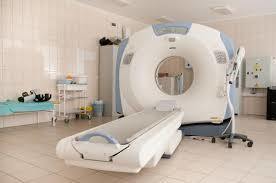
- 1Explain the use of CAT scans.X-rays are used to generate a 3D image on from lots of 2D images.
- 2Explain the use of ultrasound.Tissues and organs reflect ultrasound waves back and the time taken for them to return is used to measure their depth. This is used to create an image.
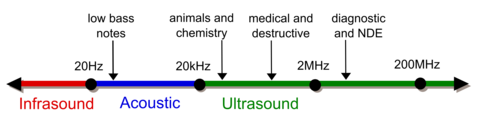
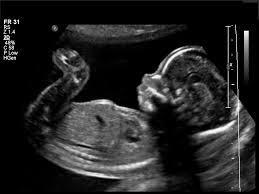
- 3Describe the use of ultrasound.Used to create images of unborn babies (foetal scanning) and of tendons, muscles joints and some internal organs.
- 4Describe the use of endoscopes.Used to look inside the body - commonly the reproductive and digestive systems, and the urinary and respiratory tracts.
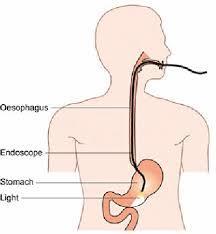
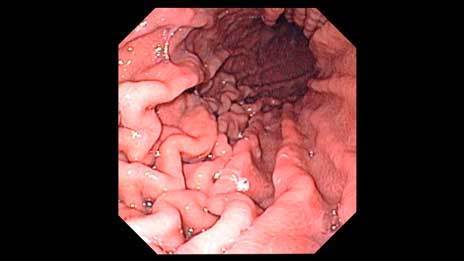
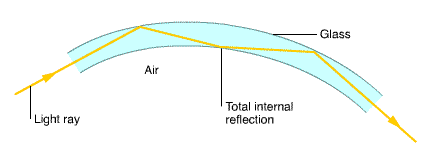
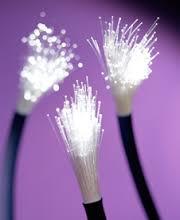
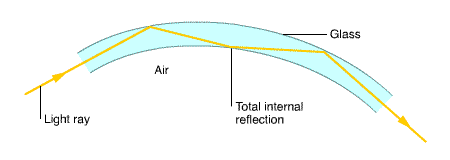
- 5Explain the use of endoscopes.One bundle of fibre optics carries light using total internal reflection to the object and another returns an image for the doctor to view.
- 6State the uses of non-ionising radiation in medicine.Visible light used in endoscopes and laser eye surgery. Ultrasound used in foetal scanning.
- 7State the uses on ionising radiation in medicine.X-rays in CAT scans, x-rays and fluoroscopes. Gamma rays in radiotherapy and PET scanners.
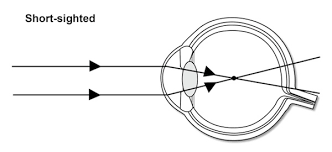
- 8Define the term myopia.Short sightedness.
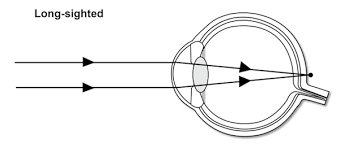
- 9Define the term hyperopia.Long sightedness.
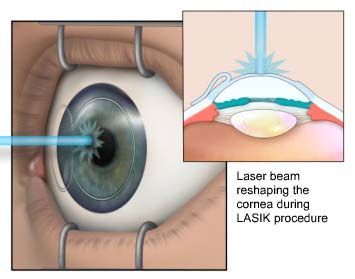
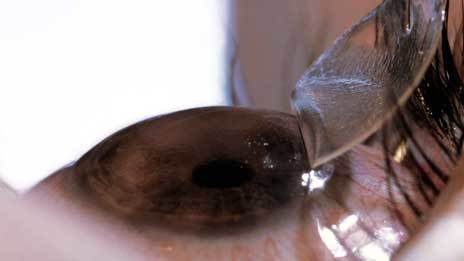
- 10Explain the use of laser eye surgery.Laser eye surgery is used to treat myopia and hyperopia by changing the shape of the cornea using a laser.
- 11Define the term radiation.Any form of energy originating from a source, including both waves and particles.
- 12State two factors that can affect the intensity of radiation.The distance from a source and the medium through which it is travelling.
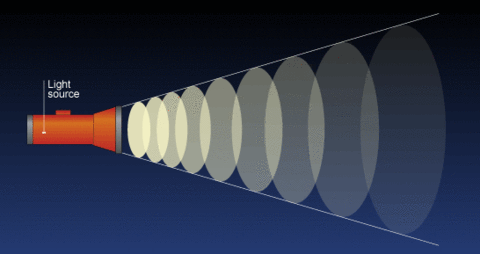
- 13State the equation linking intensity, power of radiation and area.Intensity = power of incident radiation / area
I = P / A - 14Explain what causes the refraction of light.The speed of a wave will change due to the density of the material it passes through.
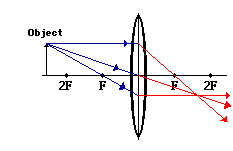
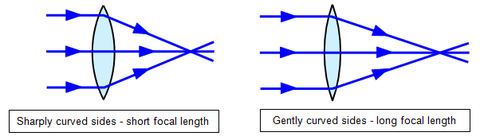
- 15Describe the relationship between the power of a lens and its shape.The more curved the surface of a lens (thicker center) the greater its power.
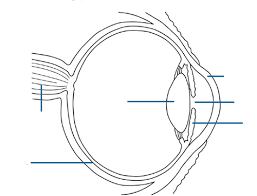
- 16State the main feature on the diagram of the eye.The main features are the cornea, iris, pupil, lens, retina and ciliary muscle.
- 17State the parts of the eye involved with focusing the light onto the retina.The cornea and the lens are involved in focusing the light onto the retina.
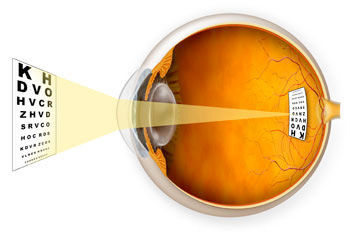
- 18State the near point and the far point of the average adult human eye.The near point is 25 cm and the far point is at infinity.
- 19Explain the symptoms and cause of short sight.Someone with short-sightedness cannot focus properly on distant objects.
This is caused by the eyeball being elongated, so that the distance between the lens and the retina is too great.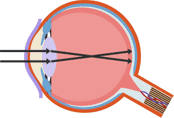
- 20Explain the symptoms and cause of short sight.Someone with long-sightedness cannot focus properly on near objects.
This is because the lens focuses the sharpest image behind the retina. This defect is often age-related, and due to the lens becoming more crystalline.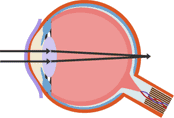
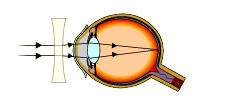
- 21Describe how short sight can be corrected.It can be corrected by placing a concave lens in front of the eye.
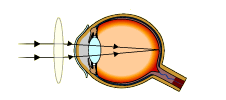
- 22Describe how long sight can be corrected.It can be corrected by placing a convex lens in front of the eye.
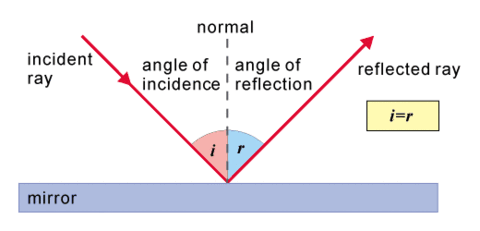
- 23Describe the law of reflection.The angle of incidence = the angle of reflection.

- 24Explain the cause of refraction.Refraction occurs when light enters a more or less dense material causing it to change it's speed and direction.
- 25State the equation for calculating critical angle.sin c = 1 / n
Where c is the critical angle
and n is the refractive index.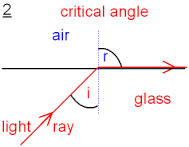
- 26Describe the term critical angle.The critical angle is the angle of incidence for which the angle of refraction is 90 degrees.
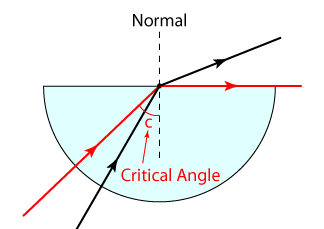
- 27Explain why total internal reflection occurs.Total internal reflection occurs when waves pass form a dense to a less dense medium. If the angle of the incident ray is greater then the materials critical angle, then all the waves are reflected back into the medium.