
Karteikarten
ACS/MI
Karten in diesem Stapel (35)
- 1Define Acute Coronary SyndromeACS represents a spectrum of clinical conditions which occur when there is a sudden severe reduction in myocardial perfusion leading to ischaemia and/ or infarction. ACS are due to an acute(sudden) change in a coronary artery atherosclerotic plaque: sudden rupture of a vulnerable atherosclerotic plaque with superimposed thrombosis in the lumen at the site of rupture.
- 2Symptoms of an acute MIAcute central chest pain similar to angina lasting more than 20 minutes with nausea, sweating, dyspnoea, palpitations.
- 3Symptoms of acute MI in elderly or diabeticsmay present without chest pain (silent infarct). presentations may include: syncope, pulmonary oedema, epigastric pain, and vomiting, oliguria , acute confusional state.
- 4Signs of an acute MIDistress, anxiety, pallor, sweating, increase or decrease pulse rate and BP, 4th heart sound.
There may be signs of heart failure: raised JVP, 3rd heart sound, basal crepitations) or a pansystolic murmur (papillary muscle dysfunction/rupture) - 5Give criteria for diagnosis of myocardial infarction.ECG changes: presence or absence of ST elevation
cardiac troponin levels: contractile protein mainly bound as part of the actin-myocin complex ( T & I are clinically used). Highly sensitive and specific for myocardial necrosis. levels rise following myocardial injury, peak at around 24hr and remain elevated for up to 14 days. Measure Troponin I at admission, 3hr and 6 Hr. - 6Other aetiology for high Troponin other than MIMyocardial damage of any aetiology will cause a Troponin release and therefore a Troponin rise. Other causes include coronary artery spasm due to cocaine, hypotension, chronic heart failure, myocarditis and some drugs etc.
- 7Immediate management of Acute MI ( mnemonics)M = morphine (+ met or cyclizine)
O = Oxygen ( SaO2< 95%)
N = Nitrogly. (hypertensive or acute LVF)
A = aspirin
C = clopidogril
B = beta blockers (atenolol 5 mg IV)
T = thrombolysis - 8Immediate management of Acute MIECG; Bloods for FBC, U&E, Glucose, Lipids, cardiac enzymes; brief assessment- history, examination and risk factors
Aspirin 300 mg
Morphine 5-10 mg IV + anti-emetic
STEMI on ECG and PCI available within 120 minutes-- If YES-- primary PCI. if NO then Fibrinolysis - transfer to primary PCI centre. - 9Aspirin ( indication)Acute coronary syndrome and acute ischaemic stroke ( rapid inhibition of platelet aggregation)
Long-term secondary prevention of thrombotic arterial event in CVD, cerebrovascular and peripheral arterial D.
Atrial fibrillation ( warfarin & novel oral anticoagulants are contraindicated.
To control mild-to-moderate pain & fever. - 10MOA of aspirinIt reversibly inhibits COX to reduce production of the pro-aggregatory factor thromboxane from arachidonic acid, reducing platelet aggregation. The anti platelet effect occurs at low doses and lasts for lifetime of a platelet ( no nucleus to synthesise new COX).
- 11Adverse effects of AspirinGI irritation; GI ulceration and haemorrhage and hypersensitivity reactions including bronchospasm. in regular high dose therapy aspirin causes tinnitus. Life threatening in overdose : hyperventilation, hearing change, metabolic acidosis, and confusion.
- 12Warnings of AspirinChildren aged under 16 years : Reye's disease ( life threatening illness affects the liver and brain.
Aspirin hypersensitivity
Should be avoided in the 3rd trimester of pregnancy when prostaglandin inhibition may lead to premature closure of ductus arteriosus. caution in people with peptic ulcer or gout. - 13Symptoms of Unstable anginaThe pain of unstable angina can feel as if there's a weight on your chest or like a squeezing, crushing, or gripping sensation. It usually lasts at least 20 minutes.
The feeling is usually in the middle of the chest. But you may get it in your neck and jaw, or in your back. It may go down one or both of your arms and make them feel heavy. You may get stomach pain or feel as if you have indigestion. You may get breathless and sweaty. Or you may feel sick or exhausted. - 14Right coronary artery supplies to which parts of heart?Right ventricle and atrium
pacemaker
Inferior left ventricle - 15Left coronary artery supplies to which parts of heart?LAD: Anterior LV
Left circumflex artery: lateral LV - 16Inferior MI leadsECG leads II, III and aVF.
- 17Anterior MI leadsECG leads V1- 4
- 18Lateral MIECG leads l, aVL, V5 - 6.
- 19Alterations from normal ECG in MIClassically hyper acute tall T waves,
ST elevation or
New LBBB - 20Management of a patient after a MIprophylaxis against thromboembolism: Large anterior MI, warfarin for 3months, Aspirin, Long-term beta blockade (bisoprolol), Ace-i, simvastatin. Address modifiable risk factors: discourage smoking, encourage exercise, identify and treat DM, hypertension, and hyperlipidaemia.
- 21Management of a patient in primary care after a MIPatient may return to work after 2 months. lighter job. Diet in oily fish, vegetables, fruit, and fibre and low in saturated fat should be encouraged. Encourage daily exercise. Avoid intercourse for 1 month and air travel for 2 months. refer for structured rehabilitation programme. Review at 5 weeks post MI.
- 22what are Short term Complications of MI?Short term complications:
1. Ventricular fibrillation
2. Other arrhythmias
3. Acute cardiac failure or cardiogenic shock
4. Myocardium rupture
5. Pericarditis
6. Mural thrombus - 23Define ventricular fibrillation and other arrhythmias.Ventricular fibrillation: probably related to K released from necrotic myocytes which include arrhythmias in the hyper-excitable tissue around the infarct.
Other arrhythmias: common in inferior infarcts e.g. bradycardia, ventricular tachycardia, supra ventricular tachycardia. - 24Define Acute cardiac failure and cardiogenic shock?The infarcted myocardium no longer contracts and this may cause heart failure or, if a significant proportion of the myocardium is affected, cardiogenic shock.
- 25Key difference between Acute cardiac failure and cardiogenic shock?The key difference is the blood pressure, when acute cardiac failure is so severe that the blood pressure can not be maintained, the condition is called cardiogenic shock.
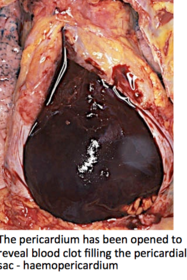
cardiogenic shock has a high mortality. - 26What is cardiac tamponade?Rupture of the free wall of the ventricle causes haemopericardium and cardiac tamponade.
- 27Describe the process of acute LVF?Rupture of the papillary muscle of the mitral valve causes acute mitral regurgitation, the heart does not have time to undergo compensatory changes. As a consequence blood flows back into the left atrium, causing the pressure in the LA to rise. The high pressure in the LA is transmitted backwards into the pulmonary circulation--- causes transudation of fluid from circulation into the lung interstitium and alveoli ( pulmonary oedema)--acute LVF.
- 28How the rupture of inter ventricular septum presents?Rupture of the interventricular septum causes an acute ventricular septal defect and presents as acute HF.
- 29What is pericarditis?A transmural infarct extends to involve the pericardium, inciting an inflammatory response, this manifests as acute pericarditis.
- 30Define mural thrombus and where it is form?A thrombus may form in a heart chamber, usually the left ventricle.
Thrombus may form because of a number of factors:
--Endothelial injury ( a transmural infarct extends to involve the endothelium)
--Stasis ( the infarcted myocardium does not contract and so there is an akinetic zone. - 31What are long term complications of MI?--Recurrent MI: due to coronary artery stenosis
--Chronic congestive cardiac failure: due to loss of contractile myocardium
--ventricular aneurysm formation, which predisposes to:
1. congestive cardiac failure
2. Arrhythmias
3. Thrombus formation within the aneurysm( due to stasis), the thrombus may embolise. - 32What is Dressler's syndrome?Post myocardial infarction syndrome-- usually a self limiting autoimmune pericarditis 2-10 months after full thickness MI.
In the era of PCI it is uncommon. - 33What is repurfusion injury?The process of reperfusion may damage some myocytes that were not already dead when reflow occurred. This is termed repurfusion injury, which is mediated by toxic oxygen species that are overproduced on restoration of the blood supply.
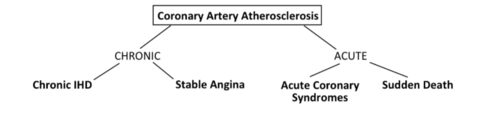
- 34Spectrum of ischaemic heart disease.
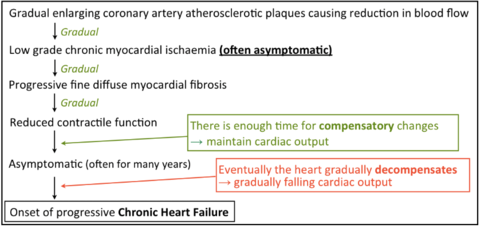
- 35What is chronic ischaemic heart disease.
Informationen
- Beschreibung
- Cardiology Medicine Karteikarten am ACS/MI, erstellt von Rahul sharma am 28/08/2016.
- Erstellt von
- Rahul sharma
- Aufrufe
- 10
- Bewertung