
10493568
Description

Flashcards by bradley kewell, updated more than 1 year ago

|
Created by bradley kewell
over 8 years ago
|
|
| Question | Answer |
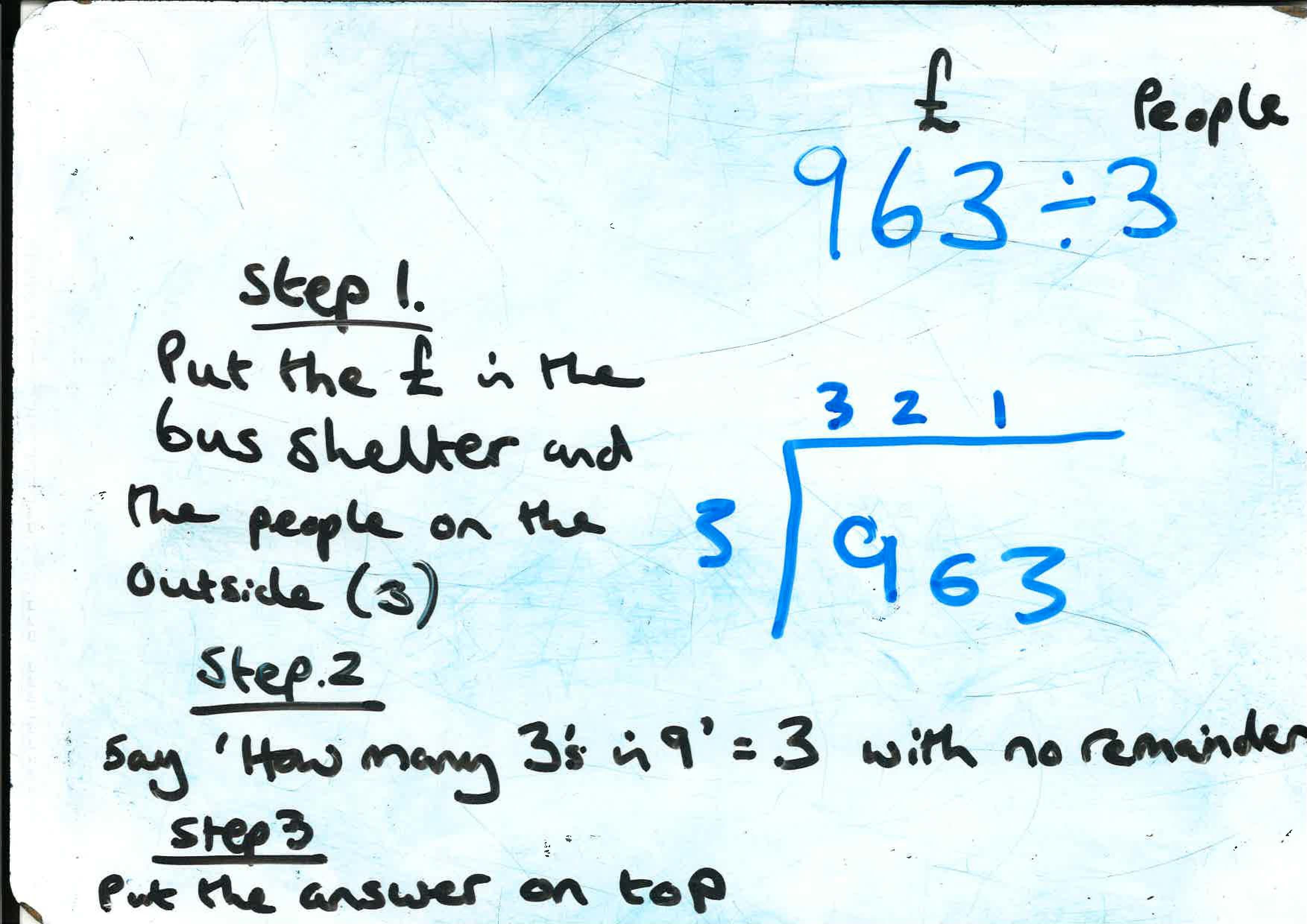
| Easy Division 963 ÷ 3 | 321 |
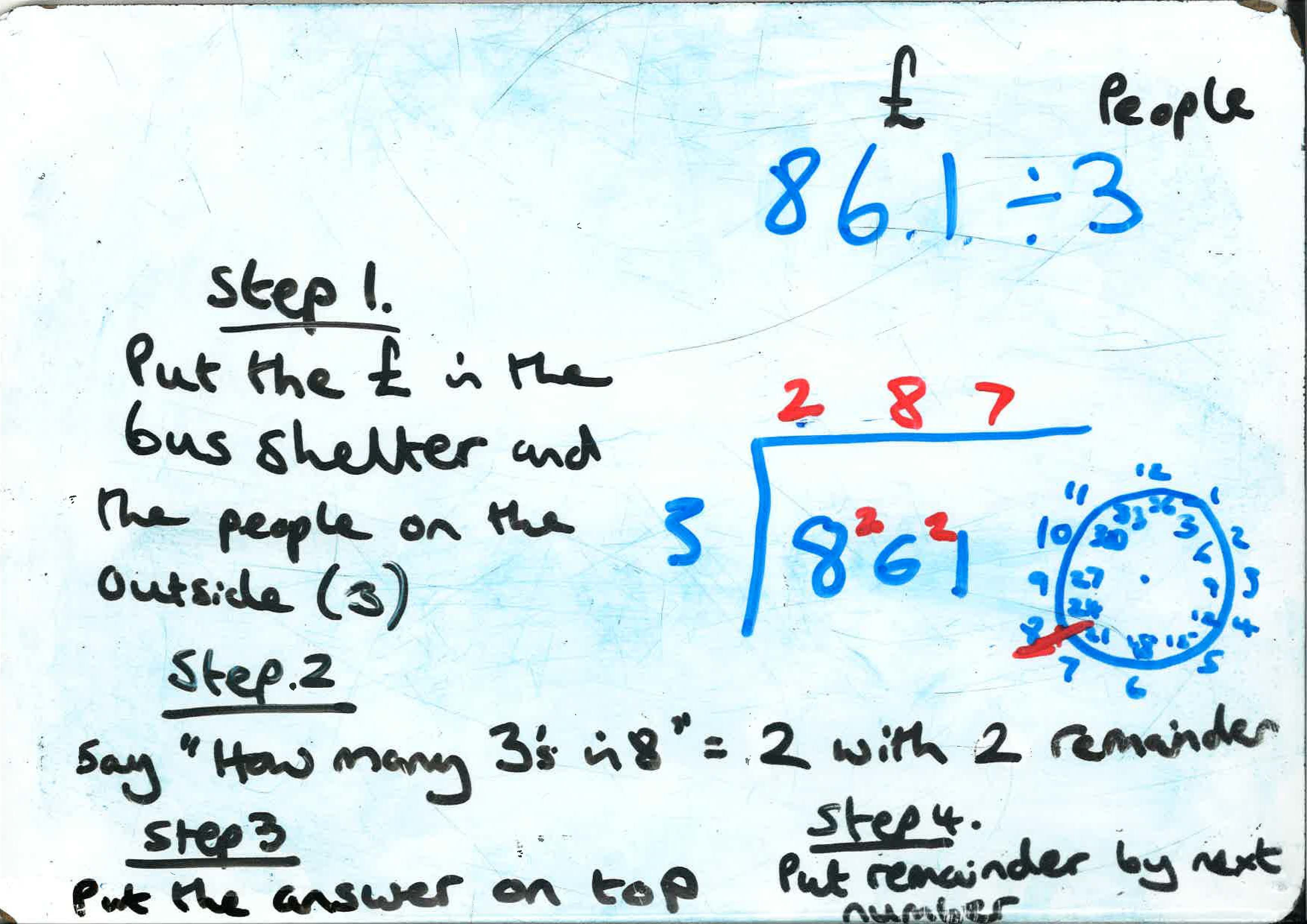
| Medium Division 861 ÷ 3 | |
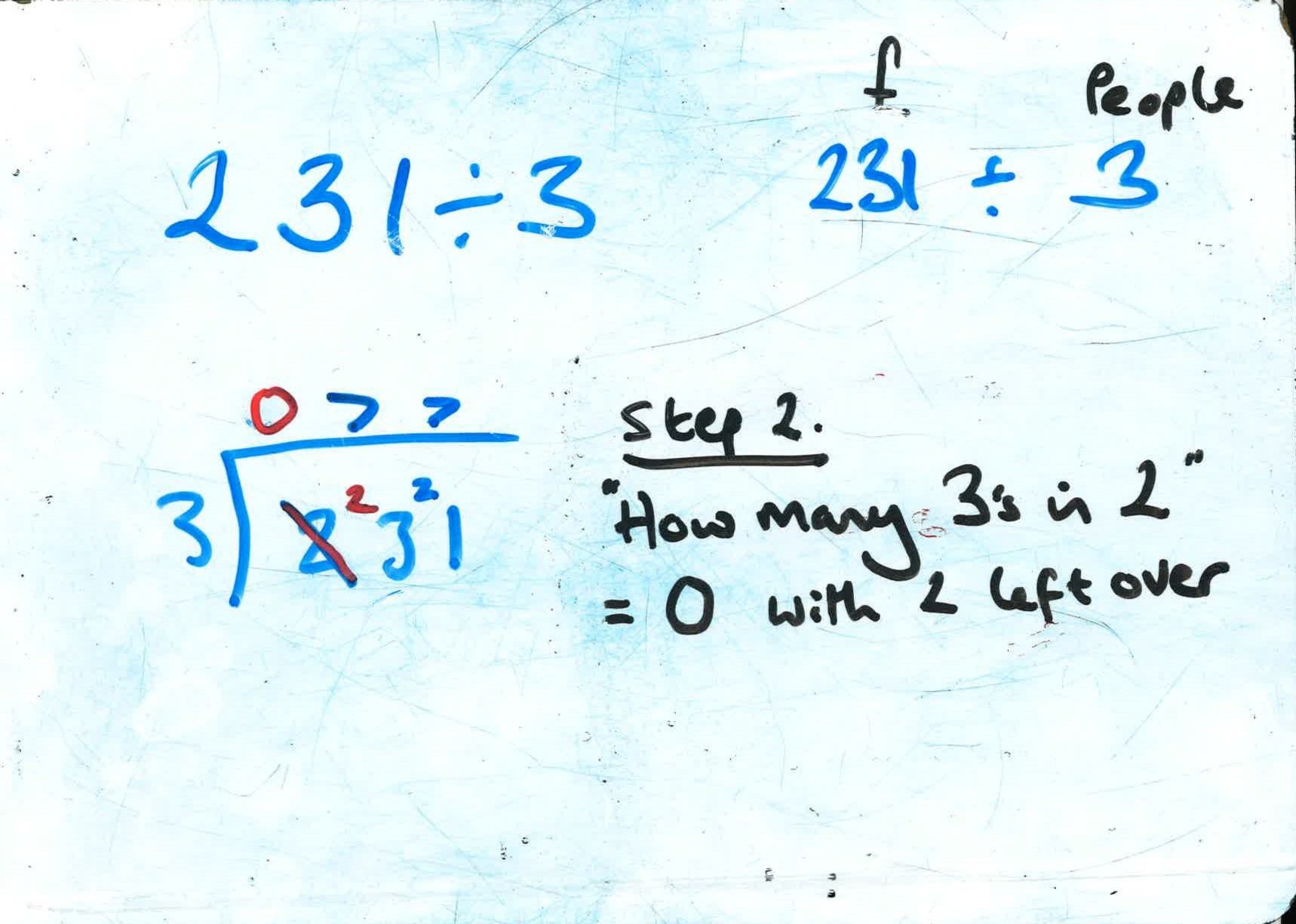
| Hard Division 231 ÷ 3 | |
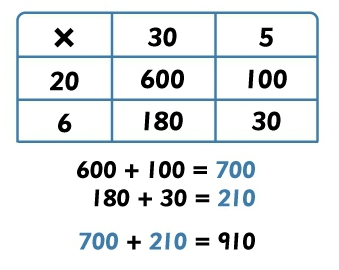
| Multiplication grid 35x26 | |
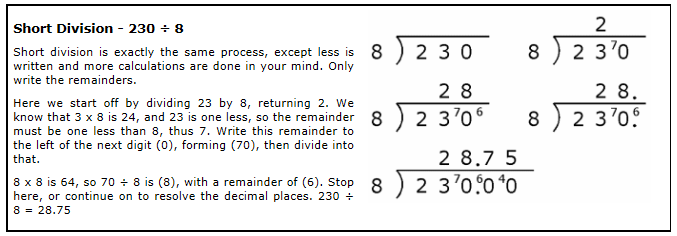
| Division with remainder 230÷8 | |
| Adding and subtracting decimals 0.0032 + 32.156 | Line up the decimal points 0.0032 32.1560 ----------- 32.1592 |
| Multiplying Decimals 3.25 x 5 | Ignore decimal point, calculate using grid method (325x5=1625), then count how many numbers there are after the question (3.25 = 2 numbers), have the same amount of numbers after the decimal place in the answer (16.25). |
| Dividing decimals 6.21 ÷ 3 | ignore decimals. Calculate as normal using bus stop method. Then put in decimal place |
| Bus shelter method for division which end do you start? | Left hand side --------------> |
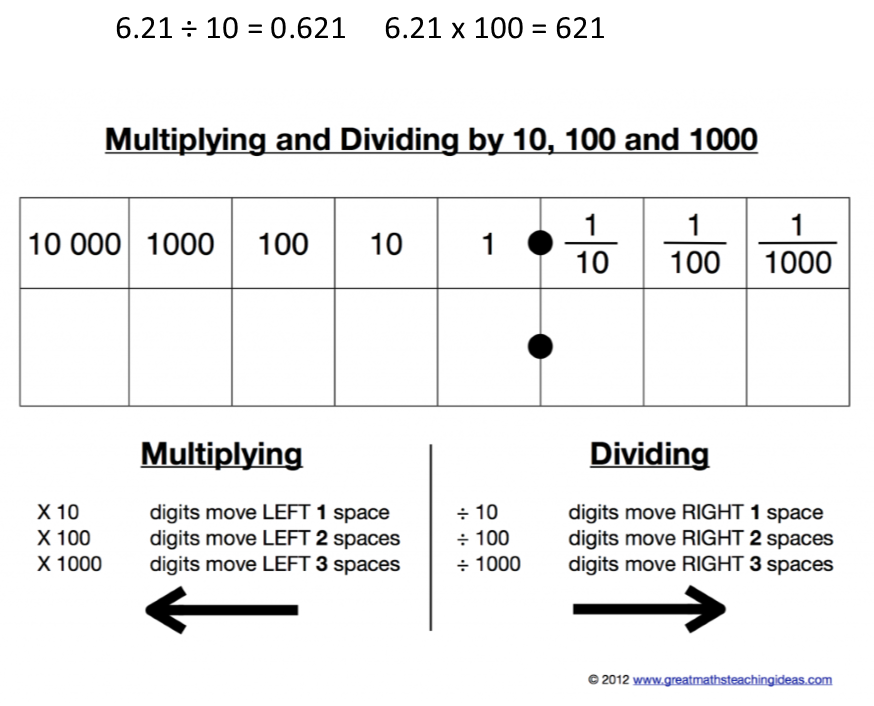
| Multiply and divide by multiples of 10 (eg. x 10, x 100 etc) 6.21 ÷ 10 6.21 x 100 | |
| x ÷ two negative numbers e.g. -5 x -2 | Two negatives make a positive -5 x -2 = 10 |
| x ÷positive and negative numbers e.g. -5 x 2 | if the signs don't match = negative -5 x 2 = -10 |
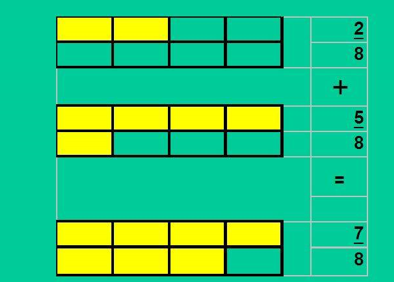
| Adding or subtracting fractions with same denominator (bottom) e.g. 2/8 + 5/8 | |
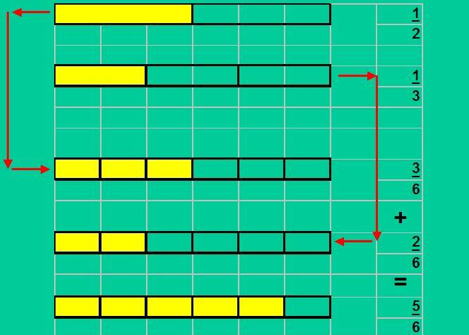
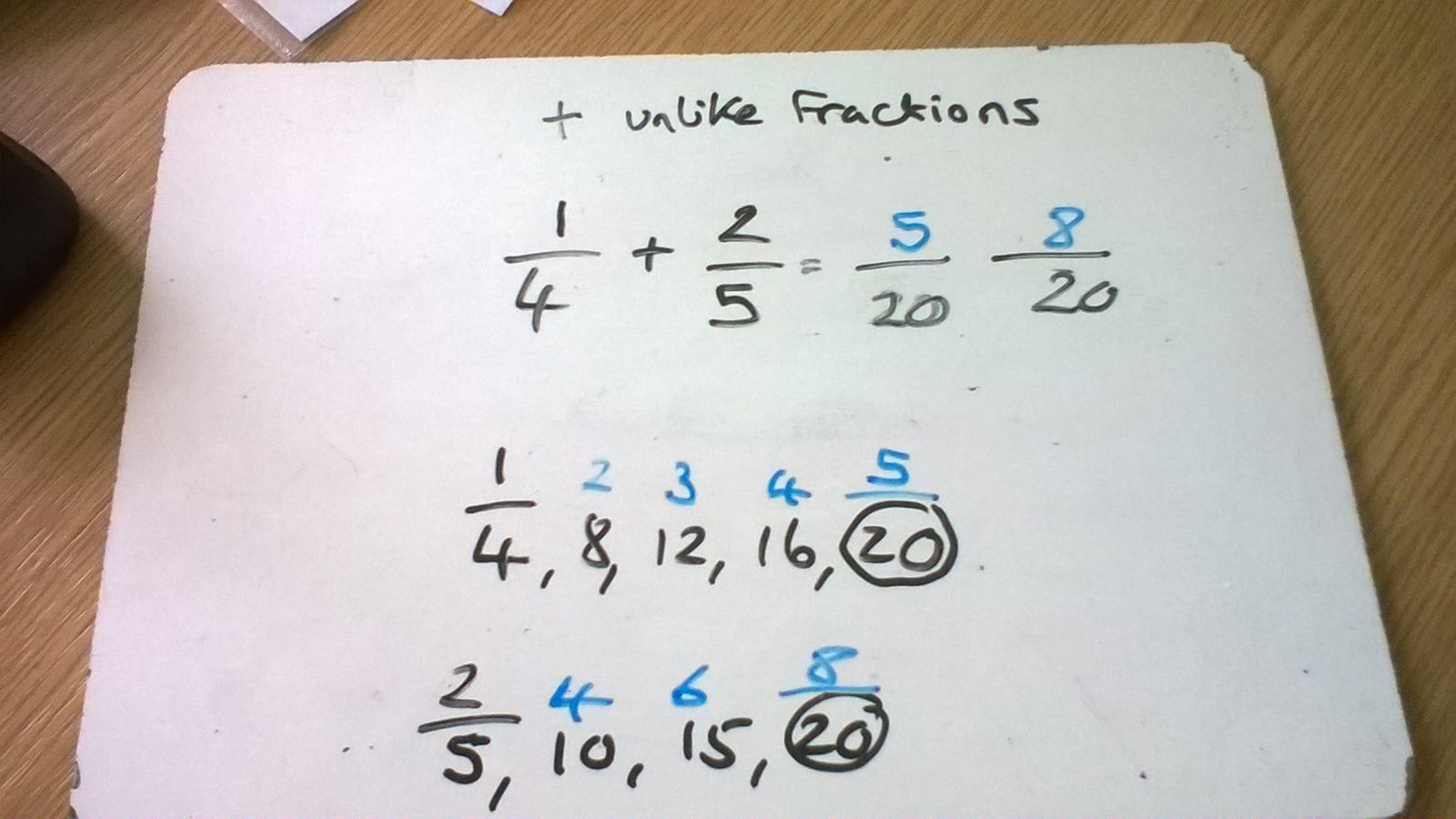
| Adding or subtracting unlike fractions e.g. 1/2 + 1/3 | Find a common multiple by multiplying the two denominators. The make equivalent fractions. |
| Rounding decimals e.g. 3.524 to nearest 10th 3.649 to nearest 100th | 1. Find the column e.g. 10th 2. look at number to right to see if this column changes: (5 or above then go up by 1, 4 or less stays the same) 3. ignore any numbers after the column e.g. 3.524 to nearest 10th = 3.5 e.g. 3.649 to nearest 100th = 3.65 |
| Multiplying fractions e.g. 2/5 x 3/4 | Multiply the top and the bottom 2 x 3 = 6 5 x 4 = 20 and simplify = 3/10 |
| Adding or subtracting unlike fractions e.g. 1/4 + 2/5 | |
| Dividing fractions 2/5 ÷ 3/4 | reverse the sign, reverse the fraction change it to x flip the 2nd fraction 2/5 x 4/3 |
| Finding Fraction Parts 3/4 of £20 | 20 ÷ 4 X 3 (divide by the bottom and times by the top) = £15 |
| Expressing one number as a fraction of another number. 3 as a fraction of 30 | write the part over the whole 3/30 and simplify 1/10 |
| Turn top heavy (improper) fraction into mixed numbers e.g. 8/3 | Divide top by the bottom = 8 ÷ 3 = 2 (whole number) with remainder 2. Put the remainder over the bottom of the fraction = 2/3 2 2/3 |
| Mixed number to top-heavy fractions 5 2/4 | Times the whole number by the bottom of the fraction 5 x 4 = 20 Add the remainder (top part of the fraction) 20 + 2 Put the total over the bottom 22/4 |
| Find %age Part of a number e.g. 37% of £70 | Break 37% into parts 1. find 10% of £70: 70 ÷ 10 = 7 2. Find 30%: 10% x 3: 7 x 3 = 21 3. Find 5%: 10% ÷ 2: 7 ÷ 2 = 3.5 4. Find 1% of £70: 70 ÷ 100 = 0.7 5. Find 2%: 1% x 2: 0.7 x 2 = 1.4 Add up 30%, 5% & 2% = £25.90 |
| Find %age after deduction/increase e.g. price was £80, sale is 25% off. What is the price now? | Find the saving: 25% of £80 = £20 Take the saving from the original price: £80 - £20 = new price: £60 |
| Express one number as a percentage of another number e.g. express 20 as a %age of 80 | Write it as a fraction: 20/80 Turn it into a decimal by solving it: 20 ÷ 80 = 0.25 Turn it into a %age by x 100 0.25 x 100 = 25% |
| Find 10% of a number e.g. 10% of 85 | 10% = ÷ 10 85 ÷ 10 = 8.5 |
| Find % increase/decrease e.g. A TV cost £300 but in a sale is now £270. What is the %age saving? | Difference ÷ original x 100 (300-270)=30 ÷ 300 = 0.1 x 100 = 10 10% saving |
Want to create your own Flashcards for free with GoConqr? Learn more.