
39081628
Description
Flashcards by sam bailey, updated more than 1 year ago
|
|
Created by sam bailey
about 2 years ago
|
|
| Question | Answer |
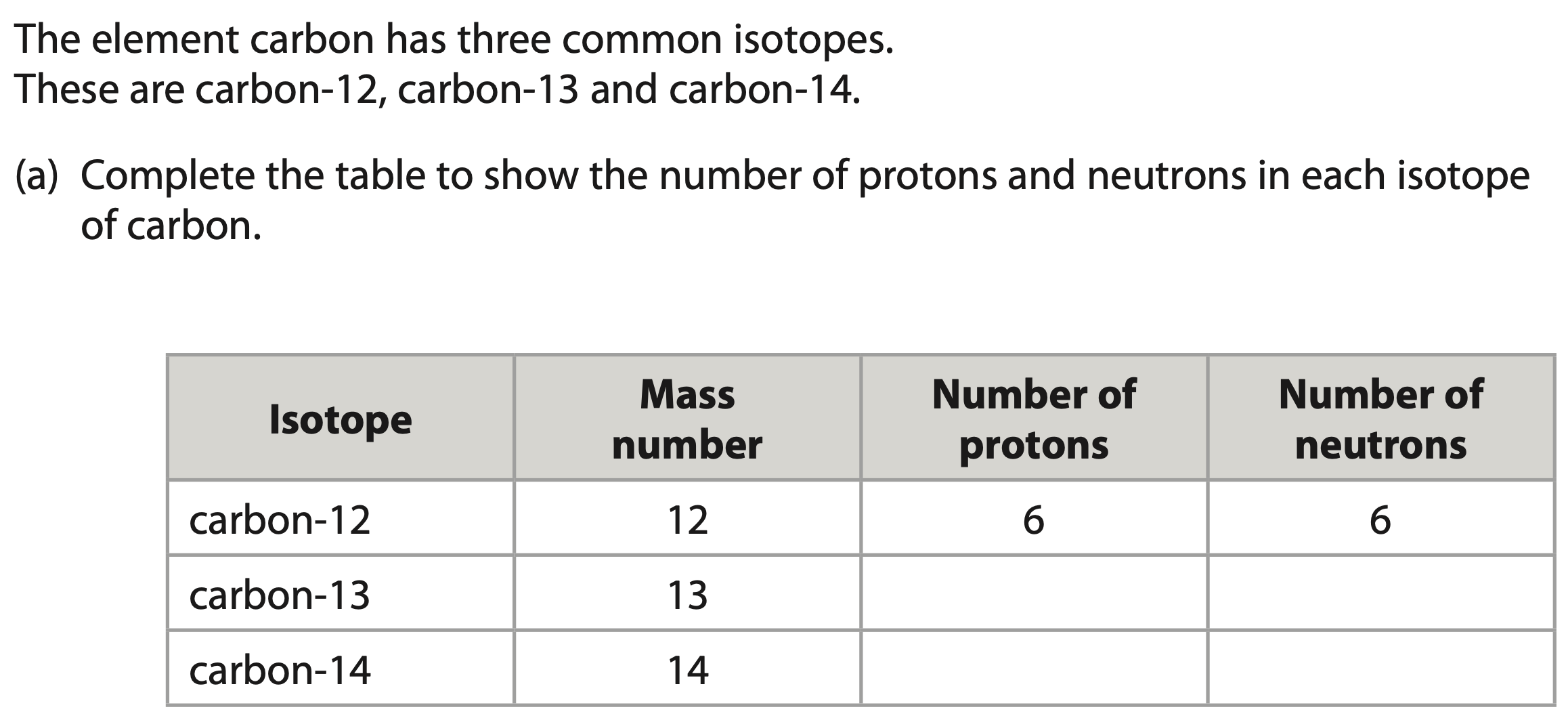
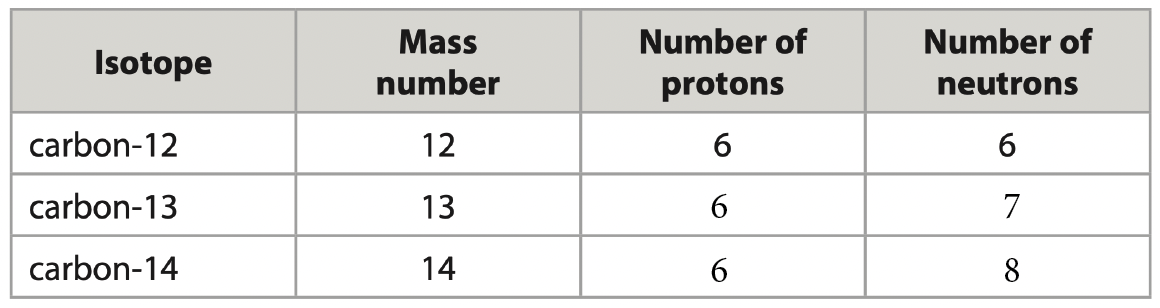
| Explain, in terms of electrons, why the three isotopes have the same chemical properties. | same number of electrons |
| The average / mean mass of an atom (of the element) | |
| Atoms contain three different types of particle. These are electrons, neutrons and protons. Which one of the three particles has a negative charge? | electron(s) |
| Atoms contain three different types of particle. These are electrons, neutrons and protons. Which one of the three particles has the smallest mass? | electron(s) |
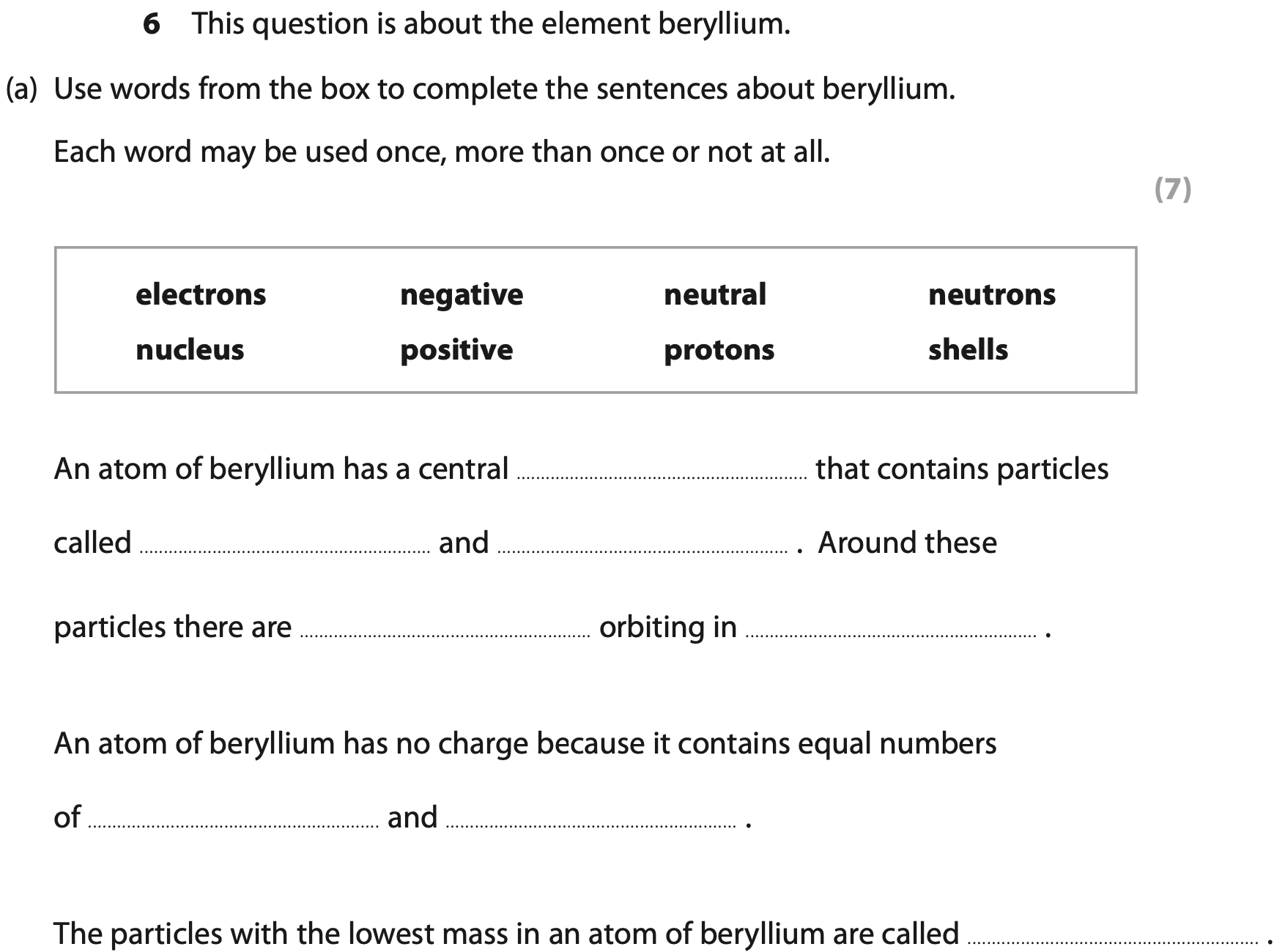
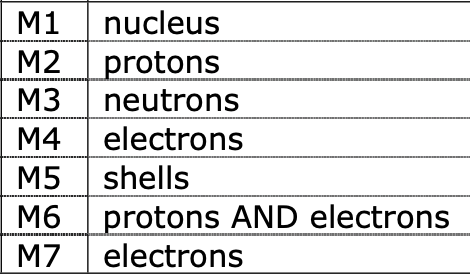
| Atoms are neutral because they contain equal numbers of ____ and ____ | protons (and) electrons |
| Isotopes are atoms with the same number of ____ but different numbers of ____ in the nucleus. | protons neutrons |
| The atomic number of this atom is ____ | 12 |
| The mass number of this atom is ____ | 24 |
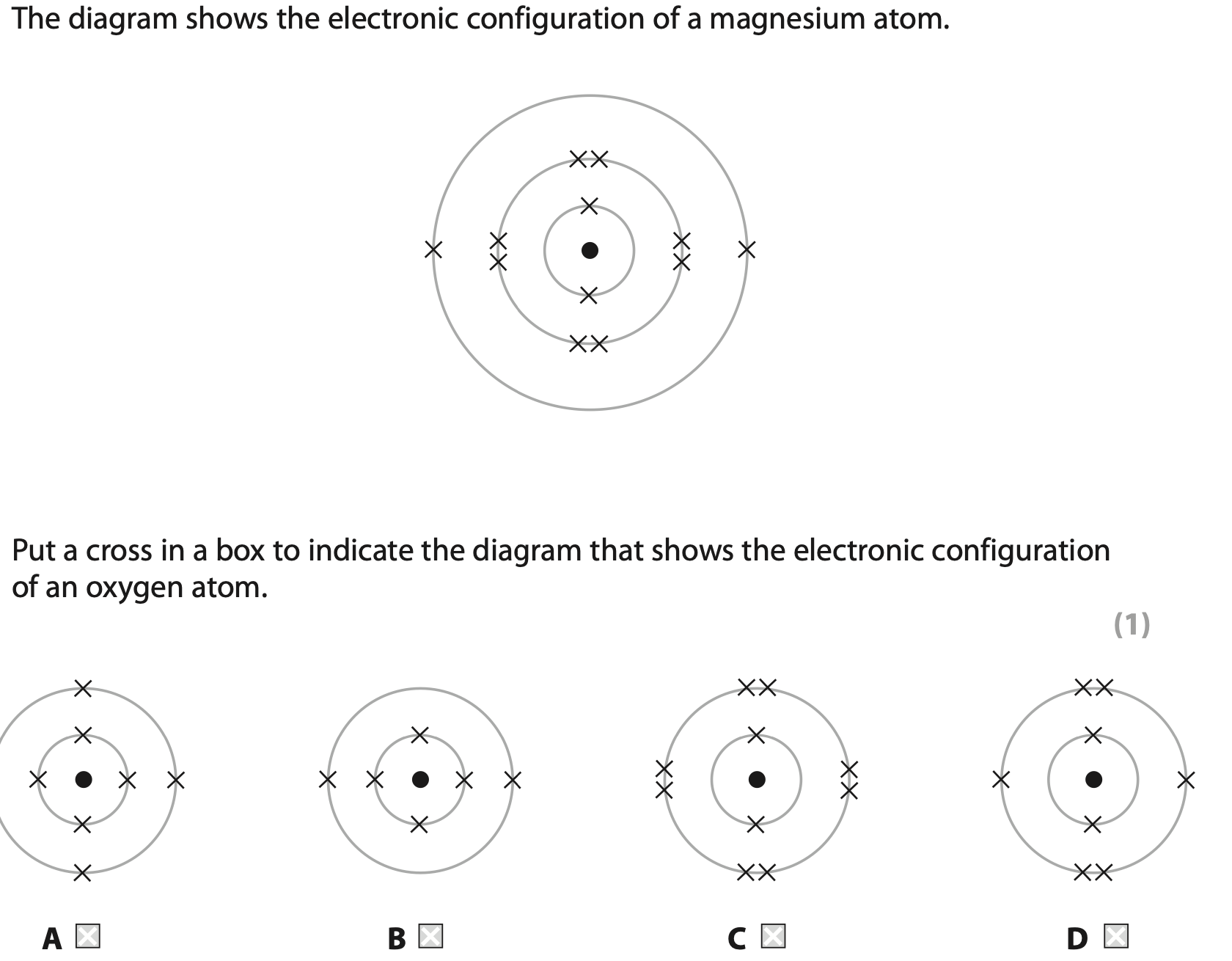
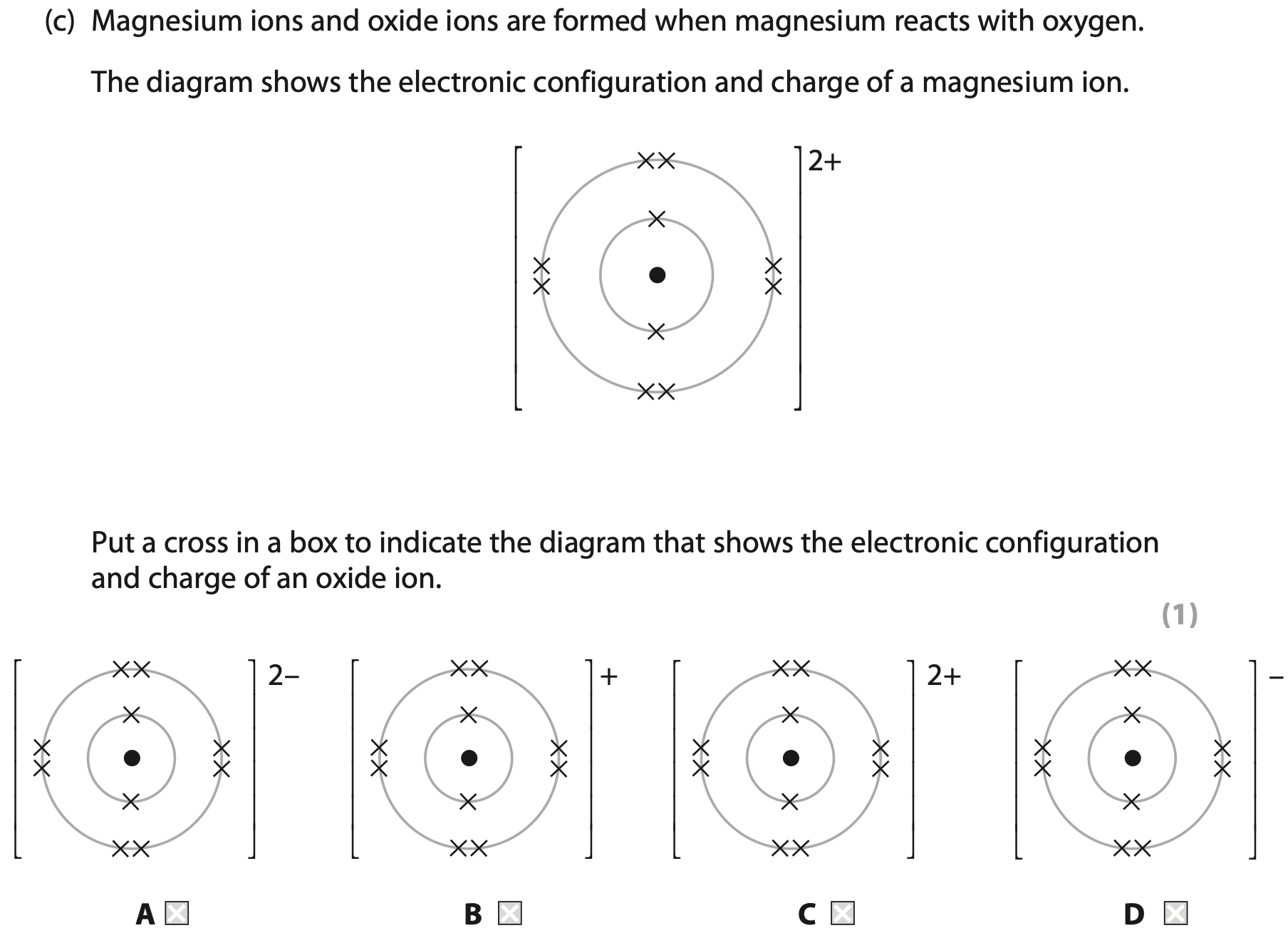
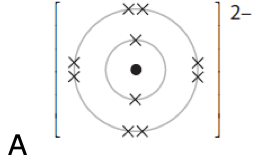
| The electronic configuration of this atom is ___ | 2.8.2 |
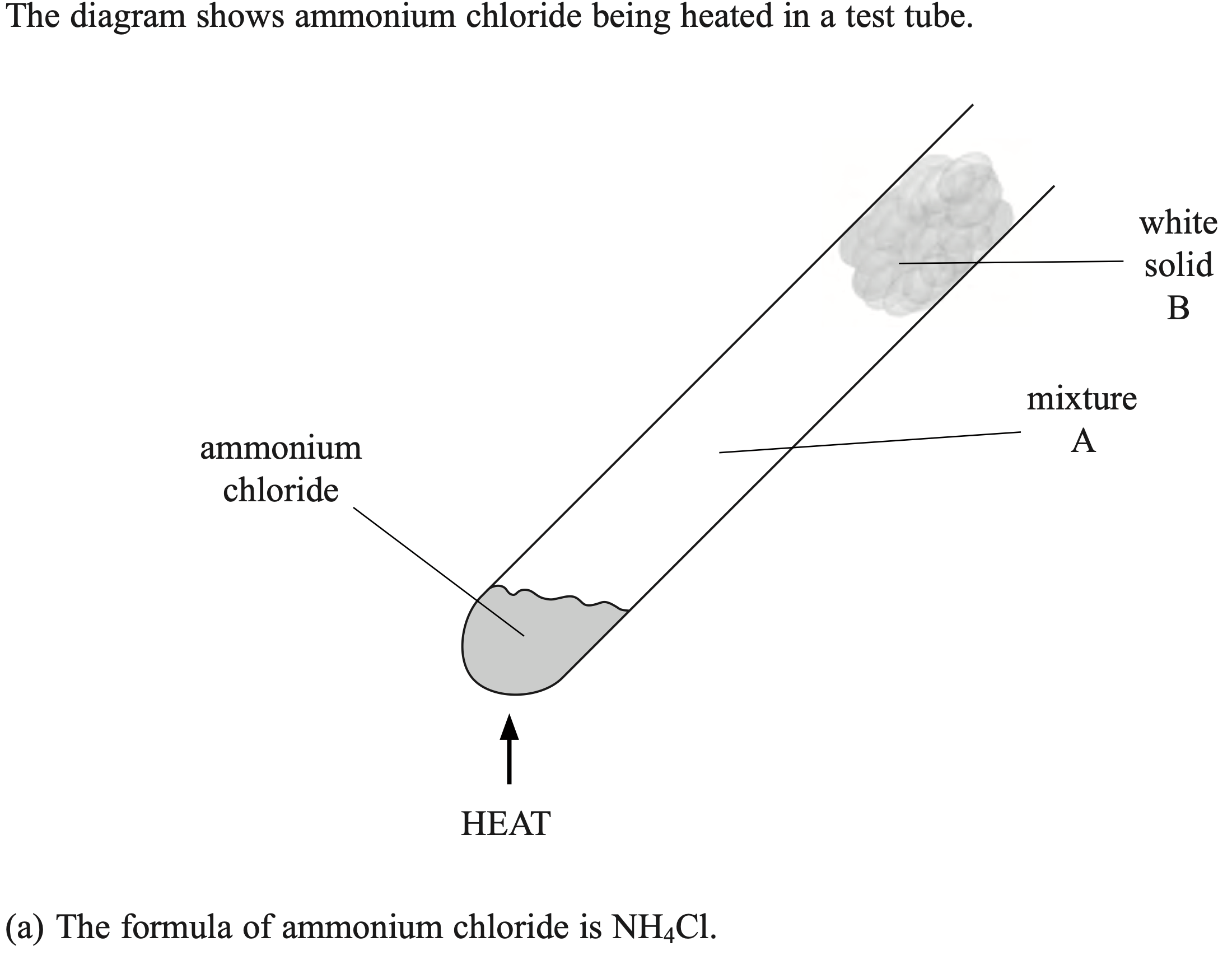
| How many different elements are there in ammonium chloride? (1) | 3 |
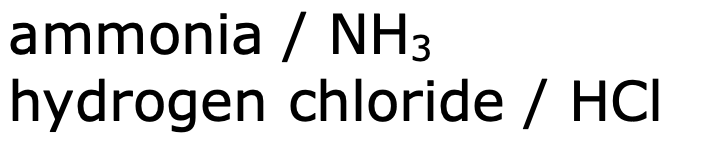
| Identify the two gases in mixture A. ___ and ___ | |
| Identify the white solid B. | |
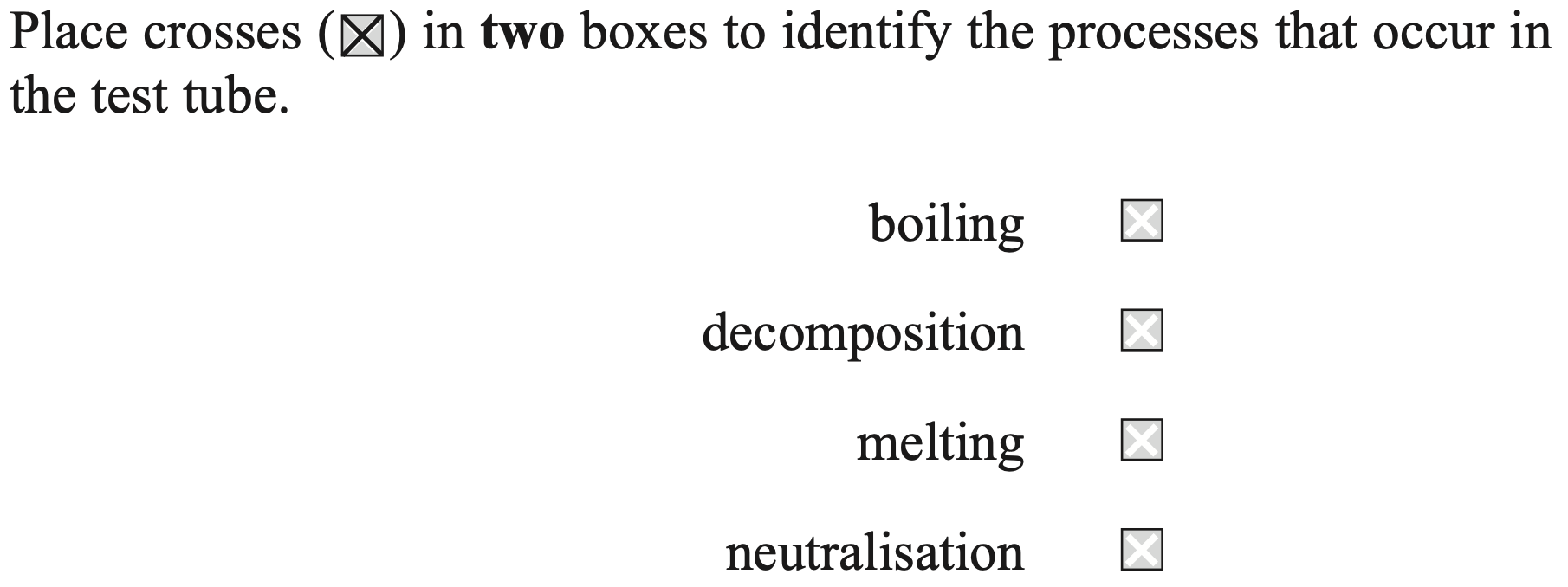
| cross in box 2 (decomposition) cross in box 4 (neutralisation) | |
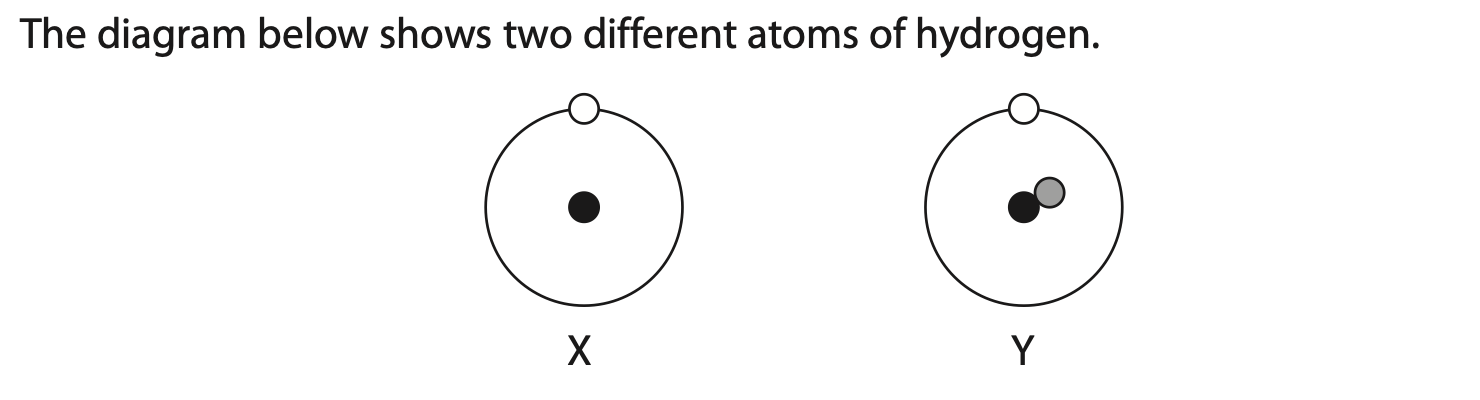
| The particle furthest from the centre of each atom is an electron - a neutron - a nucleus - a proton | an electron |
| The particle present in atom Y but not in atom X is an electron - a neutron - a nucleus - a proton | a neutron |
| Both atoms are neutral because they have the same number of an electron - a neutron - a nucleus - a proton | electrons and protons |
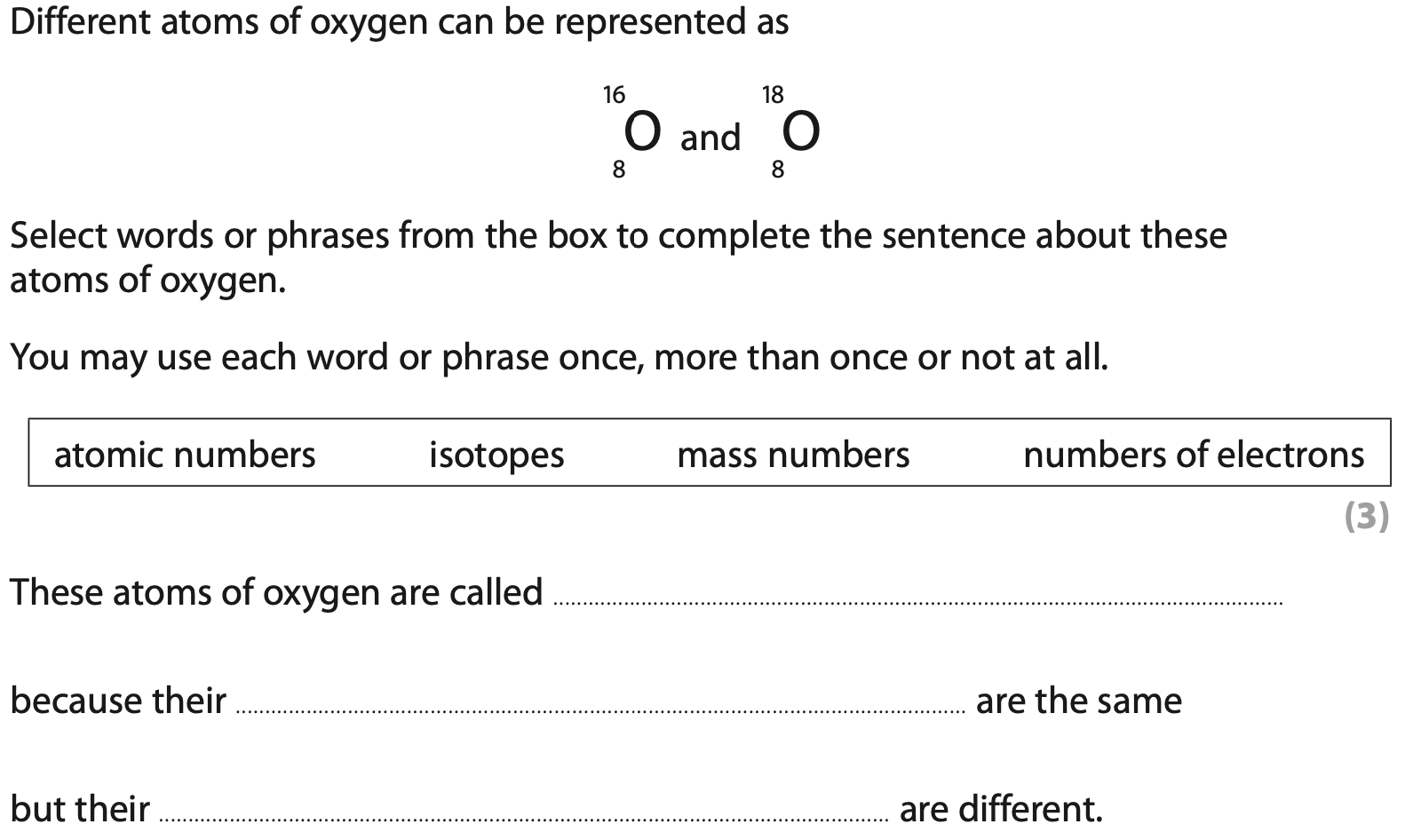
| isotopes atomic numbers mass numbers | |
| releases thermal energy | |
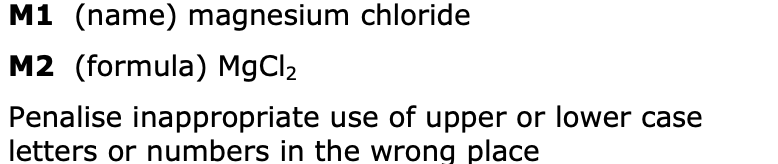
| Magnesium oxide is also used as an antacid. It helps relieve indigestion by neutralising hydrochloric acid in the stomach. Give the name and formula of the salt produced when magnesium oxide reacts with hydrochloric acid. (2) | |
| 3 | |
| 5 |







Want to create your own Flashcards for free with GoConqr? Learn more.