
2197531


Intelligent System Supervision - Cloud Computing
- Cloud computing: is a model for enabling ubiquitous convenient, on-demand network
access to a shared pool of configurable computing resources, that can be rapidly
provisioned and released with minimal management effort or service provide interaction.
Annotations:
- Ubiquitous / network access o Not only the Internet On-demand self-service „Resource pooling” o „Multi-tenant model”: the same resource pool is used to serve many tenants o Dynamic allocation of resources & services to tenants o Tenant control of that: rather/very/extremely limited
- Elastic scale-out and scale-in o Seemingly infinite amount of resources, o that can be rented (and released) at any time Metered/utility-like services o Some notion of „service usage” metric („how much service is used”) is introduced o Payment is at least partially based on „actual usage” • N.B. modulo time granularity (hour, day, month...)
- SaaS
Annotations:
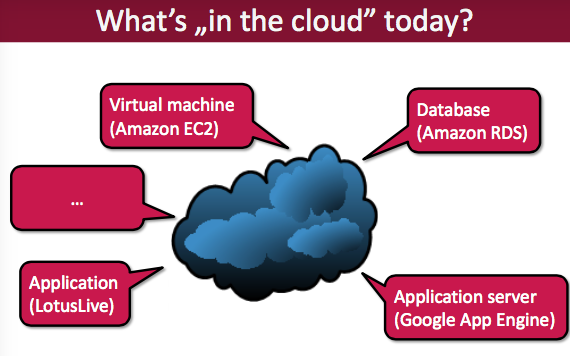
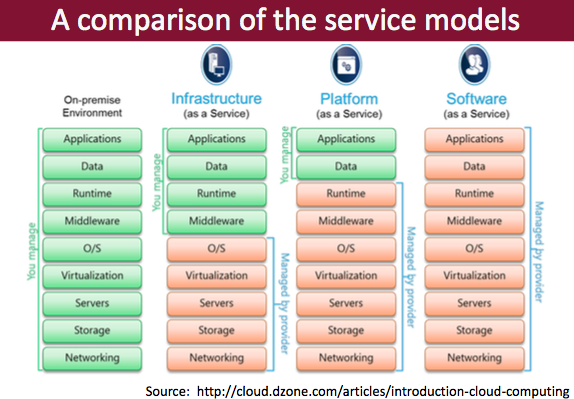
- Capability: using the applications of the provider o Access: usually thin client (browser!) o In all ernesty, not a new concept Examples o Google Apps o Salesforce CRM o LotusLive o Microsoft Business Productivity Online Suite (BPOS) Hugely successful in some domains: collaboration, accounting, CRM, ERP, HRM, CM, PM, ...
- PaaS
Annotations:
- Capability: deploying a custom application into a „rented” runtime environment (usually app. server container) o Predefined platform services o Predefined languages and APIs o The environment can be configured to some extent o The application model may be constrained • E.g. „no direct access to the file system”, „no direct access to OS networking”, ... Google AppEngine Microsoft Windows Azure Platform Amazon Beanstalk
- IaaS
Annotations:
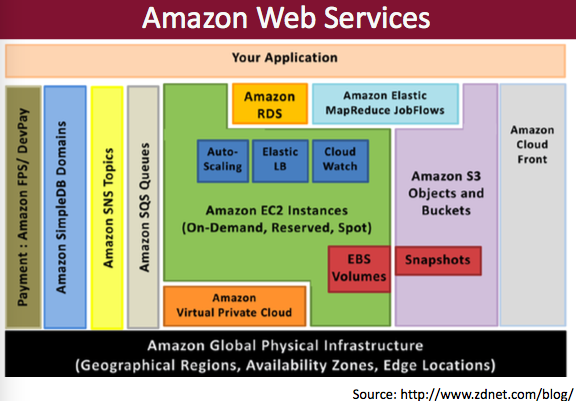
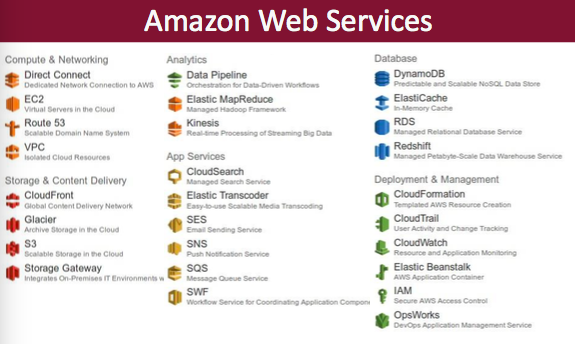
- Capability: access to fundamental computational resources o Most fundamental manifestation: „renting virtual machines” o You run what you like on the OS you get o Resources are usually either logical or virtualized o Meaning no direct access to the hypervisor & HW level Amazon Elastic Compute Cloud (EC2) o Xen-based virtualization o Full ecosystem o Note: as a rule, general purpose cloud service
- Amazon Web Services
- Amazon Elastic Compute Cloud - EC2
Annotations:
- For building something bigger: e.g. AWS CloudFormation. Amazon Elastic Compute Cloud is a central part of Amazon.com's cloud computing platform, Amazon Web Services. EC2 allows users to rent virtual computers on which to run their own computer applications.
- Amazon Elastic Compute Cloud - EC2
- Gartner IaaS MQ 2014
- When do I have to / should I / should I not / must I not use clouds?
- When don't use
Annotations:
- Constant load Legacy systems Security, legal obligations and regulatory compliance
- Demand and Capacity
- Deployment models
Annotations:
- Private: for a single organization with internal tenants. May be locally managed and owned by the organization. Community: a cross-organizational community shares the cloud resources (can be closed) o Gorvernment, healthcare, finance, education, ... Public: open (!= free (as in beer)) access. Operator owns the service infrastructure Hybrid: composition of two or more clouds with data and application portability
- Cost optimization
Annotations:
- There are costs involved with... o Demand left unserved o Overcapacity The unit price unit price of a cloud can be higher than investing in your own infrastructure, but... ... the same goes for hiring a car or a hotel room! Hybrid clouds: private – base load, public: varying o Nontrivial optimization problem o Still have to guess predict future demand
- When don't use
- Demand and Capacity
- Scaling resources
Annotations:
- "Scale out” o Parallelizability? o "webscale” technologies o Clustering and replication o (Mongo DB Is Web Scale)
- Capacity planning
Annotations:
- Too low capacity: unserved demand o E.g. planning for average load Too high capacity: not economical (?) o E.g. planning for maximum load Physical („in-house”) capacity is usually slow and costly to increase...o ... and decrease! (One-time) investment and commitment Demand?
- ...surges that can’t be predicted The cloud is scalable, let's use it! For larger businesses with existing internal data centers, well-managed virtualized infrastructure and efficient IT operations teams, IaaS for steady-state workloads is often no less expensive, and may be more expensive, than an internal private cloud.”
- Scaling resources
- Cloud deployment models
- Free time / free speedup
- Paralellizable loads
Annotations:
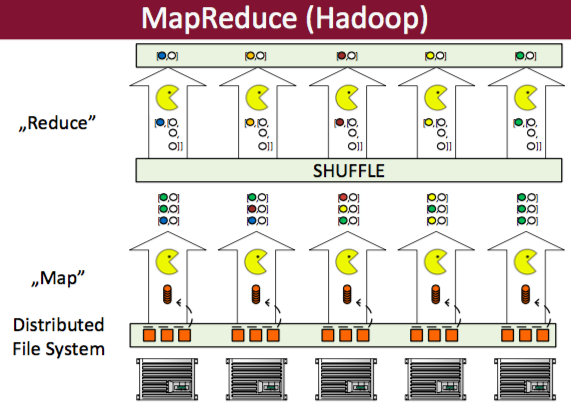
- More and more embarrassingly parallel problems and „scale-out” applications NYT TimesMachine [12]: public domain archive o Conversion for the web [13]: Hadoop, few hundred VMs, 36 hours Due to usage based pricing costs approx. the one VM In a sense, „speedup for free”
- Paralellizable loads
- IaaS performance
Media attachments

Want to create your own Mind Maps for free with GoConqr? Learn more.