
21987724


Periodic Table
- Objective:
- Dimitry
Mendeleev create
the periodic table
- What is the Periodic Table
- Shows all know all the elemnets
in the universe
- Organizes the elements by
chemical properties
- Organizes the elements by
chemical properties
- Shows all know all the elemnets
in the universe
- What is the Periodic Table
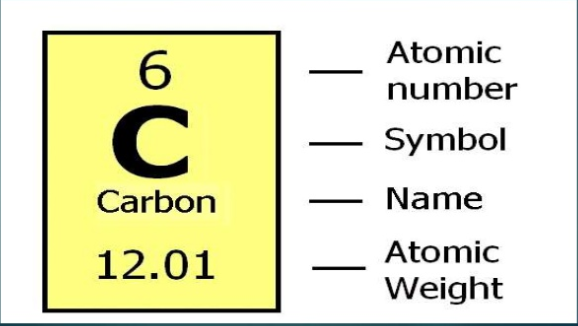
- How do you read the
periodic table?
- Atomic
number
- Symbol
- Name
- Atomic
wheight
- The number of protons and
neutrons in the nucleus of an atom
- The number of protons and
neutrons in the nucleus of an atom
- Atomic
wheight
- An abreviation of the
element name
- Name
- The number of protons of
protons found in the nucleus of
an atom
- Or
- The number of electrons
surrounding the nucleus of an
atom
- The number of electrons
surrounding the nucleus of an
atom
- Or
- Symbol
- Atomic
number
- How can find the number of Protons,
Electrons and Neutrons in a element using the
Periodic Table
- # of protons =
Atomic number
- # of Electrons =
Atomic number
- # of Neutrons = Atomic
Weight -- Atomic
number
- # of Electrons =
Atomic number
- # of protons =
Atomic number
- ELEMENTS: The elements, alone or in
combinations , make upor bodies, our
world, or sun, and in fact, the entire
universe
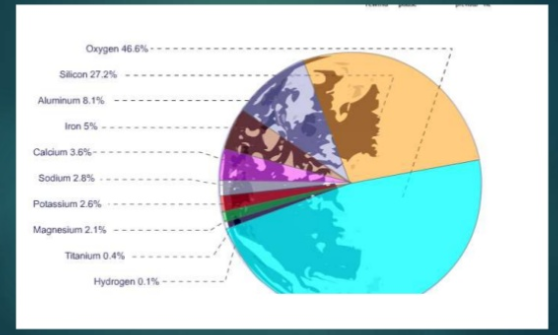
- The most abundant element
in the earth´s crust in oxigen
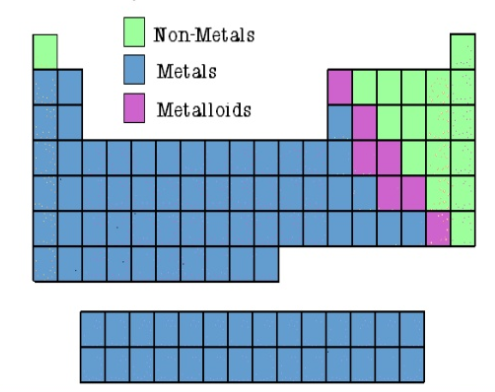
- The elements of the periodic table con be divided into three main
categories Metals, Non-Metals , and Metalloids
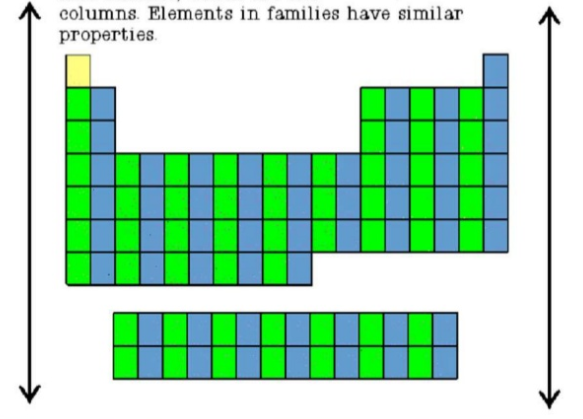
- Elements in the periodic table are also grouped
into families, wich are the colums. Elements in
families have similar properties
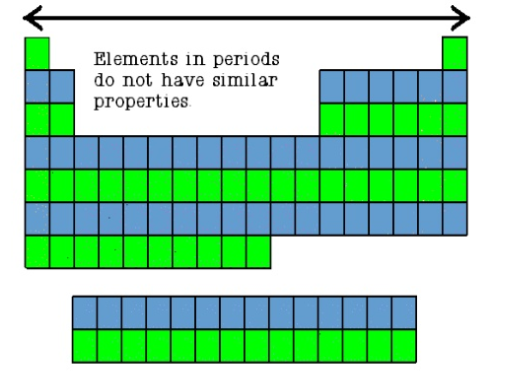
- The elements are also categorized into periods, or horizontal rows
- Elements in periods do not have similar properties
- Elements in periods do not have similar properties
- The most abundant element
in the earth´s crust in oxigen
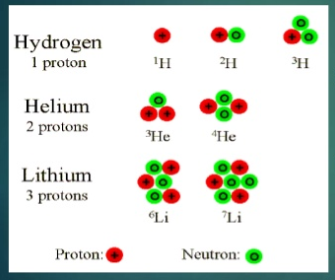
- While most atoms have the same number of Protons and Neutrons, some don´t
- Some atoms have more or less Neutrons and
Protons . These are called isotopes
- An atomic mass number with a decimal is the total of the number of protons plus the average
number of Neutrons
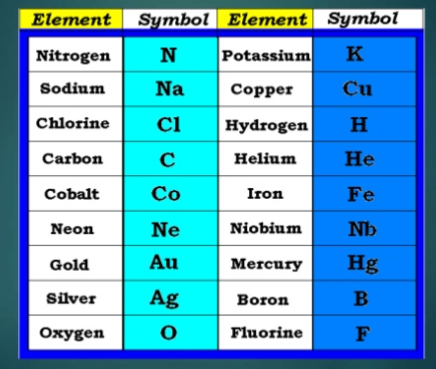
- Common elements and symbols
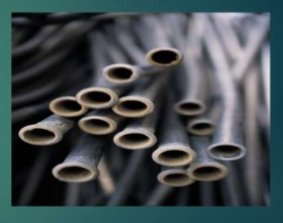
- METALS
- Metals are good conductors of heat
and electricity
- Metals are
shiny
- Metals are malleabe (Can be
pounded into thin sheets)
- A chemical property of metal is its reaction with water wich results in
corrosion
- Metals are good conductors of heat
and electricity
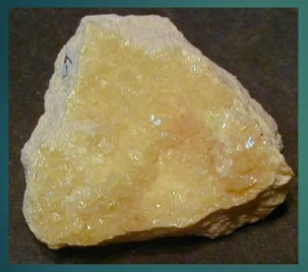
- NON-METALS
- Non-Metals are poor conductoors of heat and electricity
- Non-Metals are not ductile or malleable
- Solid Non-Metals are bittle and break easily
- They are dull
- Many Non-Metals are gases
- Non-Metals are poor conductoors of heat and electricity
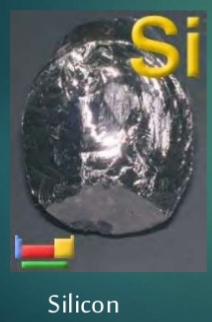
- METALLOIDS
- Metallodis (Metal-like) have properties of both metals and Non-Metals
- They are solids that can be shiny or dull
- They conduct heat and electricity better than nometals but not as well as metals
- They are ductile and malleable
- Metallodis (Metal-like) have properties of both metals and Non-Metals
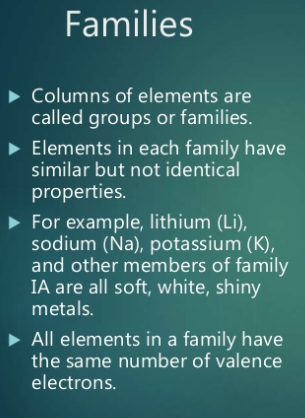
- FAMILIES
- Elements in each family have similar but
not identical properties
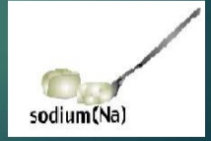
- For example, lithium (Li), sodium (Na), potassium (K) , and other members of family IA are all soft, white, shiny, metals
- All elements in a family have the same number of valence electrons
- Colums of elements are
called groups or families
- Elements in each family have similar but
not identical properties
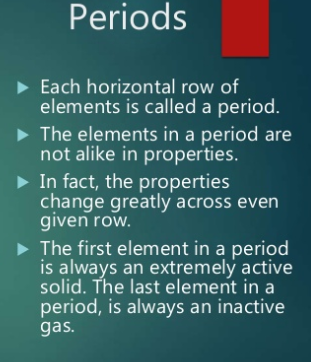
- PERIODS
- Each horizontal row of elements is called a
period
- The elements is a period are not alike in
properties
- The first element in a period is always an extremely active solid. The last element in a period, is always an inactive gas
- In fact, the properties change greatly acrosseven given
row
- Each horizontal row of elements is called a
period
- FAMILIES IN THE PERIOD TABLE OF
ELEMENTS
- Periodic Table of the Elements
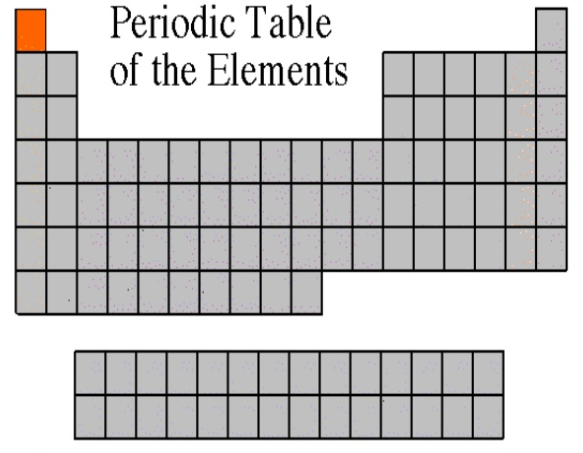
- Hydrogen
- The hydrogen square
sits atop Family AI,
but it is not a member
of that fsmily.
Hydrogen is in a class
of its own
- It´s a gas at room
temperature
- It has one proton
and one electron in
its one and only
energy level
- Hydrogen only needs
2 Electrons to fill up
its valence shell
- The hydrogen square
sits atop Family AI,
but it is not a member
of that fsmily.
Hydrogen is in a class
of its own
- Periodic Table of the Elements
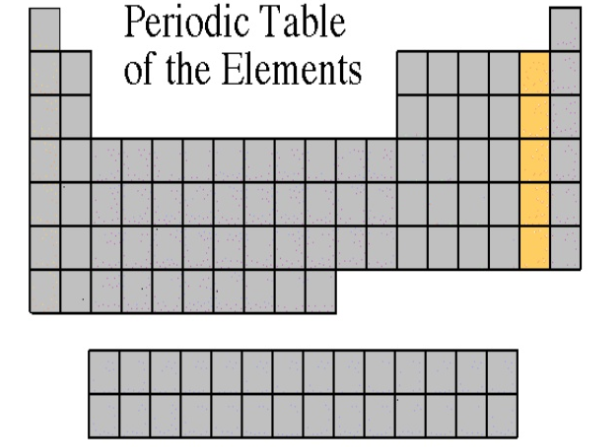
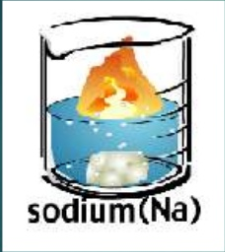
- ALKALI METALS
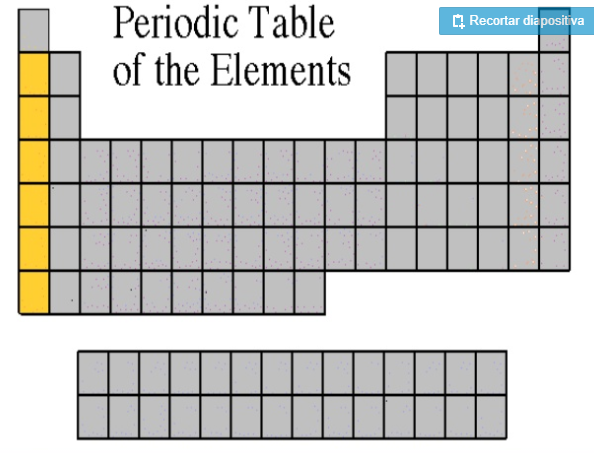
- The alkali family is
found in the first
colum of the periodic
table
- Atoms of the alkali metals have a single electron in their
outermost level, in other words, 1 valence electron
- They are shiny, have the conssistency
of clay and are easly cut with a knife
- They are the most reactive
metal
- They ract violenty whith
water
- Alkali metals are never found as free elements in nature. They are always bonded with another
element
- The alkali family is
found in the first
colum of the periodic
table
- ALKALINE EARTH METALS
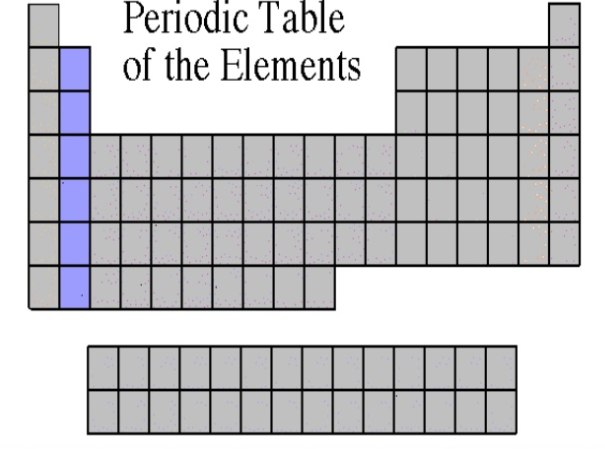
- They have two valence Electrons
- They are never found uncobined in nature
- Alkaline earth metals include
magnesium and calcium, among others.
- They have two valence Electrons
- What does it mean to be reactive?
- We will be describing elements acording to their reactivity
- Elements that are reactive bond easily with other elements to make
compounds
- Some elements are only found in nature bonded with other
elements
- What makes an element reactive
- An incomplete valance Electron
level
- All atoms (Expept hydrogen) want to have 8 electrons in their
very outermost energy level (This is called the rule of octent
- Atoms bond until this level is complete. Atoms with few valence Electrons
lose them during bonding. Atoms with 6, 7, or 8 valence Electrons gain
Electrons during bonding
- An incomplete valance Electron
level
- We will be describing elements acording to their reactivity
- TRANSITION METALS
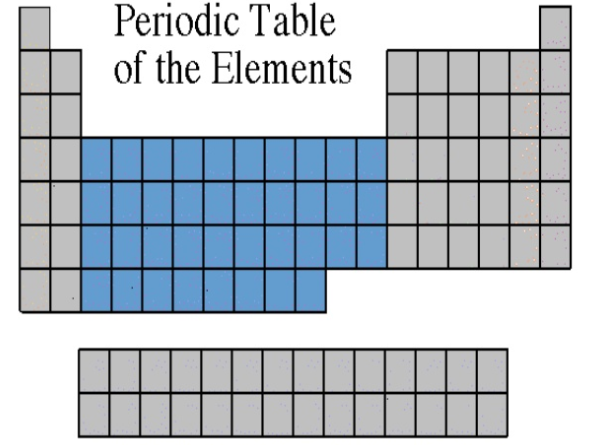
- Transition elements include those elements in the B families
- These are the metals you are probably most familiar: copper,
tin, zinc, iron, nickel, gold, and silver
- They are good conductors of heat and
electricity
- Transition elements include those elements in the B families
- TRANSITION METALS
- The compouds of transition metals are usually
brightly colored and are often used to color
paints
- Transition elements have 1 or 2 valence electrons, wich they lose when
they form bonds with other atoms. Some transition elements can lose
electrons in their next- to- outermost level
- The compouds of transition metals are usually
brightly colored and are often used to color
paints
- TRANSITION ELEMENTS
- Transition elements haver properties similar to one another and to other metals, but their properties do not fit in with
those of any other family
- Many transition metals combine chemically with oxygen to form compounds called
oxides
- Transition elements haver properties similar to one another and to other metals, but their properties do not fit in with
those of any other family
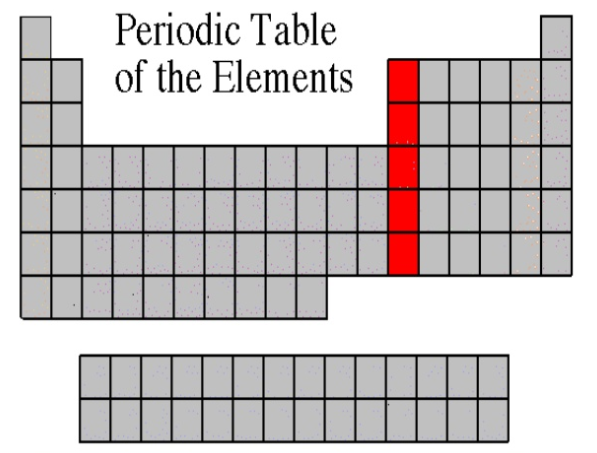
- BORON FAMILY
- The Boron family is named after the first element in the
family
- This family includes the most abundant metal in the earth´s crust
(aluminium)
- This family includes a metalloid (boron), and the rest are
metals
- Atoms in this famili
have 3 valence
Electrons
- The Boron family is named after the first element in the
family
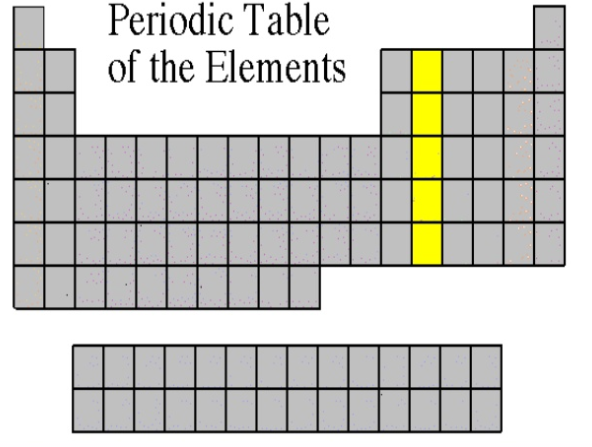
- CARBON FAMILY
- Atoms is the family have 4 valence Electrons
- This family includes a Non-Metal (carbon), metalloids, and Metals
- The element carbon is called the "basis of life". There is an entire brant of chemistry devoted to carbon compound called organic chemistry
- Atoms is the family have 4 valence Electrons
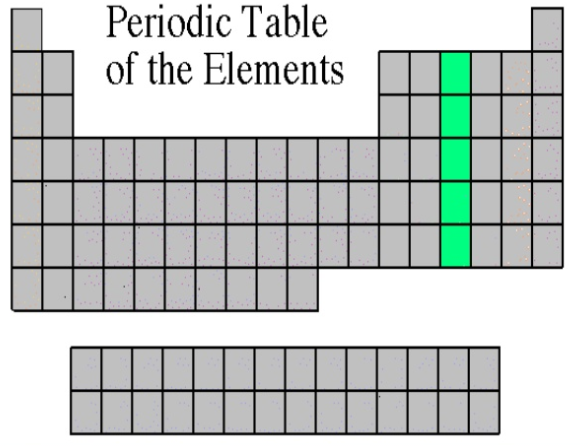
- NITROGEN
FAMILY
- The nitrogen family is named after the element that make up 78% of our
atmosphere
- This family includes Non-Metals, Metalloids, and
Metals
- Atoms in the nitrogen family have 5 valence Electrons. They tend to share Electrons when they
bond
- Other elements in the family are phosphorus,
arsenic, antimony, and bismuth
- The nitrogen family is named after the element that make up 78% of our
atmosphere
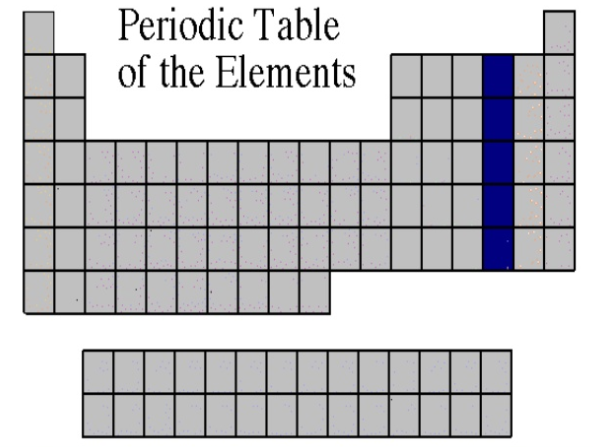
- OXYGEN FAMILY
- Atoms of this family have 6 valence Electrons
- Oxigen is the most abundantelement in the earth´s crust. It is extremely active and combines with almost all elements
- Most elements in this family share Electrons when forming compounds
- Atoms of this family have 6 valence Electrons
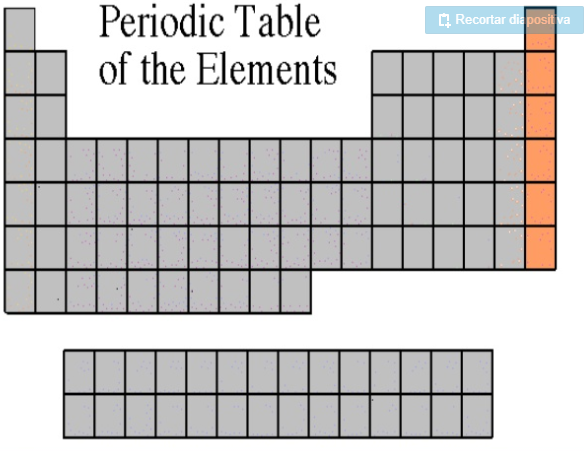
- HALOGEN FAMILY
- The elements in this family are fluorine, chloroine, bromine, iodine, and astatine
- Alogen atoms only need to gain 1 Electron to fill their outermost energy level
- Halogens have 7 valence Electrons, wich explains why they are the most active Non-Metals. They are
never found free in nature
- They react with alkali metals to form salts
- The elements in this family are fluorine, chloroine, bromine, iodine, and astatine
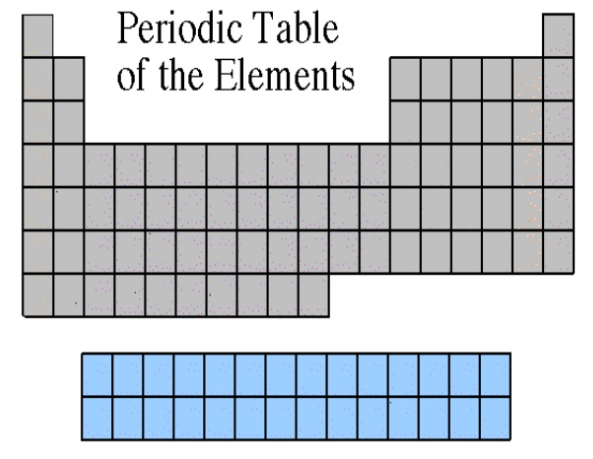
- RARE EARTH ELEMENTS
- One element of the lanthanide series and most of the elements in the actinide series
are called trans-uranium, wich means syntethic or man-made
- The thirty rare earth elements are composed of the lathanide and actanide series
- One element of the lanthanide series and most of the elements in the actinide series
are called trans-uranium, wich means syntethic or man-made
- NOBLE GASES
- Noble Gases are colorlessgases that are extremely un-reactive
- One important property of the Noble Gases is their inactivity. Thy are inactivy because their outermost
energy level is full
- Thefamily of Noble Gases includes helium, neon, argon, krypton, xenon, and radon
- Noble gases are called
inert
- All the Noble Gases are found in small amounts in the earth´s atmosphere
- Noble Gases are colorlessgases that are extremely un-reactive
- Dimitry
Mendeleev create
the periodic table
Media attachments
Want to create your own Mind Maps for free with GoConqr? Learn more.