
Close
Plants can reproduce sexually or asexually.
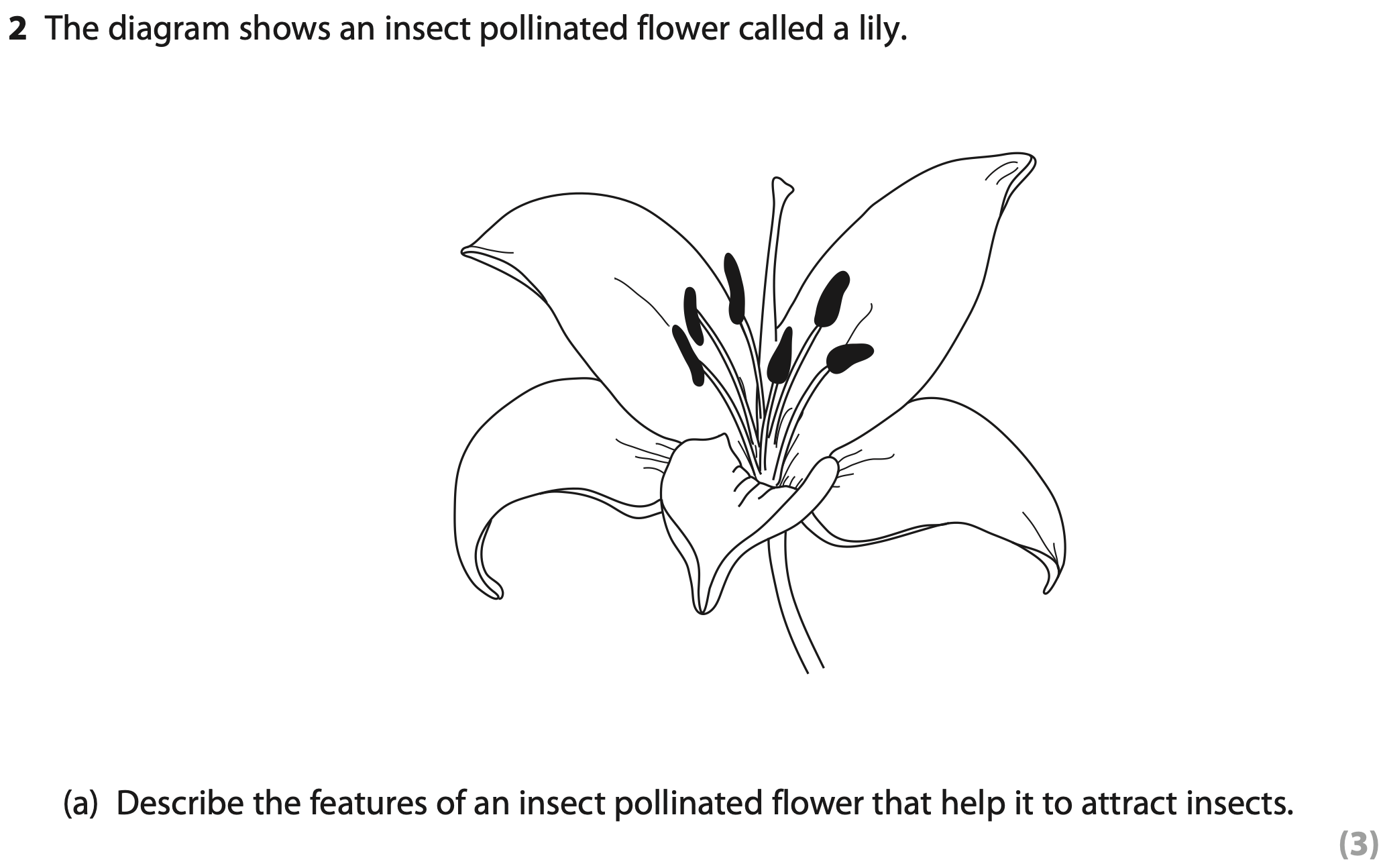
Plants that reproduce sexually can be pollinated by insects or by wind.
(a) State three ways in which the structure of insect-pollinated flowers differs from
the structure of wind-pollinated flowers.
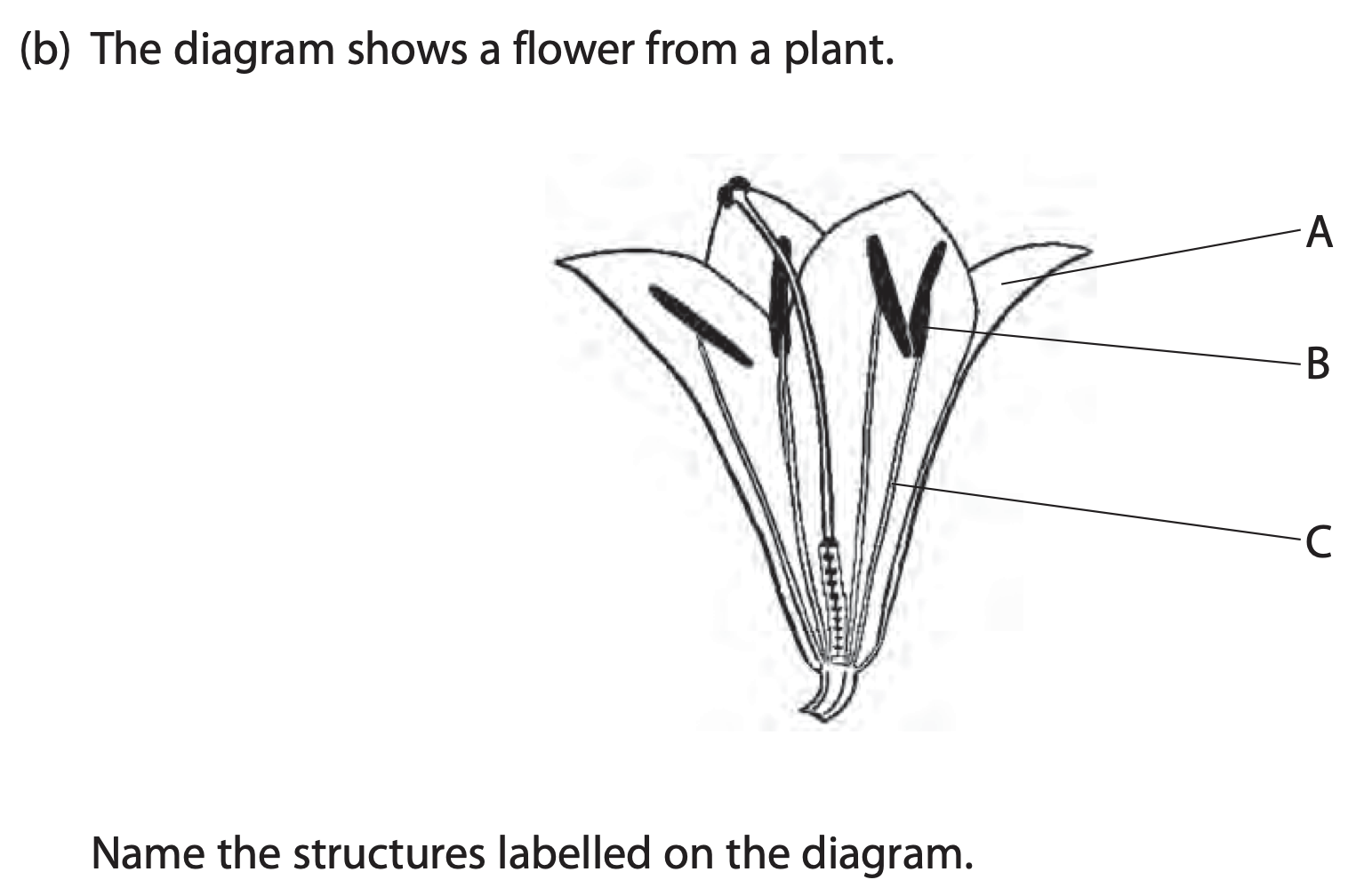
The flower in the diagram is insect-pollinated.
An insect carrying pollen lands on the flower.
Describe the events that lead to seed formation.
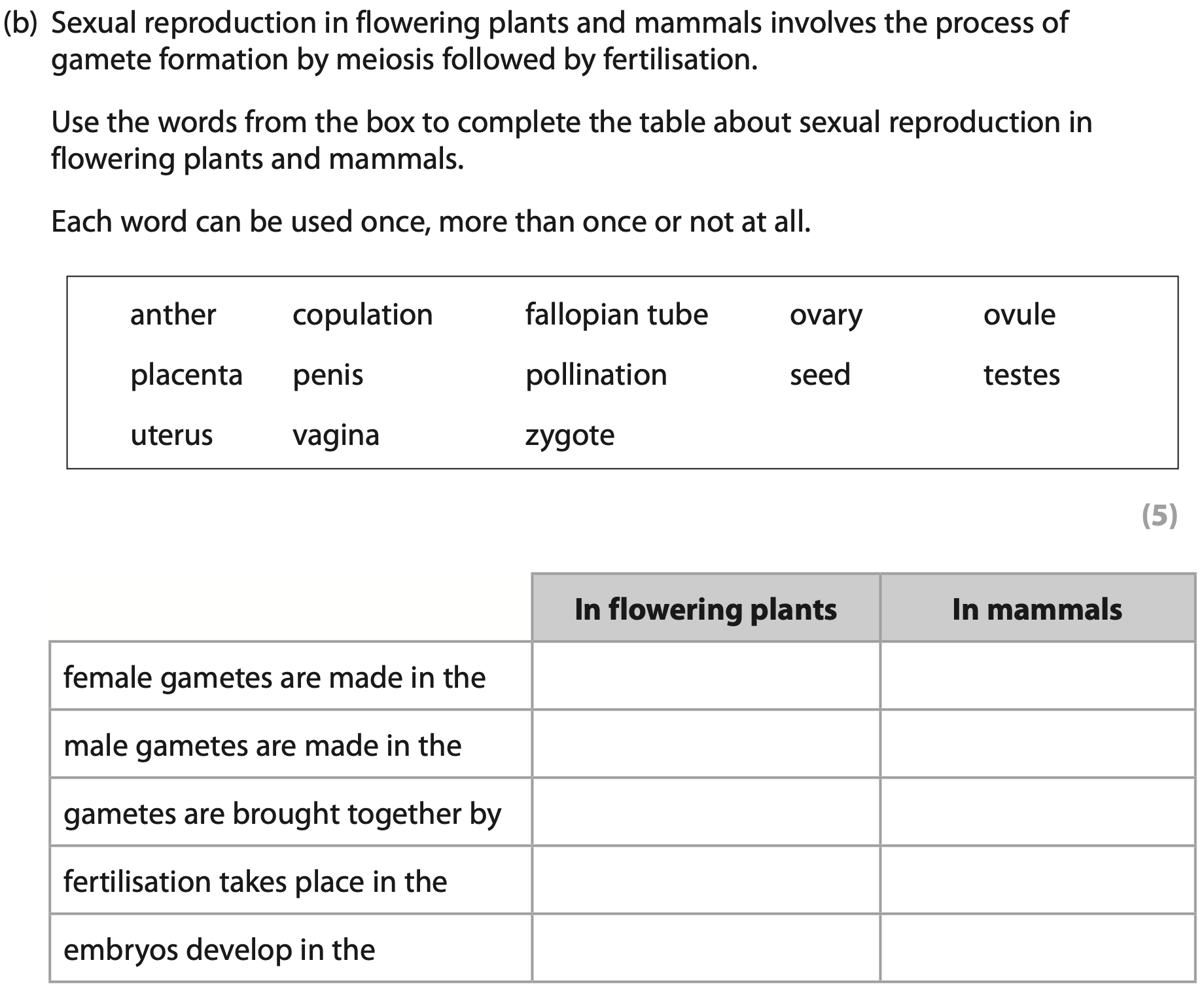
Cell division in an organism can take place by mitosis or by meiosis.
Give three ways in which mitosis differs from meiosis
Suggest why a flower grower may want his coloured flowers to reproduce asexually
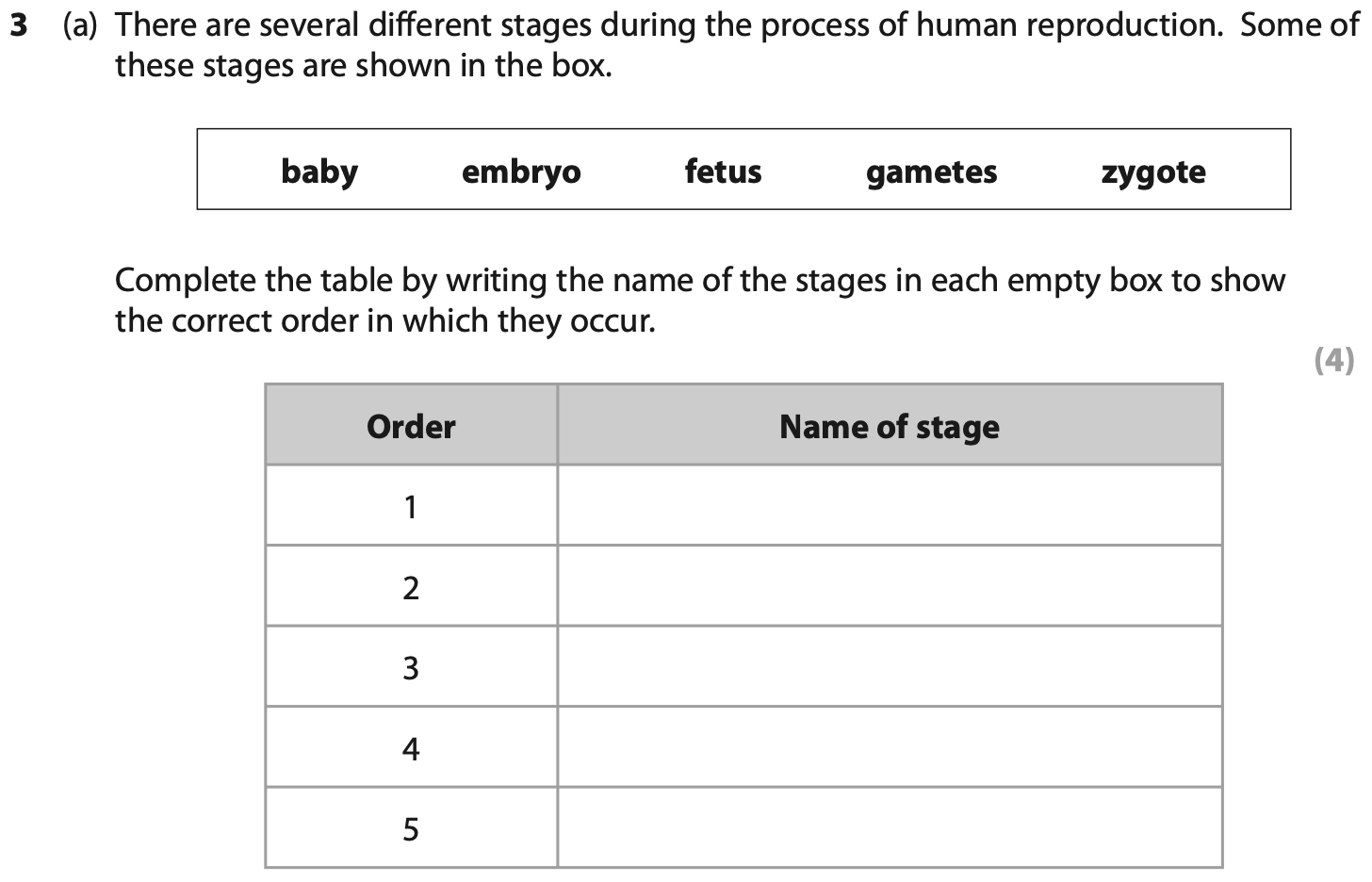
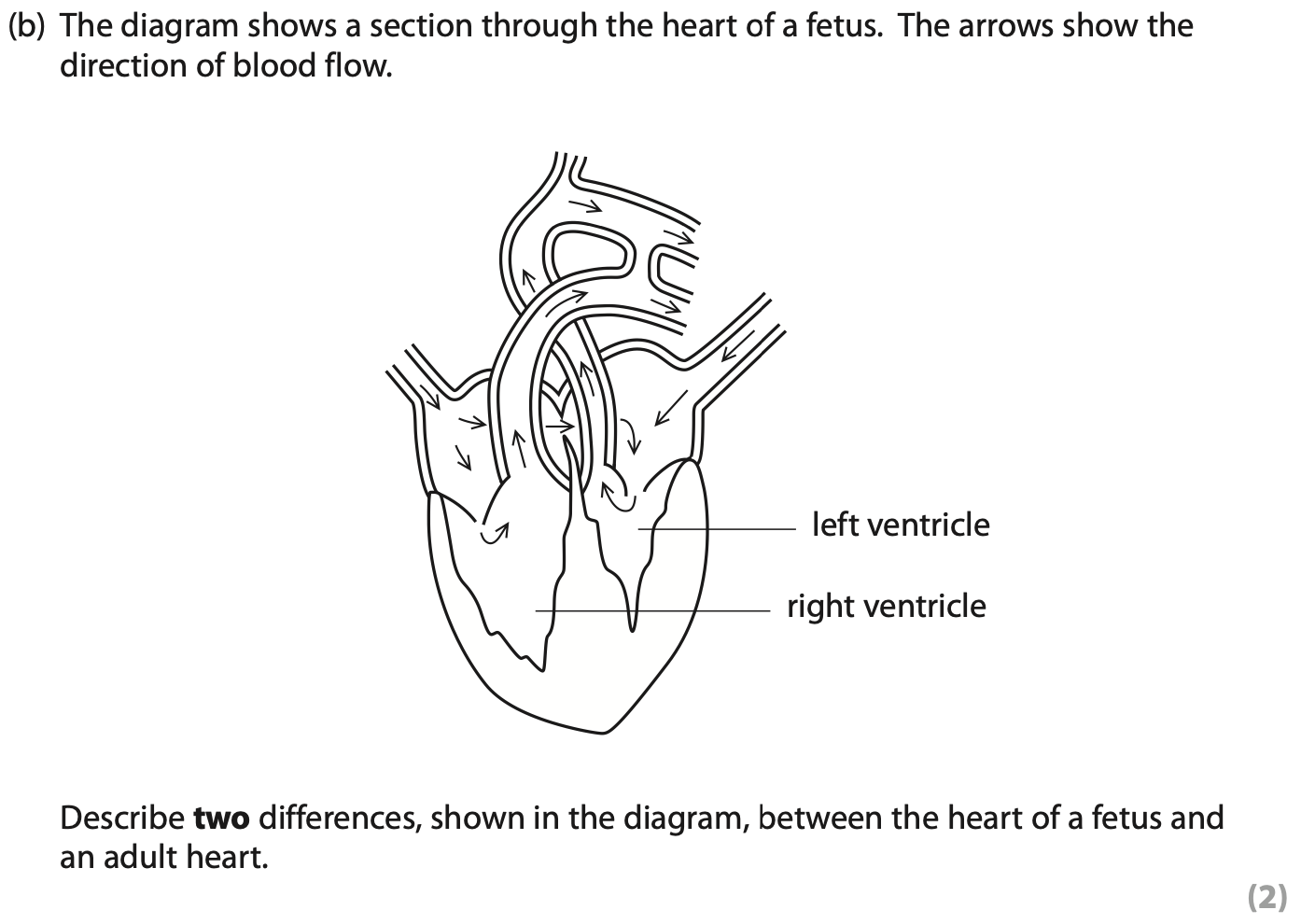
The sex chromosomes in the cells of a mother are XX. The sex chromosomes in
the cells of a father are XY.
(i) Use this information to give the sex chromosomes in the cells of their male fetus.
Give the number of chromosomes in a body cell of the male fetus.
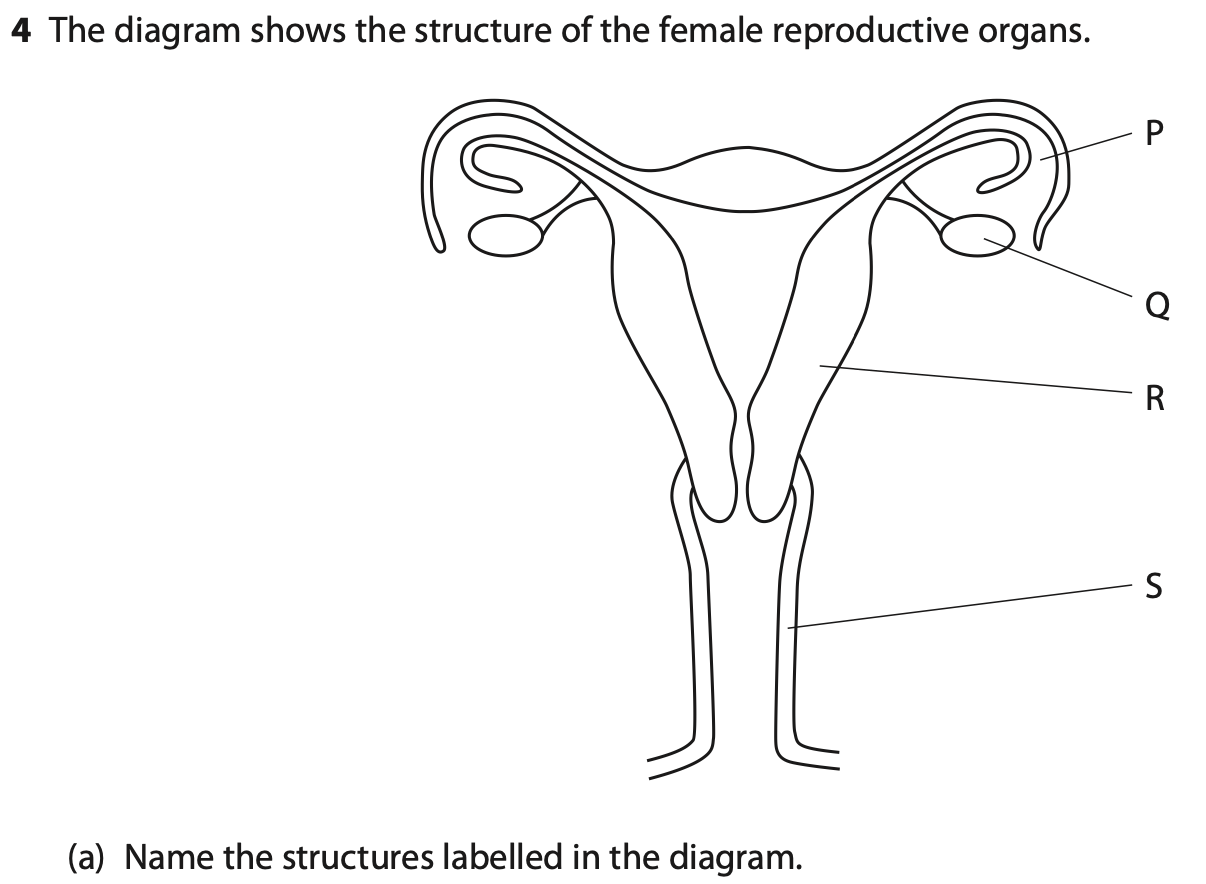
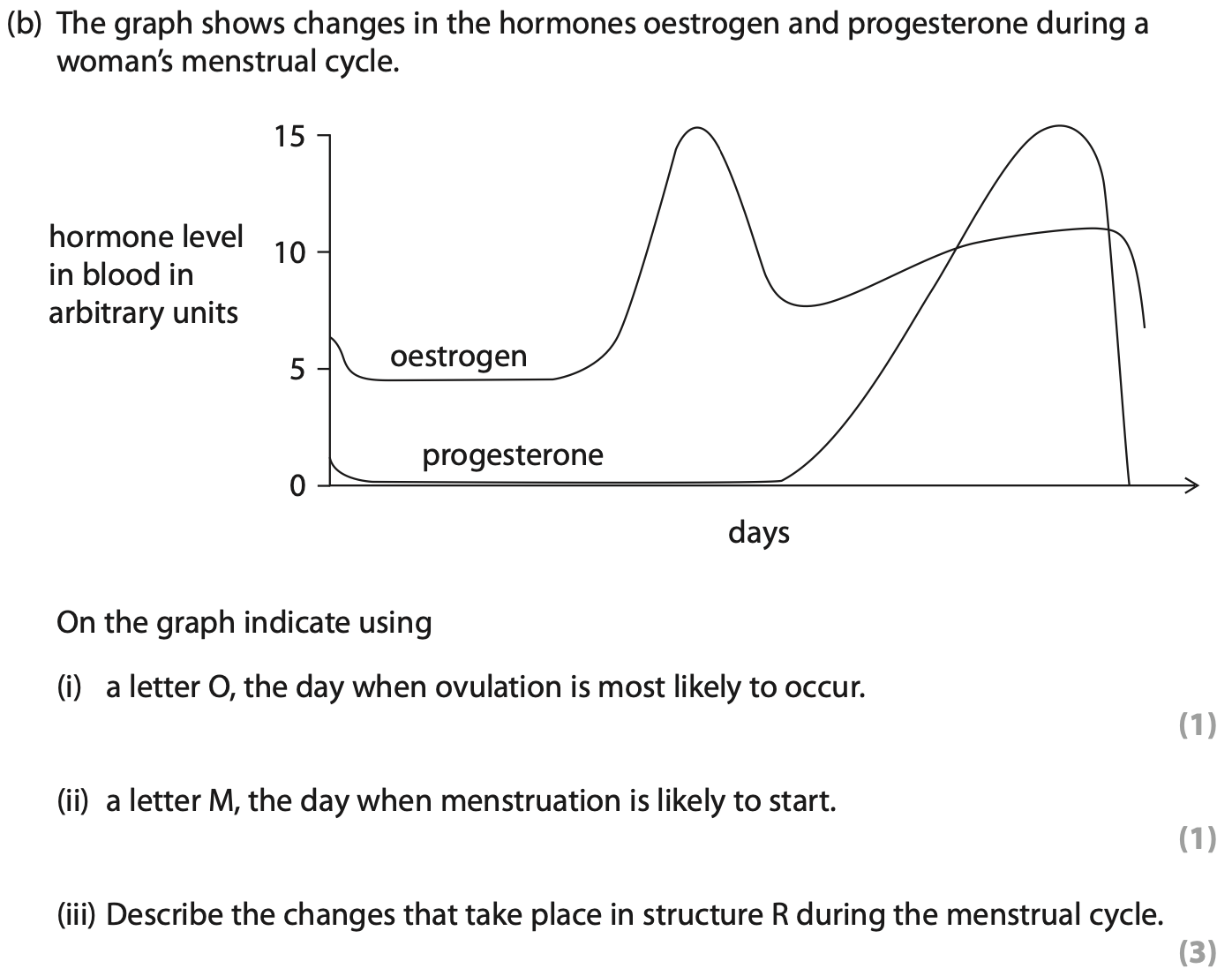
Some women only have sexual intercourse at certain times of their menstrual cycle
in order to avoid pregnancy.
Explain why this may not be a reliable method of birth control.
Describe the role of oestrogen at puberty. (3)
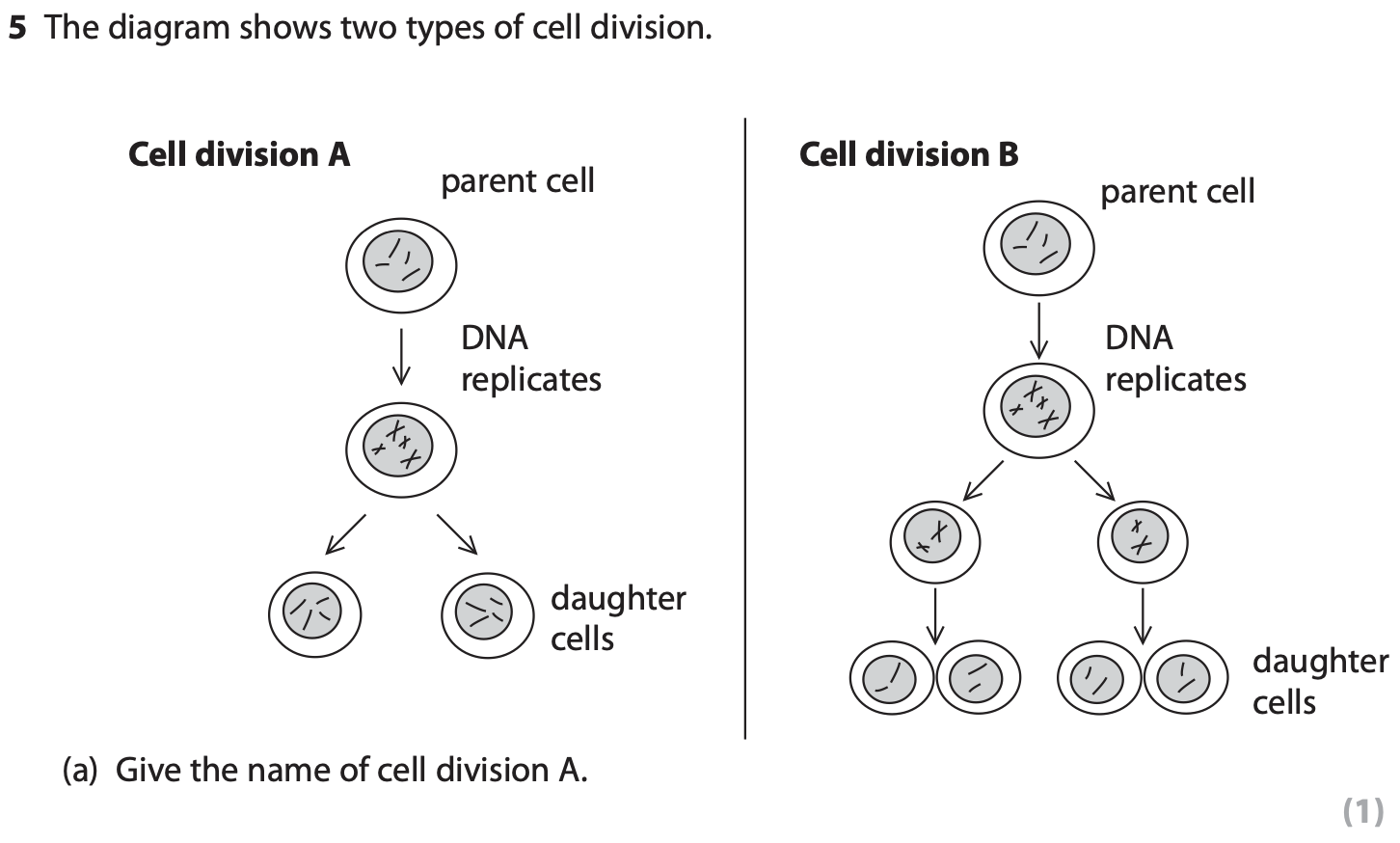
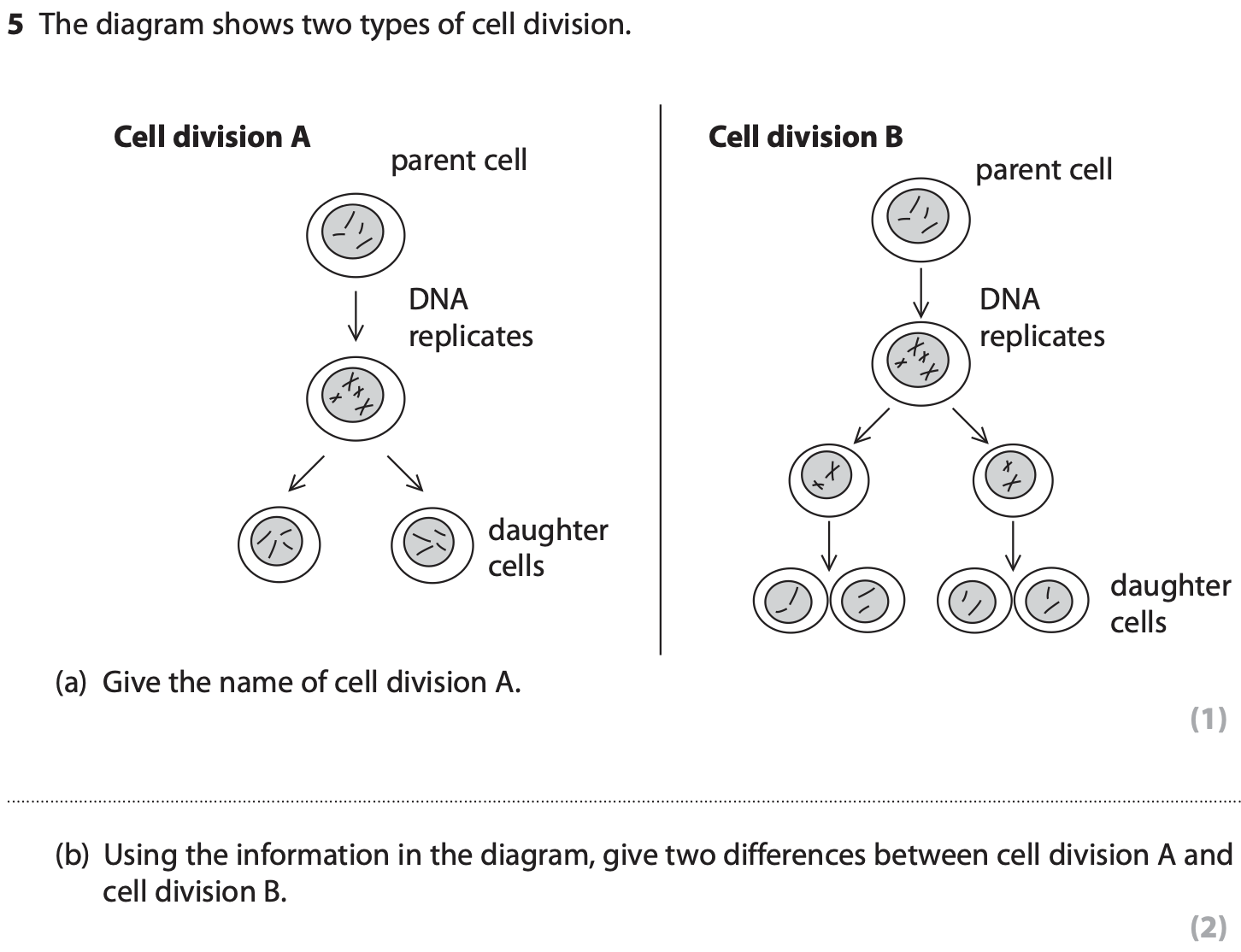
Name a part of a flowering plant where cell division
A occurs and a part where cell
division B occurs.


