
Quiz
Biology Chapter 1 Test Review
This quiz has question types that open in the usual player.
Questions in this quiz (41)
1Biology is the [blank_start]study[blank_end] of [blank_start]living[blank_end] things
- Astudy
- Bliving
2An organism is an individual [blank_start]living[blank_end] thing.
- Aliving
3A habitat is a [blank_start]region[blank_end] where a particular organism normally [blank_start]lives[blank_end].
- Aplace
- Blives
4Botany is the study of [blank_start]plants[blank_end]
- Aplants
5Zoology is the study of [blank_start]animals[blank_end].
- Aanimals
6A [blank_start]woody[blank_end] plant is a plant that produces wood.
- Awoody
7A herbaceous plant is a [blank_start]non-woody[blank_end] plant.
- Anon-woody
8An angiosperm is a plant with [blank_start]flowers[blank_end] that produce seeds covered with [blank_start]fruit[blank_end].
- Aflowers
- Bfruit
9A [blank_start]disk[blank_end] flower is one of the flowers in the center of a composite flower head. A [blank_start]ray[blank_end] flower is one of the petal-like flowers arranged around the outer edge of a composite flower head.
- Adisk
- Bray
10A legume is a plant of the [blank_start]pea[blank_end] family.
- Apea
11Nitrogen-fixing bacteria grow on the [blank_start]roots[blank_end] of legumes and convert nitrogen in the [blank_start]air[blank_end] into ammonia and nitrates.
Denitrifying bacteria is bacteria in the [blank_start]soil[blank_end] that convert unused nitrates back into [blank_start]atmospheric[blank_end] nitrogen.
Nitrifying bacteria is bacteria that provide nitrates to the soil from decomposing [blank_start]plants[blank_end] and [blank_start]animals[blank_end].- Aroots
- Bair
- Csoil
- Datmospheric
- Eplants
- Fanimals
12A [blank_start]dicot[blank_end] is a plant with two cotyledons per seed. These plants usually have flower petals that are arranged in groups of [blank_start]four[blank_end] or five. The leaves are usually [blank_start]broad[blank_end] and flat with branching veins. And they usually have a [blank_start]taproot[blank_end] system.
A [blank_start]monocot[blank_end] is a plant with only one cotyledon per seed. These plants usually have flower petals that are arranged in groups of [blank_start]three[blank_end]. The leaves are usually long and [blank_start]narrow[blank_end] with parallel veins. And they usually have a [blank_start]fibrous[blank_end] root system.- Amonocot
- Bdicot
- Cfour
- Dthree
- Ebroad
- Fnarrow
- Gtaproot
- Hfibrous
13[blank_start]Cereals[blank_end] are any of the types of grass used by man for food.
- ACereals
14[blank_start]Forage[blank_end] grasses are any of the types of grass used to feed livestock.
[blank_start]Turf[blank_end] grasses are any of the grasses used as coverings for lawns, athletic fields, golf courses and playgrounds.- AForage
- BTurf
15Stolon are creeping special stems that grow [blank_start]above[blank_end] the ground and produce new [blank_start]plants[blank_end] wherever a node touches the [blank_start]soil[blank_end]. These are common in [blank_start]grass[blank_end] plants. They are also called [blank_start]runners[blank_end].
- Aabove
- Bplants
- Csoil
- Dgrass
- Erunners
16A [blank_start]sheath[blank_end] is the bottom portion of a grass leaf, which wraps partially around the stem.
- Asheath
17[blank_start]Hardwood[blank_end] is another name for a broadleaf tree.
- AHardwood
18[blank_start]Deciduous[blank_end] describes a tree that loses its leaves each fall.
- ADeciduous
19Botany is the study of living things.
- ATrue
- BFalse
20Botany is the study of plants.
- ATrue
- BFalse
21
The three broad divisions of biology are:- Aphysics
- Bbotany
- Cchemistry
- Dzoology
- Ehuman anatomy and physiology
22The importance of plants:
- AMan is totally dependent upon plants, directly or indirectly, for food.
- BPlants and plant products are also essential in medicine and industry.
- CPlants are necessary to put extra carbon dioxide into the atmosphere.
23How land plants may be grouped according to the size and type of stem:
- Atrees
- Bshrubs
- Cherbs
- Dvines
24What are the two main kinds of root systems? [blank_start]taproot[blank_end] system, [blank_start]fibrous[blank_end] root system
- Ataproot
- Bfibrous
25Three types of growing seasons in plants:
[blank_start]annuals[blank_end], [blank_start]biennials[blank_end], and [blank_start]perennials[blank_end]- Aannuals
- Bbiennials
- Cperennials
26[blank_start]Annuals[blank_end] complete their entire life cycle in one growing season.
- AAnnuals
27[blank_start]Biennials[blank_end] complete their life cycle in two growing seasons.
- ABiennials
28[blank_start]Perennials[blank_end] grow from year to year and bloom each season.
- APerennials
29The three most important cereal crops:
- Abarley
- Bwheat
- Ccorn
- Drye
- Erice
30The purpose of flowers is to help plants [blank_start]reproduce[blank_end] after their kind by forming fruits with [blank_start]seeds[blank_end].
- Areproduce
- Bseeds
31The purpose of leaves is to manufacture [blank_start]food[blank_end] for the plant through [blank_start]photosynthesis[blank_end].
- Afood
- Bphotosynthesis
32The purpose of stems is to [blank_start]hold[blank_end] [blank_start]up[blank_end] the plant's leaves and flowers.
- Ahold
- Bup
33The purpose of roots is to [blank_start]anchor[blank_end] the plant to the soil absorb [blank_start]water[blank_end] and [blank_start]minerals[blank_end], and to store [blank_start]food[blank_end].
- Aanchor
- Bwater
- Cminerals
- Dfood
34Which group of North American trees are known for distinctive fruits called samaras? [blank_start]Maples[blank_end]
- AMaples
35The nitrogen cycle is important because both [blank_start]plants[blank_end] and [blank_start]animals[blank_end] require nitrogen for survival. Plants use the nitrogen to form [blank_start]proteins[blank_end]. Animals and man need the proteins that come from the [blank_start]plants[blank_end].
- Aplants
- Banimals
- Cproteins
- Dplants
36Four characteristics of monocots:
- A1 cotyledon
- B2 cotyledons
- Cbranching veins
- Dparallel veins
- Epetals in multiples of 3
- Fpetals in multiples of 4 or 5
- Gtaproots
- Hfibrous roots
37In what ways are grasses important to man?
Grasses provide much of the world's [blank_start]food[blank_end] for both animals and man. Grasses also help prevent [blank_start]soil[blank_end] [blank_start]erosion[blank_end].- Asoil
- Berosion
- Cfood
38Deciduous trees [blank_start]lose[blank_end] their leaves and remain [blank_start]bare[blank_end] in the winter.
Evergreen trees [blank_start]retain[blank_end] their leaves throughout the year.- Alose
- Bretain
- Cbare
39A [blank_start]bract[blank_end] is a special leaf that looks like a flower petal. One example is on the dogwood tree.
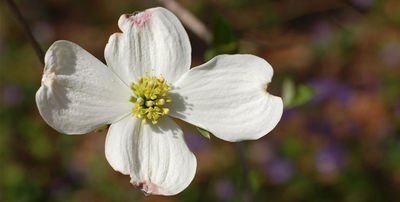
- Acatkin
- Bbract
- Cstolon
40A [blank_start]catkin[blank_end] is a long, tassel-like cluster formed by the flowers of some trees.
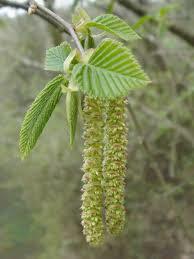
- Acatkin
- Bstolon
- Cbract
- Dcattail
41Check four characteristics of dicots.
- A1 cotyledon
- B2 cotyledons
- Cbranching veins
- Dparallel veins
- Epetals in multiples of 4 or 5
- Fpetals in multiples of 3
- Gfibrous roots
- Htaproots
Information
- Description
- Chapter 1 Review
- Author
- Kelda Brenny
- Language
- English
- Views
- 127
- Tags
- Rating
- No ratings yet Rate this quiz