
Módulo 2 de 4 · Multimedia
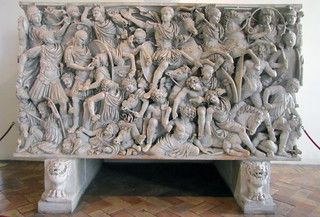
Ludavisi Battle Sarcophagus. Late Imperial Rome. C. 250 CE. Marble
Form:
- Incredibly deep relief
- White Marble
- Sarcophagus
Function:
- Sarcophagus
Context:
- Beginning to see more and more sarcophagi in Roman culture as they move into the 3rd century
- Previous to the switch to sarcophagi, most Romans were cremated
- Must have been a sarcophagus for a wealthy individual
- Chaotic scene represents the disorganization and chaos in the empire at the time of its creation
- Turning away from classical era art and idealized form of the body
Content:
- Romans depicted themselves as heroic vs their enemies, the goths, are almost like caricatures, with puffy noses and cheeks, along with wild emotions
- Piled on top of one another
- Carvings are so deep the forms are almost completely detached
- In the center at the top is the hero, he is coming in on his horse, twisting around opening his right arm bringing his horse along with him
- Horse is off-set against him, his horse is wild compared to him seemingly unfazed
- Romans look stern and serious
- Seeming to be making a decision to be merciful or to slay the preisoner
- Figures at the bottom appear to get smaller
- Kind of looking down from above
- Shields create a canopy and kind of frame people in the sculpture
- Smooth texture of the Romans contrast the rough texture given to the Goths
- LOTS of movement in the sculpture
-