
Módulo 1 de 8 · Multimedia
Screenshot 2024 05 09 At 10.42.56 Am
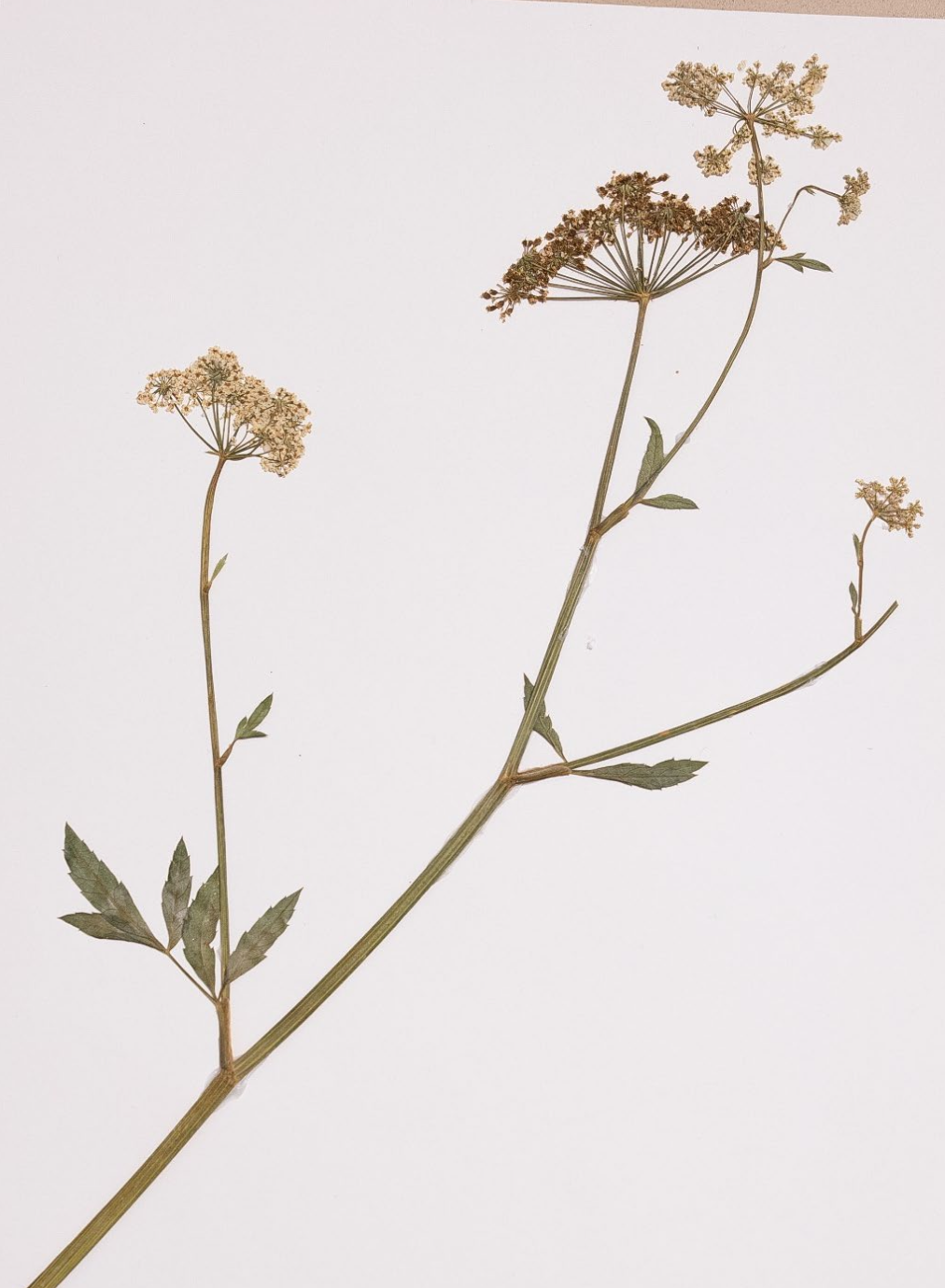
Water Hemlock
Cicuta maculata
Native Perennial
Poisonous
Family: Apiaceae
Plant Attributes
•Cool season forb
•Adapted to moist locations
•Roots tuberous, exceptionally poisonous
•Toxin: Cicutoxin and cicutol
•Causes muscle spasms, dilated pupils, dizziness, stomach
pain, convulsions
•Very small amounts can cause death
Water hemlocks and the polyacetylenes they contain are
not distasteful, thus contributing to their ingestion by animals and
humans. In fact, it is reported that roots have a sweetish pleasant
taste and pleasant order contributing to their acceptability (Mitchell
and Routledge, 1978; Schep et al., 2009). Cattle readily eat new
growth water hemlock in the early spring, often without death losses
unless tubers or excess quantities of vegetative material are
ingested (K.E. Panter, personal observation).”
“It is well understood that water hemlock tubers are highly toxic to animals and to humans. However,
this is the first time that immature seed from (Cicuta maculata) has been implicated in livestock
poisoning. Nine mature Hereford cows from a herd of 81 died in northwestern Utah after ingesting
immature seed heads of water hemlock (Cicuta maculata) in late summer.”
Drought / Stress Tolerance
•Shade intolerant
•Drought intolerant
Grazing Tolerance
•One of the most toxic plants in North America
•Cattle especially at risk in comparison to all
livestock (roots easily pulled up)
Fire Tolerance
•Topkilled by fire