
Módulo 6 de 8 · Multimedia
Screenshot 2024 05 14 At 11.56.13 Am
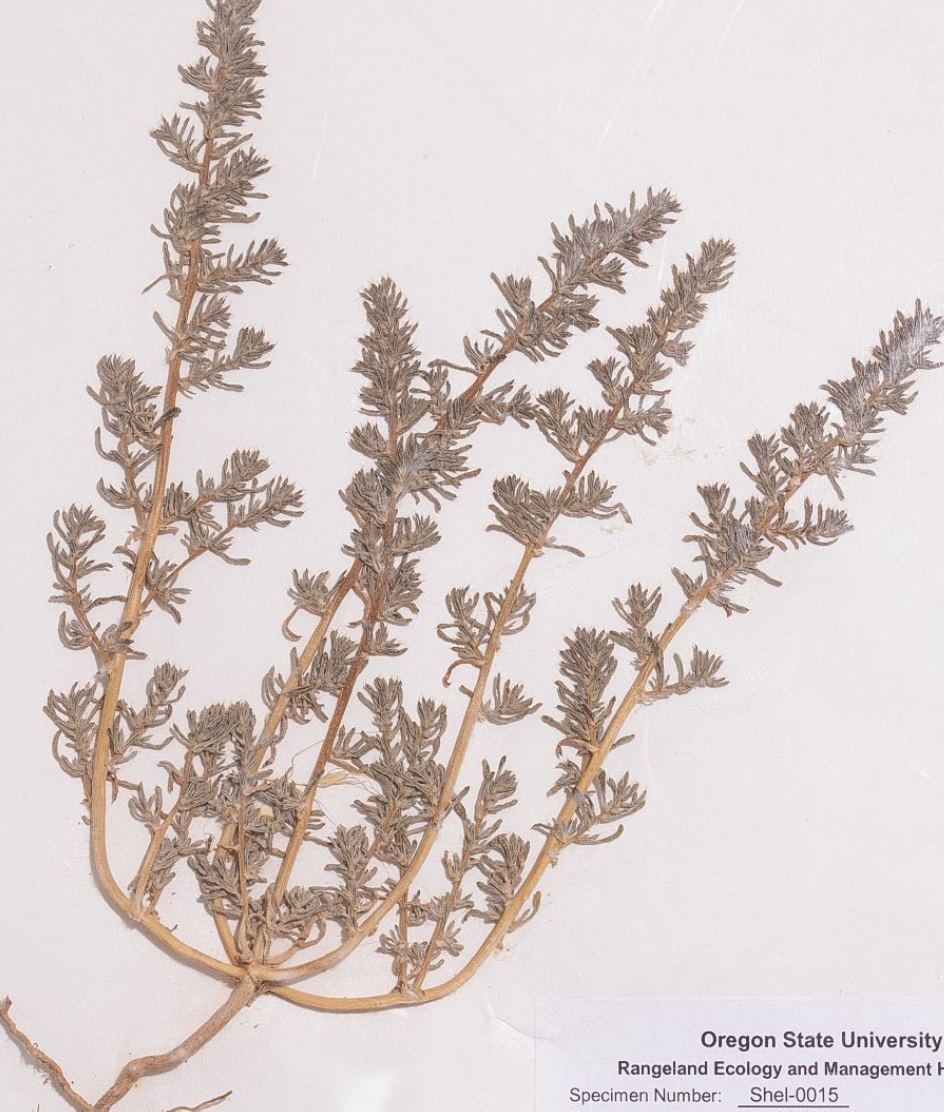
poisonous
Halogeton
Halogeton glomeratus
Introduced annual
family: Chenopodiaceae
Distribution: Rocky Mountain and Great Basin region. Introduced from Russia and NW China
Inflorescence
• Flowers in the leaf axis
Leaves succulent, cylindrical, and hair tipped
Branched from the base
Single taproot (annual plant)
Leaves succulent, yellowish stems (pink upon maturation).
Plant Attributes
•Warm season forb
•Poor root development in spring causes it to be less competitive.
It does best in saline sites where competition is naturally low
•High seed production
•Produces black seed (no dormancy) and brown seed (high
dormancy – 10 years)
•Distributed by animals (sheep), tumbling (wind), and machinery
•Early succession that can change plant communitiesHalogeton glomeratus - Autecology
Forage Quality, Palatability, and Cover
•Poisonous species (high in oxalates) – health threat to grazing
animals (especially sheep)
•Extremely low palatability, seldom eaten by livestock
•Fair forage for small mammals and birds.
•Provides poor protection for ungulates, but fair cover for small
mammals and birds
•Best control method is increasing perennial plants in the standHalogeton glomeratus - Autecology
Drought / Stress Tolerance
•Drought tolerant
•Alkalinity tolerant
Grazing Tolerance
•Not readily grazed.
•Invader.