
Módulo 3 de 9 · Texto
A bit of History
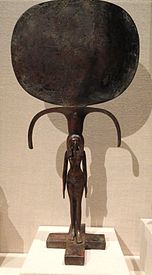
The first mirrors used by humans were most likely pools of dark, still water, or water collected in a primitive vessel of some sort. The requirements for making a good mirror are a surface with a very high degree of flatness (preferably but not necessarily with high reflectivity), and a surface roughness smaller than the wavelength of the light. The earliest manufactured mirrors were pieces of polished stone such as obsidian, a naturally occurring volcanic glass.
Glass was a desirable material for mirrors. Because the surface of glass is naturally smooth, it produces reflections with very little blur. In addition, glass is very hard and scratch resistant. However, glass by itself has little reflectivity, so people began coating it with metals to increase the reflectivity.