
Fichas
Annual Events and Decisions in Livestock Production Systems
Fichas del conjunto (28)
- 1(1) A calendar of operations is an essential tool that allows the producer to schedule in what?It allows the producer to schedule in events pertaining to the flock or herd over a 12-month period.
- 2(2) List three reasons why a calendar of operations is important.(1) It allows the producer to reach their productive goals, (2) Work can be evened out with effective management and timing decisions, (3) Assist in the coordination of activities between enterprises.
- 3(3) What does a production phase include?(1) Time to when females become pregnant, (2) Time to when they give birth, and (3) Subsequent growth phase of the young animals.
- 4(4) What are the 3 factors that determine how a calendar of operations is developed?(1) Geographical location and climate (has an impact on annual feed supply), (2) Market requirements, and (3) Labour availability.
- 5(5) Represented as a chart, what does a calendar of operations help us with and understand?(1) Helps us understand pasture growth and availability for the area, (2) Events within the calendar demonstrate when the greatest amount of feed should coincide with the greatest amount of pasture growth, (3) Essential for potential pasture growth to be understood first, (4) Events are thus placed in accordance with feed supply, (5) First decision to be made when formulating a calendar.
- 6(6) When are feed requirements the greatest for livestock?During lambing and calving as the mother and progeny have a high demand for nutrients.
- 7(7) What does joining involve?Putting males in with females for a period of time in order to achieve the highest conception rate possible. Timing should coincide to when the greatest amount of feed supply will be available for calving and lambing.
- 8(8) Males should be left with females long enough during joining to allow the females to achieve what?To allow the females to come into heat twice, where the female sheds an egg from the ovary ready for fertilisation.
- 9(9) It is desirable to have as many females become pregnant during joining. If males are left in too long, what will happen?A drawing out calving or lambing interval will eventuate. Animals will be born at odd times. Animal management difficulties will arise during certain times of the year and producing an even line of stock for sale will prove difficult.
- 10(10) How is successful conception achieved?(1) Requires animals to be well conditioned, (2) Plentiful supply of highly nutritious feed, (3) During certain times of the year, certain animals come into heat more easily.
- 11(11) Why are certain animals more prone to heat during certain times of the year?Due to the effect of day length on the pituitary gland in the brain as perceived through the animals vision. Sheep are short day breeders (Autumn), whereas cattle are long day breeders (Spring).
- 12(12) Why should producers undertake a pregnancy diagnosis after joining?To determine whether pregnancy did take place during joining and indicates any problems with fertility and health and management.
- 13(13) How is pregnancy diagnosis conducted?By using ultrasound 3 month into pregnancy or the manual palpation of the fallopian tube / surface of the uterus in cattle only 2 to 3 months into pregnancy.
- 14(14) What is marking?A time in an animal's life when it must be physically set up for the rest of its life.
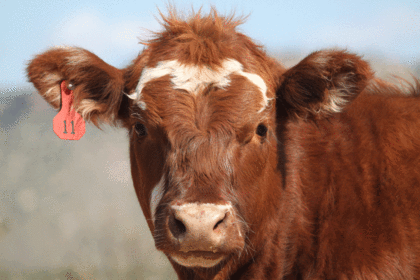
- 15(15) When are sheep and cattle marked?Sheep are marked at approximately 6 weeks of age and cattle are marked at 2 to 3 months of age.
- 16(16) What are the procedures involved in marking?(1) Vaccination, (2) Tail docking, (3) Castration of animals, (4) Ear tagging, (5) Ear marking, (6) Branding, (7) De-Horning, (8) Gudair vaccine, (9) Scabby mouth vaccine, (10) Mulesing
- 17(17) What is weaning?Removing the young animal from its mother due to its ability to survive and develop on its own.
- 18(18) When are cattle and sheep weaned?Cattle 7-months of age. Sheep 12 - 14 weeks.
- 19(19) What is fat scoring?Method used to assess the condition of the animal.
- 20(20) Adult animals are given an annual vaccination to protect them from what?To protect them from the main clostridial diseases common in livestock.
- 21(21) What are clostridial diseases and what causes them?Caused by anaerobic bacteria widespread in the environment, particularly soil. Can often be fatal. Bacteria produces spores that can survive in the environment for a long time. Clostridial diseases include tetanus, blackleg, black disease, malignant oedema, pulpy kidney and botulism.
- 22(22) Why might animals be losing weight in summer even when it appears feed is very high?Pasture quantity described as herbage mass and expressed as kilograms of pasture dry matter per hectare (kg DM/ha). Described as dry mass as water content will vary depending on time of day and different stages of growth. Though ample feed may appear available during summer, this feed may not be nutritionally sufficient.
- 23(23) Tail docking is the intentional removal of part of an animals tail. What can result with long tails?Long tails can result in faecal-contamination of the hind end of the animal, attracting flies and the potential for fly strike in sheep.
- 24(24) Why ear tag livestock?To identify the animal.
- 25(25) What is ear marking?Permanent identifier of where the stock were born.
- 26(26) Why is dehorning in cattle performed?To reduce bruising in other stock and handlers.
- 27(27) The Gudair vaccine is a one-off for sheep against what disease?Against the wasting disease Ovine Johnes Disease.
- 28(28) Muelsing is a surgical operation performed on Merino sheep only to prevent the onset of what?To prevent the onset of flystrike.