
Fichas
C5
Fichas del conjunto (10)
- 1Science- Chemistry revision C5- EXOTHERMIC and ENDOTHERMICIntroduction :
Exothermic reactions TRANSFER ENERGY to the surroundings
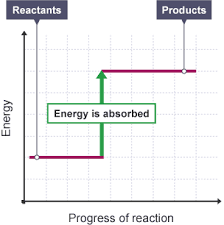
Endothermic reactions TAKE IN ENERGY from the surroundings - 2Development: When a chemical reaction occurs energy is either transferred out or taken in from or to the surroundings- often there is a temperature change.For example when a candle burns heat energy is going OUT. This is an EXOTHERMIC reaction.
Another example is photosynthesis, because the plant ABSORBS the suns rays. This is an ENDOTHERMIC reaction. - 3Things to know about EXOTHERMIC REACTIONS: Making bonds- When bonds are made energy is given out in an exothermic reaction. MEXO (making exothermic reactions)Things to know about ENDOTHERMIC REACTIONS:
Breaking bonds- When bonds are broken energy is taken in, an endothermic reaction
BENDO
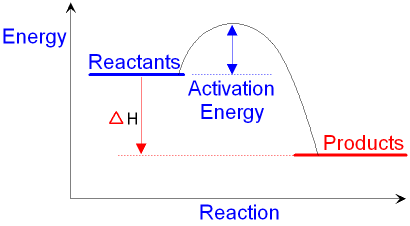
(breaking endothermic reaction) - 4Exothermic and Endothermic reactions: Ea- the activation energy (what is needed to start a reaction) Delta H- the change in the energy as the reaction takes placeexample
- 5Exothermic energy level profile diagramEndothermic
energy level profile
diagram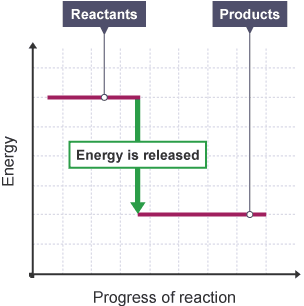
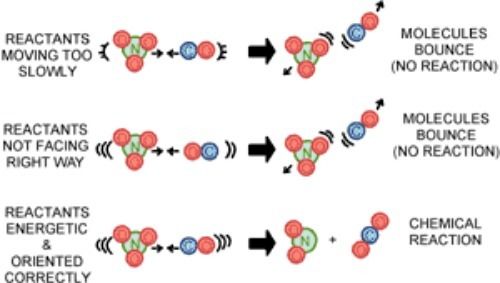
- 6Science- Chemistry revision C5- COLLISION THEORY~In order for a reaction to occur particles must collide
~Reactants must collide with enough kinetic energy
~To do this the particles must move fast to do this heat them up.
~They must collide with the correct orientation - 7—By orientation we mean the way the way the particles move and the way they are facing
- 8How to find the relative formula mass: Relative atomic masses can be used to find the relative formula mass of a compound. The relative formula mass can be found in the periodic table. To find the relative formula mass (Mr) of a compound, you add together the relative atomic mass values (Ar values) for all the atoms in its formula.Here is an example:
Find the Mr of carbon monoxide, CO.
The Ar of carbon is 12 and the Ar of oxygen is 16.
The Mr of carbon monoxide is 12 + 16 = 28. - 9—
- 10—
Información
- Descripción
- Fichas sobre C5, creado por Amelia Turner el 05/03/2018.
- Creado por
- Amelia Turner
- Visitas
- 10
- Valoración