
Fichas
PE GCSE: physiology
Fichas del conjunto (54)
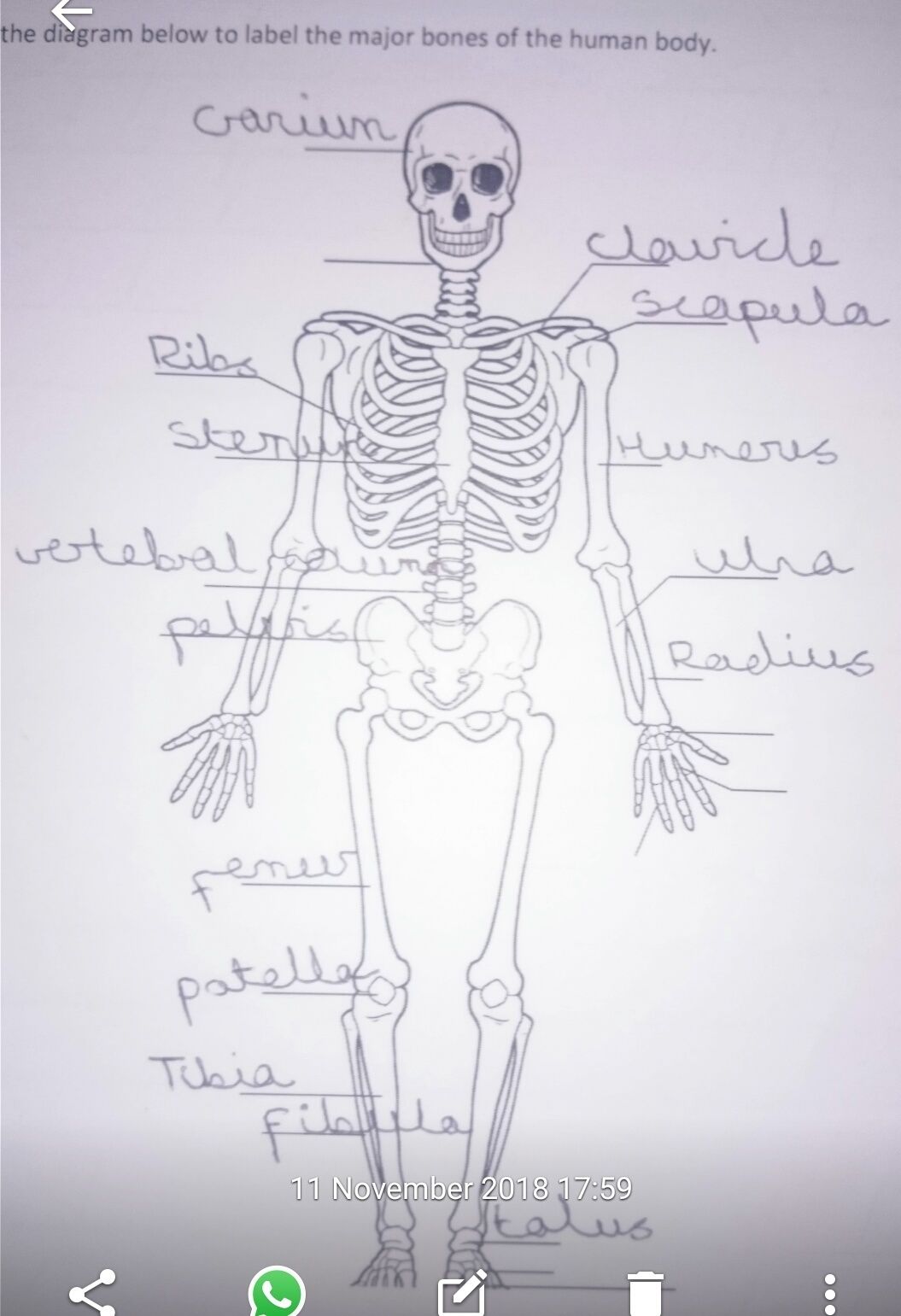
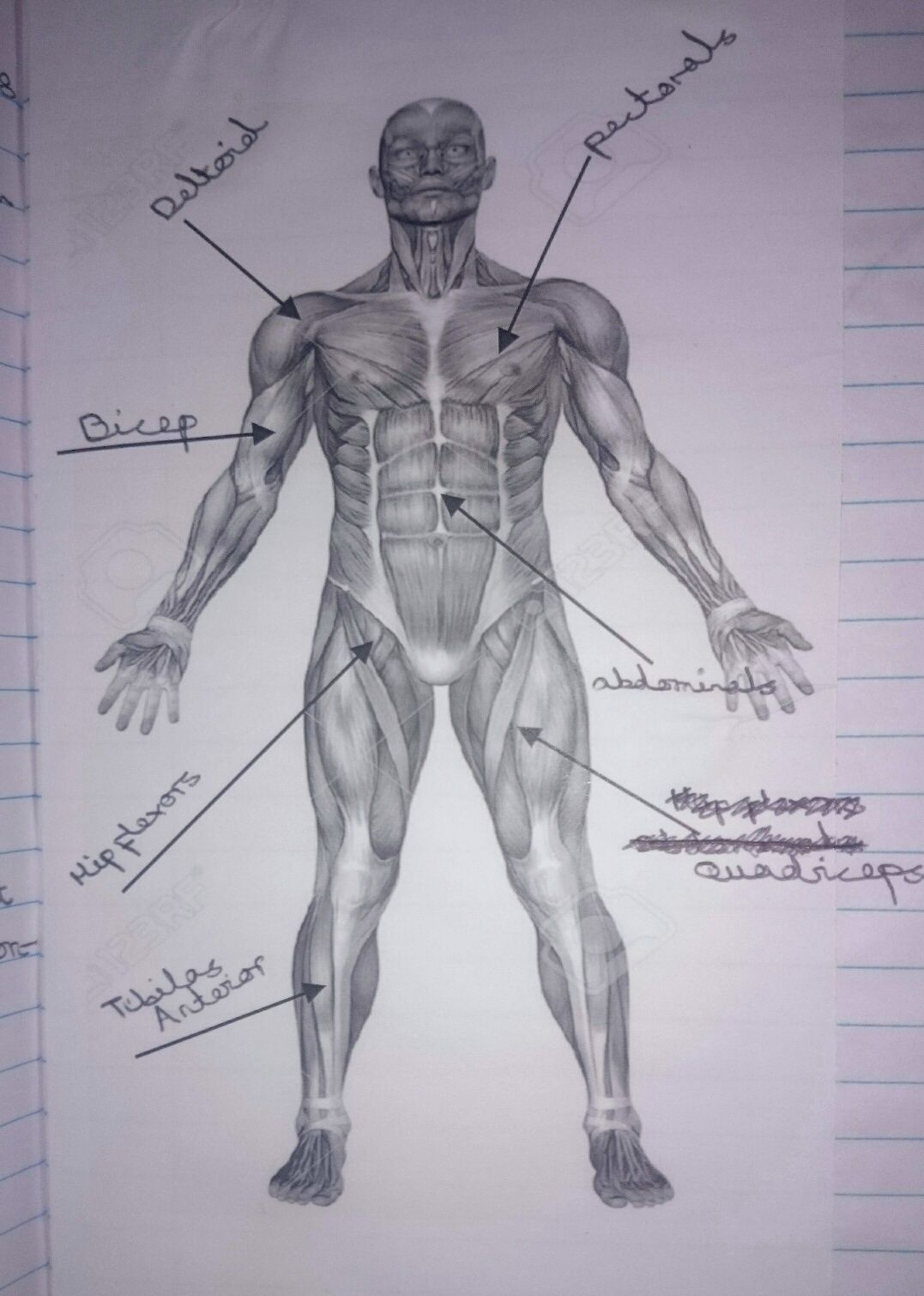
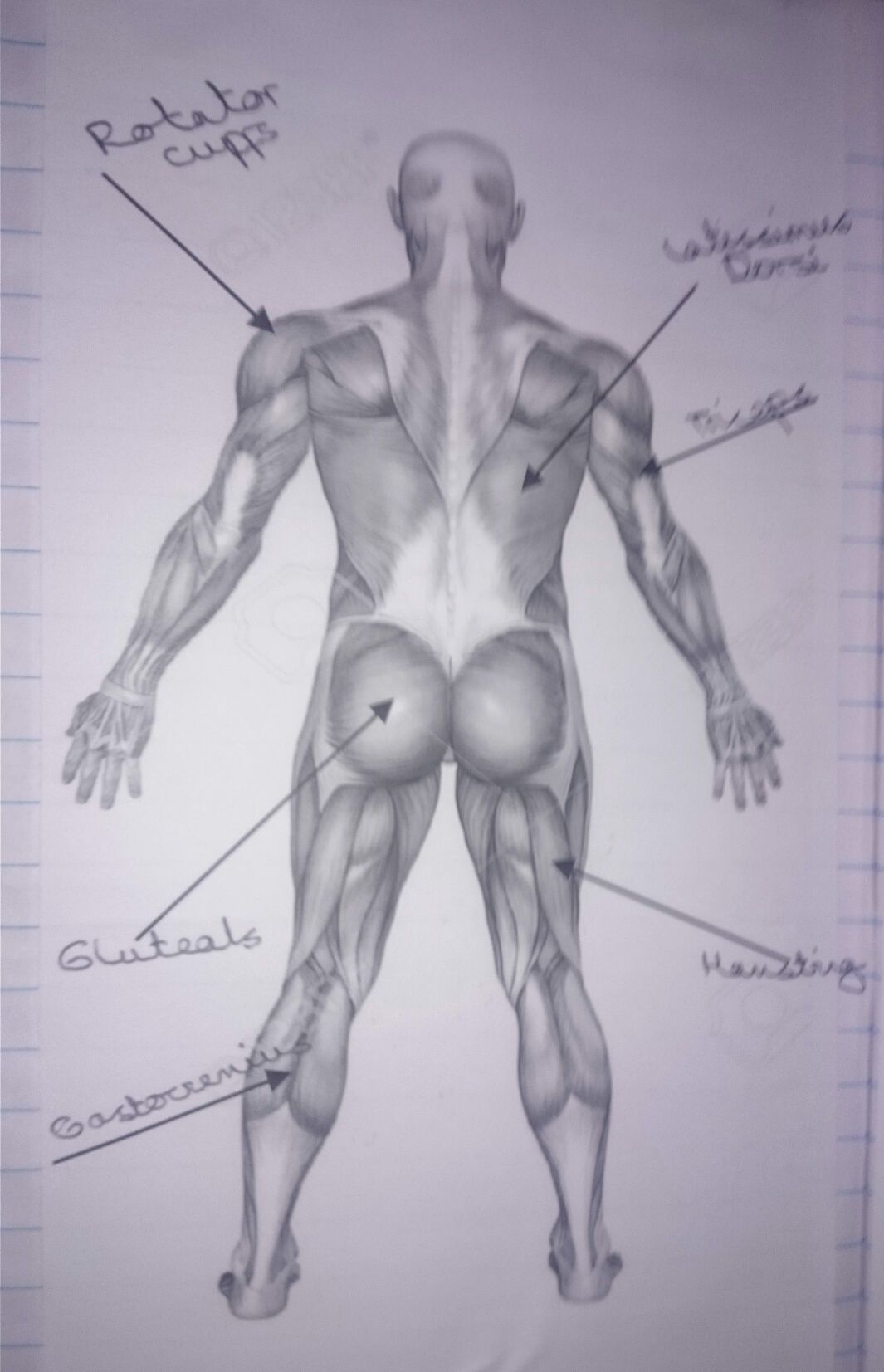
- 1Label the musculoskeletal system.
- 2What is the function of the skeleton system when it comes to support?The skeleton gives the body support, enabling us to stand. The bones of the body are held together by ligaments. The skeleton provides a framework for the muscles, which are attatched to bones by tendons.
- 3What is the function of the skeleton system when it comes to protection?Some of our body parts, such as the brain are very delicate and need protection. Bones can protect body parts from impacts and injuries. For example the rib cage protects the heart and lungs, when tackled in rugby.
- 4What is the function of the skeleton system when it comes to movement?Muscles are firmly attatched to bones forming levers to allow for sporting movements.
- 5What is the function of the skeleton system when it comes to structual shape & muscle attatchments?The skeleton acts as a framework. Muscles are firmly attatched to bones forming levers to allow for sporting movements. Muscles work in antagonistic pairs.
- 6What is the function of the skeleton system when it comes to mineral storage?Your bones also function as a mineral storage depot, releasing dissolved calcium, phosphorus and magnesium into your bloodstream if needed.
- 7What is the function of the skeleton system when it comes to blood cell production?The ends of long bones and some other bones including the ribs, humerus, femur and even vertebrae bones, contain red bone marrow. This is where thr red blood cells are produced.
- 8What is a joint?A joint is a place where two or more bones meet.
Eg. elbow joint where the radius, humerus and ulna meet. - 9What are long bones?long bones have a long shaft and are primairly used for movement.
Eg. humerus, femur, tibia and fibular. - 10what are flat bones?flat bones are primairly used for protection.
Eg. pelvis and cranium. - 11what are short bones?Short bones are light, small and very strong. The primary function is to support the weight of the body.
Eg. the carpals in the wrist and the tarsals in the foot. - 12What are irregular bones?irregular bones are specially shaped to perform a particular function. These functions include protection and muscle attatchment.
Eg. the patella and the verterbrae. - 13Keywords Muscles shorten when they contract and lenghten when they relax. Antagonistic pairs are muscles that work together at a joint. Agonist is the prime mover Antagonistic= relaxesAsim1
- 14—
- 15What is a synovial joint?a synovial joint is a freely moveable joint.
Eg. Knee and elbow joint - 16—Cartilage prevents the ends of bones rubbing together at joints.
Synovial fluid lubricates the joint allowing the parts to move freely.
Ligaments are tough elastic fibres that link bones to bones
Tendons connect muscle to muscle.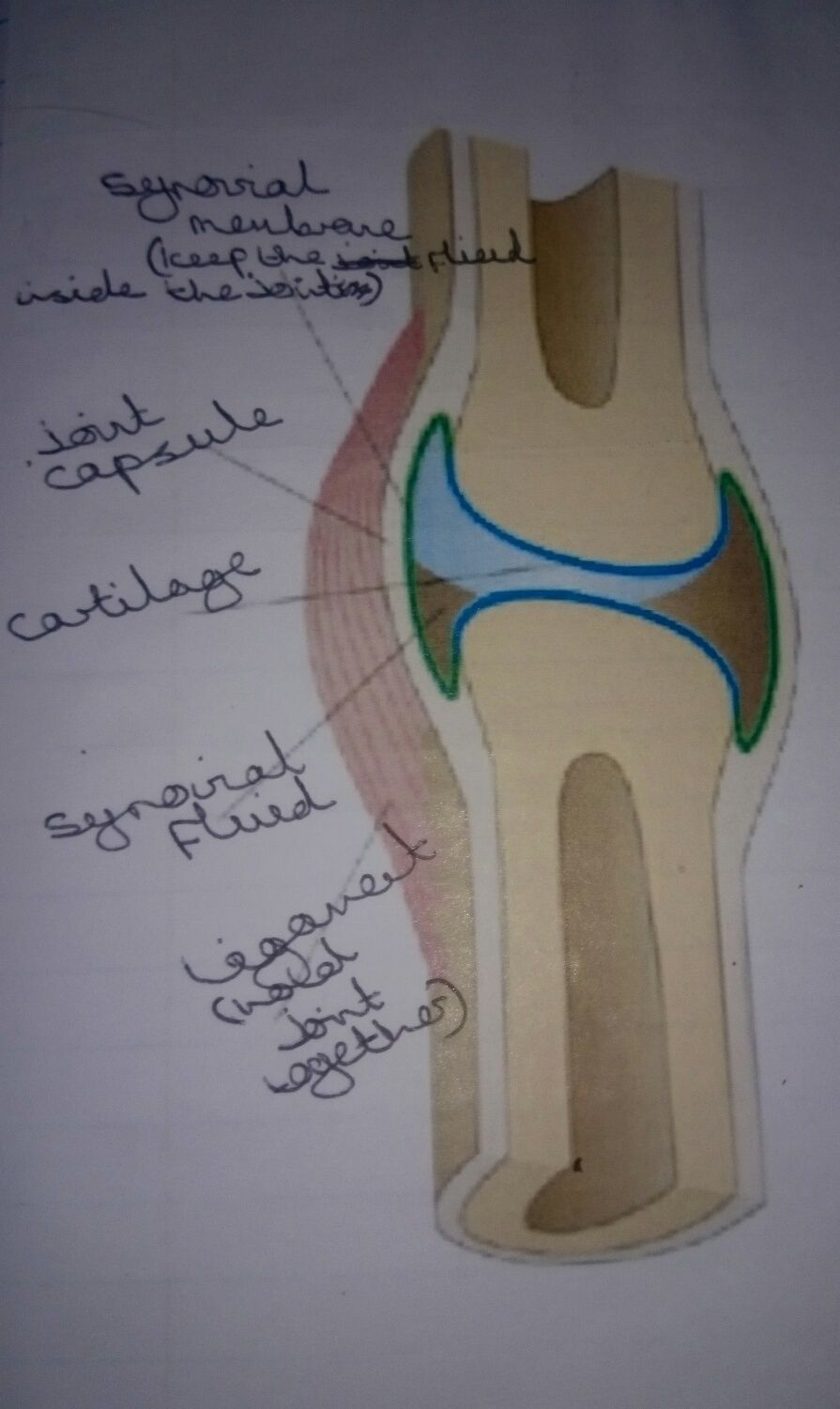
- 17What is a ball and socket joint?Are the rounded end of a bone fits inside a cup shaped end. Ball and socket joints allow movement in all direction. These are the most mobile joints in the body
Eg. shoulder and hips. - 18What is a hinge joint?hinge joints only allow forward and backward movements like the hinge on a door.
Eg. The knee and elbow - 19Keywords Flextion= decreasing the angle at a joint. Extension= Increasing the angle at a joint. Plantar flextion= The action of pointing toes away from the body. (Gastrocnemius causes this) Dorsiflextion= The action of pulling toes towards the body. (Tibias anterior causes this) Rotation= The joint moves in a circular motion around the axis of a joint. Circumduction= a circular movement Eg. Hip/shoulderA1
- 20what is isotonic and isometric contraction?Isotonic contraction: these occurs when the muscles changes length when it contracts and they result in limb movement.
Isometric contraction: these occur when you are contracting but there is no actual movement.
Eg. A scrum in rugby. - 21what are the definitions of concentric and eccentric?concentric: where the muscle contracts and shorterns.
eccentric: where the muscles contracts and lengthens. - 22What is the pathway of air?1) mouth/nose
2)trachea
3) bronchi
4)bronchioles
5)alveoli (is a tiny air filled sack, when you breath in they fill with air) - 23Why can gaseous exchange happen quickly in the alveoli?- the alveoli have thin walls.(moist)
- they have a large amount of blood supply
- the capillaries are close to alveloi making diffusion distance short.
- Large surface area of alveoli helps diffusion take place. - 24what is it meant by the redistribution of blood?the redistibution of blood flow to areas where it is needed the most is known as a vascular shunt.
- 25What are arteries?They transport oxygnated blood away from the left hand side of the heart. They carry blood in high pressure so have thick elastic walls to withstand pressure.
- 26What are veins?They transport blood all over the body back to the heart and lungs for re-oxygenation.
Viens carry blood under low pressure so dont need thick elastic walls.
They are one way and contain valves to prevent the backflow of blood.
The blood is pushed by muscle contraction. - 27What is vasodilation?- expanding to redistribute blood to where it is needed by increasing blood flow.
- 28what is vasoconstriction?- Narrowing to redistribute blood to essential areas that need it by decreasing blood flow.
- 29—A1
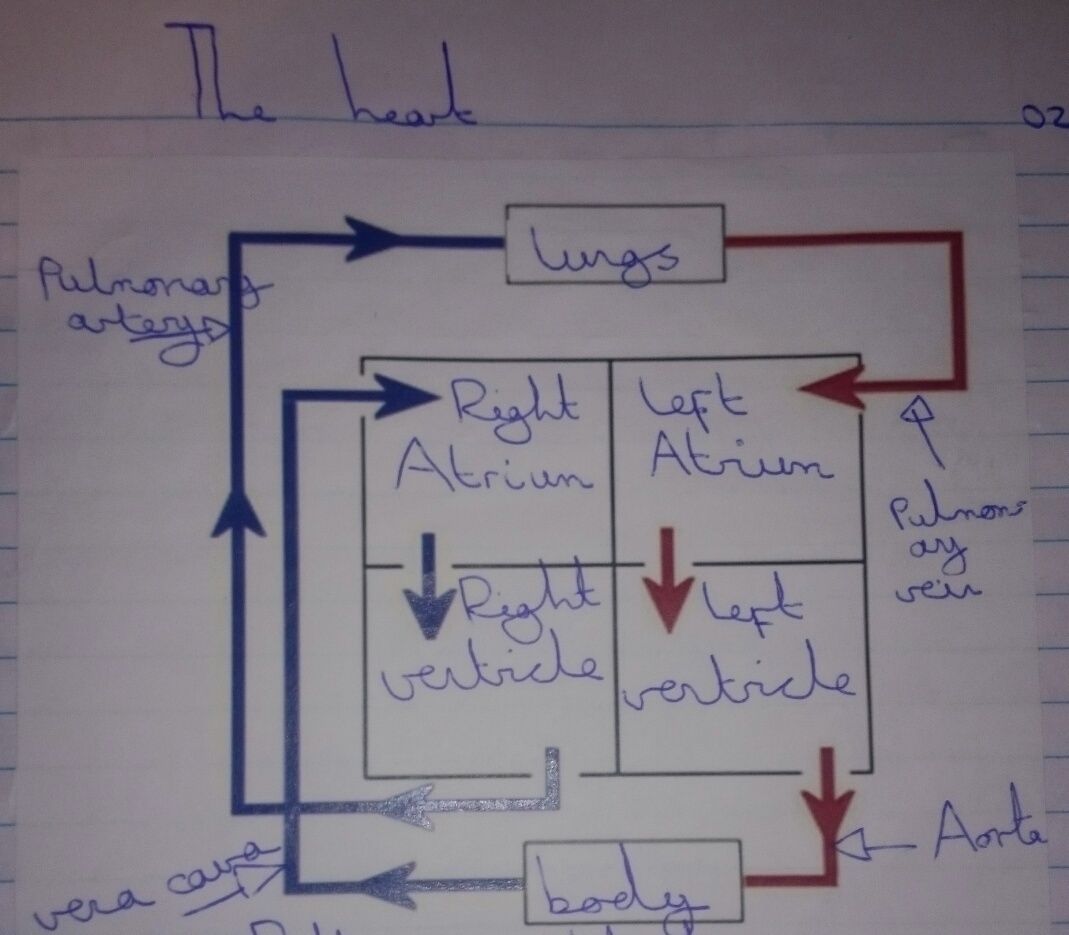
- 30What is it called when the heart contracts?Systole
- 31What is it called when the heart relaxes?Diastrole
- 32What is stroke volume?The amount of blood pumped out the heart in 1 beat.
- 33what is the equation for cardiac output and what is it?stroke volume x heart rate (bpm)
It is the amount of blood punped out the heart in a minute. - 34What is anticipatory rise?Heart rate increases before the start of exercise due to the release of adrenaline.
- 35What is a spriometer?a spirometer is used to measure the air capacity of the human lungs.
- 36what is tidal volume?is the amount of air you can breath in or out with each breath you take.
- 37what is inspiratory reverse volume?After breathing in a normal breath, inspiratory reverse volume is the extra amount you can breath in.
- 38what is expiratory reverse volume?After breathing out a normal breath, expiratory reverse volume is the extra amount you can breath out.
- 39what is residual volume?is the amount of air left in your lungs after you have breathed out as much as possible.
ALWAYS STAYS THE SAME. - 40what is vital capacity?The maximum amount of air you could breath in or out in one breath.
- 41what is aerobic respirarion?glucose + oxygen = energy + co2 + water
- low to mid intensity
- can be maintained for a long period of time.
Eg. long distance swimming or cycling - 42what is anaerobic respiration?glucose = energy + lactic acid
- high intensity when the respiratory system cannot supply enough oxygen to muscles.
Eg. sprinting/weightlifting - 43What is lactic acid?A waste product that builds in muscles when they work anaerobically.
- 44What is excess post - exercise oxygen consumption?It is the amount of oxygen needed to recover after anaerobic respiration and exercise.
It is characterised by an increased breathing rate and highrt breathing.
EPOC replenishes the body with oxygen and enables the body to convert the lactic acid produced during anaerobic exersice into glucose, co2 and water - 45What does a cool down do when recovering from vigorous exercise?- A cool down is important to assist in recovery as extra oxygen is required to return the body to its pre - exercise state.
Gradual reduction in heart rate will allow the body to succesfully remove lactic acid and carbon dioxide. - 46What does streaching do in recovering process from vigorous exercise?- Streaching, a thourogh full body strech will aid the removal of lactic acid and reduce the stiffness and sorness felt post exercise..
- 47What does rehydration and glucogen stores do?-Eating a high carbohydrate meal will speed up the glucogen replacment, and should be done within 1 hour post exercise.
- 48How does ice baths help the recovery process from vigorous exercise?The cold water causes the blood vessels to tighten and drains the blood out of the legs (vasoconstriction).
The blood that leaves takes away with it the lactic acid that has built up during activity. - 49What is DOMS?Delayed onset muscle soreness.
- 50What are the immediate effects of exercise?- Red coloured skin, thermoregulation
- Sweating - 51What are the short term effects of exercise?- Tiredness
- Light headedness
-Nausea (feeling sick)
-Aching muscles/Doms and cramps - 52What are the long term affects of training?-Increase in the size of the heart (hypertrophy)
- Decreased resting heart rate (bradycardia)
-Improvments in specific components of fitness.
-Improved supplenes (being able to move)
-increase in the number of mitochondria. - 53what happens when you inspire/breath in?In order to draw lungs with air the volume/size of our chest must increase. To do this the intercoastal muscles and the diaphram flatens to increase the volume. This then decreases the air pressure in our lungs, causing air to rush in from outside.
- 54What happens when you expire/breath out?At the end of a breath or intercostal muscles and diaghram relax and return to their starting position. This then decreases the size of our chest and space. The increase in air pressure forces air out.
Información
- Descripción
- Flashcards on PE 1, created by AsimAli Rehman on 11/11/2018.
- Creado por
- AsimAli Rehman
- Visitas
- 4
- Valoración