
Fichas
untitled 2
Fichas del conjunto (162)
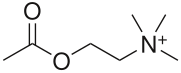
- 1—Acetylcholine
-muscarinic receptor agonist - 2—Metacholine
- muscarinic receptor agonist
- modification of the ethylene bridge
- S(+) equipotent to ACH
- beta methyl substitution => more selective to Muscarininc receptor
- more resistant to AChE => slow hydrolysis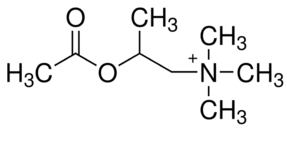
- 3—Carbachol
-muscarinic receptor agonist
- modification of the acetoxy group
- converting ester to carbamate
- similar ACh potency, same profile
-hydrolysis by AChE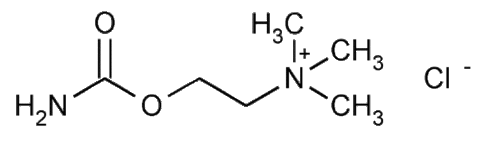
- 4—Bethanechol
- muscarinic receptor agonist
- beta methyl substitution
- potent and selective Muscarinic agonist
-S(+) more potent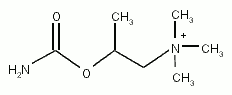
- 5—choline ethyl ether
- muscarinic receptor agonist
- exception to the classical SAR of muscarinic activity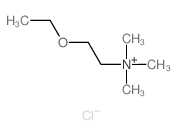
- 6—alkyl amino ketones
- muscarinic receptor agonist
- exception to the classical SAR of muscarinic activity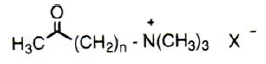
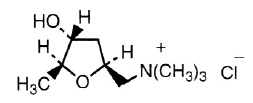
- 7—L(+)- Muscarine Chloride
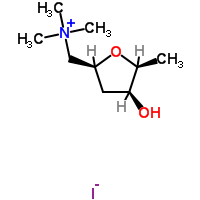
- 8—epimuscarine
- 9—pilocarpine
- alkaloid, produced from Pilocarpus jaborandi
- Potent muscarinic agonist
- chemically unstable => ring opening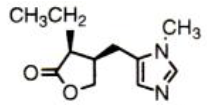
- 10—pilocarpic acid
- inactive
- product of hydrolysis of pilocarpine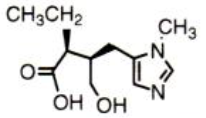
- 11—isopilocarpine
- epimerization of pilocarpine
- inactive product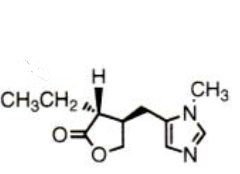
- 12—Physostigmine
-indirectly acting parasympathomimetics
- reversible AChE
- 3ary alkaloid obtained from the Calabar Bean, Physostigma venosum
- exhibits high affinity to AChE of 10^-9 to carbachol of 10^-4
-used to treat glaucoma and over dose of anticholinergic
-light sensitive
-undergoes hydrolysis in aqueous solutions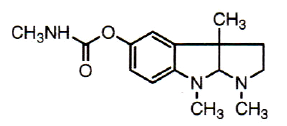
- 13—eseroline
inactive degradation product of physostigmmine in aqueous solutions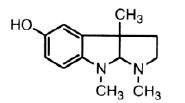
- 14—rubreserine
-inactive degradation product of physostigmmine in aqueous solutions
- red color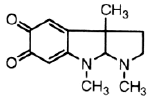
- 15—neostigmine
-indirectly acting parasympathomimetics
- reversible AChE
synthetic
ionized
-indicated for Myastenia Gravis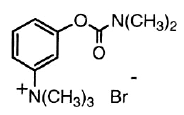
- 16—pyridostigmine
-indirectly acting parasympathomimetics
- reversible AChE
synthetic
ionized
-indicated for Myastenia Gravis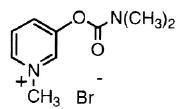
- 17—donepezil hydrochloride
-indirectly acting parasympathomimetics
- reversible AChE
- lack hepatotoxicity
- used for Alzheimer's disease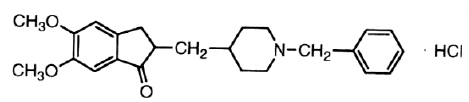
- 18—tacrine
indirectly acting parasympathomimetics
- reversible AChE
- cause hepatotoxicity
- used for Alzheimer's disease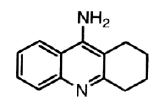
- 19—rivastigmine
indirectly acting parasympathomimetics
- reversible AChE
- lack hepatotoxicity
- used for Alzheimer's disease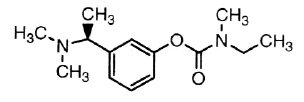
- 20—Edrophonium
-used for diagnostic purposes
- improve Myastenia Gravis
-worsen cholinergic chrisis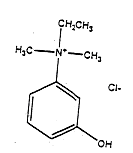
- 21—Malathion
irreversible AChEi
organophosphate
thio group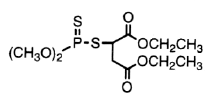
- 22—parathion
irreversible AChEi
organophosphate
thio group
low Anti-AChE activity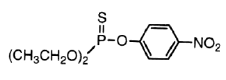
- 23—sarin
irreversible AChEi
organophosphate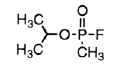
- 24—paraoxon
irreversible AChEi
organophosphate
oxo group
high Anti-AChE activity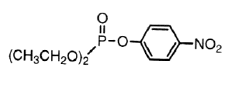
- 25—echothiophate iodide
irreversible AChEi
organophosphate
ionized => clnical application for glaucoma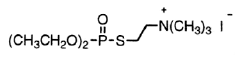
- 26—oxime
reactivation of AChE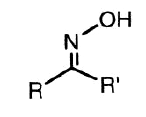
- 27—Pralidoxime chloride (2 -PAM)
reactivation of AChE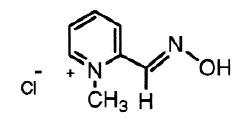
- 28—obidoxime
reactivation of AChE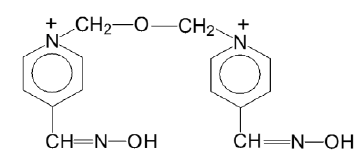
- 29—diacetylmonoxime
reactivation of AChE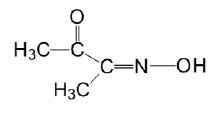
- 30—atropine
parasympatholytics
muscarine receptor antagonist
alkaloid obtained from atropa belladonna
atropine also found in datura stramonium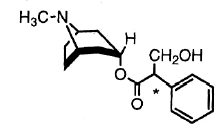
- 31—scopolamine
parasympatholytics
muscarine receptor antagonist
alkaloid obtained from atropa belladonna
aslo found in Hyascyamus niger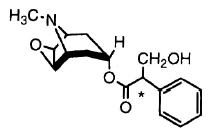
- 32—glycopyrrolate
-antiholinergic
-amino alcohol ester
-ionized, exert effect locally in GI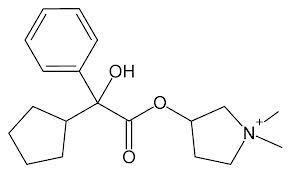
- 33—propantheline
antiholinergic
-amino alcohol ester
-ionized, exert effect locally in GI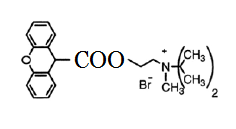
- 34—clinidium
antiholinergic
-amino alcohol ester
-ionized, exert effect locally in GI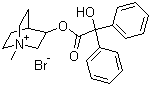
- 35—ipratronium
antiholinergic
-amino alcohol ester
-ionized, exert effect locally in GI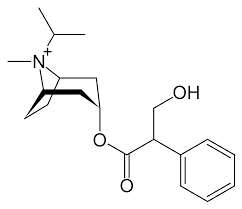
- 36—flavoxate
antiholinergic
-amino alcohol ester
-ionized, exert effect locally in GI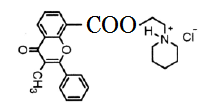
- 37—oxyphencyclimine
anticholinergic
amino alcohol ester
3ary amine, used for Parkinson treatment
systemic, can cross BBB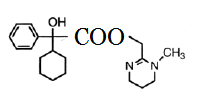
- 38—procyclidine
anticholinergic
amino alcohol
3ary amine, systemic effect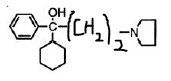
- 39—trihexyphenidyl
anticholinergic
amino alcohol
3ary amine, systemic effect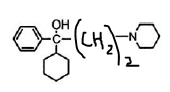
- 40—benztropine
anticholinergic
amino ethers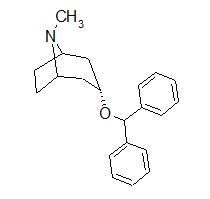
- 41—orphenadrine
anticholinergic
amino ether
antihistaminic
anticholinergic> antihistaminic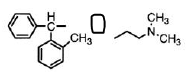
- 42—pirenzepine
- selective M1 receptor antagonist
- they are competitive antagonists
-have antispasmodic effects
-produce mydriasis
-antisecretory:
-decrease gastric secretions
-decrease saliva secretions
-decrease bronchial secretions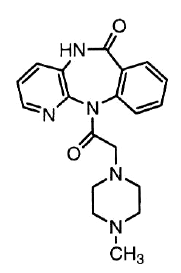
- 43—telenzepine
selective M1 receptor antagonist
- they are competitive antagonists
-have antispasmodic effects
-produce mydriasis
-antisecretory:
-decrease gastric secretions
-decrease saliva secretions
-decrease bronchial secretions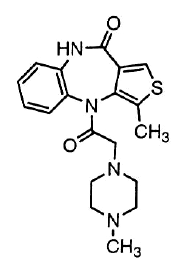
- 44—hexamethonium
- ganglionic blocking agent
- bisquaternary ammonium
-MOA: they block autonomic ganglia => inhibit ganglionic transmission
- main therapeutic indication: antihypertensive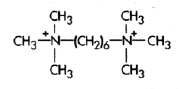
- 45—trimethophan
ganglionic blocking agent
- sulfonium
-MOA: they block autonomic ganglia => inhibit ganglionic transmission
- main therapeutic indication: antihypertensive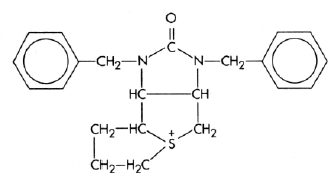
- 46—pentolinium
ganglionic blocking agent
- bisquaternary ammonium
-MOA: they block autonomic ganglia => inhibit ganglionic transmission
- main therapeutic indication: antihypertensive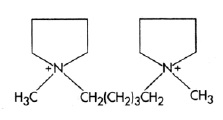
- 47—mecamylamine
ganglionic blocking agent
- secondary amines
-MOA: they block autonomic ganglia => inhibit ganglionic transmission
- main therapeutic indication: antihypertensive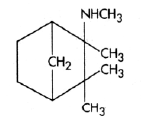
- 48—pempidine
ganglionic blocking agent
- tertiary amine
-MOA: they block autonomic ganglia => inhibit ganglionic transmission
- main therapeutic indication: antihypertensive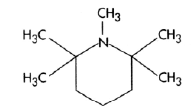
- 49—succinylcholine chloride
- depolarizing NMJ blocker
- produce a 2 phase block
phase 1: stimulation
phase 2: depression
block by receptor desensitization
- therapeutic use : muscle relaxation
- reversal of effects of depolarizing : give antagonist to sensitize the receptor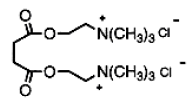
- 50—tubocurarine
- non depolarizing NMJ blocker
- cc: benzylisoquinoline
- they are competitive receptor antagonist
- all are ionized
- lack CNS side effect
- therapeutic use: muscle relaxation
- reversal of effects of non depolarizing: AChI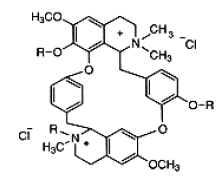
- 51—atracurium besylate
- non depolarizing NMJ blocker
- cc: benzylisoquinoline
- they are competitive receptor antagonist
- all are ionized
- Exception: CNS side effects
- therapeutic use: muscle relaxation
- reversal of effects of non depolarizing: AChI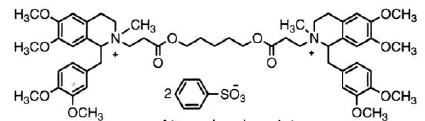
- 52—mivacurium chloride
non depolarizing NMJ blocker
- cc: benzylisoquinoline
- they are competitive receptor antagonist
- all are ionized
- lack CNS side effect
- therapeutic use: muscle relaxation
- reversal of effects of non depolarizing: AChI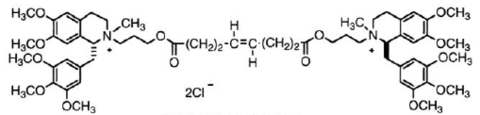
- 53—doxacurium chloride
non depolarizing NMJ blocker
- cc: benzylisoquinoline
- they are competitive receptor antagonist
- all are ionized
- lack CNS side effect
- therapeutic use: muscle relaxation
- reversal of effects of non depolarizing: AChI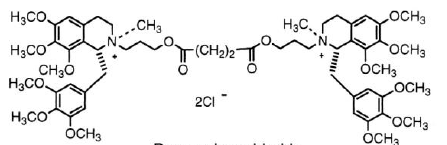
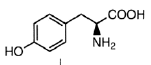
- 54—L-Tyrosine
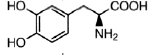
- 55—L-Dopa
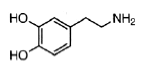
- 56—Dopamine
- 57—Norepinephrine
- released NE :
binding to receptor postsynaptic and presynaotic
uptake 1( recycling NE)
uptake 2 ( degradation, metabolism )
- receptor selectivity: alpha 1, 2, beta 1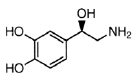
- 58—epinephrine
- increasing the size of R1 ( CH3)
increase beta and decrease alpha adrenergic activity
- receptor activity: Beta 2 > alpha 1,2, beta 1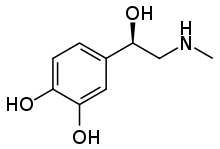
- 59—Isoproterenol
increasing the size of R1 (isopropyl)
increase beta and decrease alpha adrenergic activity
- receptor activity: Beta 2, Beta 1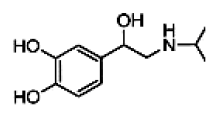
- 60—Colterol
- increase the size of R1 to t-butyl group
increase selectivity to beta 2 agonistic activity
-cc: phenylethanolamines
-receptor selectivity :beta 2 > beta 1
beta 2 agonist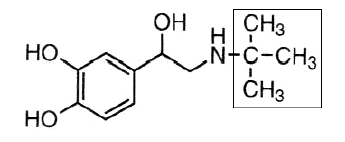
- 61—ritodrine
-increasing the size of R1 => increase selectivity to beta 2 agonistic activity
- at least one hydroxyl group is required to form hydrogen bonding with receptor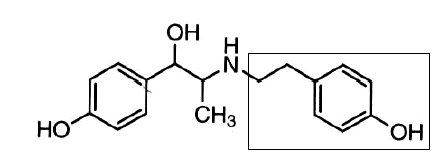
- 62—Ethylnorepinephrine
substation on Carbon 2, R2: ethyl
increase beta activity
chiral center at C2
-receptor activity: beta > alpha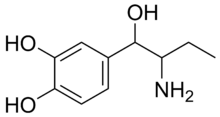
- 63—alpha- methylnorepinephrine (1R, 2S)
1R, 2S isomer : maximum direct activity
1R, 2R isomer: indirect activity
receptor activity: alpha 2 > alpha 1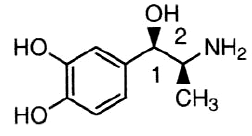
- 64—terbutaline
3', 5'- dihydroxy substitution: orally active no COMT metabolism
receptor activity: beta 2> beta 1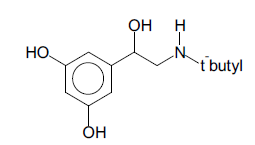
- 65—albuterol
3' hydroxymethyl,4'hydroxy substitution
non cathechol => orally active
receptor activity: beta 2 > beta 1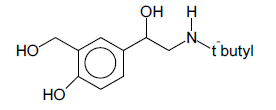
- 66—Phenylephrine
3' hydroxyl substitution => alpha 1 activity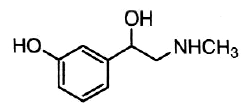
- 67—Metaraminol
3' hydroxyl substitution => alpha 1 activity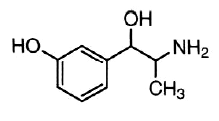
- 68—Methoxamine
2',5' -dimethoxy substitution => alpha 1 activity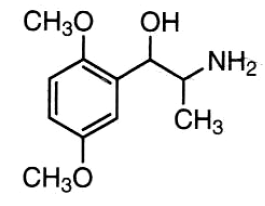
- 69—pirbuterol
beta 2 agonist
cc: phenylethanolamies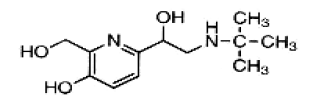
- 70—salmeterol
beta 2 agonist
cc: phenylethanolamines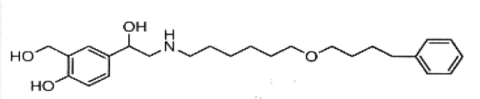
- 71—bitolterol
-beta 2 agonist
- phenylethanolamine
- non catechol : orally active
- bi- toluoylester ( more lipophilic)
- given by inhalation
-hydrolyzed by esterase in the lungs to give colterol
- twice the DOA than catechol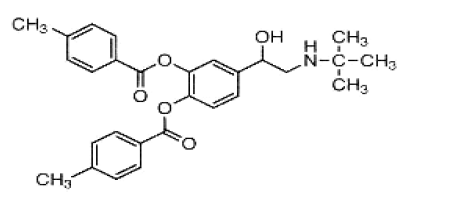
- 72—Dobutamine
(-) dobutamine : alpha agonist + beta 1 agonist
(+) dobutamine: alpha antagonist + beta 1 agonist ( 10x)
racemic mixture: selective beta 1 activity
exception to SAR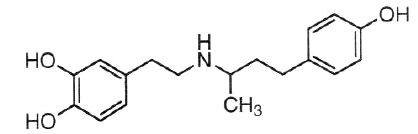
- 73—dopamine
- not strictly adrenergic agonist
- DA receptor agonist => dialates renal blood vessels
- at higher dose acts on beta 1 receptor
- at much higher dose acts on alpha 1 receptor
- not orally active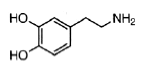
- 74—(+,-) ephedrine
- mixed acting sympathomimetics
- alkaloid from Ephedra species (Ma Huang)
- non cathechol : orally active
more lipophilic
- 1R, 2S: direct + indirect acting
-used as nasal decongestant
- cc: phenylethanoloamines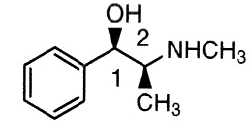
- 75—pseudoephedrine
- 1S, 2R and 1S, 2S : indirectly acting sympathomimetics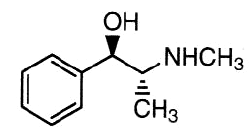
- 76—amphetamine
indirectly acting sympathomimetics
dextro> levo
non cathechol: orally active
no hydrolysis: no 0H, very lipophilic, CNS stimulant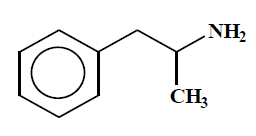
- 77—metamphetamine
indirectly acting sympathomimetics
dextro> levo
non cathechol: orally active
no hydrolysis: no 0H, very lipophilic, CNS stimulant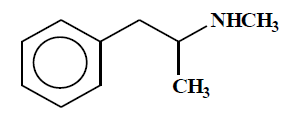
- 78—propylhexedrine
indirectly acting sympathomimetics
same as metamphetamine
dextro> levo
non cathechol: orally active
no hydrolysis: no 0H, very lipophilic,
POTENT CNS stimulant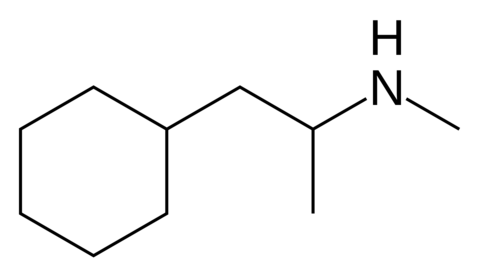
- 79—xylometazoline
- alpha 1 adrenergic agonists
- cc: imidazoline derivatives
- contain a carbon between C2 of imidazoline and a phenyl ring
- contain phenylethylamine moiety
ortho methyl: agonistic activity at alpha 1 and alpha 2 receptors
- bulky group at para position: increase alpha 1 and decrease alpha 2 activity
- mainly used as nasal decongestant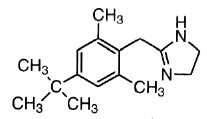
- 80—oxymetazoline
- alpha 1 adrenergic agonists
- cc: imidazoline derivatives
contain a carbon between C2 of imidazoline and a phenyl ring
- contain phenylethanolamine moiety
ortho methyl: agonistic activity at alpha 1 and alpha 2 receptors
- bulky group at para position: increase alpha 1 and decrease alpha 2 activity
- mainly used as nasal decongestant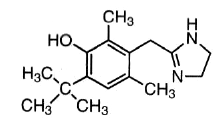
- 81—tetrahydrozoline
alpha 1 adrenergic agonists
- cc: imidazoline derivatives
contain a carbon between C2 of imidazoline and a phenyl ring
- contain phenylethylamine moiety
ortho methyl: agonistic activity at alpha 1 and alpha 2 receptors
- mainly used as nasal decongestant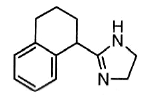
- 82—naphazoline
alpha 1 adrenergic agonists
- cc: imidazoline derivatives
contain a carbon between C2 of imidazoline and a phenyl ring
- contain phenylethylamine moiety
ortho methyl: agonistic activity at alpha 1 and alpha 2 receptors
- mainly used as nasal decongestant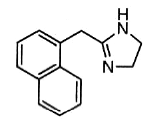
- 83—clonidine
- potent alpha 2 adrenergic receptor agonist
-cc: imidazoline derivatives
- developed as nasal vasoconstrictor
- produce marked hypotensive effects, maily centrally mediated throughpostsynaptic alpha2 adrenergic receptor
- used as antihypertensive agent
- effects on peripheral postsynaptic alpha 2 receptors: vasoconstriction
- effects on peripheral presynaptic: negative feedback, decrease NE
- pka 8.5, 80% ionized, 20% NI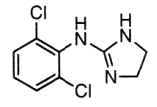
- 84—Apraclonidine
alpha 2 adrenergic agonist
imidazoline moiety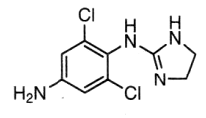
- 85—brimonidine
alpha 2 adrenergic agonist
imidazoline moiety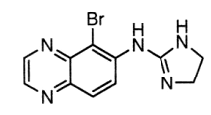
- 86—guanabenz
potent alpha 2 adrenergic agonist
non imidazoline, clonidine like
same indication as clonidine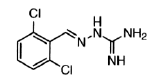
- 87—guanfacine
potent alpha 2 adrenergic agonist
non imidazoline, clonidine like
same indication as clonidine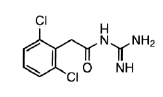
- 88—alpha -methyldopamine
alpha 2\ adrenergic antagonist
non imidazoline derivative
undergoes bioinactivation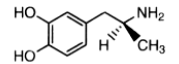
- 89—phenoxybenzamine
- adrenergic antagonist
- irreversible alpha blocker
- non selective ( alpha 1 and 2 )
- Beta-haloalkylamine derivative
- slow onset of action: because it is a prodrug, must undergoe bioactivation
( alkylated receptor active )
-limited use in pheochromocytoma (cancer of adrenal medulla)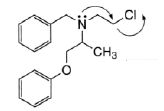
- 90—tolazoline
- adrenergic receptor antagonist
- reversible
- non selective ( blocks alpha 1 and 2 )
- similar to xylometazoline BUT no ortho substitution: no alpha agonistic effects
- limited use in treatment of symptoms of pheochromocytoma
- rapid onset of action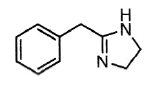
- 91—phentolamine
- adrenergic receptor antagonist
- reversible
- non selective ( blocks alpha 1 and 2 )
- limited use in treatment of symptoms of pheochromocytoma
- rapid onset of action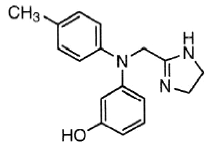
- 92—prazosin
- selective alpha 1 receptor antagonist
reversible
- quinazoline derivative
-contain 4-amoni-6-7-dimethoxyquinazoline ring connected to piperazine at C2
-lower Blood Pressure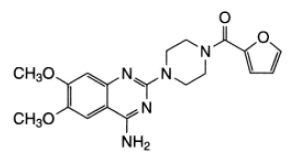
- 93—terazosin
selective alpha 1 receptor antagonist
reversible
- quinazoline derivative
-contain 4-amoni-6-7-dimethoxyquinazoline ring connected to piperazine at C2
-lower Blood Pressure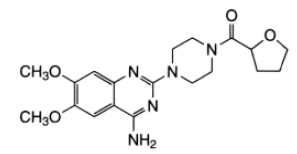
- 94—doxazosin
selective alpha 1 receptor antagonist
reversible
- quinazoline derivative
-contain 4-amoni-6-7-dimethoxyquinazoline ring connected to piperazine at C2
-lower Blood Pressure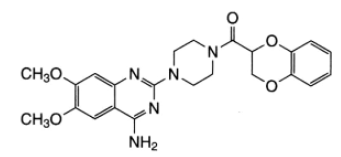
- 95—tamsulosin
selective alpha 1 receptor antagonist
reversible
high affinity to alpha 1 A subtype present in prostate gland => used to treat BHP ( benign prostatic hyperplasia)
- cc: sulfonamide phenylpropylamine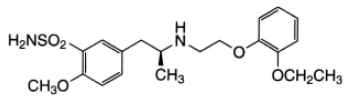
- 96—indoramin
- reversible selective alpha 1 receptor antagonist and H1 (histamine) and 5receptor antagonistHT (serotonin)
- indole derivative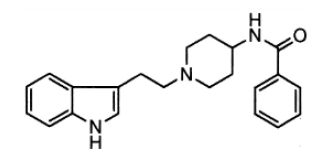
- 97—yohimbine
- reversible selective alpha 2 blocker
- indole alkaloid from Yohimbe bark
- increase Blood Pressure AND Heart Rate
- very limited use to treat male sexual impotency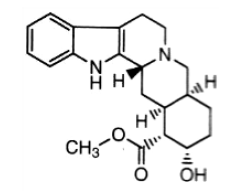
- 98—practolol
- Beta adrenergic receptor antagonist
- aryloxypropanolamine with p-acylamino
-change of acylamino to ortho or meta => loss of selectivity
- inhibited isoproterenol induced tachycardia with minimal effects on isoproterenol induced hypotension
-withdrawn from the market due to visual loss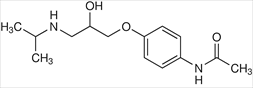
- 99—pronethalol
- beta adrenergic receptor antagonist non selective
-arylethanolamine
- no partial agonistic activity
- carcinogenic in animals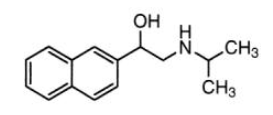
- 100—propranolol
-aryloxypropanolamine
-beta adrenergic receptor non selective
-10X> potent
-no partial agonistic activity
-not carcinogenic
- used in hypertension, agnia pectoris, arrhythmia, migraine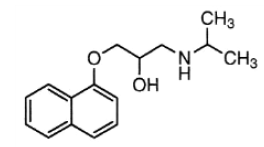
- 101—bunolol
-non selective beta adrenergic receptor antagonist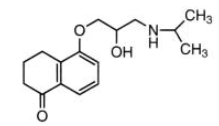
- 102—carteolol
-non selective beta adrenergic receptor antagonist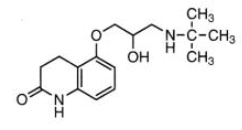
- 103—metipranolol
-non selective beta adrenergic receptor antagonist
- exception para postion
- ester hydrolysis=> short acting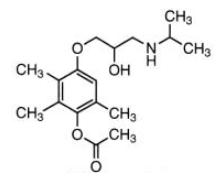
- 104—nadolol
-non selective beta adrenergic receptor antagonist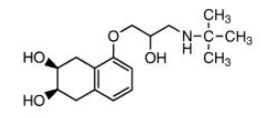
- 105—penbutolol
-non selective beta adrenergic receptor antagonist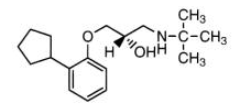
- 106—pindolol
-non selective beta adrenergic receptor antagonist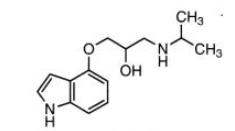
- 107—sotalol
-non selective beta adrenergic receptor antagonist
- aryl sulfonamide ethanolamine derivative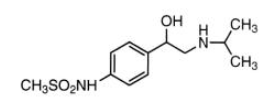
- 108—timolol
-non selective beta adrenergic receptor antagonist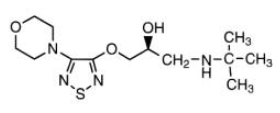
- 109—acebutolol
-selective beta 1 adrenergic receptor antagonist
cardio slective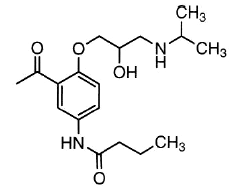
- 110—atenolol
-selective beta 1 adrenergic receptor antagonist
cardio slective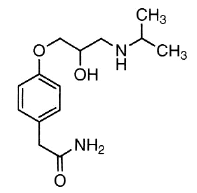
- 111—betaxolol
- selective beta 1 adrenergic receptor antagonist
cardio selective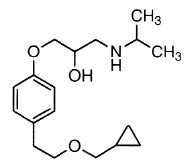
- 112—esmolol
- selective beta 1 adrenergic receptor antagonist
cardio slective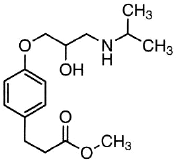
- 113—metoprolol
selective beta 1 adrenergic receptor antagonist
cardio slective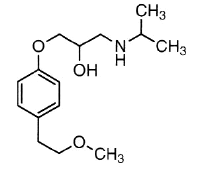
- 114—bisoprolol
selective beta 1 adrenergic receptor antagonist
cardio slective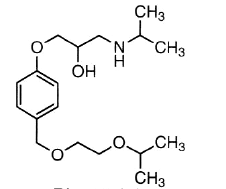
- 115—labetolol
non selective beta blocker and alpha 1 blocker
mixed acting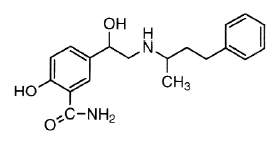
- 116—carvedilol
non selective beta blocker and alpha 1 blocker
mixed acting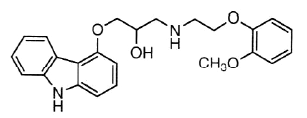
- 117—metyrosine
- drugs affecting NE biosynthesis
- tyrosine hydroxylase inhibitor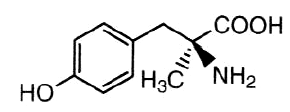
- 118—carbidopa
- drugs affecting NE biosynthesis
- L-Dopa decarboxylase inhibitor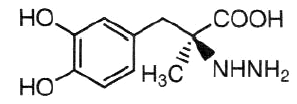
- 119—reserpine
-drugs affecting NE storage
( catecholamine depleting agents)
- indole alkaloid
-isolated from Rauwolfa Serpentina
- inhibit catecholamine storage in storage vesicle => depletion of catecholamines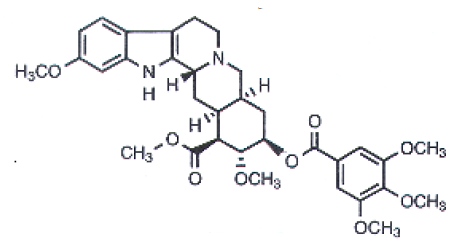
- 120—guanadrel
- drugs affecting NE release ( adrenergic neuronal blocking agents)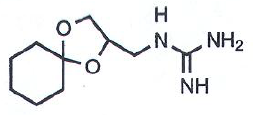
- 121—guanethidine
- drugs affecting NE release ( adrenergic neuronal blocking agents)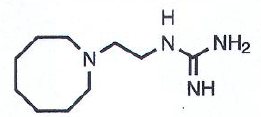
- 122—bretylium
- drugs affecting NE release ( adrenergic neuronal blocking agents)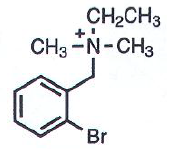
- 123—ergot alkaloid
- produced by calviceps purourea, a fungus that infects grains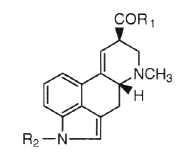
- 124—ergotamine
- ergot alkaloid
- produced by calviceps purourea, a fungus that infects grains
-mixed agonist/ antagonist
- potent smooth muscle contraction
- also used for migraine treatment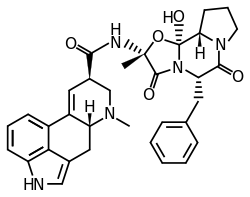
- 125—ergonovine
-ergot alkaloid
-mixed agonist/ antagonist
- potent smooth muscle contraction
- also used for migraine treatment
- potent inducer of uterine
- because of better bioavailability, used to replace ergotmaine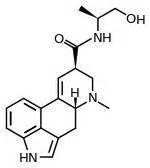
- 126—methylergonovine
-ergot alkaloid
-mixed agonist/ antagonist
- potent smooth muscle contraction
- also used for migraine treatment
- potent inducer of uterine
- because of better bioavailability, used to replace ergotmaine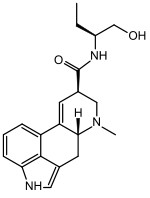
- 127—methylseregide
-ergot alkaloid
-mixed agonist/ antagonist
-mainly used for migraine treatment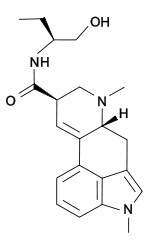
- 128—morphine
- cc: phenantrene
- teriary amine group,
N-methyl: good agonist
Removal of N-methyl: decrease activity
increase size of alkyl group: antagonist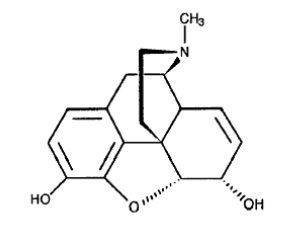
- 129—phenanthrene
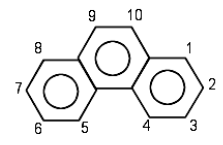
- 130—benzoquinone
-oxidation od morphine product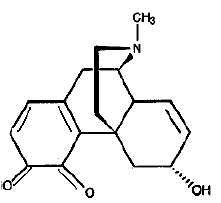
- 131—codeine
- weak mu agonist
- potent antitussive agent
-partial O-demethylated => morphine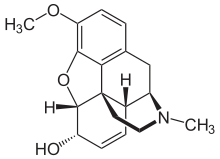
- 132—Heroin
-3,6-diacetyl derivative of morphine
- weak affinity to mu receptor
-more lipophilic: penetrates BBB
- hydrolyzed in the brain to give:
3-acetylmorphine (3-MAM)
6-acetylmorphine (6-MAM)
- 6-MAM has potent mu agonist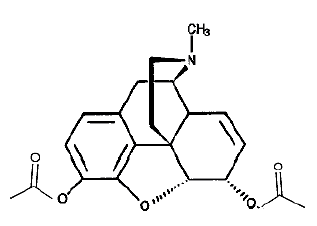
- 133—oxymorphone
- 3-hydroxy-N-methyl derivative 10X as potent as morphine
- 14 beta hydroxyl enhances mu agonist activity and decrease antitussive activity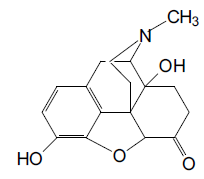
- 134—oxycodone
-3-hydroxyl-N-methyl derivative same activity as morphine but better oral bioavailability
- 14 beta hydroxyl enhances mu agonist activity and decrease antitussive activity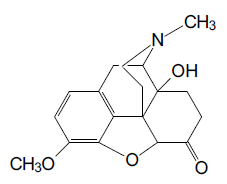
- 135—naloxone
- N-allyl oxymorphone
- pure non selective opioid receptor antagonist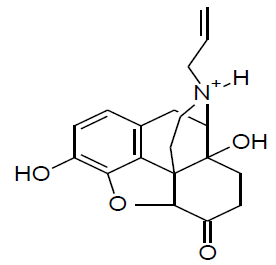
- 136—nalorphine
- N-allyl substitution for N-methyl 7,8-double bond reduction 6-keto reduction
u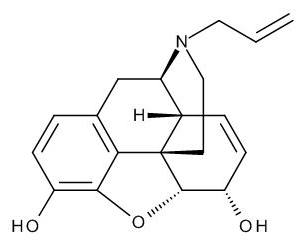
- 137—morphinan
- removal of 4,5 epoxide bridge
(modification of E ring)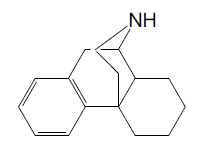
- 138—levorphanol
-removal of 4,5 epoxide bridge
- 8X more potent mu receptor agonist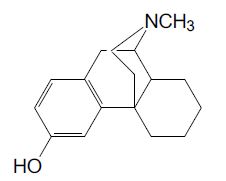
- 139—butorphanol
-removal of 4,5 epoxide bridge
- mu antagonist and kappa agonist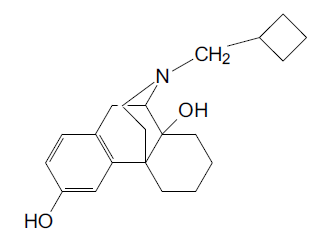
- 140—dextromethorphan
-removal of 4,5 epoxide bridge
(+) levorphanol = dextrophan
- lacks analgesia
- antitussive activity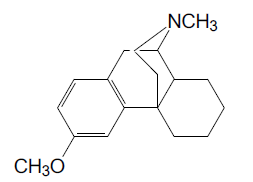
- 141—benzomorphans
- lacks the epoxide ring and the C ring
- retain opioid activity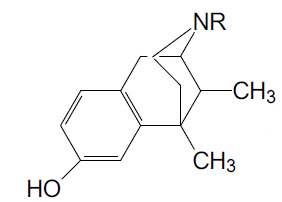
- 142—cyclazocine
- R: N-cyclopropyl methyl
- mixed agonist/ antagonist
kappa agonist
mu antagonist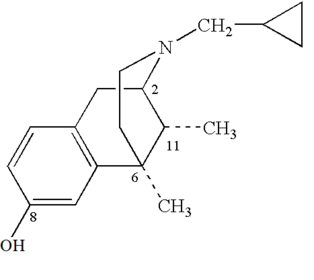
- 143—phenazocine
- R: N-ethylphenyl
-potent mu agonist about 10X> morphine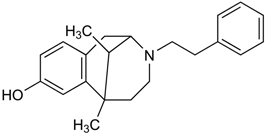
- 144—pentazocine
-R: N-methyl of 2-methyl-2-butene
- mixed agonist/antagonist
kappa agonistic activity: analgesic
mu antagonistic activity
-only one marketed in US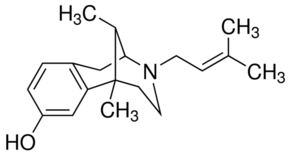
- 145—metazocine
-R: CH3
- mu agonist
-metasocine > morphine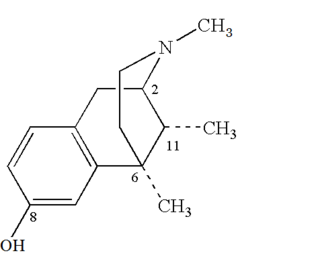
- 146—meperidine
- A and D ring analogs of morphine
- cc: phenylpiperidine
-first synthesized agent with mu agonist activity of 1/4 of morphine
-short DOA (useful in some medical procedure)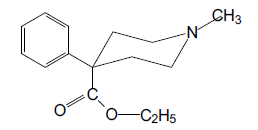
- 147—MPTP
1-methyl-4-phenyl-1,2,3,6-tetrahydropyridine
-damages DA neurons => parkinsonism
- product of reversed ester of meperidine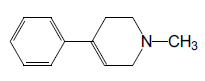
- 148—fentanyl
- cc: anilidopiperidine
- 80X> potent than morphine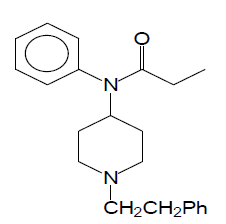
- 149—sufentanil
- cc: anilidopiperidine
- 10X> potent than fentanyl (fentanyl 80X> morphine)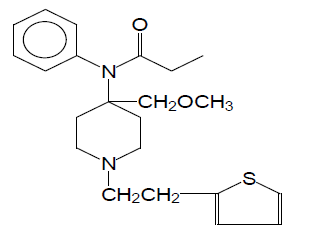
- 150—remifentanyl
- cc: anilidopiperidine
- 25X> potent than morphine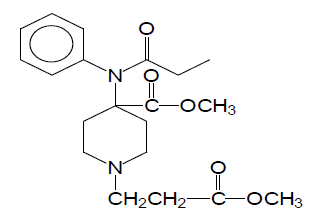
- 151—alfentanil
- cc: anilidopiperidine
- 20X> potent than morphine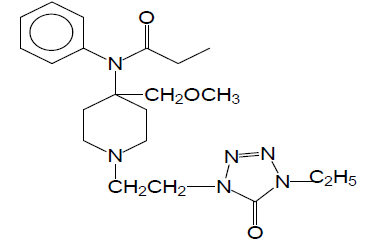
- 152—methadone
-cc: diphenylheptanone
- orally active and long DOA
- useful for maintenance therapy of opoids addicts and for pain suppression of terminally ill patients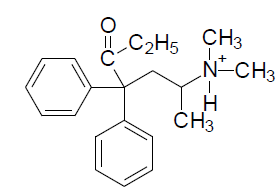
- 153—isomethadone
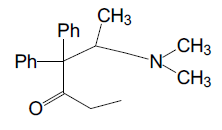
- 154—diphenoxylate
-cc: diphenylheptanone
- structural modification of methadone
-antidiarrheal opioids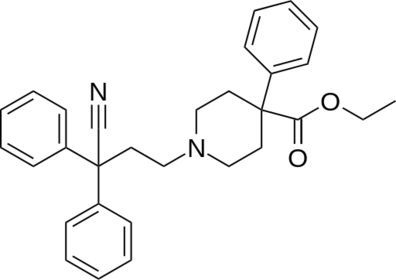
- 155—loperamide
-cc: diphenylheptanone
- structural modification of methadone
-antidiarrheal opioids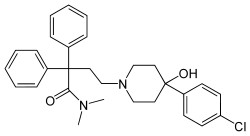
- 156—thebaine
-oripavine derivative
- from papaver bracteatum
no activity as opioid agonist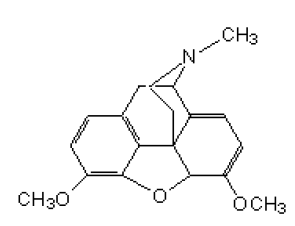
- 157—etorphine
- oripavine derivative
- 1000 X> morphine
- severe respiratory depression
-low therapeutic index in humans, used for veterinary medicine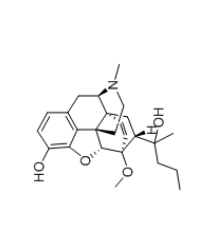
- 158—buprenorphine
-orpavine derivative
- 20-50X> morphine
- mixed agonist / antagonist
-does not produce tolerance and addiction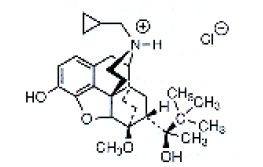
- 159—tramadol
- synthetic mu agonist
- orally active
- possess opioid and non opioid analgesic activity
-analgesic not reversed by naloxone
-O-dimethyl metabolite is 6X> parent drug
-less respiratory depression than morphine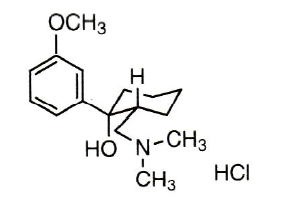
- 160—dezocine
-mixed agonist / antagonist
-only primary amine opoid agent
- exact receptor selectivity is not known
- equipotent with morphine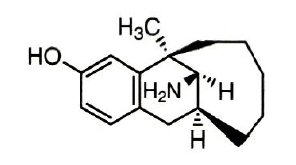
- 161—nalbuphine
- N-cyclobutylmethyl substitution for N-methyl 7,8-double bond reduction 6 keto reduction
-mu antagonist and kappa agonist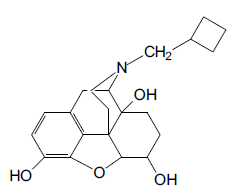
- 162—naltrexone
-N-cyclopropyl-methyl oxymorphone
- pure non selective opioid antagonist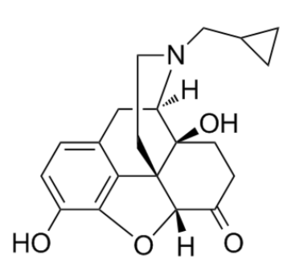
Información
- Descripción
- Fichas sobre untitled 2, creado por lola_smily el 22/06/2015.
- Creado por
- lola_smily
- Visitas
- 2.277
- Valoración