
Fichas
BenchWork (Non-cutting Hand Tolls)
Fichas del conjunto (70)
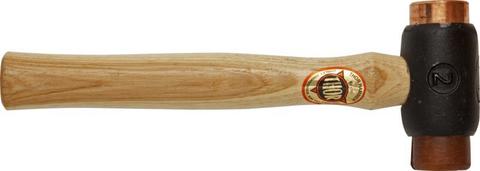
- 1The hammer shown is asoft faced hammer
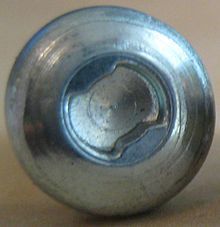
made from copper, rawhide, lead - 2The screwdriver recess in Figure 71 is a :clutch head
- 3A standard screwdriver blade maintains a better grip in the slot if the blade is ground slightly:a concave blade holds better grip
- 4When tightening a bolt with a wrench:always pull on the wrench, it's safer than pushing
- 5The type of tool least likely to slip when holding small parts is the:vice grip
- 6A type of wrench that can be used to turn a polished cylindrical shaft is a:a strap wrench
- 7The included angle that should be ground on the point of a centre punch is:90 degrees
- 8A drift punch is useful to:to align holes in different work pieces
- 9The removable serrated jaws on a bench vise are made from:hardened steel
- 10Which type of torque wrench is best for achieving a preset amount of torque?a click type torque wrench
- 11Pullers are used to:easily remove bearings, hubs and sprockets
- 12Before working around a load that has been raised with a hydraulic jack:blocks must be placed under the load to ensure it doesn't drop
- 13Alkaline cleaning must be only be used on which of the following metals:ferrous metals
- 14Barrel finishing:many pieces can be done at once
inexpensive - 15How do you designate the size of a bench vise?the width of the jaws
- 16Why is it important to NOT hammer on the vise surface of the slide bar?it can crack or distort the vise
- 17What is the purpose of using soft jaws on a vise?to protect the surface of that part you are holding
- 18If you have to use a vise for heating and heavy bending operations, what is often a common practise?using a vise that is only used for that purpose
- 19What are the four principal parts of a ball peen hammer?Face
Peen
Eye
Post - 20For what application is the peen of the ball peen hammer used?the peen is used for riveting
- 21What is another name for a sledgehammer?A MAUL
- 22Why is a sledgehammer used?When a larger force than a regular hammer is capable of is required
- 23Where would you use a soft face hammer?When you don't want to damage the surface of the workpiece
- 24What is different about a dead-blow hammer?The head of the hammer is filled with steel of lead shot
- 25How do you secure a wooden handle to the hammer head?with a metal wedge
- 26Of what material are punches normally made from?Hardened steel
Tempered Steel - 27What punch is recommended if you do not want to damage the finished surface?A soft steel puch or
A brass punch - 28Which punch material is good to use in a non-sparking environment?Brass
- 29What is the purpose of using a centre punch ground at an included point angle of 90 degrees?To make an indentation to properly locate and start the drill
- 30What is the purpose of using a prick punch ground at an included point angle of 30 to 60 degrees?To make small permanent layout marks on a workpiece
- 31Which punch is used without the use of a hammer?Automatic Centre Punch
- 32How can you change the indentation size when using the automatic centre punch?by turning the cap on the handle end of the punch
- 33Why should you ensure the mushroomed punch heads do not appear on your punches?Because there is a possibility of pices breaking off and causing injury
- 34What is the purpose of a pin punch?they are used to drive or remove:
dowel pins, tapered pins, cotter pins, keys - 35What is the purpose of a drift punch?to align holes in two or more work pieces that must be joined together
- 36What is the purpose of a transfer (spotting) punch?transferring the hole positions from one plate to another
- 37Why is a shallow groove cut into the side of a metal stamp?so you can feel it with your thumb for proper letter orientation
- 38Why should you grind a standard blade screwdriver with a concave?so it won't tend to slip out of the slot when turned
- 39Describe a box and wrenchit fully encircles the nut of bolt head
- 40Why is a wrench angled at 15 degrees from the working surface?so your hand clears the work
- 41Which wrench has a different size open at each end of the wrench (box end or open end)?Open End Wrench has a different size on each end
- 42How is the size of an open end wrench determined?The distance across the flutes
- 43Why are the open end wrench flats at 15 degrees to the wrench handle?so the wrench can be flipped over allowing a new bite to be taken on the bolt
- 44What does a 3/8 drive socket mean?it is a socket driven with a 3/8" square hole
- 45Describe the proper way to use an adjustable wrench?the force must act against the solid jaw, not the movable one.
- 46How are hex socket wrenches sized?the distance across the flats on the wrench
- 47What is the purpose of using a torque wrench?to prevent under or over torquing
- 48Where should the working range of a torque wrench be in relation to the scale of the wrench?it should be in the middle half of the torque scale
- 49How does a torque wrench multiplier increase torquegear ration reduction
- 50What enables a pipe wrench to grasp round parts?adjustable serrated jaws
- 51When is a strap wrench used?when the surface of the work piece must not be damaged
- 52Why is an adjustable hood spanner more flexible in its use?it can be adjusted to fit different nut sizes
- 53How is a slug wrench designed to be hammered on?it has a square area for the hammer to land its blows on
- 54What is a use for the pry bar pointed end?it is used for many alignment applications
- 55What determines the size of a C-clamp?The maximum distance between the fully open jaws
- 56When using a puller or press and removing a bearing from a shaft, what should you do?inspect and clean the shaft
- 57How may finished work be held in a vise without the surface being marred or damaged?-use soft jaw caps made of brass, aluminum, or copper
- 58Describe the most common hammer used by a machinist.Ball-peen hammer
- 59For what purpose are soft-face hammers used?--used in assembling or dismantling parts so the finished surface of the work will not be marred; made of plastic, copper, lead
- 60State three safety rules that should be observed when using a hammer?1. Handle is solid and not cracked
2. Head is tight on handle, with proper wedge
3. No grease
4. Never strike tow handle faces together, because of chips - 61Why is a properly sized box wrench preferred to other types of wrenches?-because it cannot slip when the proper size is used
- 62What advantages does a socket wrench have over a box wrench?-when nuts or bolts must be tightened to within certain limits to prevent warping, socket wrenches can be used in conjunction with torque-wrench handle
- 63What is the cross-sectional shape of an Allen wrench and for what purposes is an Allen wrench used?-hexagonal shape
-fit into recesses of socket head setscrews
-very small heads, hard to reach places - 64Where is a hook pin spanner used?-used on the circumference of a round nut
-pin of the spanner fits into a hole int he periphery of the nut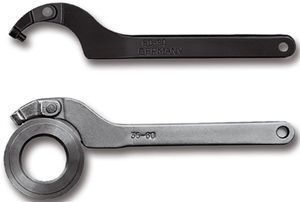
- 65State four useful hints for using any wrench.1. Always use wrench that fits the nut or bolt properly to stop slippage
2. When possible, always pull instead of push
3. Be sure the nut is fully in wrench jaw
4. Put drop of oil on the threads when assembling a bolt to ensure easier removal later
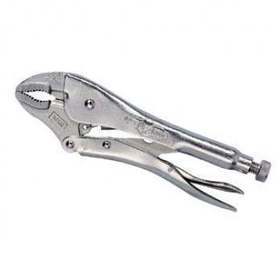
5.Use jerks instead of constant pulls - 66—Vise grip pliers: extremely high gripping power because of adjustable lever action
- 67—Diagonal cutter: solely for cutting wire and small pieces of soft metal
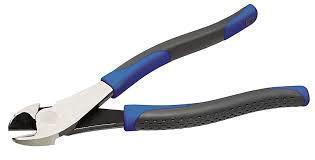
- 68—Needle-nose pliers: holding very small parts, and bending and forming wire
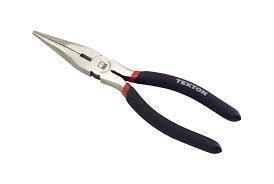
- 69—Side cutting pliers:
-small diameter (1/8 inch or less) rods or wires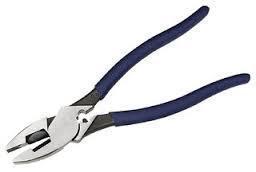
- 70—-Slip joint pliers: used when small holes must be drilled or for twisting small light materials
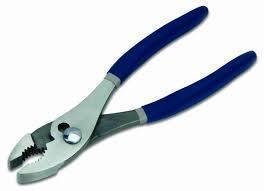
Información
- Descripción
- Questions from Benchwork (Non cutting Hand tools)
- Creado por
- Vincent Bergeron
- Visitas
- 130
- Etiquetas
- Valoración