
Fichas
Biology iGCSE - Topic 3 -Reproduction and Inheritance - Inheritance Paper 1
Fichas del conjunto (16)
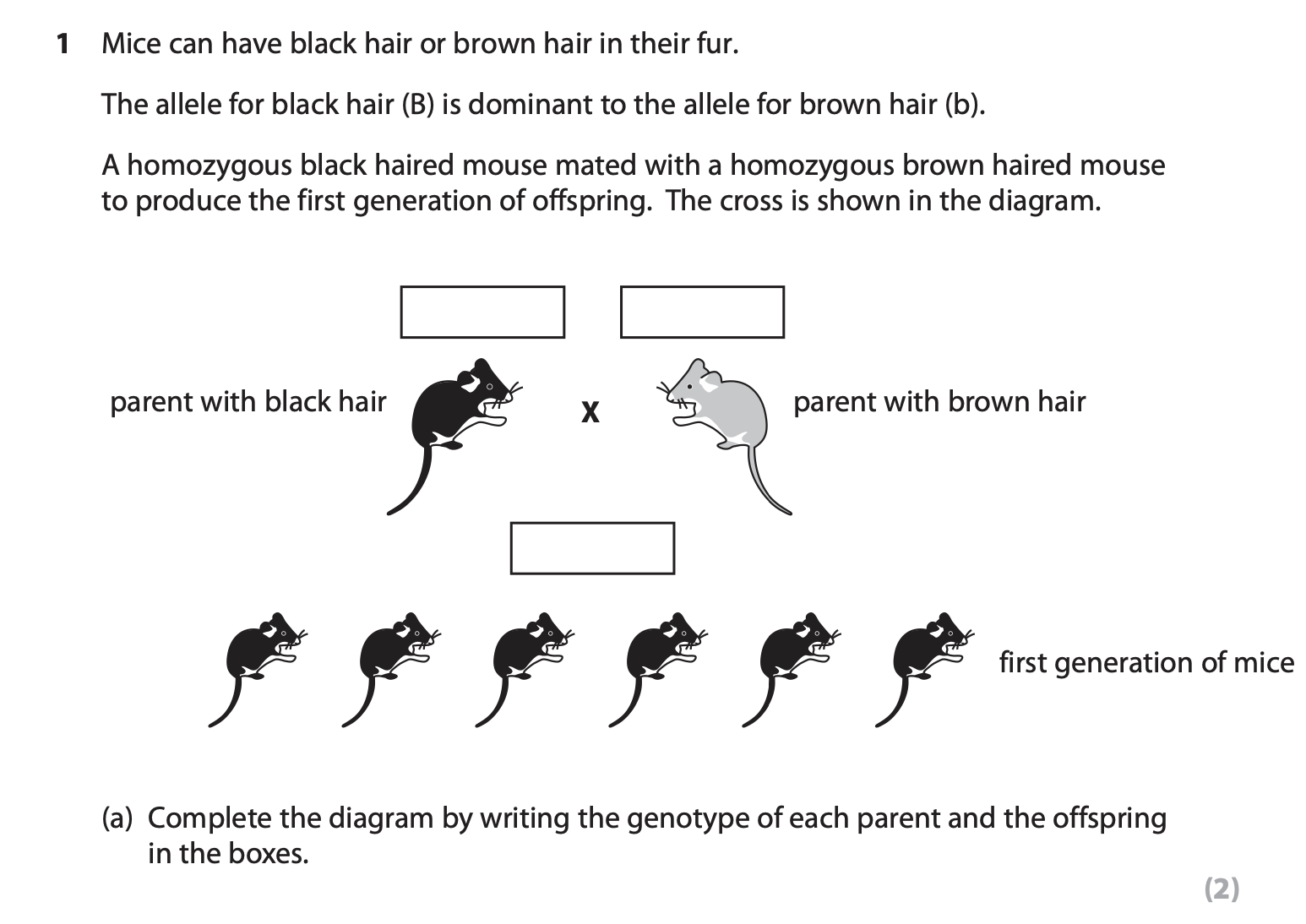
- 1—1. parents are BB and bb
2. first generation is Bb - 2—1. gametes B and b
2. second generation BB, Bb, Bb and bb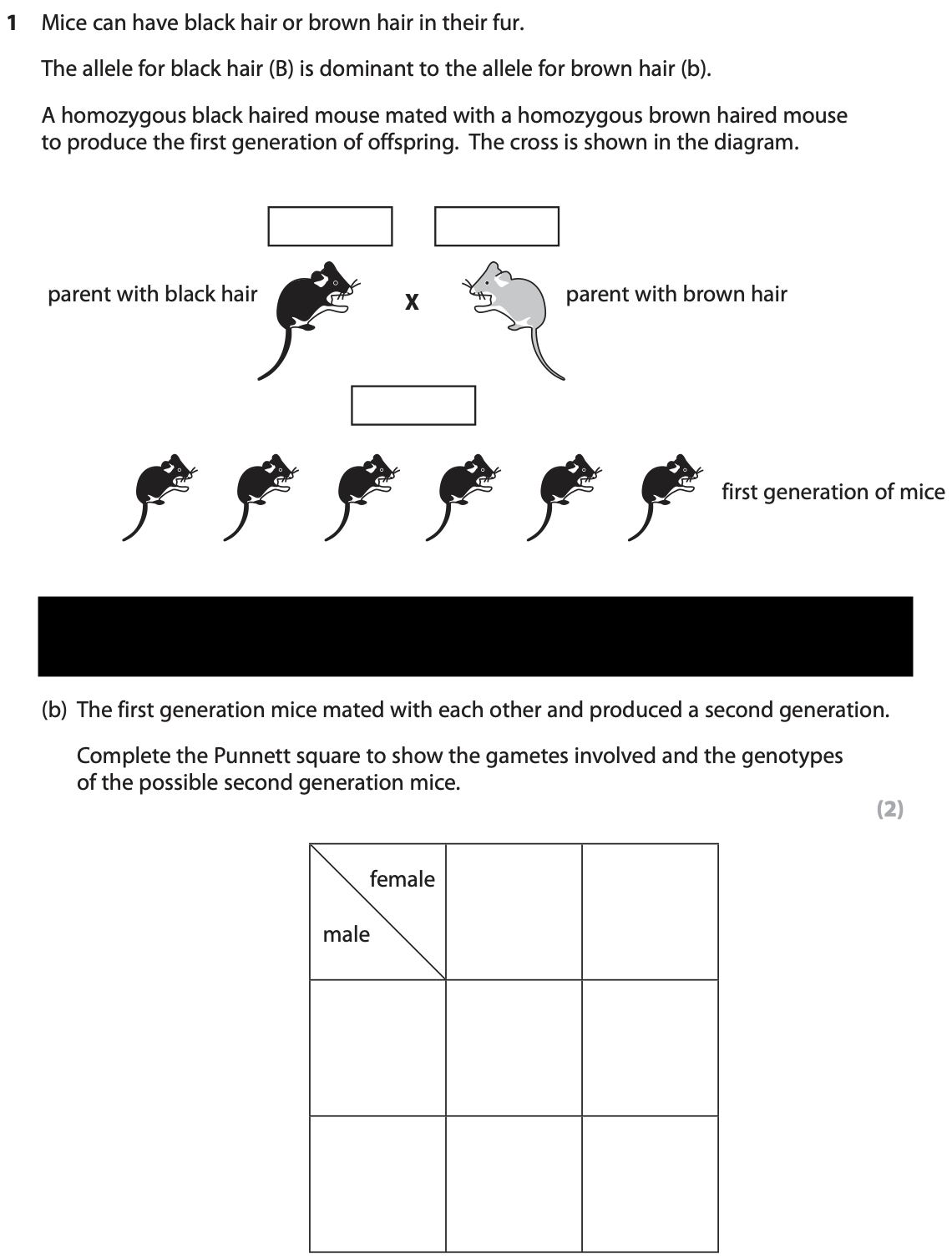
- 3—1. sperm
2. fertilisation
3. zygote
4. diploid
5. mitosis
6. 40 / 20 pairs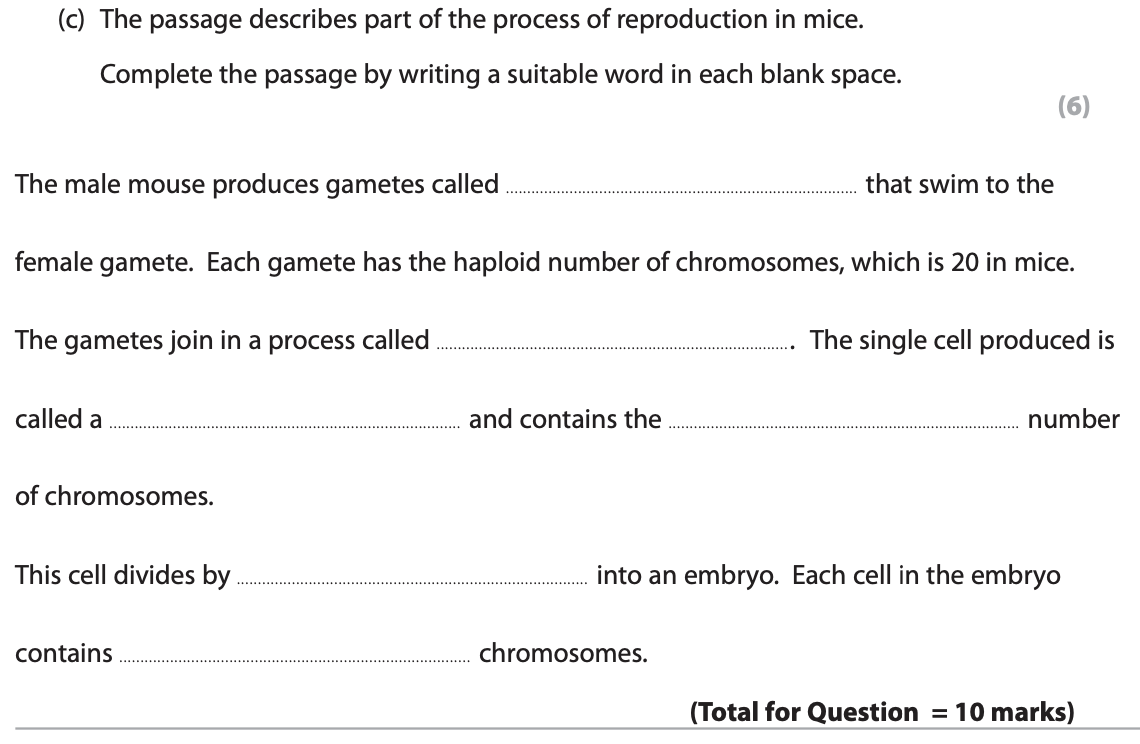
- 4How many chromosomes are shown in this photograph?47
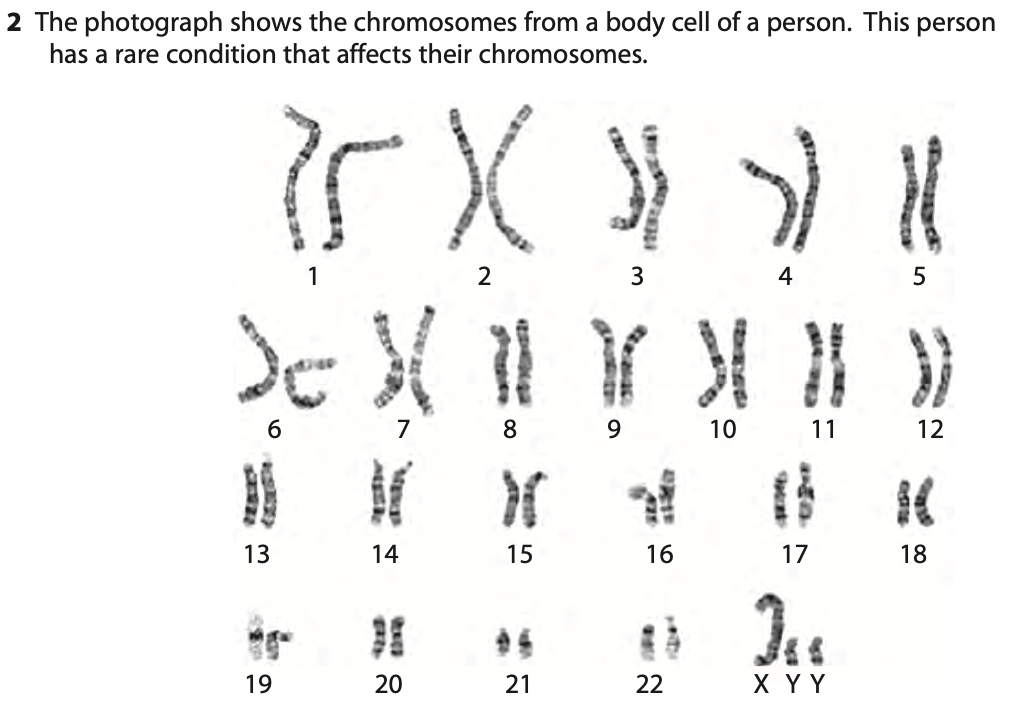
- 5State the sex of the person the chromosomes were taken from.male
- 6Describe how the chromosomes in the photograph differ from those found in a typical human body cell.has an extra chromosome
2. (which is) sex chromosome / Y - 7The rare condition leads to the formation of abnormal sperm cells. (i) Name the cell division that produces sperm cells.meiosis
- 8Suggest how an individual with the chromosomes shown could be produced.1. failure of chromosomes to separate
2. (gamete) has an extra chromosome
3. normal egg / gamete fertilised by abnormal sperm - 9—
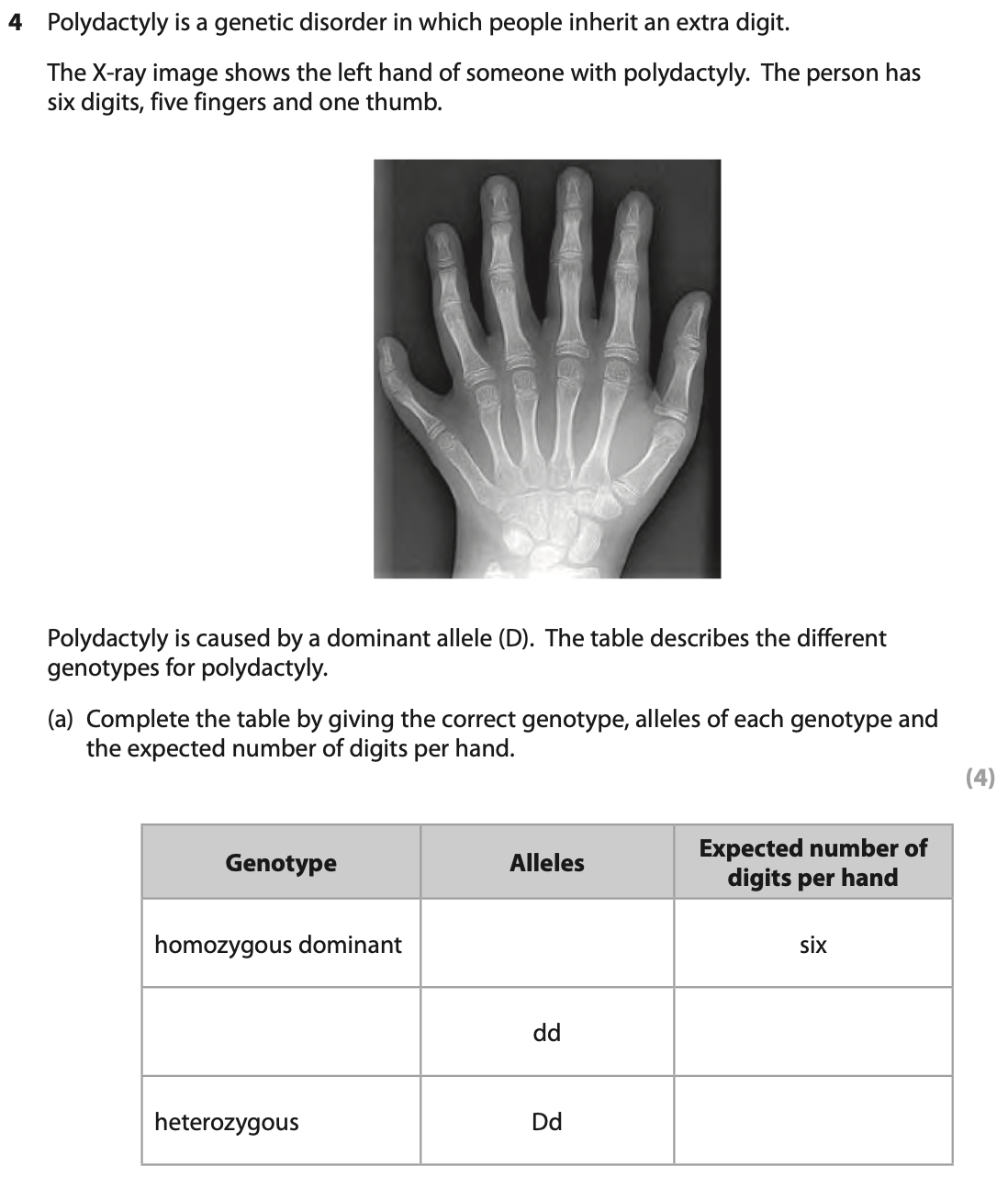
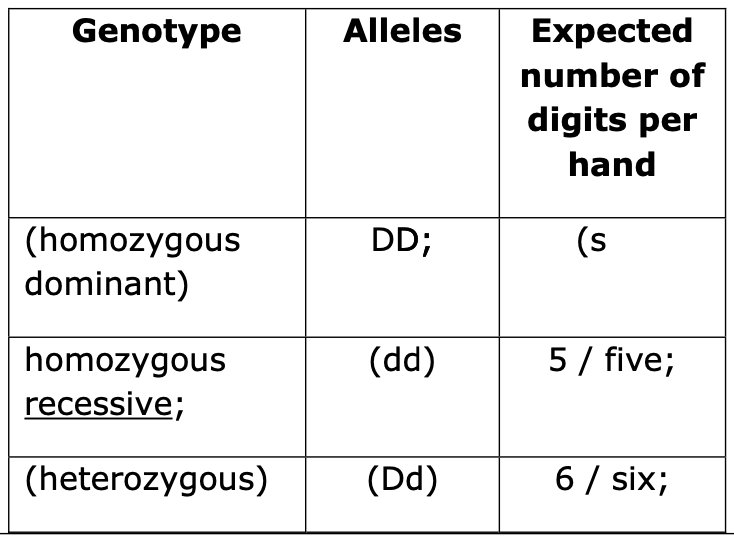
- 10—
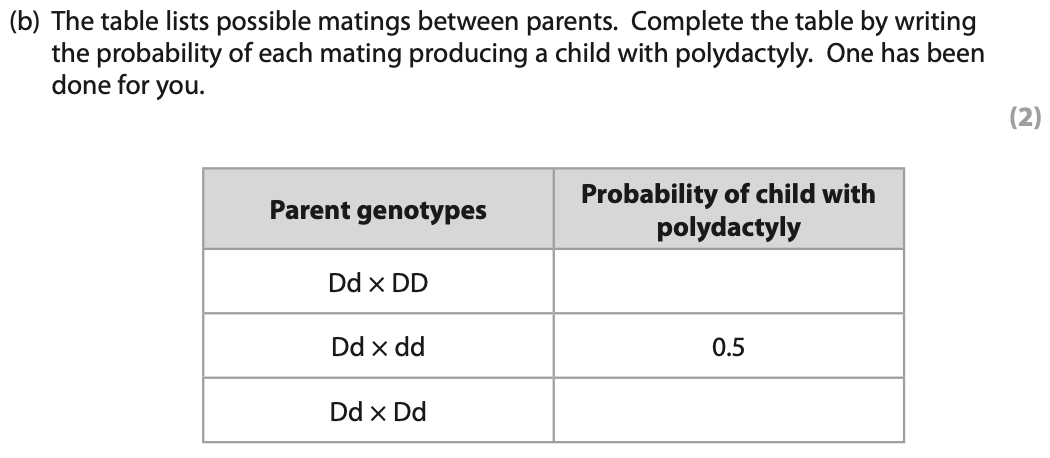
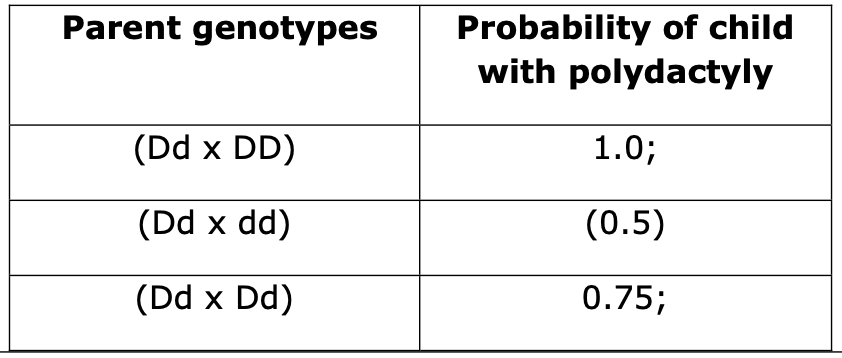
- 11—

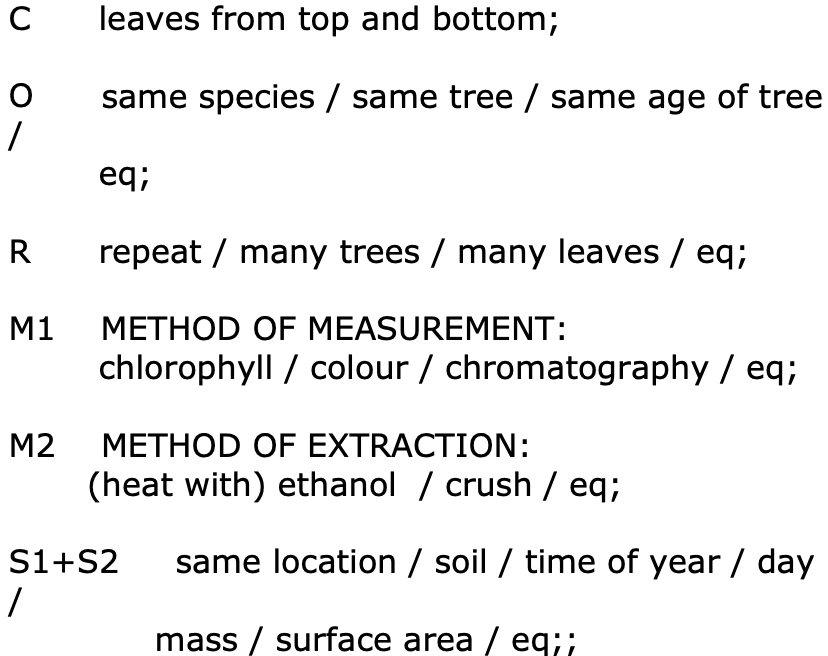
- 12—1. source of food / source of nutrients
2. smell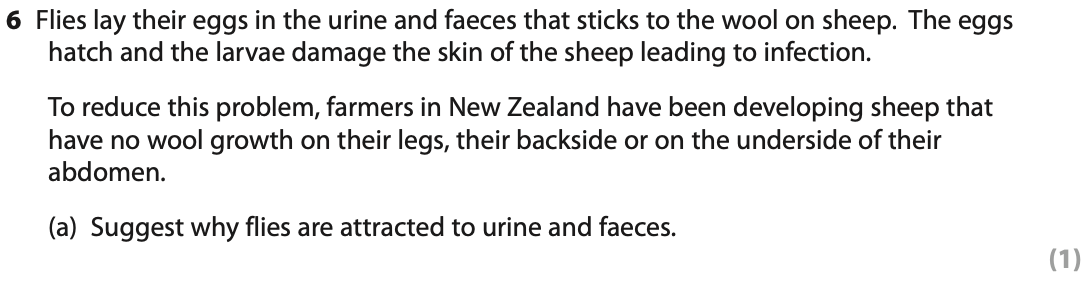
- 13—
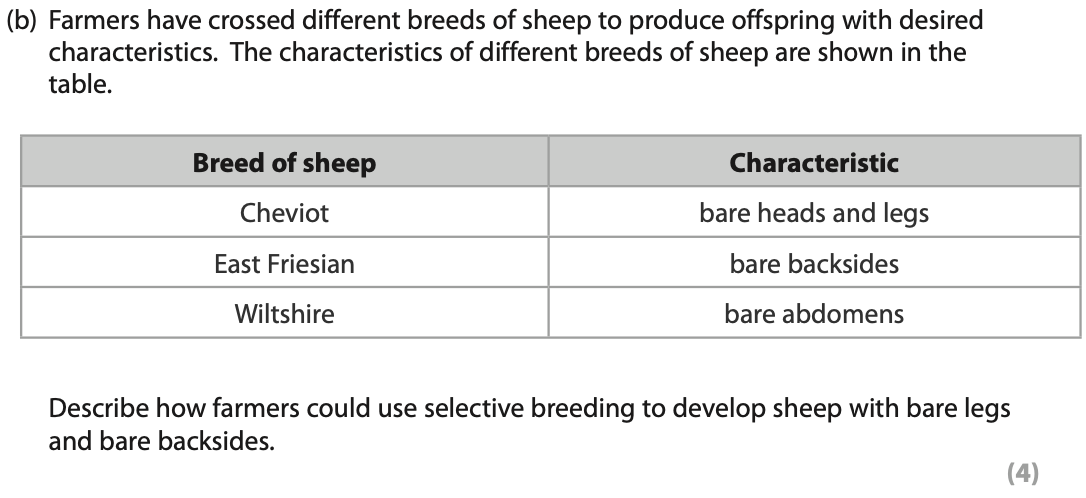
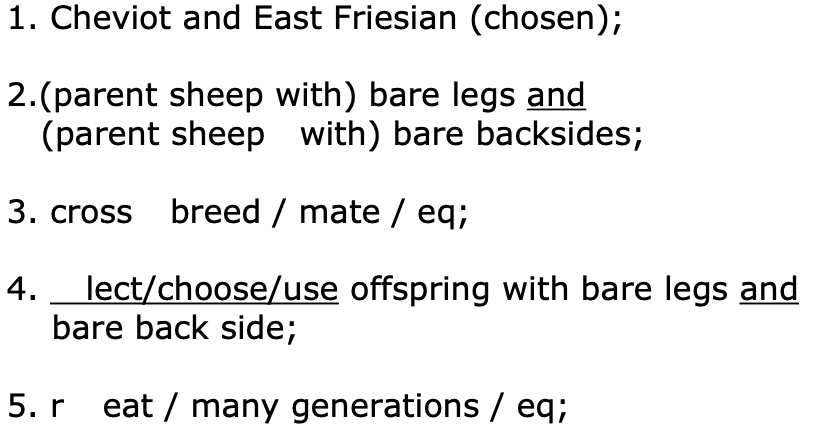
- 14Describe two differences between selective breeding and natural selection.1. sp erm;
2. fertilisation / fusion;
3. zygote;
4. diploid;
5. mitosis;
6. 40 / forty / 20 pairs; - 15Farmers sometimes use pesticides to prevent flies attacking sheep. Give two problems with the use of chemical pesticides.They may kill pollinating insects, harming the lifecycle of plants, especially crops.
They may be harmful to the sheep, or damage the sheep’s wool. - 16The passage describes selective breeding. Complete the passage by writing a suitable word in each of the spaces. Selective breeding involves ___ choosing organisms with desired ___. These organisms are allowed to breed and produce ___ . The process is ___ for several generations.Selective breeding involves HUMANS choosing organisms with desired CHARICTERISTICS.
These organisms are allowed to breed and produce OFFSPRING . The process is REPEATED for several generations.