
Diagrama de flujo
Sin título
Contenido del diagrama
Protein synthesis
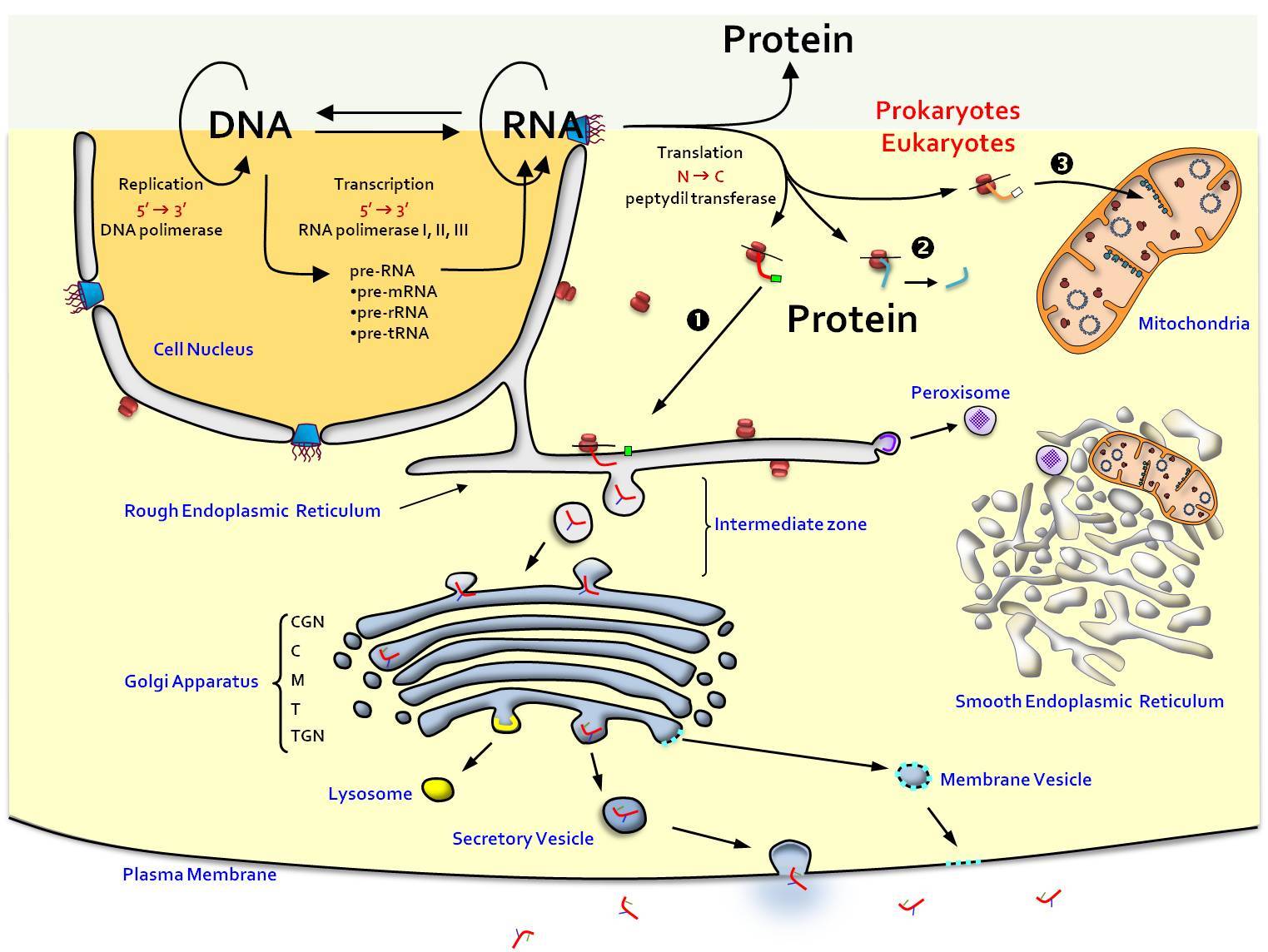
Making and secreting a protein:
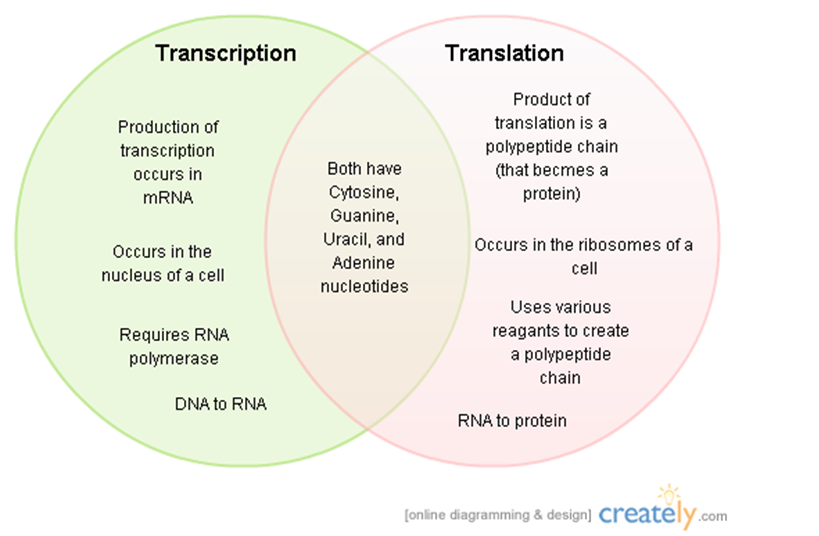
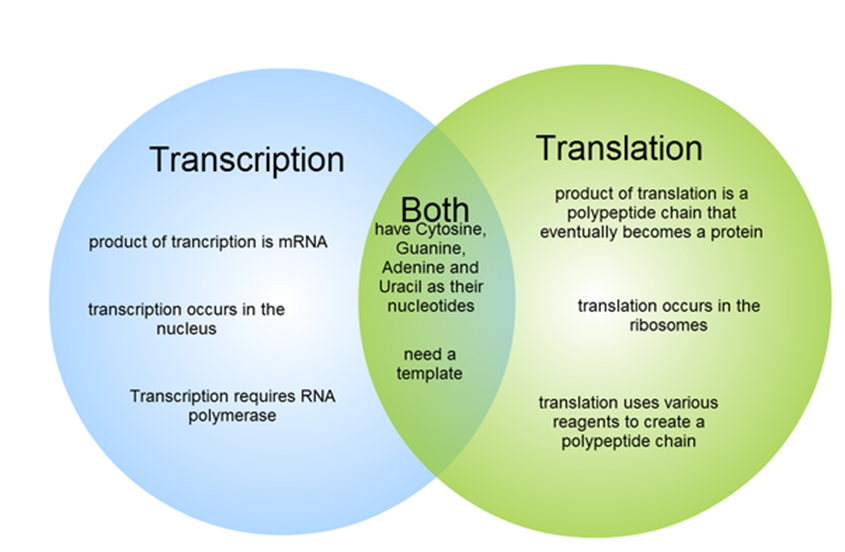
Transcription
Translation
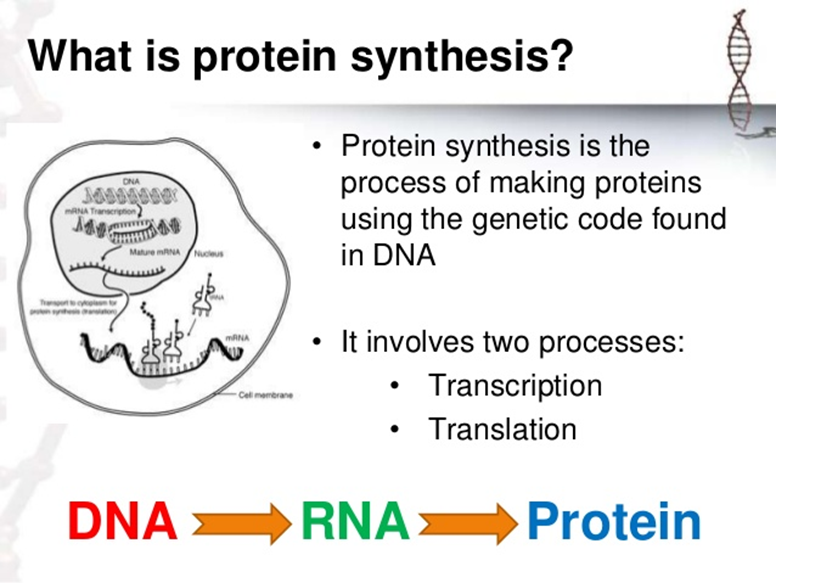
Transcription is the process by which the
information in a strand of DNA is copied into a new molecule of messenger RNA
(mRNA). DNA safely and stably stores genetic material in the nuclei of cells as
a reference, or template.
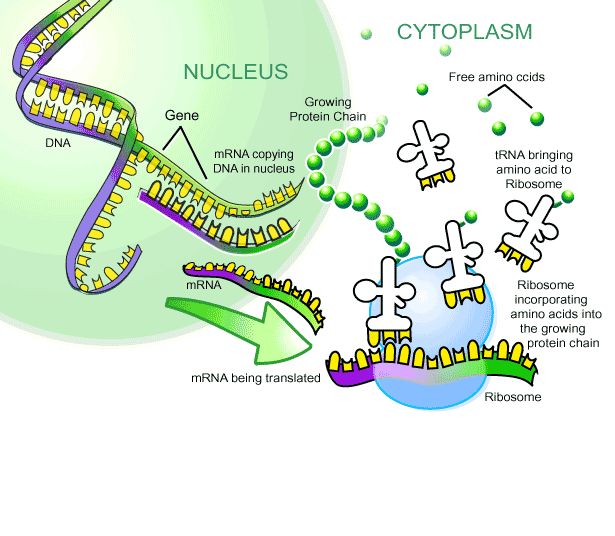
mRNA copy of the instructions (genes) for insulin is made in the nucleus.
mRNA leaves the nucleus through a nuclear pore.
mRNA attaches to the ribosome, in this case attached to rough endoplasmic reticulum. Ribosomes reads the instructions to assemble the protein (insulin)
Insulin molecules are 'pinched off' in vesicles and travel towards the Golgi Apparatus
Golgi Apparatus processes and packages insulin molecules ready for release
Vesicle fuse with Golgi Apparatus
Packaged insulin molecules are 'pinched off' in vesicles from Golgi Apparatus and move towards plasma membrane
Vesicle fuses with plasma membrane
Plasma membranes opens to release insulin molecules outside
A gene unwinds and unzips.
Hydrogen bonds between complementary nucleotide bases break.
The enzyme RNA polymerase catalyses the formation of temporary hydrogen bonds between nucleotide and their complementary unpaired DNA bases. A bonds with T;C with G; G with C; and U with A, on one strand of the unwound DNA. This DNA strand is called the template strand.
A length of RNA that is complementary to the template strand of the gene is produced. It is therefore a copy of the other DNA strand- the coding strand.
The mRNA now passes out of the nucleus, though the nuclear envelope and attaches to a ribosome.
Ribsomes are made in the nucleolus, into two smaller sub-units. These pass out of the nucleus through pores in the nuclear envelope and come together to form the ribosome.
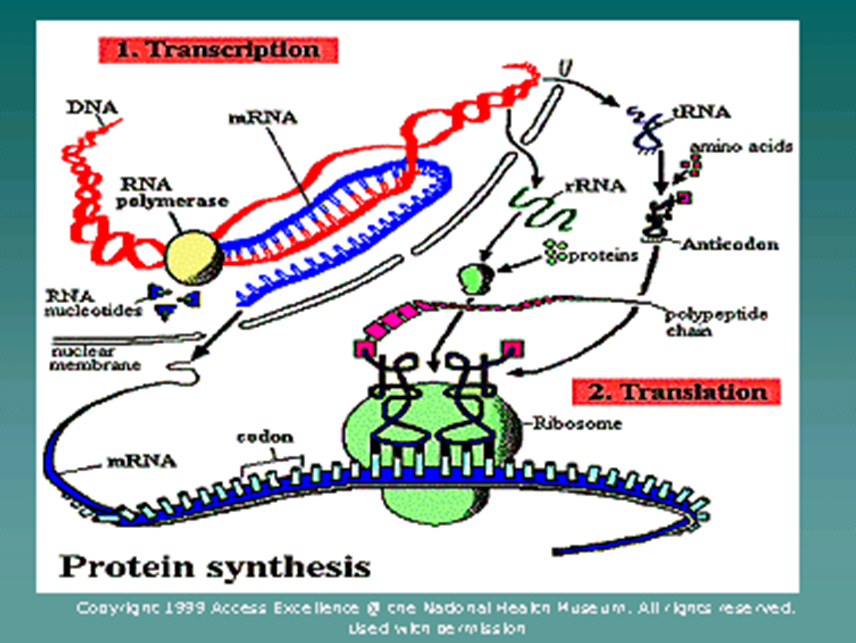
Transfer RNA molecules are made in the nucleolus and pass out of the nucleus into the cytoplasm. they are single-stranded polynucleotides, but can twist into a hairpin shape. At one end is the trio of nucleotide bases that recognises and attaches to a specific amino acid. At the loop of the hairpin is another triplet of bases called an anticodon, that is complementary to a specific codon (triplet) of bases on the
tRNA molecules bring the amino acids and find their place when the anti-codon binds by temporary hydrogen bonds to the complementary codon on the mRNA molecule.
As the ribosomes moves alongvthe length of mRNA, it reads the code, and when 2 amino acids are adjacent to each other a peptide bond forms between them.
ATP is needed for polypeptide synthesis.
After the polypeptide has been assembled, mRNA breaks down and its compoent molecules can be recycled.
The newly syntheissed polypetide formas a 3D tertairy structure
Información
- Descripción
- Diagrama sobre Sin título, creado por Nasra Moh el 25/04/2017.
- Creado por
- Nasra Moh
- Visitas
- 0
- Valoración