
Mapa mental
Eletricidade
Contenido del mapa
Eletricidade
GRANDEZAS ELÉTRICAS
- Corrente elétrica (i ou I) [S.I: Àmpere (A)]
- i = Q/t
- Tensão elétrica: (V) ou (U) [S.I: Volt (v)]
- U=E/Q || U=R.i
- Carga elétrica (Q) [S.I: C]
- Q=± n.e
- n= arga em excesso
- e=1,6 . 10^-19
- Q=i.t
- Q=± n.e
- Potência elétrica (P) [S.I: Watt (W) ou (J/s).]
- P=V.i || P=R.i² || P=U²/i
- Consumida: P = Eelétrica/dt [W/h]
- Resistência elétrica (R) [S.I: Ohm (Ω).]
- Resistividade (ρ) [S.I: Ωm]
- R = (ρ*L)/A
- R=U/i
- Resistividade (ρ) [S.I: Ωm]
- Frequência e Período
- T = 1/f e f = 1/T
- Frequência = nº de ciclos/segundo
- Corrente elétrica (i ou I) [S.I: Àmpere (A)]
Associação de cargas.
- SÉRIE
- I=I1=I2=I3=In
- Vfonte = Vr1 +Vr2 + Vr3 + ... + Vrn
- Req = R1 + R2 + R3 + ... + Rn
- PARALELO
- Ifonte = I1 + I2 + I3 + ... + In
- Vfonte = V1 = V2 = V3 = Vn
- 1/Req = 1/R1 +1/R2 + 1/R3 + ... +1/Rn
- SÉRIE
LEIS DE KIRCHHOFF
- 1 - Identificar os nós, ramos e malhas
- 2 - Atribuir para cada ramo um sentido de corrente
- 3 - Polarizar as fontes de tensão
- 4 - Polarizar as quedas de tensão nos resistores de acordo com o sentido adotado
- 5 - Havendo nós, aplicar a 1 a Lei de Kirchhoff
- 6 - Se o número de equações ainda não for suficiente para resolver o circuito, aplicar a 2 a Lei de Kirchhoff
- 7 - Escolher um ponto de partida e adotar um sentido de percurso para analisar a(s) malha (s)
- (A soma das tensões é nula)
- (Soma das correntes é nula)
- 6 - Se o número de equações ainda não for suficiente para resolver o circuito, aplicar a 2 a Lei de Kirchhoff
- 5 - Havendo nós, aplicar a 1 a Lei de Kirchhoff
- 4 - Polarizar as quedas de tensão nos resistores de acordo com o sentido adotado
- 3 - Polarizar as fontes de tensão
- 2 - Atribuir para cada ramo um sentido de corrente
- 1 - Identificar os nós, ramos e malhas
MÉTODO DE THÉVENIN
- 1 - Curto-circuitar a fonte p/ obter Rth
- 2 - Retirar o curto-circuito e obter Vth
- 3 - Caso possuir uma carga:
- Rt = Rth+Carga
- P=Vcarga*i
- I = Vth/Rt
- Vcarga = icarga + Rcarga
- Vth = (E.R2)/(R1+R2)
- 3 - Caso possuir uma carga:
- 2 - Retirar o curto-circuito e obter Vth
- 1 - Curto-circuitar a fonte p/ obter Rth
MÉTODO DE NORTON
- 1 - Curto-circuitar a fonte p/ obter RN
- 2 - Retirar o curto-circuito e curto-circuitar a e b p/ obter IN
- 3 - Calcular a corrente com carga
- IC = (RN.IN)/(RN+Rcarga)
- 4 - Divisores de corrente
- I1 = (R2.IN)/(R1+R2)
- I2 = (R1.IN)/(R1+R2)
- IN = V/R
- 3 - Calcular a corrente com carga
- 2 - Retirar o curto-circuito e curto-circuitar a e b p/ obter IN
- 1 - Curto-circuitar a fonte p/ obter RN
TRANSFORMAÇÕES DE CIRCUITOS
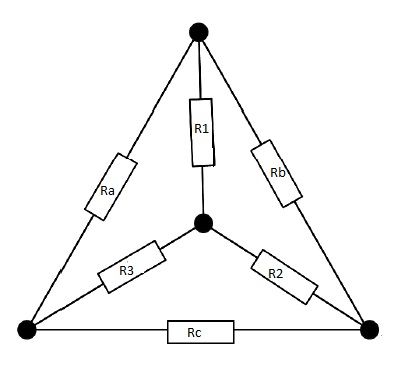
- Transformação Δ - Y
- R1=(Ra.Rb)/(Ra+Rb+Rc)
- R2=(Rb.Rc)/(Ra+Rb+Rc)
- R3=(Ra.Rc)/(Ra+Rb+Rc)
- Transformação Y - Δ
- Ra=(R1.R2+R2.R3+R1.R3)/R3
- Rb=(R1.R2+R2.R3+R1.R3)/R1
- Rc=(R1.R2+R2.R3+R1.R3)/R2
- Transformação Δ - Y
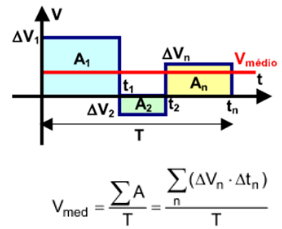
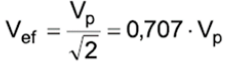
CARACTERÍSTICAS DE SINAIS ALTERNADOS
- Vpp=Vp*2
- FORMA DE ONDA SENOIDAL:
- f(a)=Amáx*sen(α) e α= ω.t
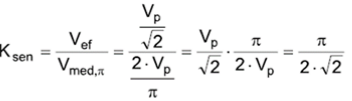
- FATOR DE FORMA DE ONDA SENOIDAL
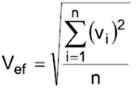
- VALOR EFICAZ DE UMA FUNÇÃO DISCRETA (Ñ PERIÓDICA, SENOIDAL)
- CORRENTE
- CORRENTE INSTANTÂNEA:
- i(t) = Ip*sen(ω.t)
- CORRENTE INSTANTÂNEA:
- TENSÃO
- TENSÃO INSTANTÂNEA
- v(t) = Vp*sen(ω.t)
- TENSÃO INSTANTÂNEA
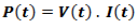
- POTÊNCIA
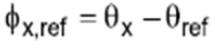
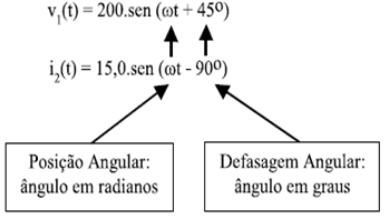
- FASE INICIAL: ângulo de deslocamento de uma onda senoidal em relação a outra
- IMPORTANTE
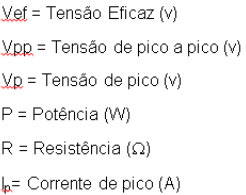
- LEGENDA
CAPACITORES EM CORRENTE CONTÍNUA
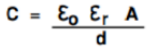
- CAPACITÂNCIA
- C = (8,85.10^-12).A/d
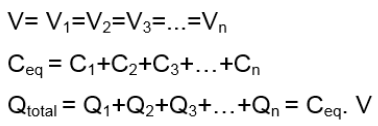
- ASSOCIAÇÃO EM PARALELO
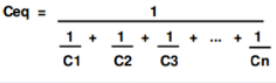
- ASSOCIAÇÃO EM SÉRIE
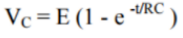
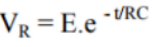
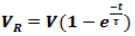
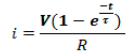
- CONSTANTE DE TEMPO
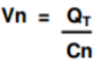
- TENSÃO NO CPACITOR
- TENSÃO NO RESISTOR
- TENSÃO NO CPACITOR
- CAPACITÂNCIA
GERADORES E RECEPTORES
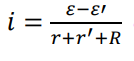
- LEI DE POUILLET
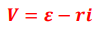
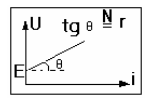
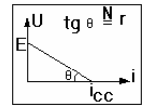
- EQUAÇÃO DO GERADOR
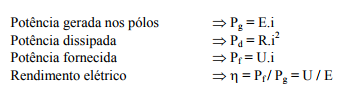
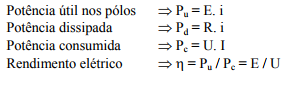
- POTÊNCIA ELÉTRICA NO GERADOR
- POTÊNCIA ELÉTRICA NO GERADOR
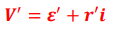
- EQUAÇÃO DO RECEPTOR
- POTÊNCIA ELÉTRICA NO RECEPTOR
- POTÊNCIA ELÉTRICA NO RECEPTOR
- GERADOR IDEAL: r=0 E U=E
- LEI DE POUILLET
INDUTORES EM CORRENTE CONTÍNUA
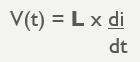
- INDUTÂNCIA (L)
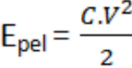
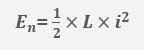
- ENERGIA ARMAZENADA
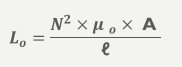
- INDUTÂNCIA EM CONDUTOR COM ESPIRAS
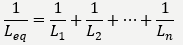
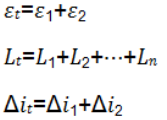
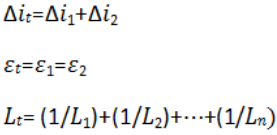
- ASSOCIAÇÕES
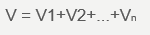
- SÉRIE
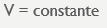
- PARALELO
- N INDUTORES IGUAIS
- N INDUTORES IGUAIS
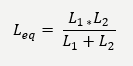
- 2 INDUTORES DIFERENTES:
- SÉRIE
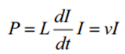
- POTÊNCIA E ENERGIA ARMAZENADA
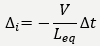
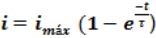
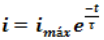
- REGIME TRANSITÓRIO
- CORRENTE
- C/ CONDIÇÃO DE CONTORNO
- S/ CONDIÇÃO DE CONTORNO
- C/ CONDIÇÃO DE CONTORNO
- TENSÃO
- CORRENTE
- INDUTÂNCIA (L)
INDUTORES EM CORRENTE ALTERNADA
- INDUTORES EM SÉRIE
- LEI DE LENZ
- TENSÃO INDUZIDA
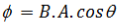
- FLUXO MAGNÉTICO
- INDUTORES EM PARALELO
- FORÇA ELETROMOTRIZ
- INDUTÂNCIA
- TENSÃO
- CORRENTE
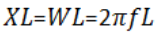
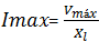
- REATÂNCIA INDUTIVA
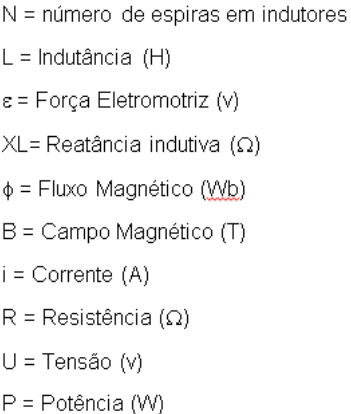
- LEGENDAS
- INDUTORES EM SÉRIE
CAPACITORES EM CORRENTE ALTERNADA
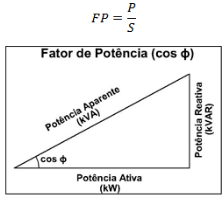
- POTÊNCIA ATIVA
- POTÊNCIA APARENTE
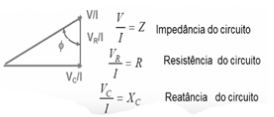
- IMPEDÂNCIA
- POTÊNCIA EM CAPACITORES DE CORRENTE ALTERNADA
- POTÊNCIA REATIVA
- MÓDULO DE Z
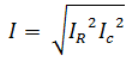
- CORRENTES NO CIRCUITO RC PARALELO
- FATOR DE POTÊNCIA
- REATÂNCIA CAPACITIVA
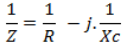
- IMPEDÂNCIA EM CIRCUITO PARALELO
- NA FORMA CARTESIANA
- EM MÓDULO
- NA FORMA CARTESIANA
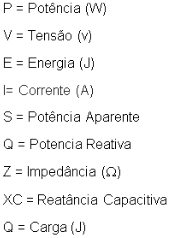
- LEGENDAS
- POTÊNCIA ATIVA
Imágenes y archivos del mapa


























Información
- Descripción
- ELETRICIDADE M2 Mapa Mental sobre Eletricidade, creado por Nadine Soares el 23/10/2017.
- Creado por
- Nadine Soares
- Visitas
- 31
- Valoración