
Mapa mental
P9: Motion
Contenido del mapa
P9: Motion
Speed and distance-time graphs
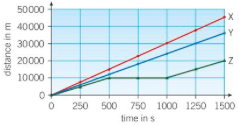
- Distance-time graphs can show us the speed a vehicle is travelling.
- The gradient of the line tells us the speed of the car.
- If the graph has a straight line, the speed is constant.
- The steeper the gradient, the greater the speed.
- If a graph has a curved line, then speed is changing.
- Speed can be calculated at any point by working out the tangent to a point.
- If the line is flat, then the vehicle has no speed and is not moving.
Velocity and acceleration
- Velocity is speed in a given direction.
- Two vehicles may have the same speed but different velocities dependant on their direction.
- If a vehicle travels in a circular direction, its speed is the same however the velocity is continuously changing.
- Displacement is the distance travelled in a given direction.
- The acceleration of a vehicle is its change in velocity per second.
- Deceleration is when a vehicle slows down.
- Velocity is speed in a given direction.
Velocity-time graphs
- The gradient of the line shows a vehicles' acceleration.
- When brakes are applied to a vehicle, it begins to decelerate.
- Because of this, the line of the graph will have a negative gradient.
- The area under a velocity-time graph can calculate the distance travelled.
Imágenes y archivos del mapa

Información
- Descripción
- GCSE Physics Mapa Mental sobre P9: Motion, creado por Shannon O'Boy el 22/01/2018.
- Creado por
- Shannon O'Boy
- Visitas
- 63
- Valoración