
Mapa mental
Biology - Risk of Cardiovascular Disease 1
Contenido del mapa
Biology - Risk of Cardiovascular Disease 1
Risk?
- 'The probability of occurrence of some unwanted event or outcome'
- Example calculation of risk: 19,429 UK people died of an injury/poisoning in 2005. Total population at the time was 60,209,408, so we can calculate this as an average risk
- 19,429 in 60,209,408... OR 1 in 60,209,408÷19,429 --> =1 in 3099 --> =1÷3099 --> =0.00032 OR 0.032%
Factors that Increase the Risk of Cardiovascular Disease
- Lifestyle
- DIET - high in saturated fat increases blood cholesterol level, which increases atheroma formation. High salt levels increase blood pressure
- HIGH BLOOD PRESURE - increased risk of damage to artery walls
- Other causes include excessive alcohol consumption, stress and diet
- SMOKING - carbon monoxide combines with HAEMOGLOBIN in the blood, reducing the amount of oxygen being transported
- NICOTINE makes platelets more sticky so blot clots can form easily
- Amount of ANTIOXIDANTS (help protect cells) in the blood decreases - increased risk of CVD
- INACTIVITY - lack of exercise leads to high blood pressure
- Beyond Our Control
- GENETICS - some people inherit particular alleles which make them more likely to have high blood pressure or high cholesterol levels
- AGE - increased age increases the risk of CVD
- GENDER - men are at greater risk
- Lifestyle
High Blood Pressure (Hypertension)
- Measure of the hydrostatic force of the blood against blood vessel walls
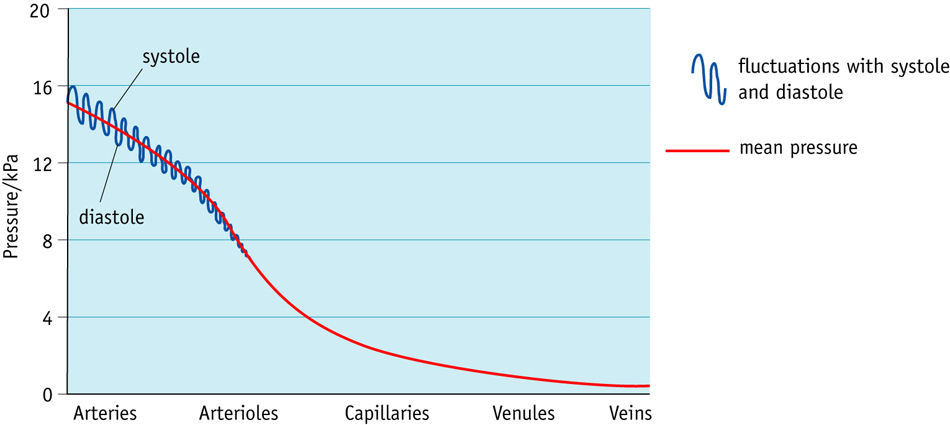
- A SPHYGMOMANOMETER measures blood pressure - for a healthy average person the reading should be 100-140mmHg for SYSTOLIC pressure and 60-90mmHg for DIASTOLIC pressure
- What determines your blood pressure?
- Contact between blood and vessel walls causes FRICTION and effects the flow of blood - PERIPHERAL RESISTANCE
- ARTERIOLES and CAPILLARIES have greater total SURFACE AREAS --> more friction --> more resistance --> slower blood flow --> lower pressure
- If the walls of an artery/arteriole contract, the vessel contracts, increasing resistance
- If they relax, the lumen is dilated, so the resistance falls
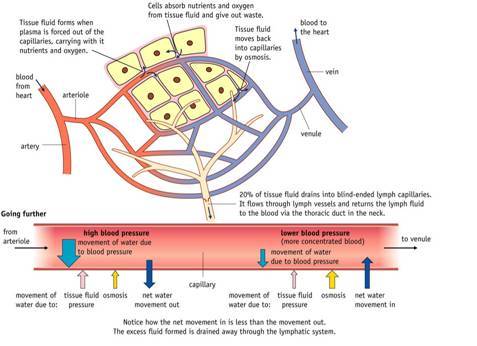
- OEDEMA - fluid building up in tissues and causing swelling
- At the arterial end of a capillary, blood is under pressure. This forces fluid through the capillary walls into the intercellular spaces, forming TISSUE FLUID
- The capillary walls prevent blood cells and larger plasma proteins from passing through though
- High blood pressure means more of the fluid is forced out of the capillaries
- At the arterial end of a capillary, blood is under pressure. This forces fluid through the capillary walls into the intercellular spaces, forming TISSUE FLUID
- Contact between blood and vessel walls causes FRICTION and effects the flow of blood - PERIPHERAL RESISTANCE
Imágenes y archivos del mapa
Información
- Descripción
- Mapa Mental sobre Biology - Risk of Cardiovascular Disease 1, creado por izzykersley01 el 29/10/2014.
- Creado por
- izzykersley01 · oct 2014
- Actualizado
- 15 jun 2016
- Visitas
- 5
- Valoración