
Mapa mental
Instructional Designs
Contenido del mapa
Instructional Designs
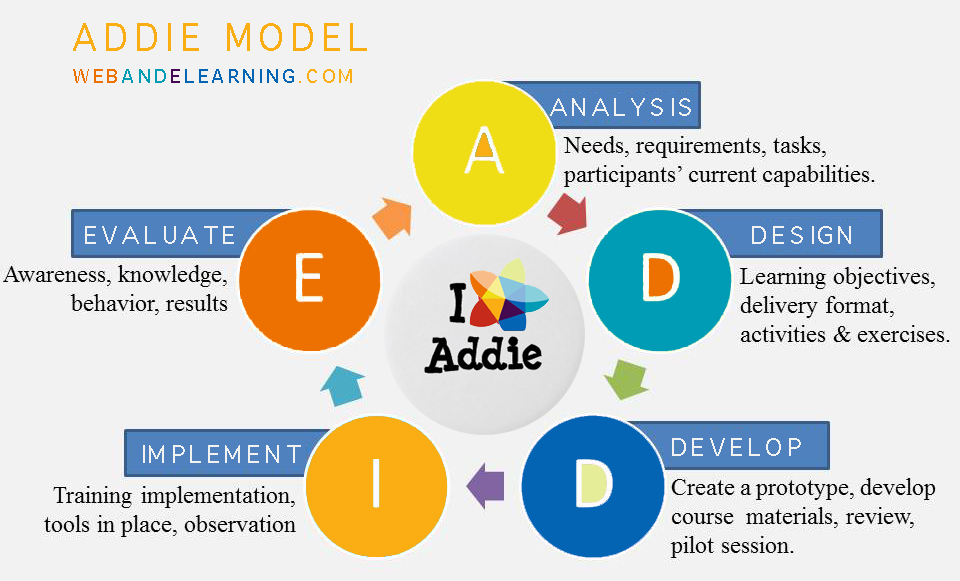
ADDIE MODEL
- It is a systematic process well known as instructional technology too. Also, it helps instructional designers in creating an efficient, affective teaching design.
- It is a systematic process and it helps designers in creating an efficient, and effective teaching. In fact, it has four components.
- Analysis phase
- Analyze Ss (Knowing Ss, their needs and problems
- Develop an instructional design (Provinding steps and opportunities to learn)
- Create instructional goal (What learners learn?, specify goals to save time and resources)
- Analysis's learning objectives (Ss should achieve the objectives when instruction is completed)
- Designed phase
- Steps of applying instructions. Also, how effective is in facilitating Ss' learning and interaction with materials. It focuses on designing assessment.
- An assessment's design
- Assess Ss' outcomes. Relate content and context
- Select a form of the course (Lectures, online over the internet, self-based workbook, etc...)
- Creating structional strategy (It's a combination of methods, for example: lectures, discussions, reading, and activities, etc....)
- Development phase
- Integrates technology by holding the educational settings and process. Backup plan is important
- Runs through conduction of the course.
- Creating factual sample for the instruction design
- Develop the materials of the course
- Implementation phase
- Transforming the plan into actions. It considers three steps: training instructors , preparing the Ss and organizing the learning environment
- Evaluating Phase
- Make sure that the Ss achieve their goal.
- Formative evaluation (One to One). It focuses on evaluating each material, confirm if the materials were effective and identifying the strenghts and weaknesses
- Small Group (Evaluation)
- Formative evaluation on trial in field
- Important Summative evaluation support the real value for the design
- Formative evaluation on trial in field
- Analysis phase
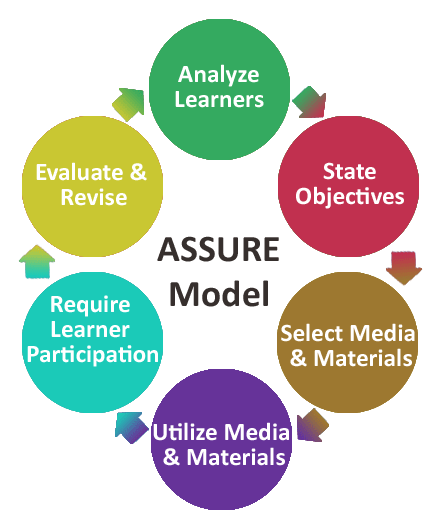
ASSURE MODEL
- It is a guide of planning and conducting instruction that uses media.
- Analyze Ss
- Analyze Ss' characteristics (Grade level, age, sex, mental emotional, etc...)
- Analyze entry competencies (prior knowledge, skills, and attitude on the topic)
- Analyze learning styles
- State Objectives
- Focuses on the objectives (Objectives are learning outcomes)
- Objectives contain four parts:
- Audience-who you Ss are?
- Behavior to be demostrated
- Condition under which the behavior will be observed
- Degree to which the learned Skills are to be demostrated
- Condition under which the behavior will be observed
- Behavior to be demostrated
- Audience-who you Ss are?
- Select methods, media, and materials
- Select the appropiate method
- Select available materials
- Modify existing materials
- Designs new materials
- Modify existing materials
- Select available materials
- Select the appropiate method
- Utilize media and materials
- Must be used for your methods
- It is important to preview the materials and have a plan B
- Must be used for your methods
- Require Ss participation
- Ss should actively involved in the learning experienced.
- Incorporate questions and answers, discussions, group work, hand-on activities, etc...)
- Ss should actively involved in the learning experienced.
- Evaluate and revise
- Evaluate the instructional process
- Must reflect the lesson, objectives, instructional strategy, instructional materials, assessment, etc...
- Evaluate the instructional process
Imágenes y archivos del mapa


Información
- Descripción
- These are the description of educational model (Instructions designs)
- Creado por
- Brandon Tuyuc · ago 2016
- Actualizado
- 6 abr 2017
- Visitas
- 74
- Etiquetas
- Valoración