
Mapa mental
PhysEd Curriculum Development
Contenido del mapa
PhysEd Curriculum Development
Curriculum Theory
- What is it?
- Planned Sequence of Formal Instructional Experiences as presented by the instructor
- Curriculum is the what and why when facilitating learning
- Instruction is the delivery mechanism
- They're connected
- Curriculum is the what and why when facilitating learning
- Planned Sequence of Formal Instructional Experiences as presented by the instructor
- Curriculum as Praxis
- Cookbook approaches are not generally effective because every school and community is unique
- To have a successful approach one must blend public policy and personal judgement
- It is important to include different methods in your curriculum. All of the students must be approached in a different manner but their must be an end goal to ones curriculum
- Cookbook approaches are not generally effective because every school and community is unique
- Curriculum Value Orientations
- Disciplinary Mastery
- Priority placed on the subject matter to be learned
- Mastery of Knowledge
- Evaluation based on definition of effective performance
- Evaluated by skill tests and drills
- Students Gain Proficiency in
- Fundamental movement, skill and fitness
- A cognitive understanding of rules, strategies and scientific principles associate with increased performance
- Appreciation of a healthy active lifestyle
- Priority placed on the subject matter to be learned
- Self Actualization
- Emphasis is placed on the development of the individual learner
- Growth in independence, individuality and personal growth
- Students learn about themselves, how to become responsible and independent and develop their own characteristics
- Evaluation stresses self understanding and personal growth
- Growth in independence, individuality and personal growth
- Emphasis is placed on the development of the individual learner
- Social Responsibility
- Emphasis on Societal Goals
- Emphasize skills that are needed to participate successfully in todays society
- Evaluated based on students demonstration of cooperation, participation and acceptance of responsibility
- Students learn social rules and norms and develop appropriate social interactions with others
- I feel that it is important to include social responsibility in every curriculum as one must try and foster good future citizens, This can be a small part of any curriculum rather then the sole focus
- Emphasis on Societal Goals
- Learning Process
- Emphasis placed on both subject matter content and the learner
- Emphasize how to learn and the skills required for continued learning
- Evaluation Occurs within the process of learning
- Students learn how to learn movment and sport and how to use previous information to solve other problems
- Emphasize how to learn and the skills required for continued learning
- I prefer the Learning Process strategy because I feel that it is important to teach students how to learn, rather then just pure facts or simple tasks. This gives the students wide variety of skills.
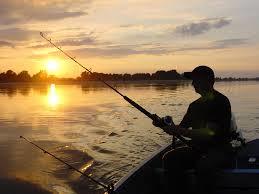
- Example: Give a man a fish and you feed him for a day. Teach a man to fish and you feed him for a lifetime.
- Emphasis placed on both subject matter content and the learner
- Ecological Intergration
- All of the curriculum is equally important
- Offers wide range of strategies to meet needs and interests of students
- Students learn to respond to changes in their lives and determine their own future
- All of the curriculum is equally important
- Disciplinary Mastery
- What is it?
Curriculum Innovation and Change
- What can you change?
- Content
- Materials
- Expierences or Tasks
- Student Grouping and scheduling
- Use of time and space
- Use of different teaching tactics
- Top-Down versus Bottom Up strategies
- How ca you change it?
- Large Scale
- Designed by external experts and packaged for implementation in schools
- Teacher is the executor of the large scale reform
- Designed by external experts and packaged for implementation in schools
- Small Scale
- Perspectives on the change Process
- Technical
- Not historically successful
- Resistance Theory suggest that teachers consciously and actively resist changes that they do not beleve in
- Not historically successful
- Ecological
- Envision the teacher as an integral part of the innovation process
- Cultural
- Teachers are part of the culture that facilitates stability or initates and sustains valuable curricular change
- Teachers are empowered to make decisions in their classrooms
- Teachers are part of the culture that facilitates stability or initates and sustains valuable curricular change
- Technical
- Large Scale
- Top Down
- Developed by external experts and admin who work in a technical perspectives
- More effective approach to comprehensive curriculum change
- Successful only when an effort is made to foster teacher involvement and teacher ownership of a new program
- Bottom Up
- Strategies are initiated by the teacher
- Teachers are often most receptive to innovations created by colleagues within their school district
- Limitations
- Change is limited to small scale teachers innovations
- Radical changes are not possible
- Practical Implications
- The most effective innovations are ones that combine the ideas of both admin and the teachers
- It is important for the government, admin and teacher to work together to create the best possible student expierence
- Coordinating the efforts of admin and teachers requires them to assume different roles then the traditional school setting
- Solutions fail because of value conflicts that can not be solved
- Committees are valuable that view all members viewpoints
- The most effective innovations are ones that combine the ideas of both admin and the teachers
- How ca you change it?
- What can you change?
PE Curriculum Foundation
- Curriculum Perspectives is viewpoints that further explain the meaning and nature of curriculum development
- Hidden Curriculum is unplanned and unrecognized values that are taught and learned through the process of education
- Curriculum Alignment
- Involves a process to identify discrepancies between what is intended and what actually happens
- Example is Fitness Renaissance and the Wellness Movement has created fitness education
- Involves a process to identify discrepancies between what is intended and what actually happens
- Curriculum Integration responds to the need to make students learning relevant by making connections accross subject areas
- Planning Curriculum
- Backward Design
- Identify Results
- Determine acceptable evidence
- Plan learning experiences and instruction
- Determine acceptable evidence
- Key is to think like an assessor, design assessments before lessons
- Photo Album approach
- Lots of planning
- It is important to design with the end goal in mind so that you can design proper curriculum
- Identify Results
- Outcome- Based Education
- Based on a goal
- Not what is taught but what is learned. Cintent is a method of reaching essential learning
- Planning done based on exit outcomes!
- Based on a goal
- Backward Design
- Curriculum Perspectives is viewpoints that further explain the meaning and nature of curriculum development
Global Planning
- Global planning is a distribution by year of 3 things
- The PE Competencies
- The types of physical Activity according to their level of importance
- The number of lessons available
- Global Plan enables teachers by
- Deciding how Competency 3 will be planned during the cycle
- Draw a list of types of physical activities and means of action to be used
- How to global plan
- Decide how to plan Comp 3
- Create a list of activities for Comp 3
- Create a list of PA and means of actions
- Decide on the requirements for each competency
- Plan the number of periods during the cycle assigned to each competency
- Decide how to plan Comp 3
- Global planning, although a time consuming process, can save a lot of time in the long term. When a plan is set out it because easier to teach lessons day to day as well as easier to have long term goals. The students must know the long term goal so they know how to succeed.
- Global planning is a distribution by year of 3 things
Program Evaluation
- Program Evaluation is the process of identifying the areas of merrit and the areas of concerns in your program
- 3 Questions to ask about your program
- Is the program producing the desired results?
- Are the students learning the outcomes targeted for each grade and are students leaving after achieving the program aims.
- The collection and compilation of data on students performance is required to be an ongoing process
- Is the program being implemented as intended?
- Write comments on your LES on a daily basis to learn from prior failure
- Is the program plan appropriate?
- Should the number of learning outcomes in the program be increased or decreased
- Should sequence or placement of any of the learning outcomes in the program be changed
- Are the program aims still achievable or do they need to be revised
- Is the program producing the desired results?
- Remember that you can always defend your program with data based arguments
- Program evaluation is a long term process that should be on going. If something is not working at all it should be modified so that the strategy works.
- 3 Questions to ask about your program
- Program Evaluation is the process of identifying the areas of merrit and the areas of concerns in your program
Curriculum in Action Teaching Sport Within PE
- Multiactivity Model
- Known as the traditional Model
- Teacher Explanation
- Teacher Demonstration
- Teacher led drill on basic skills
- Game Play
- Teacher led drill on basic skills
- Teacher Demonstration
- Teacher Explanation
- Characterized by unit approach which activities last 3 to 6 weeks, which allow for initial instruction and skill development, culminating in game play
- Critiques
- Lack of content mastery and transfer of skills
- Elite athletes are dominant while the lower skilled students avoid participation
- Boring and Irrelevant content
- Known as the traditional Model
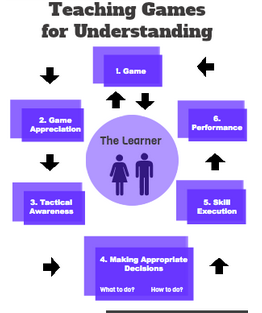
- Teaching Games for Understanding
- This strategy Focuses on the problems posed by game situations and the solutions to said problems
- Games are split up into categories which allow for transfer within the game categories
- Use small sided games to highlight a predetermined tactical problem
- Advantages
- Increase in Game Play
- Link between skills practice and their application
- Facilitates transfer of learning
- Description of TGFU
- This strategy Focuses on the problems posed by game situations and the solutions to said problems
- Sport Education
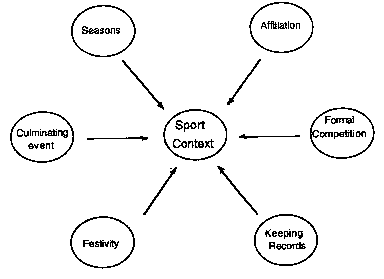
- The curriculum is designed around features of professional and amateur sports, with seasons, affiliation, formal competition and culminating event
- There are differences when compared to formal sport
- Students are engaged in diverse roles including
- Referee
- Player
- Statistician
- Coach
- Team Manager
- Journalist
- Students are engaged in diverse roles including
- There are differences when compared to formal sport
- Student Responses to Sports Education
- Perceived skill improvement
- reference for persisting team concept
- Increased roles and responsibilities
- Teacher Responses to Sport Education
- Frees teachers from much of the instructional demands of lessons
- Need to establish prior proticals
- Need to monitor and guide the tasks that peer coaches implement
- Implications for the use of Sports Education
- Critiques
- According to research there is no justification to playing full sided non modified games in PE
- Teachers need to start with a sport that they know well
- Success of a season in sport education requires strong managerial skills
- Students need to be held accountable for actions in during the sport season
- Critiques
- The curriculum is designed around features of professional and amateur sports, with seasons, affiliation, formal competition and culminating event
- I think it is important for teachers to use different strategies that can apply to many students, rather then just one or two. A combination of models would form the best practice, and my preferred practice
- Multiactivity Model
Problems and Issues in Physical Education
- Issues in Elementary Physical Education
- Time
- Specialist Teachers
- Facilities
- Curricula
- Issues in Secondary School Physical Education
- Difficult Teaching Situations
- Class sizes, different skill levels and interest
- It is important to best use your space that you have
- Coed Participation
- Sometimes different sexes don't want to participate in activities because they fear the judgement of the other sex
- Coed teaching is difficult because of the different abilities of those in the class
- Personally I feel that the classes should be split by sex to maximize participation
- Role conflict and strain
- Conflict exists when one is expected to coach rather then teach
- Physical Education in Urban High Schools
- Intramural Athletics
- Happy, Busy and Good
- Too many high school classes can be described as supervised recreation
- As future physical educators it is important not to continue this trend
- Too many high school classes can be described as supervised recreation
- Difficult Teaching Situations
- The problems in Physical Education can be solved, but it takes the commitment of many individuals
- Issues in Elementary Physical Education
Green Indicates my personal opinion and ideas
Imágenes y archivos del mapa
Información
- Descripción
- Mapa Mental sobre PhysEd Curriculum Development, creado por nicholas.richard el 12/04/2014.
- Creado por
- nicholas.richard
- Visitas
- 23
- Valoración