
Mapa mental
Backpain
Contenido del mapa
Backpain
Anatomy of the back
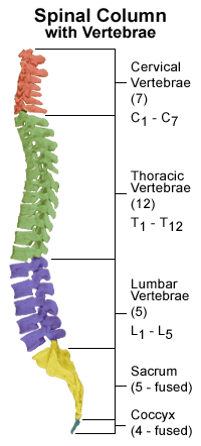
- spinal column
- consists from 33 vertebrae divided to different regions
- Cervical region
- Thoracic region
- Lumbar region
- Sacral region
- coccyx
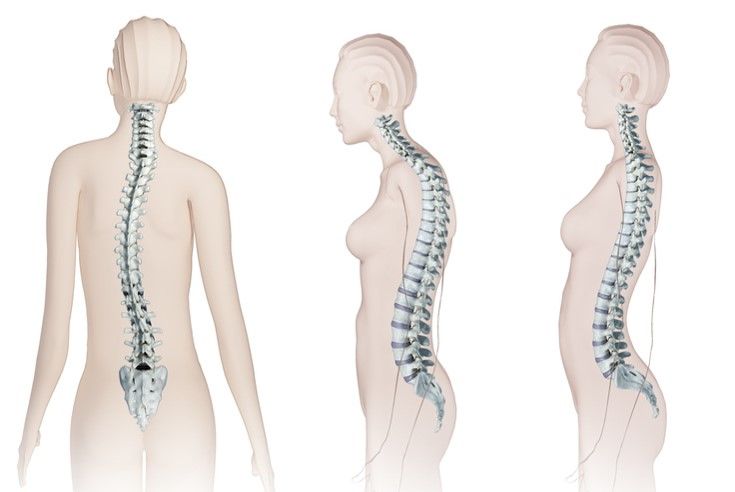
- Abnormal curvatures
- Lordosis
- the spine of a person with lordosis curves significantly inward at the lower back
- osteoporosis, obesity, discitis, spondylolisthesis
- the spine of a person with lordosis curves significantly inward at the lower back
- kyphosis
- characterized by an abnormally rounded upper back (more than 50 degrees of curvature).
- abnormal vertebrae development, poor posture or slouching, arthritis, spinda bifida, spine infections or tumors
- characterized by an abnormally rounded upper back (more than 50 degrees of curvature).
- scoliosis
- A person with scoliosis has a sideways curve to their spine. The curve is often S-shaped or C-shaped.
- tends to run in families
- A person with scoliosis has a sideways curve to their spine. The curve is often S-shaped or C-shaped.
- Lordosis
- Joints
- The Intervertebral Discs
- between the bodies of the vertebrae
- Zygapophyseal Joints (facet joints)
- synovial joints between the inferior articular process of superior vertebrae and the superior articular process of inferior vertebrae.
- Atlanto Occipital Joint
- articulations are between C1 (atlas) & the occipital condyles (skull).
- Nodding
- articulations are between C1 (atlas) & the occipital condyles (skull).
- Atlanto Axial joints
- Two lateral joints - One medial (Pivot) joint
- saying no
- Two lateral joints - One medial (Pivot) joint
- The Intervertebral Discs
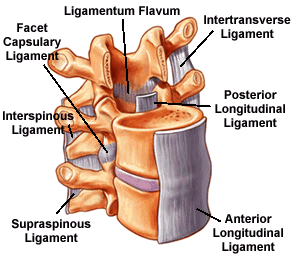
- Ligaments
- Anterior longitudinal ligament
- strong, broad fibrous band that covers and connects the anterior aspects of the bodies of the vertebrae and intervertebral discs.
- Posterior Longitudinal ligament
- narrower, weaker band than the anterior longitudinal ligament. It runs along the posterior aspect of the vertebral bodies, within the vertebral canal.
- Ligamentum Flavum
- laminae of adjacent vertebral arches are joined by broad, elastic bands
- Supraspinous and Interspinous ligaments
- join adjacent spinous processes.
- Intertransverse ligaments
- Connecting adjacent transverse processes.
- Anterior longitudinal ligament
- Spinal Cord Functions
- Reflexes.
- It serves as the reflex center for all spinal reflexes for involuntary responses to stimuli
- Conduction
- provides tracts to conduct impulses up (afferent) and down (efferent) the cord
- Reflexes.
- Internal structure
- Grey matter (H-shaped)
- Consists of 2 equal halves connected together by the Grey Commissure, which is traversed by the Central Canal.
- consists mainly of nerve cells (bodies).
- Consists of 2 equal halves connected together by the Grey Commissure, which is traversed by the Central Canal.
- White matter
- - It consists of Ascending & Descending Tracts
- myelinated nerve fibers grouped together; every tract has the same cells of origin, termination& carrying out the same function
- - It consists of Ascending & Descending Tracts
- Grey matter (H-shaped)
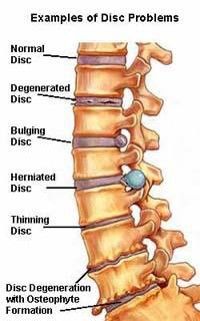
- Disk problems
- consists from 33 vertebrae divided to different regions
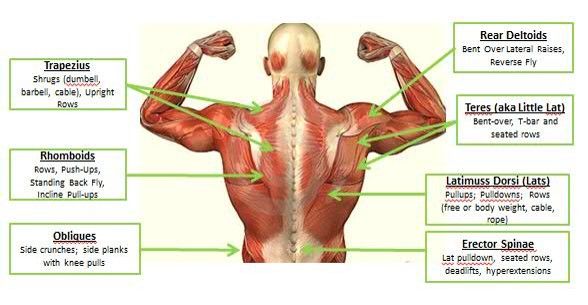
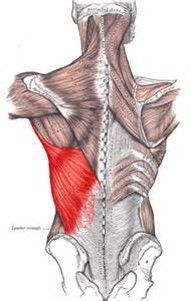
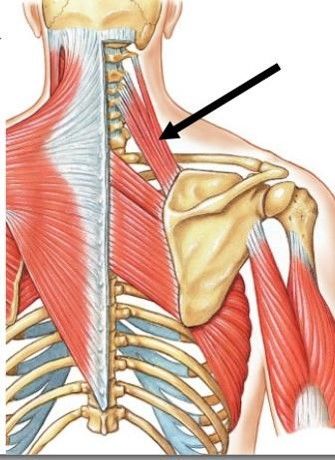
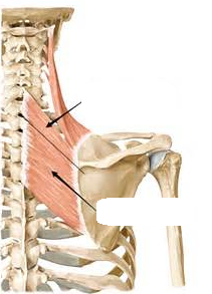
- Muscles
- Superficial
- Help to move the arm
- Levator Scapulae
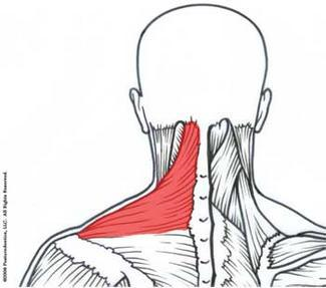
- Trapezius
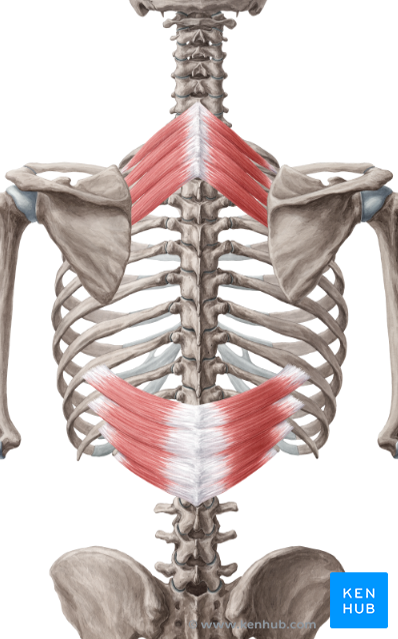
- Rhomboids
- Rhomboideus Minor
- Rhomboideus Major
- Latissmus Dorsi
- Help to move the arm
- Intermediate
- Respiratory muscles (insert to ribs)
- Serratus Posterior Superior and Inferior
- Respiratory muscles (insert to ribs)
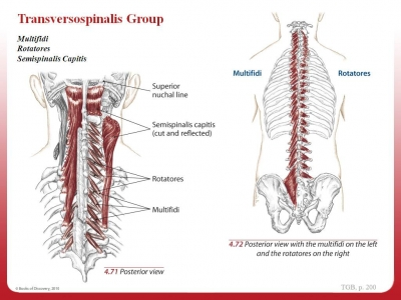
- Deep
- Move trunk and back
- Transverso-Spinalis
- Origin: transverse processes
- Insert: spines of vertebrae above.
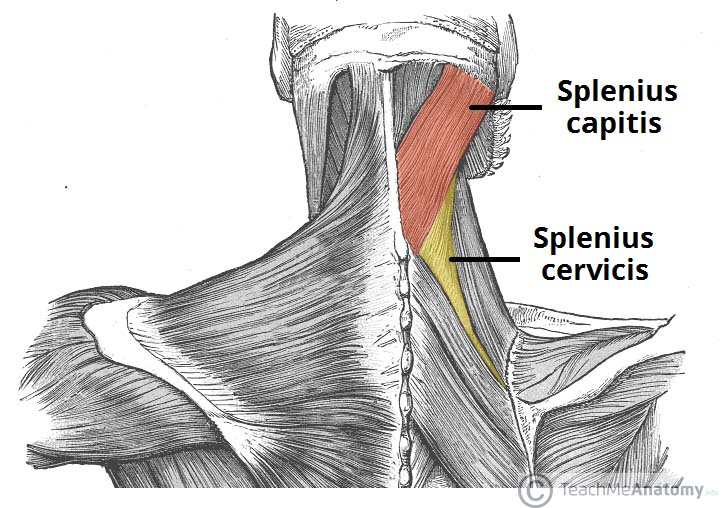
- SPLENIUS
- SPLENIUS CAPITIS AND SPLENIUS CERVICIS-
- Origin: Vertebrae (Spines of lower cervical, T1-T4).
- Insertion: Splenius Capitis- Skull (occipital, temporal bones) Splenius Cervicis- vertebrae (transverse processes C2, C3)
- Action: Extend neck and head; rotate in unilateral action.
- SPLENIUS CAPITIS AND SPLENIUS CERVICIS-
- Transverso-Spinalis
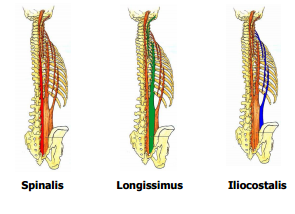
- Erector Spinae
- SPINALIS - most medial
- LONGISSIMUS - intermediate
- ILIOCOSTALIS - lateral
- Move trunk and back
- Superficial
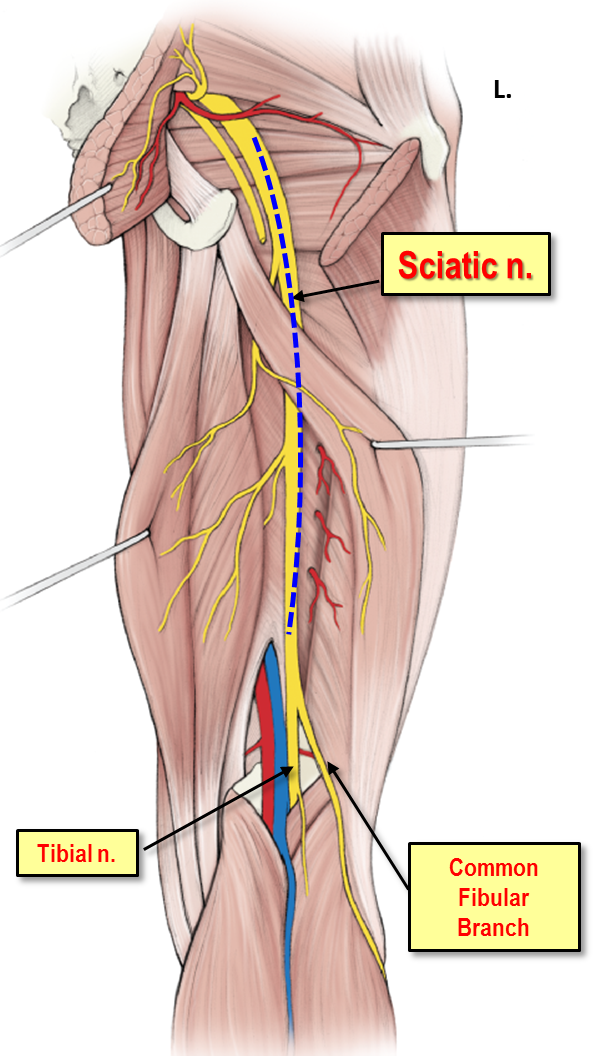
- Sciatic Nerve
- Largest Nerve in the body
- Also known as the ischiadic Nerve
- Originates from the lumbosacral nerves L4 , L5 , S1 , S2 , S3
- Two major branches
- Tibular nerve
- common fibular branch
- innervates the skin on the posterior aspect of the thigh and gluteal regions, as well as the entire lower leg (except for its medial aspect).
- pain that radiates along the path of the sciatic nerve, which branches from your lower back through your hips and buttocks and down each leg
- Sciatica
- Treatment
- Chiropractic/manual manipulation
- high-velocity, short lever arm thrust that is applied to abnormal vertebra with the goal of improving functionality, reducing nerve irritability and restoring range of motion in the back.
- Acupuncture
- Alteration in the secretion of neurotransmitters and neurohormones.
- Stimulation of electromagnetic points on the body
- Release of opioid peptides
- Cognitive behavior therapy
- taking control and changing self-defeating behaviors can be helpful in managing sciatica pain, particularly in the short term.
- Massage therapy
- improves blood circulation
- relaxes muscles for an improved range of motion.
- leads to increased endorphin levels.
- Spinal mobilizations
- passive movement applied to a spinal region or segment so as gently to increase the passive range of motion of that segment/region
- Ultrasound
- uses vibration to deliver heat and energy to parts of the lower backbones.
- Exercises
- Core muscle strength. Hamstring stretching. Aerobic exercises
- Sciatica surgery
- for severe continuous pain+limitations in daily life
- Microdiscectomy
- lumbar disc herniation
- Lumbar Laminectomy
- lumbar spinal stenosis
- Microdiscectomy
- for severe continuous pain+limitations in daily life
- Chiropractic/manual manipulation
- spinal column
Pain of the lower back
- Causes
- Mechanical
- Degenerative
- lower back strain
- muscle strain
- over-stretched or torn muscle
- damage to the muscle fibers
- Pain that also moves around
- damage to the muscle fibers
- over-stretched or torn muscle
- lumbar sprain
- when ligaments are stretched too far or torn.
- Symptoms
- Difficulty moving
- achy and dull pain
- muscle spasms
- Local soreness upon touch
- Symptoms
- when ligaments are stretched too far or torn.
- Lifting a heavy object, twisting, or a sudden movement
- muscle strain
- within the disc space itself
- a lumbar disc herniation
- when a nerve root in the lower spine is compressed, causing pain and numbness to travel along the large sciatic nerve that serves the buttocks, legs and feet.
- Symptoms
- Pain typically is ongoing
- worse in the leg and foot
- felt on one side
- worse after long periods of standing still or sitting
- More severe (burning, tingling
- accompanied by weakness, numbness or difficulty
- Symptoms
- when a nerve root in the lower spine is compressed, causing pain and numbness to travel along the large sciatic nerve that serves the buttocks, legs and feet.
- lumbar degenerative disc disease.
- Symptoms
- Low-level of constant lower back pain
- Chronic pain that can range from nagging to severe
- worsened by sitting
- Walking, even running, may feel better than sitting/standing
- slight instability in the lower back, bringing about pain, muscle spasms, and sometimes sciatica.
- When the lumbar discs between the vertebrae begin to break down
- Symptoms
- Isthmic Spondylolisthesis
- when a vertebra in the low back slips forward on the disc space below it.
- Symptoms
- radiates into the buttocks and back of the thighs (sciatica)
- worsens when bending backward
- feels better with sitting
- leg numbness or tingling
- Tight hamstrings
- Symptoms
- when a vertebra in the low back slips forward on the disc space below it.
- a lumbar disc herniation
- lower back strain
- Inflammation
- Referred Pain
- Neoplastic
- Tumors
- Metabolic
- Psychosomatic
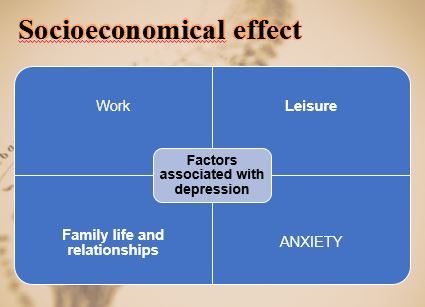
- depresstion
- Psychological aspect of pain
- Stress/anxiety
- Depression
- Anger/irritability/frustration
- Sleep disturbances
- Interference with daily activities
- Substance abuse and addiction
- Stress on the family/conflict
- Causes
History Taking
- Greeting the patient, insure privacy
- Duration &Location
- 10 years localized nagging pain
- Lower Back
- Progression
- Persistent
- Radiation
- to the back of the right leg and foot
- Quantity
- Very severe
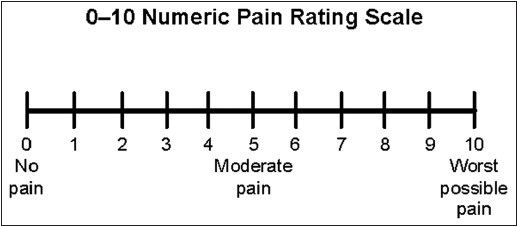
- visual Analogue Pain
- Measures intensity of pain
- visual Analogue Pain
- Very severe
- Aggravating factors
- Prolonged sitting, heavy lifting "suitcases
- Alleviating factors
- Lying down on firm surface and standing
- Associated symptom
- Leg pain
- Quality
- Nagging pain , burning or tingling and numbness
- History of medication
- voltaren
Physical Examination
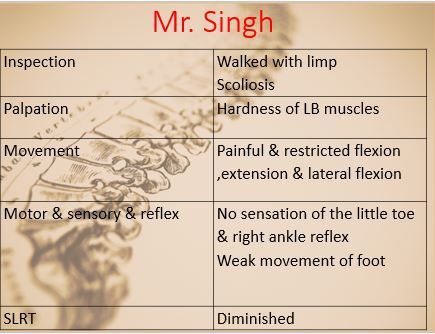
- Look
- Posture / deformity
- straight / scoliosis / ankylosing spondylitis : joint Posture / deformity
- Skin
- scar/abnormal hair/pigmentation
- Swelling
- cold abscess / hump / neurofibroma
- muscle wasting
- Posture / deformity
- Feel
- Body attitude
- Antalgic gait (severe LBP)
- Soft tissues
- Swelling
- Muscle spasm
- Body attitude
- Move
- Extension , flexion of the spine
- Motor , sensory & reflex
- Special test: Straight leg raising test
- Look
Imágenes y archivos del mapa
Información
- Descripción
- Mapa Mental sobre Backpain, creado por Fatma Shwaylia el 12/03/2017.
- Creado por
- Fatma Shwaylia
- Visitas
- 0
- Valoración