
Mapa mental
Combur⁹ Test
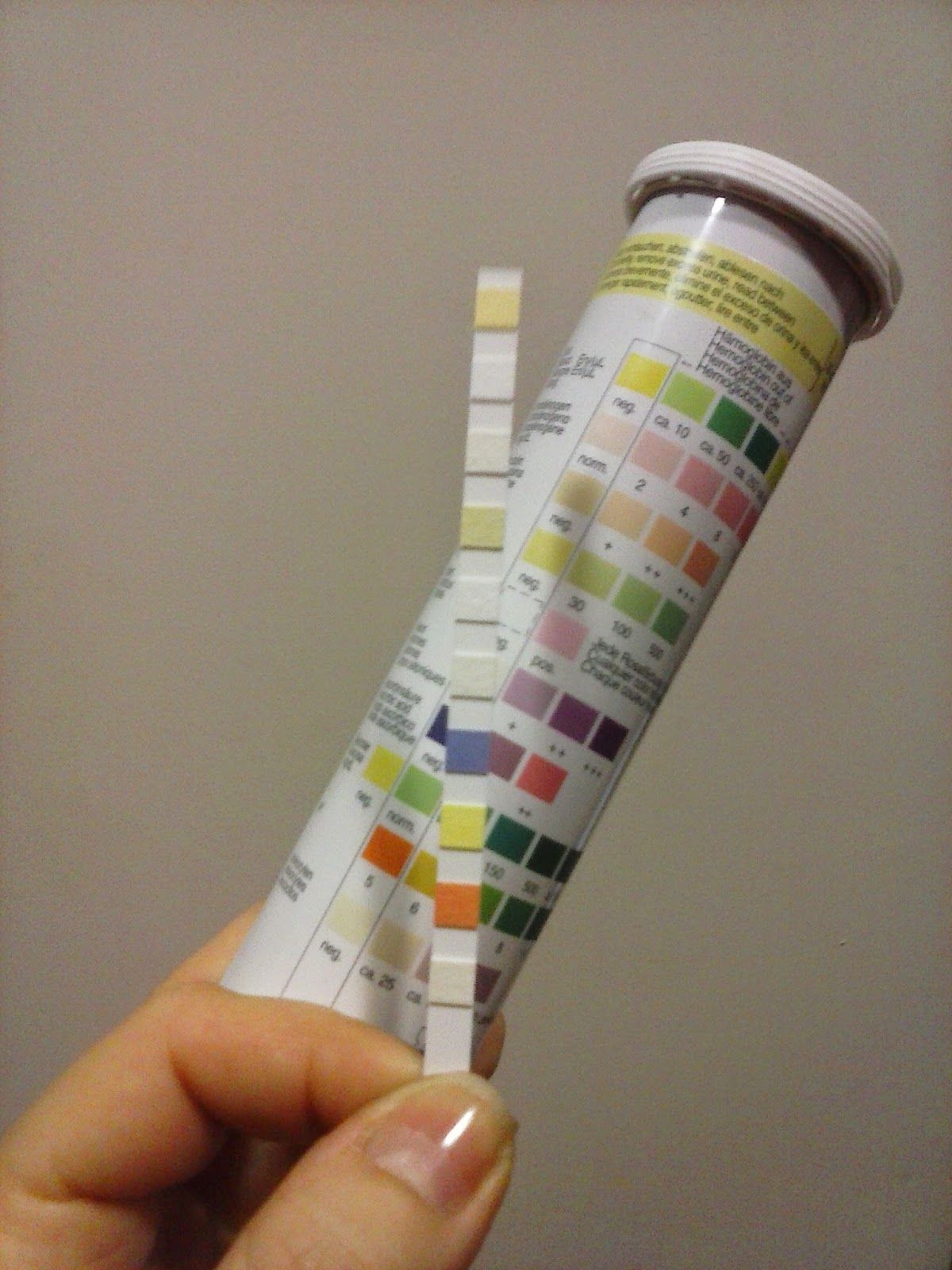
Contenido del mapa
Combur⁹ Test
Leukocytes (LEU): The test reveals the presence of granulocyte esterases. These esterases cleave an indoxyl ester, and the indoxyl so liberated reacts with a diazonium salt to produce a violet dye. Bacteria, trichomonads or erythrocytes present in the urine do not affect the reaction
- Formaldehyde (stabilizer) and medication with imipenem, meropenem and clavulanic acid may cause false-positive reactions. If the urine specimen has a pronounced intrinsic color (for example due to the presence of bilirubin or nitrofurantoin), the reaction color may be intensified due to an additive effect. Urinary protein excretions in excess of 500 mg/dL and urinary glucose excretions in excess of 1 g/dL may diminish the intensity of the reaction color, as can cephalexin and gentamicin if administered in high daily doses, or boric acid if used as a preservative.
Nitrite (NIT): The test is based on the principle of the Griess test and is specific for nitrite. The reaction reveals the presence of nitrite and hence indirectly nitrite-forming bacteria in the urine by a pink-to-red coloration of the test patch. Even a slight pink coloration is indicative of significant bacteriuria.
- Prolonged urinary retention in the bladder (4‑8 hours) is essential in order to obtain an accurate result. Administration of antibiotics or chemical drugs should be discontinued 3 days before the test. Large amounts of ascorbic acid decrease the sensitivity of the test. Attention: Nitrogen oxides present in the atmosphere may have an influence on the stability of the nitrite test pad.
pH: The test paper contains the indicators methyl red, phenolphthalein and bromothymol blue and reacts specifically with H + -ions. The most frequent pH values of fresh urine from healthy subjects lie between 5 and 6.
Protein (PRO): The test is based on the principle of the protein error of a pH indicator. It is particularly sensitive to albumin. Quinine, quinidine, chloroquine, tolbutamide and an elevated pH (up to 9) do not affect the test.
- : False-positive readings may be found after infusion of polyvinylpyrrolidone (blood substitute), or when the urine collection vessel contains chlorohexidine or traces of disinfectants possessing quaternary ammonium groups.
Glucose (GLU): The glucose determination is based on the specific glucoseoxidase/peroxidase reaction (GOD/POD method). The test is independent of the pH and specific gravity of the urine and is not affected by the presence of ketone bodies.
- The effect of ascorbic acid has been largely eliminated so that at glucose concentrations of 100 mg/dL and above even high ascorbic acid concentrations are not likely to give false-negative results.
Ketone bodies (KET): This test is based on the principle of Legal’s test and is more sensitive to acetoacetic acid than to acetone
- Phenylketones and phthalein compounds produce red colors on the test patch; they are, however, quite distinct from the violet colors produced by ketone bodies and can lead to false-positive results. Captopril, mesna (2‑Mercaptoethanesulfonic acid sodium salt) and other substances containing sulfhydryl groups may produce false-positive results.
Urobilinogen (UBG): A stable diazonium salt reacts almost immediately with urobilinogen to give a red azo dye. The test is specific for urobilinogen and is not susceptible to the interfering factors known to affect the Ehrlich’s test.
- Nitrite concentrations above 5 mg/dL or formaldehyde (stabilizer) above 200 mg/dL may cause a decrease in the color reaction.
Bilirubin (BIL): The test is based on the coupling of bilirubin with a diazonium salt. Even the slightest pink coloration constitutes a positive, i.e. pathologic, result. Other urinary constituents produce a more or less intense yellow coloration.
- Large amounts of ascorbic acid lower the sensitivity of the test. Do not expose urine specimens to sunlight as this induces oxidation of bilirubin and urobilinogen and hence leads to artificially low results for these two parameters.
Blood (ERY/Hb): The peroxidase-like action of hemoglobin and myoglobin specifically catalyzes the oxidation of the indicator by means of the organic hydroperoxide contained in the test paper to give a blue-green coloration.
- : The values appearing on the printout refer to intact erythrocytes. At concentrations of about 5‑50 Ery/μL, significant hemolysis (such as may occur on prolonged standing of the urine) leads to values which are higher than the corresponding concentrations given for intact erythrocytes. Ascorbic acid has virtually no effect on the test. In women the test for blood may be falsified from 3 days before to 3 days after a period. It is therefore advisable not to perform the test during this time.
Urine test strips are used to measure certain constituents in urine which are significant of renal, urinary, hepatic and metabolic disorders.
Imágenes y archivos del mapa
Información
- Descripción
- Mapa Mental sobre Combur⁹ Test, creado por Karla Lissete Orozco Coello el 24/10/2017.
- Creado por
- Karla Lissete Orozco Coello · oct 2017
- Actualizado
- 24 oct 2017
- Visitas
- 1
- Valoración