
Mapa mental
Leaf adaptations for photosynthesis
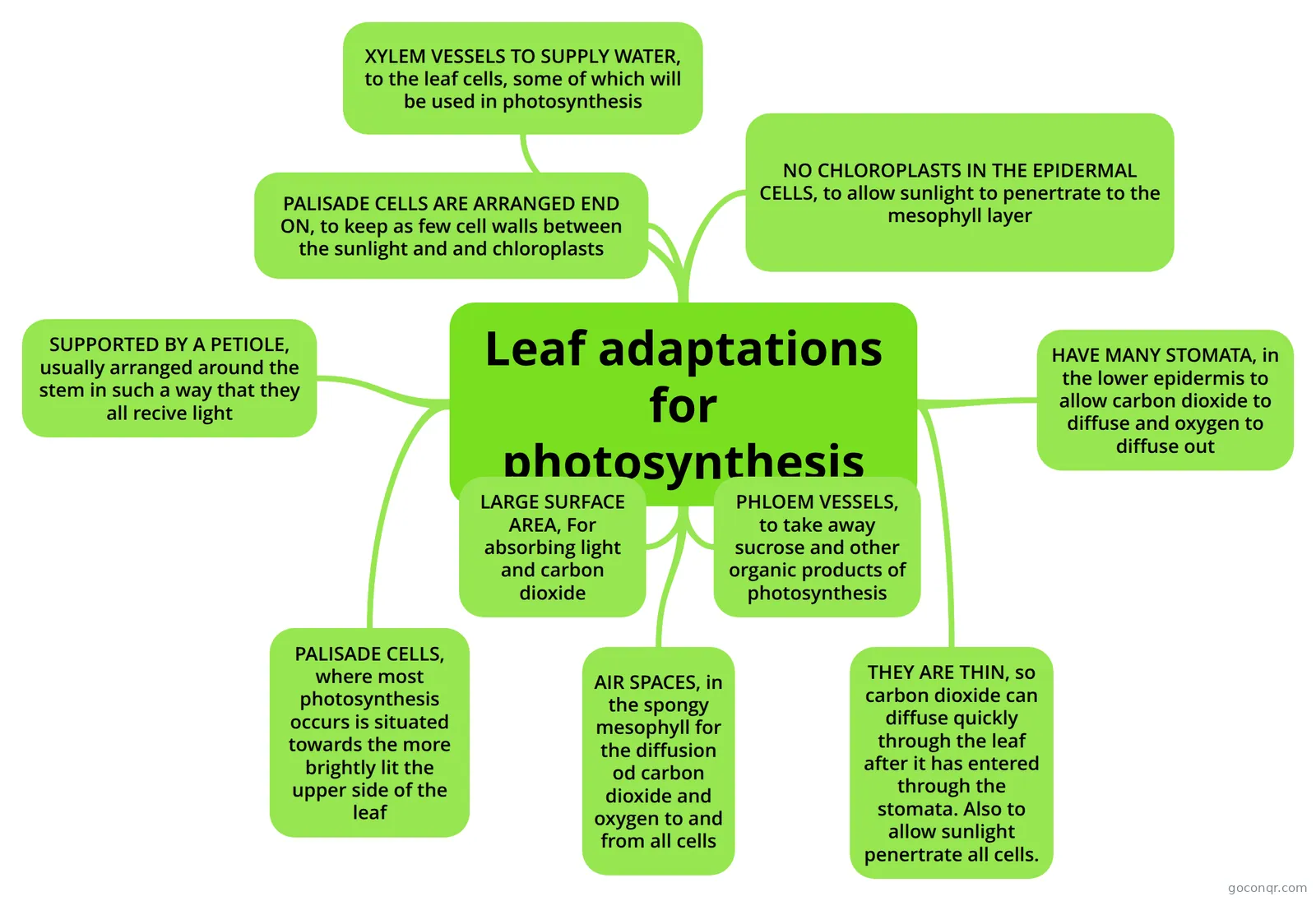
Mind map: Leaf adaptations for photosynthesis
Contenido del mapa
Leaf adaptations for photosynthesis
LARGE SURFACE AREA, For absorbing light and carbon dioxide
SUPPORTED BY A PETIOLE, usually arranged around the stem in such a way that they all recive light
HAVE MANY STOMATA, in the lower epidermis to allow carbon dioxide to diffuse and oxygen to diffuse out
THEY ARE THIN, so carbon dioxide can diffuse quickly through the leaf after it has entered through the stomata. Also to allow sunlight penertrate all cells.
AIR SPACES, in the spongy mesophyll for the diffusion od carbon dioxide and oxygen to and from all cells
PALISADE CELLS, where most photosynthesis occurs is situated towards the more brightly lit the upper side of the leaf
PALISADE CELLS ARE ARRANGED END ON, to keep as few cell walls between the sunlight and and chloroplasts
NO CHLOROPLASTS IN THE EPIDERMAL CELLS, to allow sunlight to penertrate to the mesophyll layer
XYLEM VESSELS TO SUPPLY WATER, to the leaf cells, some of which will be used in photosynthesis
PHLOEM VESSELS, to take away sucrose and other organic products of photosynthesis
Información
- Descripción
- Mapa Mental sobre Leaf adaptations for photosynthesis, creado por issyapsmith el 27/08/2014.
- Creado por
- issyapsmith
- Visitas
- 76
- Valoración