
Mapa mental
LANGUAGE FORMS AND FUNCTIONS
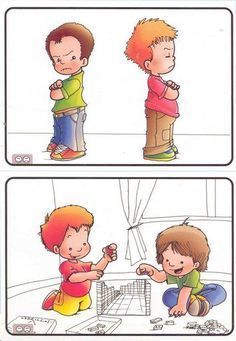
Contenido del mapa
LANGUAGE FORMS AND FUNCTIONS
Semantic Relationships
- Assistance of social and cognitive development that connects the child in relation to the world around him in order to acquire a base of language for their learning process.
- Socially, children communicate about themselves in relationships to their enviroment, (See Slobin 2004)
Social Intentions
- Children with Neuro-typical development begin to express that they "know", refer to a variety of things and do not just accept, reject, denying, negating, etc.
- (Arwood, 1991a) Children express a semantic intent of concepts they learn according to the society that surrounds them and, therefore they are of a pragmatic nature.
Extended Semantic Relationships
- A baby begins to receive, organize and express functions with significant patterns, throughout childhood the child begins to increase accuracy when trying to communicate.
- "Refer" This act allows the speaker to be clear and specific when communicating, so the social development of the child depends on the parallel expansion with everything that surrounds him.
Preoperational Cognition
- The child learns to relate more with others and develops their social and cognitive capacity.
Expanded Language Functions
- The child expands his language and learns to think critically and solve problems so that the function of the language is developed by:
- Displacement
- The child understands the function of communicating without the need for the other person to be present, for example: Calls, chats, emails, etc.
- Semanticity
- Acquisition of new concepts and meanings that develop a semantic complexity and help the child to call lexical labels.
- Flexibility
- Is the language to think about the various options available when solving or facing a situation.
- Productivity
- Flexibility, displacement and semantic, increase the capacity for variety in language to be more productive and have maximum use of expanded language functions
- Redundancy
- This factor is important because it is where the student learns to express their ideas and use more words to convey the same meaning.
- Displacement
- The child expands his language and learns to think critically and solve problems so that the function of the language is developed by:
Imágenes y archivos del mapa

Información
- Descripción
- Mapa Mental sobre LANGUAGE FORMS AND FUNCTIONS, creado por kriss ortiz el 13/11/2018.
- Creado por
- kriss ortiz
- Visitas
- 16
- Valoración