
Mapa mental
Chapter 6: red layer
Contenido del mapa
Chapter 6: red layer
The network layer protocols of the OSI model specify the addressing and processes that allow the network layer data packets to be assembled and transported.
network layer protocols
- the network layer in communications.
- The network layer.
- Addressing terminals.
- Encapsulation
- Routing
- Decapsulation
- Network layer protocols
- Internet Protocol version 4 (IPv4)
- Internet Protocol version 6 (IPv6)
- The network layer.
- IP protocol characteristics.
- IP encapsulation
- To encapsulate the transport layer segment or other data, IP adds an IP header.
- IP characteristics
- Without connection
- minimum service
- independent of the media
- IP encapsulation
- IPv4 parking.
- IPv4 packet header
- Version
- Differentiated services or DiffServ (DS)
- Duration time (TTL)
- Destination IPv4 address
- IPv4 address of origin
- Protocol
- IPv4 packet header
- IPv6 package
- IPv4 limitations
- Exhaustion of IP addresses
- Expansion of the Internet routing table
- Lack of complete connectivity:
- Introduction to IPv6
- Largest address space:
- Better package management:
- The need for NAT is eliminated
- IPv6 encapsulation
- The IPv4 heade consists of 20 octets (up to 60 bytes if the Options field is used) and 12 basic header fields,
- The simplified IPv6 heade consists of 40 octets (mainly due to the length of source and destination IPv6 addresses) and 8 header fields (3 IPv4 header fields and 5 header fields) additional)
- IPv6 packet header
- Version Traffic class: Flow label: Content length Next heading Limit of jumps: IPv6 address of origin Destination IPv6 address
- IPv4 limitations
- the network layer in communications.
routing
- How to arm host routes?
- The decision of host forwarding
- Likewise
- To the local host
- To a remote I / O module:
- Default gateway
- routes traffic to other networks
- has a local IP address in the same address range.
- can carry data and forward it
- Use of the default gateway
- The default route is derived from the default gateway configuration and is located in the server routing table
- Host routing tables
- List of interfaces
- IPv4 routes table
- IPv6 routes table
- The decision of host forwarding
- Router routing tables
- Decision to send router packets
- Routes connected directly
- Remote routes
- Default route:
- Decision to send router packets
- How to arm host routes?
routers
- anatomy of a router
- A router is a computer.
- From branch
- WAN
- Service provider
- The CPU and the router OS
- The CPU needs an OS to provide the routing and switching functions
- Router memory
- RAM
- ROM
- NVRAM
- Flash
- A router is a computer.
- router start
- Bootset files
- The running configuration is modified when the network administrator performs device configurations.
- Process of starting the router
- Realization of the POST and loading of the boot program
- Location and loading Cisco IOS
- Location and loading of the configuration file
- Bootset files
- anatomy of a router
configuration of a cisco router
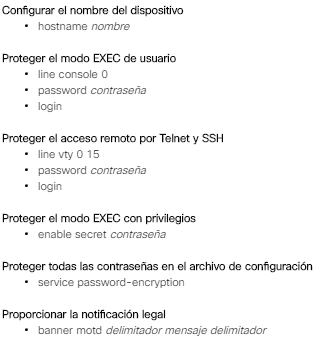
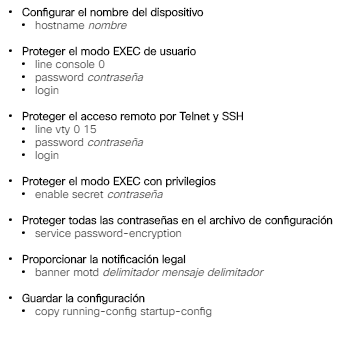
- configuration of the initial parameters
- Basic steps in the configuration of a switch
- Basic steps in configuring a router
- interface configuration
- Configure router interfaces
- Two Gigabit Ethernet interfaces: GigabitEthernet 0/0 (G0 / 0) and GigabitEthernet 0/1 (G0 / 1)
- A WAN serial interface card (WIC) consisting of two interfaces: serial 0/0/0 (S0 / 0/0) and serial 0/0/1 (S0 / 0/1)
- Configure router interfaces
- default gateway configuration
- Default gateway for a host
- Default gateway for a switch
- configuration of the initial parameters
Imágenes y archivos del mapa
Información
- Descripción
- Mapa Mental sobre Chapter 6: red layer, creado por JUAN VARGAS el 02/04/2019.
- Creado por
- JUAN VARGAS
- Visitas
- 0
- Valoración