
Mapa mental
Elements of Life
Contenido del mapa
Elements of Life
MODEL OF THE ATOM
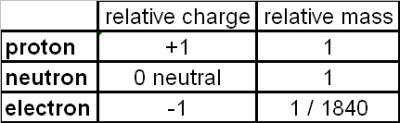
- Mass number == number of protons + number of neutrons
- atomic number == number of protons/electrons
- ISOTOPES
- Elements with the same atomic number but different mass number.
- There are more or less neutrons
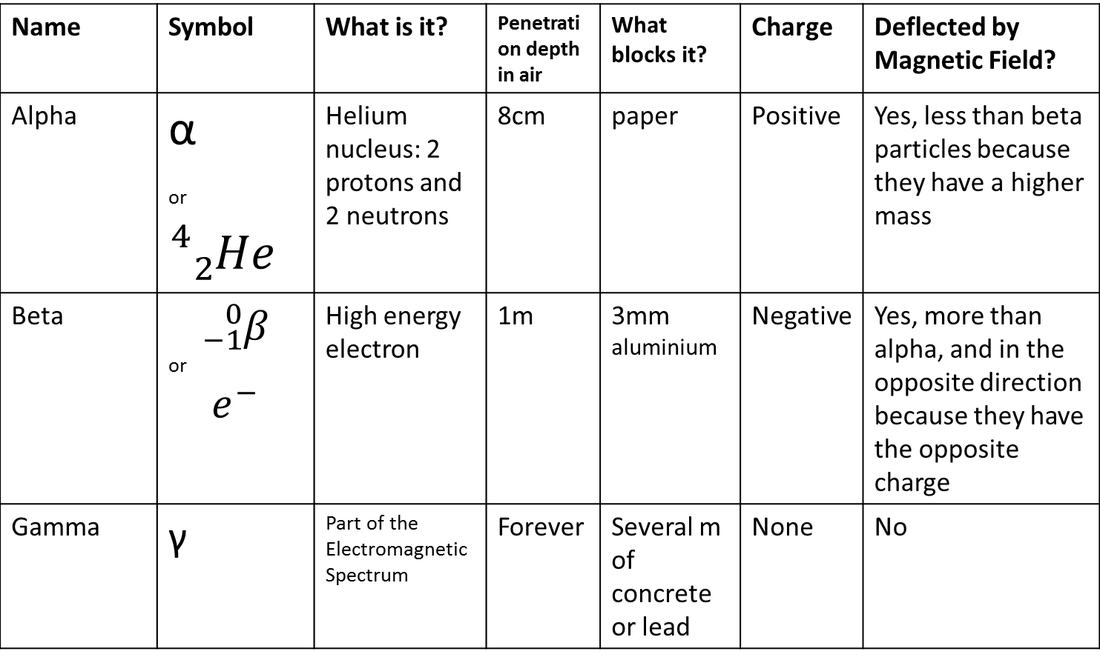
- Some are radioactive.
- This is due to an unstable nuclei
- All types of emission are dangerous and can cause cancer
- HALF LIFE == the time taken for half the radioactive nuclei to decay.
- Can be used to determine the age of archaeological artefacts
- TRACERS == Radioactive isotopes whose decay is monitored; used in medicine to aid diagnosis.
- Path is followed by a Geiger counter
- The half life of it cant be too long or too short.
- There is one isotope which is more abundant than the rest but you can find the average isotopic mass.
- Nuclear fusion is the joining together of 2 or more nuclei to form a heavier nucleus
- Need high temperatures and pressures to overcome the repulsion between positive nuclei.
LIGHT AND ELECTRONS
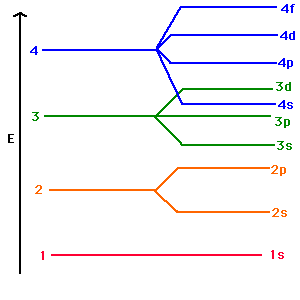
- ENERGY LEVELS == Electrons in a hydrogen atom must be in one of the allowed energy levels. If an electron is in the first energy level, it must have exactly -13.6 eV of energy. If it is in the second energy level, it must have -3.4 eV of energy.
- ABSORPTION SPECTRA
- Electrons absorb a photon.
- Excited electrons move up to a higher energy level ( producing lines on an absorption spectra.
- The electromagnetic radiation absorbed by each of the hydrogen atoms has a definite frequency, which gives the specific colour.
- Coloured background with black lines
- Electrons absorb a photon.
- EMISSION SPECTRA
- black background with coloured lines.
- Electrons first absorb a photon
- Excited electrons move up to a higher energy level
- Electrons then drop back to lower energy levels emitting a photon with a certain frequency.
- Excited electrons move up to a higher energy level
- The colour of the lines depends on the frequency of the photon emitted.
- ELECTRON SHELLS
- They fill up lowest first.
- period 3 can have more than 8 electrons
SHAPES OF MOLECULES
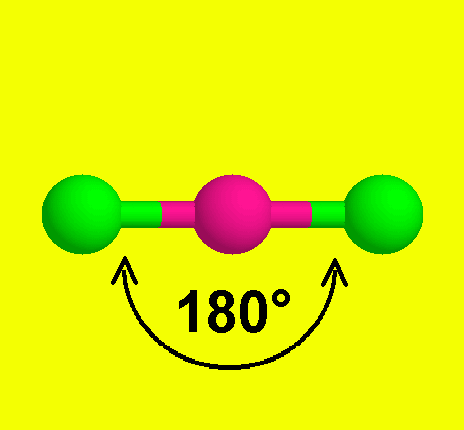
- 2 ELECTRON PAIRS
- Linear
- 180 degress
- Linear
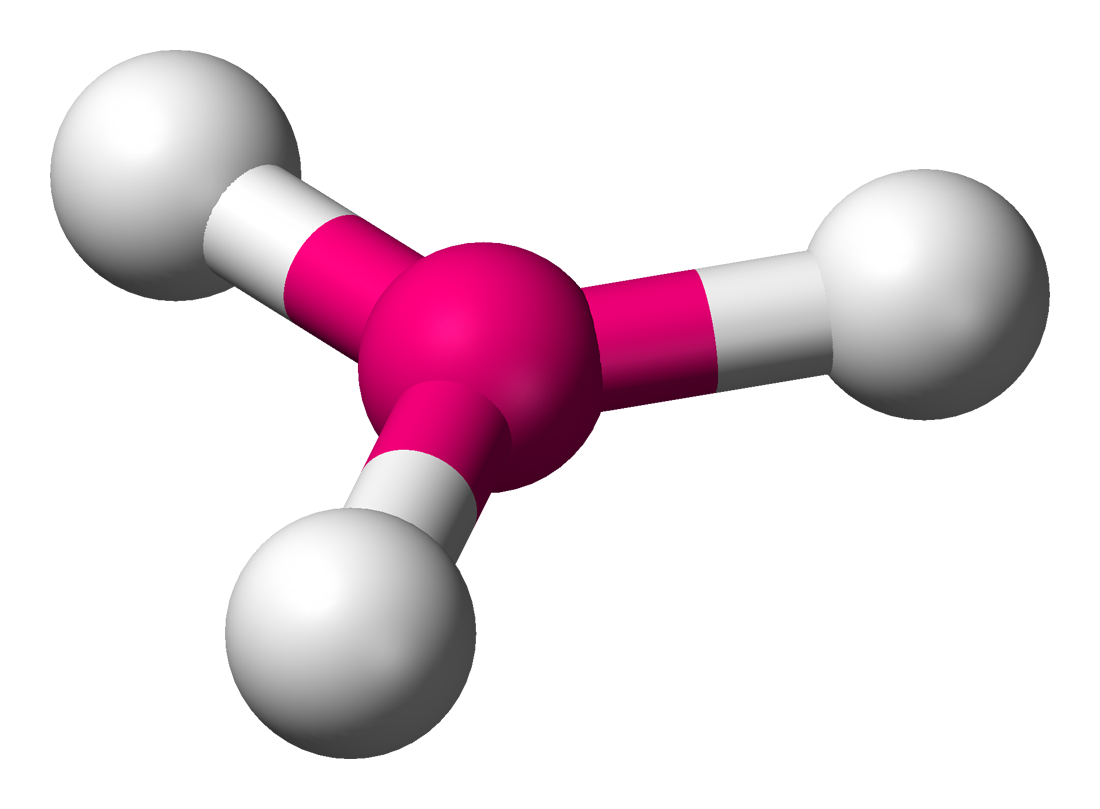
- 3 ELECTRON PAIRS
- Trigonal planar
- 120 degrees
- no lone pairs
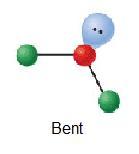
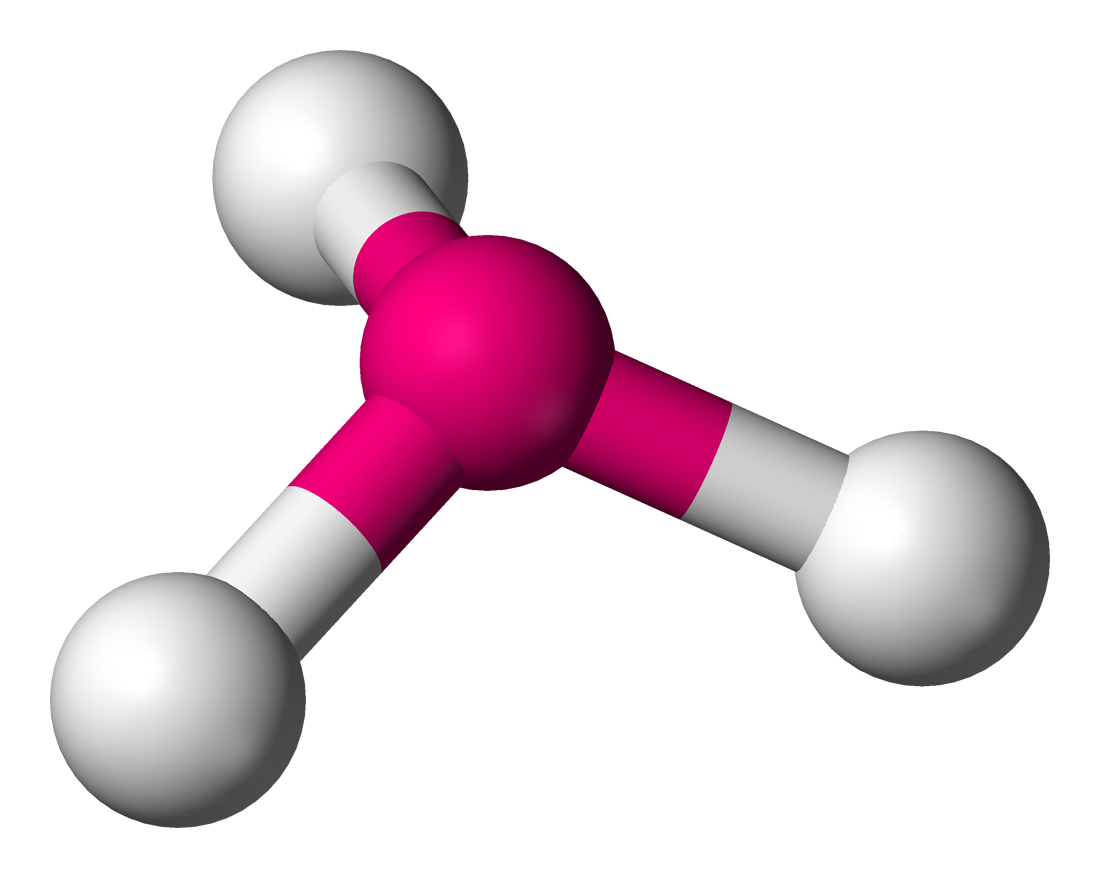
- bent
- 120 degrees
- 1 lone pair
- Trigonal planar
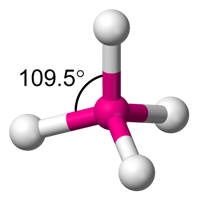
- 4 ELECTRON PAIRS
- Tetrahedral
- 109.5 degrees
- no lone pairs
- trigonal pyramid
- 107 degrees
- 1 lone pair
- bent
- 2 lone pairs
- 104.5 degrees
- Tetrahedral
- 5 ELECTRON PAIRS
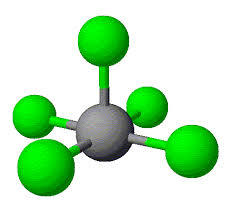
- trigonal bypyramid
- 120 degrees
- 109 degrees
- no lone pairs
- trigonal bypyramid
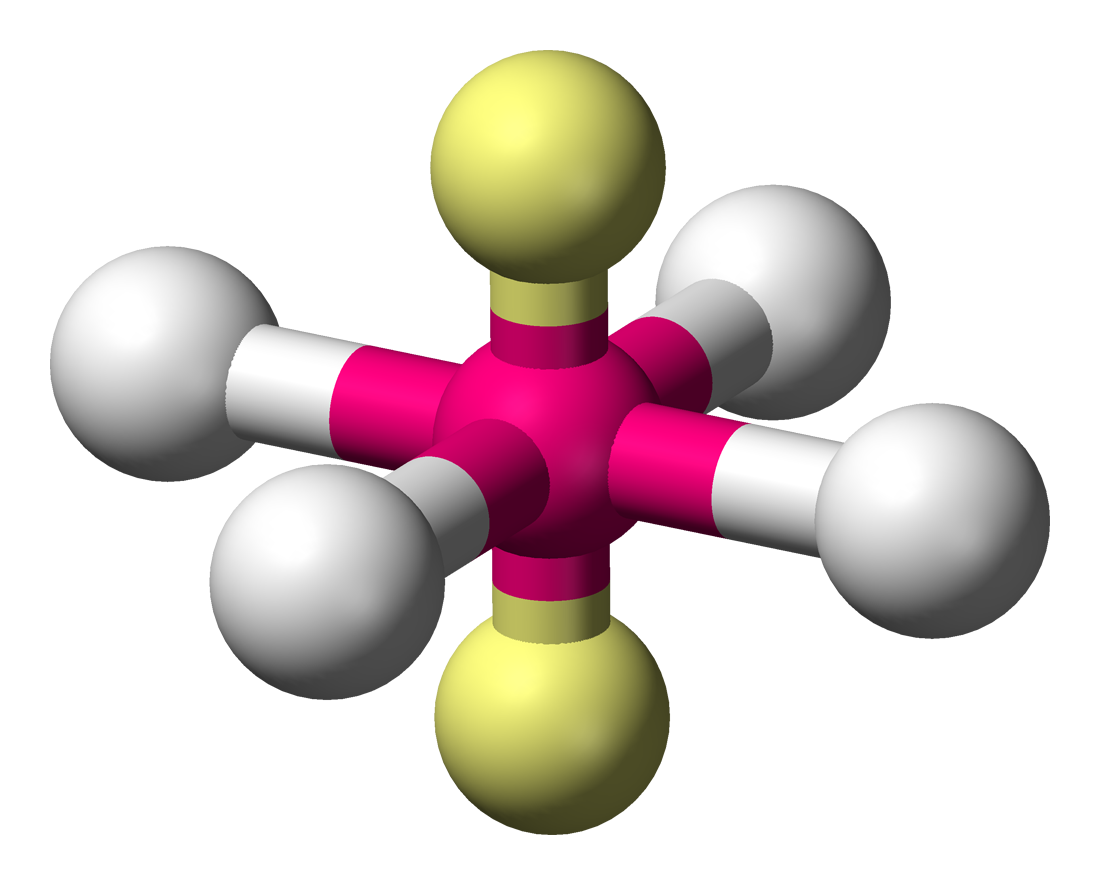
- 6 ELECTRON PAIRS
- Octahedral
- no lone pairs
- all bond angles are 90 degrees
- Octahedral
- double bonds repel further than single bonds
- lone pairs repel more than bonds
- All around a central atom
- 2 ELECTRON PAIRS
CHEMICAL BONDING AND PROPERTIES
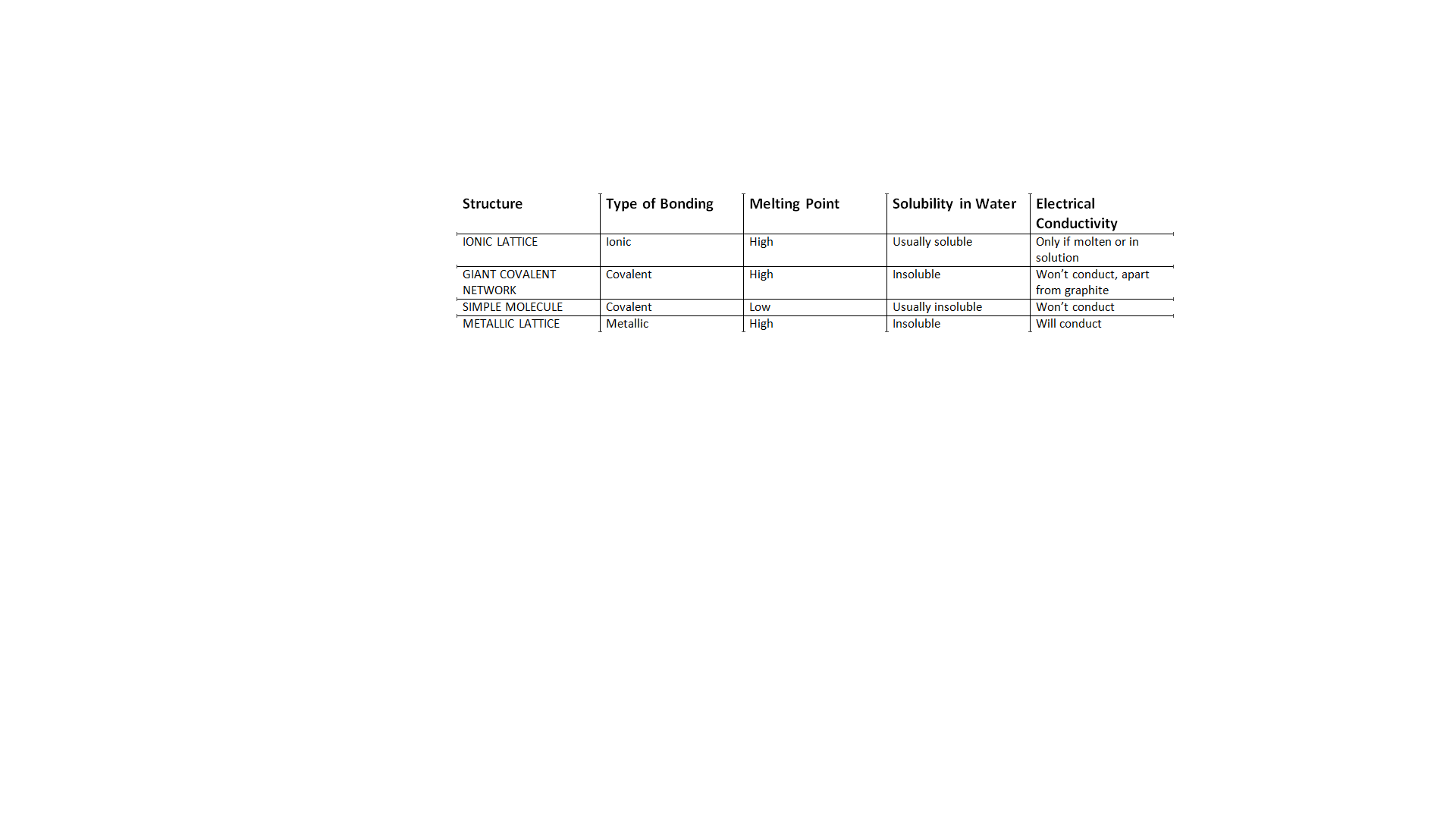
- Metal and Metal == Metallic
- Metal ions are arranged regularly in a lattice
- Outer shell of electrons are all shared; they are delocalised.
- Electrons free to move about therefore can carry a current.
- Metal and Non Metal == Ionic
- The Transfer of electrons
- Usually from the metal to the non metal.
- Form 2 charged ions in the process
- Cations == positive
- Anions == negative
- Form a giant ionic lattice, held together by the electrostatic attraction between anions and cations.
- The Transfer of electrons
- Non Metal and Non Metal == Covalent
- Sharing of electrons between two atoms
- Double bonds are where two parsr of electrons are shared
- Want to gain a full outer shell.
- Dative Covalent Bonding
- A dative covalent bond is a covalent bond (a shared pair of electrons) in which both electrons come from the same atom
- Metal and Metal == Metallic
GROUP 2 REACTIONS
- React with Water
- metal + water --> metal hydroxide + hydrogen
- more reactive as you go down the group
- Oxides
- metal oxide + water --> metal hyrdroxide
- Alkaline solution is formed
- metal oxide + acid --> salt + water
- metal oxide + water --> metal hyrdroxide
- Hydroxides
- metal hydroxide + acid --> salt + water
- solutions produced are alkaline
- More soluble as you go down the group
- metal hydroxide + acid --> salt + water
- Carbonates
- Less soluble as you go down the group
- metal carbonate --> metal oxide + carbon dioxide
- thermal decomposition occurs
- Thermal stability increases down the group
- thermal decomposition occurs
- React with Water
MASS SPECTROMETER
- Mass spectrometry is an analytical chemistry technique that helps identify the amount and type of chemicals present in a sample by measuring the mass-to-charge ratio and abundance of gas-phase ions
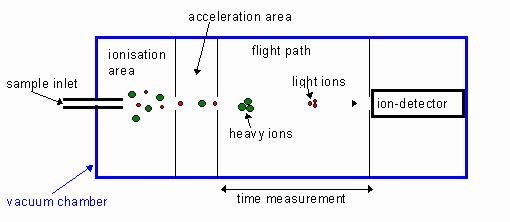
- Sample inlet ~ gases or liquids are simply injected but solids are heated to vaporise them.
- Ionisation area ~ a heated filament produces high-energy electrons. These electrons bombard any atoms or molecules in the sample and knock electrons out. Cations are formed.
- Acceleration area ~ an electric field is used to accelerate any ions so that they all have the same kinetic energy.
- Drift region ~ there is a vacuum here so that ions do not collide with air molecules which would change the direction of their flight path. Since kinetic energy = mass*velocity^2 and all ions have the same kinetic energy , heavier ions more through this region more slowly.
- Ion detector ~ light ions reach the detector before the heavier ones. A computer system converts the informations into a mass spectrum. Only positive ions are detected after fragmentation
- Drift region ~ there is a vacuum here so that ions do not collide with air molecules which would change the direction of their flight path. Since kinetic energy = mass*velocity^2 and all ions have the same kinetic energy , heavier ions more through this region more slowly.
- Acceleration area ~ an electric field is used to accelerate any ions so that they all have the same kinetic energy.
- Ionisation area ~ a heated filament produces high-energy electrons. These electrons bombard any atoms or molecules in the sample and knock electrons out. Cations are formed.
- The mass spectrum for a compound can be much more complex than the mass spectrum on an element.
- The ion with the greatest mass corresponds to the molecular mass; this is called the MOLECULAR ION and corresponds to the parent molecule minus an electron.
- The BASE PEAK is the most intense peak; there are many peaks because fragments are formed in the ionisation chamber.
- The MOLECULAR ION breaks down into fragments; if the fragment has a positive charge then it will be accelerated by the electrical field and detected later.
- The ion with the greatest mass corresponds to the molecular mass; this is called the MOLECULAR ION and corresponds to the parent molecule minus an electron.
- % relative isotopic abundance = (relative abundance/total relative abundance)*100%
Number of moles = number of particles you have/number of particles in a mole
- Avogadro's constant == 6.02 x10^23
THE PERIODIC TABLE
- Periodic Trends
- For the metals; melting and boiling points increase across the period because the metal-metal bonds get stronger as there are more delocalised electrons and decreasing radius; higher charge density.
- The elements with giant covalent structures have strong covalent bonds linking all their atoms together. A lot of energy is needed to break these bonds .
- Simple molecular substances; their melting and boiling points depend on the strength of the intermolecular forces. The stronger the intermolecular forces, the higher the melting and boiling point.
- More atoms in a molecule mean stronger intermolecular forces. e.g. in period 3 sulfur is the biggest molecule so its got higher melting/boiling points than chlorine.
- The noble gases have the lowest melting/boiling points because they exist as individual atoms resulting in very weak intermolecular forces.
- The modern periodic table is arranged according to atomic number(proton number)
- In the 1800s, they ordered the periodic table by relative atomic mass.
- John Newlands discovered the law of octaves as there were similar elements appearing at regular intervals.
- However the pattern broke down in the third row
- Mendeleev produced a better table, ordered by by atomic mass but he left gaps so the elements with similar chemical properties were together.
- He made predictions about the undiscovered elements, which later on turned out to be correct
- John Newlands discovered the law of octaves as there were similar elements appearing at regular intervals.
- Periodic Trends
Imágenes y archivos del mapa

Información
- Descripción
- A level Chemistry Mapa Mental sobre Elements of Life, creado por mollyjo23 el 08/04/2015.
- Creado por
- mollyjo23
- Visitas
- 119
- Valoración