
Mapa mental
Firewalls
Contenido del mapa
Firewalls
Firewall
- hardware and/or software
- prevents unauthorised access to/from networks
- creates perimeter defence to protect integrity of network and access to assets
firewall functions
- implement single point security measures
- security event monitoring through packet analysis
- network based access control through implementation of a rule set
Installation
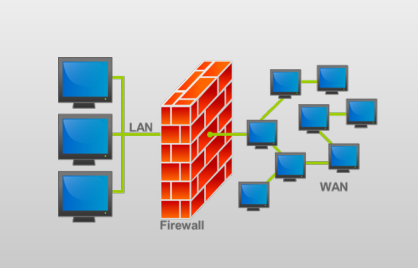
- Firewalls are generally installed between a LAN and internet
- or between different LANs in an internet
- or on individual hosts
- should control traffic to and from a protected network
- ALL traffic has to go through it to be effective
- Firewalls are generally installed between a LAN and internet
Limitations
- Cant protect against attacks that bypass the firewall
- dial-out from internal host to an ISP
- cant protect from internal threats or insider
- cant protect against the transfer of virus infected programs or files
- Cant protect against attacks that bypass the firewall
Basic function
- defend a protected network against parties accessing services that should only be available internally
- restrict access from inside - outside services: P2P
- Virtual Private Network VPN:
- secure connection between two gateways
- Network address translation
- hides internal machines with private addresses
Placement
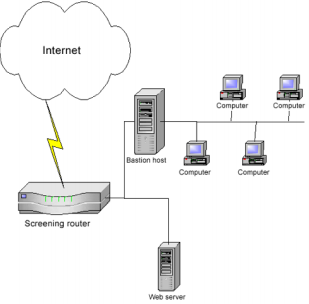
- bastion host
- topology good for corporate networks used to surf net
- Not good for hosting web/mail servers
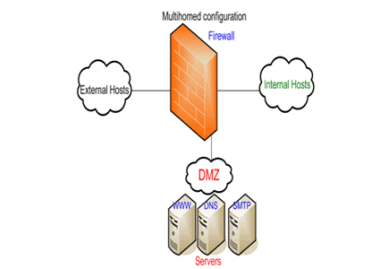
- multihomed
- provides DMZ to place publicly accessible servers using a single firewall
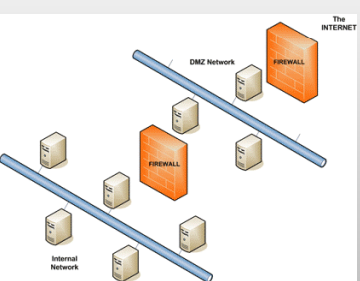
- sceened subnet
- provides dmz to place publicly accessible servers using single firewall
- most secure but most expensive
- bastion host
Firewall types
- Packet filters
- specify which packets are allowed or dropped
- rules based on source and ip adress
- rules based on TCP and UDP port numbers
- possible for in and out traffic
- can be implemented in a router examining packet headers only
- rules for filtering
- policies
- blacklisting - permissive
- allow everything except dangerous services
- whitelisting - restrictive
- block everything except designated useful services
- blacklisting - permissive
- policies
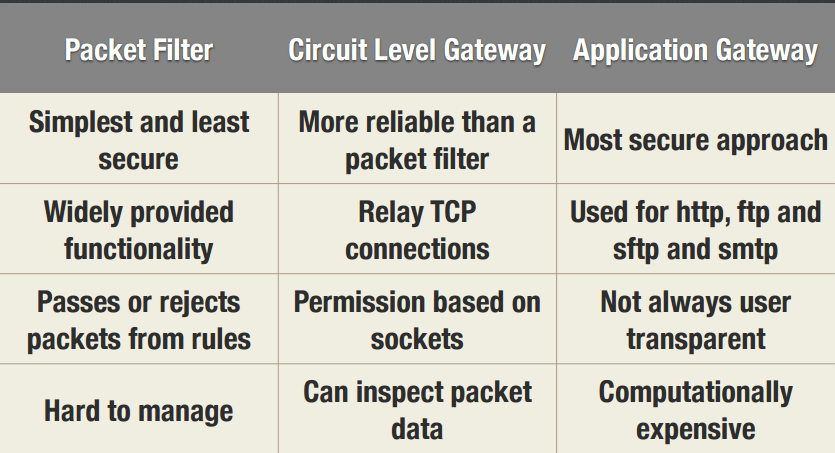
- Firewall classification
- packet filtering firewalls
- circuit level gateways
- application gateways
- dynamic packet filtering firewalls
- Filtering types
- packet filtering
- packets are treated individually
- no state info is stored or used
- session filtering or dynamic packet filtering
- packets are grouped into connections
- packets in a connection are detected
- state info is memorised
- packets in a connection are detected
- packets are grouped into connections
- packet filtering
- Packet filters
packet filtering
- applies packet filters based on access rules
- Defined by following parameters
- source / destination address
- application or protocol/ next header
- source port number
- destination port number
- applies packet filters based on access rules
packet filter rules
- rule execution depend on rules
- iptables: first rule to match is applied
- OpenBSD pf: all rules are examined, last match is applied
- rules organised in chains which are logical sub groups of rules
- depending on packet type, source and destination different chains can be activated
- rule execution depend on rules
Ip tables
- linux utility used for implementing packet filtering
- rules stored as tables for filtering the linux kernel firewall
Packet filter issues
- Good as simple , low cost, fast, transparent to user
- they cannot prevent attacks that employ specific vulnerabilities or functions because they do not examine upper layer data
- most packet filter firewalls do not support advanced authentication schemes due to the lack of upper-layer functionality
- Easy to accidentally configure a packet filtering firewall to allow traffic types, sources and destinations that should be denied based on an organisations policy set
Session filtering
- standard packet filters do not examine higher layer context
- dynamic packet filtering
- examines data at all levels of the OSI
- examine each packet in context
- much more powerful but computationally expensive
- mechanisms
- packet decision made in the context of a connection
- if packet is a new connection check again the policy
- if packet is part of an existing connection match it up in the state table and update table
- connection state table is maintained
- ACK packets are used to keep track of the session - states the connection is ongoing
- Dynamic filter (UDP)
- monitors the state of all data flows
- transparent to users
- low CPU overheads
- for the second and later packets belong to the same connection, no table look up of the policy is done
Circuit level gateways
- slim layer monitoring to determine whether a requested TCP session is legitimate
- do not permit an end - end TCP connection, do not permit the gateway sets up two TCP connections
- one between itself and a TCP user on an inner host and between itself and a TCP user on an outside host
- once the two connections are 547
Application gateway
- firewalling at the application specific level
- every connection between two networks is made via an application program also termed a proxy
- connection state is maintained and updated
- only protocols that have specific proxies configured are allowed through the firewall, all other traffic is rejected
- if an application gateway is configured to only allow web traffic, it will not permit packets of a different protocol eg ftp or ssh packets
- very cpu intensive and needs a powerful server to run on
Imágenes y archivos del mapa
Información
- Descripción
- Mapa Mental sobre Firewalls, creado por Jack Evans0219 el 25/05/2015.
- Creado por
- Jack Evans0219
- Visitas
- 1
- Valoración