
Mapa mental
Interdependence and Adaptation
Contenido del mapa
Interdependence and Adaptation
Survival
- • To survive, organisms require a supply of materials from their surroundings and from the other living organisms there.
- • Organisms live, grow and reproduce in places where, and at times when, conditions are suitable.
- • To survive, organisms require a supply of materials from their surroundings and from the other living organisms there.
Competition
- Animals often compete with each other for:
- • Food
- • Mates
- • Territory
- • Mates
- • Food
- Plants often compete with each other for:
- • Light
- • Water from the soil
- • Nutrients from the soil
- • Water from the soil
- • Light
- Animals often compete with each other for:
Adaptation
- • Organisms have features (adaptations) which enable them to survive in the conditions in which they normally live
- • The organisms that are best adapted to make use of their resources in a habitat are more likely to survive and increase in numbers
- • For example:
- o To be able to obtain a certain food better.
- o To make it more difficult for predators to catch them.
- o To survive in extreme climates, eg arctic or deserts
- • Plants lose water vapour from the surface of their leaves
- • It is essential that they have adaptations which minimise this.
- • Plants lose water vapour from the surface of their leaves
- o To survive in extreme climates, eg arctic or deserts
- o To make it more difficult for predators to catch them.
- o To be able to obtain a certain food better.
Extreme adaptations:
- • Extremophiles are organisms that live in extreme environments.
- • Some may be tolerant to high levels of salt, high temperatures or high pressures.
- • Animals and plants may be adapted to cope with specific features of their environment eg thorns, poisons and warning colours to deter predators.
Extreme Animals
- • Animals may be adapted for survival in dry and arctic environments by means of:
- o changes to surface area
- o thickness of insulating coat
- o amount of body fat
- o camouflage.
- o amount of body fat
- o thickness of insulating coat
- o changes to surface area
- • Examples:
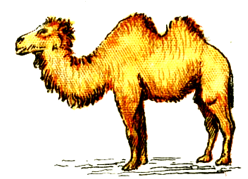
- o Camel
- • The camel can go without food and water for 3 to 4 days.
- • Fat stored in their humps provides long term food reserve, and a supply of metabolic water.
- The fat is not distributed around the body; this reduces insulation, allowing more heat loss.
- • They are tall and thin, increasing their surface area to volume ration, increasing heat loss by radiation.
- The fat is not distributed around the body; this reduces insulation, allowing more heat loss.
- • Fat stored in their humps provides long term food reserve, and a supply of metabolic water.
- • The camel can go without food and water for 3 to 4 days.
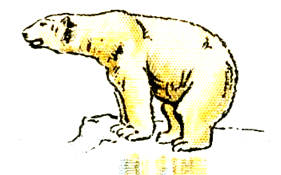
- o Polar Bear
- • Polar bear has thick fur and fat beneath its skin to insulate it.
- • Their large, furry feet help to distribute their weight as they walk on a thin ice.
- • They are white which camouflages them against the snow. This helps them to hunt.
- • They are compact in shape, reducing their surface area to volume ratio; this reduces heat loss by radiation
- • They are white which camouflages them against the snow. This helps them to hunt.
- • Their large, furry feet help to distribute their weight as they walk on a thin ice.
- • Polar bear has thick fur and fat beneath its skin to insulate it.
- o Camel
- • Animals may be adapted for survival in dry and arctic environments by means of:
Extreme Plants
- • Plants may be adapted to survive in dry environments by means of:
- o changes to surface area, particularly of the leaves
- o water-storage tissues
- o extensive root systems.
- o water-storage tissues
- o changes to surface area, particularly of the leaves
- • Desert plants
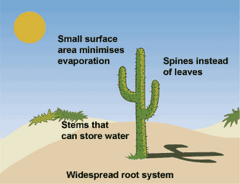
- • Eg the cactus, require very little water to survive
- • Leaves are spines.
- • Spines guard against most browsing herbivorous animals.
- • Spines also reduce their surface area, reducing water loss by evaporation
- • A thick waxy coating surrounds the plant to reduce evaporation.
- • Fewer 'stomata', reducing water loss
- • Roots tend to spread sideways to catch rain water.
- • Fewer 'stomata', reducing water loss
- • A thick waxy coating surrounds the plant to reduce evaporation.
- • Spines also reduce their surface area, reducing water loss by evaporation
- • Spines guard against most browsing herbivorous animals.
- • Leaves are spines.
- • Eg the cactus, require very little water to survive
- • Arctic plants
- • Many of the plants are small, growing close to the ground and very close together to avoid the wind and conserve heat.
- • Some possess a light, fuzzy covering to insulate the buds so they can grow.
- • Many are dark colors of blue and purple to absorb the heat from the sunlight even during the winter months.
- • Because of the cold and short growing seasons, arctic plants grow very slowly.
- • Many are dark colors of blue and purple to absorb the heat from the sunlight even during the winter months.
- • Some possess a light, fuzzy covering to insulate the buds so they can grow.
- • Many of the plants are small, growing close to the ground and very close together to avoid the wind and conserve heat.
- • Plants may be adapted to survive in dry environments by means of:
Microorganisms
- • Microorganisms have adaptations that enable them to survive in different environments.
- • Some microorganisms have flagella which enable them to move around quickly.
- • Bacteria undergo rapid reproduction when conditions are favourable.
- • Some microorganisms have flagella which enable them to move around quickly.
- • Microorganisms have adaptations that enable them to survive in different environments.
Environmental change
- • Changes in the environment affect the distribution of living organisms.
- • For example, the changing distribution of some bird species and the disappearance of pollinating insects including bees.
- Non-living (abiotic) factors:
- • Light
- • Oxygen
- • Water
- • Temperature
- • Water
- • Oxygen
- • Light
- Living (biotic) factors:
- • Food
- • Predation
- • Grazing
- • Disease
- • Competition – for: food, light, water, space.
- • Disease
- • Grazing
- • Predation
- • Food
- • Changes in the environment affect the distribution of living organisms.
Living organisms can be used as indicators of pollution:
- • Lichens are sensitive to changes in air quality.
- • They are very sensitive to sulphur dioxide (SO2) pollution in the air.
- • Some species only grow in non-polluted air. Some species grow in polluted air. These lichens can be used as air pollution indicators.
- • Invertebrate animals are sensitive to changes in the concentration of dissolved oxygen in water.
- • Some species only grow in non-polluted air. Some species grow in polluted air. These lichens can be used as air pollution indicators.
- • They are very sensitive to sulphur dioxide (SO2) pollution in the air.
- • Lichens are sensitive to changes in air quality.
Imágenes y archivos del mapa
Información
- Descripción
- Mapa Mental sobre Interdependence and Adaptation, creado por stella watkins el 26/05/2015.
- Creado por
- stella watkins
- Visitas
- 60
- Etiquetas
- Valoración