
Mapa mental
Largest millimeter telescopes
Contenido del mapa
Largest millimeter telescopes
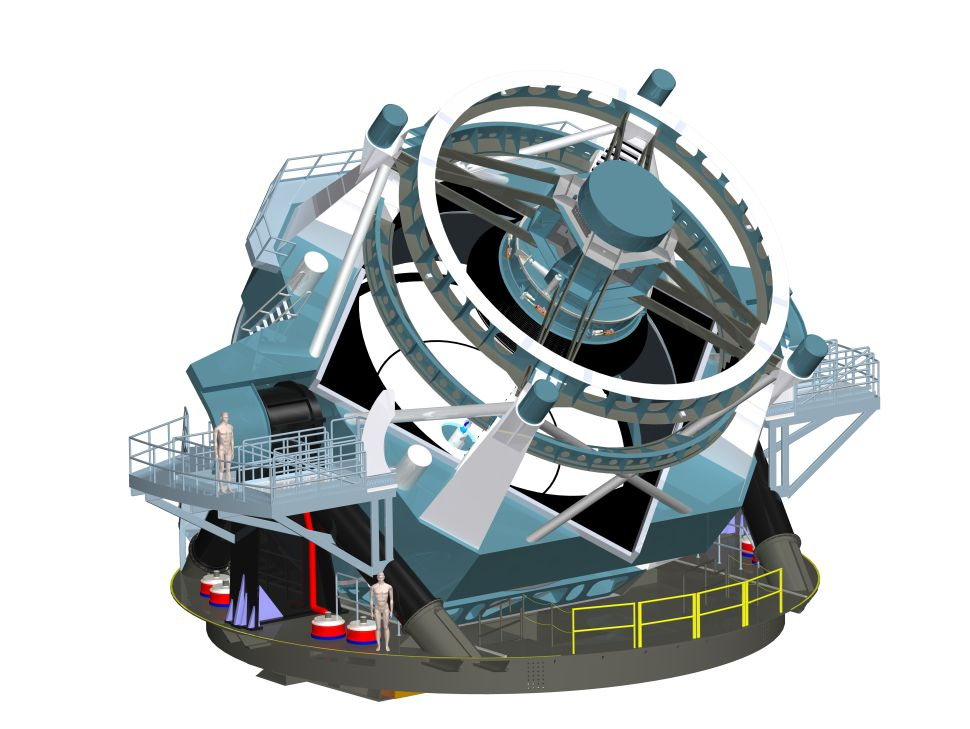
Large Synoptic Survey Telescope (LSST)
- A new ground-based observatory that would scan the entire available sky every three nights from Chile could see first light by 2014. The $465-million Large Synoptic Survey Telescope would give astronomers their best view ever of how billions of faint starry-sky objects change over time. It could also tackle questions relating to the nature of dark energy, and perhaps track space rocks that might collide with Earth in the future.
South African Large Telescope (SALT)
- This 30-foot (9.2-meter) telescope represents the largest ground-based optical instrument in the southern hemisphere, and concentrates on spectroscopic surveys. A main mirror consists of 91 hexagonal mirrors that join together to form the larger hexagonal primary —not unlike the Hobby-Eberly Telescope (HET) in Fort Davis, Texas.
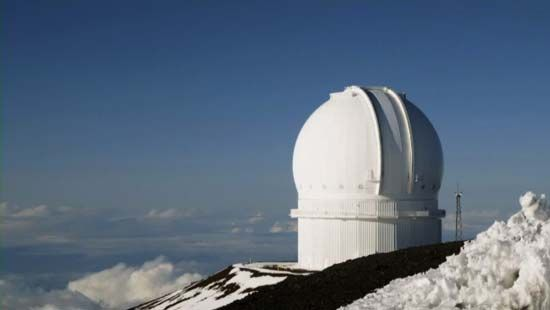
Keck I and II Telescopes
- The twin 33-foot (10-meter) telescopes at the W. M. Keck Observatory represent the second largest optical telescopes on Earth, located close to the summit of Hawaii's Mauna Kea. Each instrument's main mirror consists of 36 hexagonal segments that work together.
Gran Telescopio Canarias (GTC)
- A 34-foot (10.4-meter) telescope located on La Palma of Spain's Canary Islands seized the top spot as the world's biggest ground-based optical telescope in 2009. A main mirror that consists of 36 hexagonal segments contains some of the smoothest surfaces ever made.
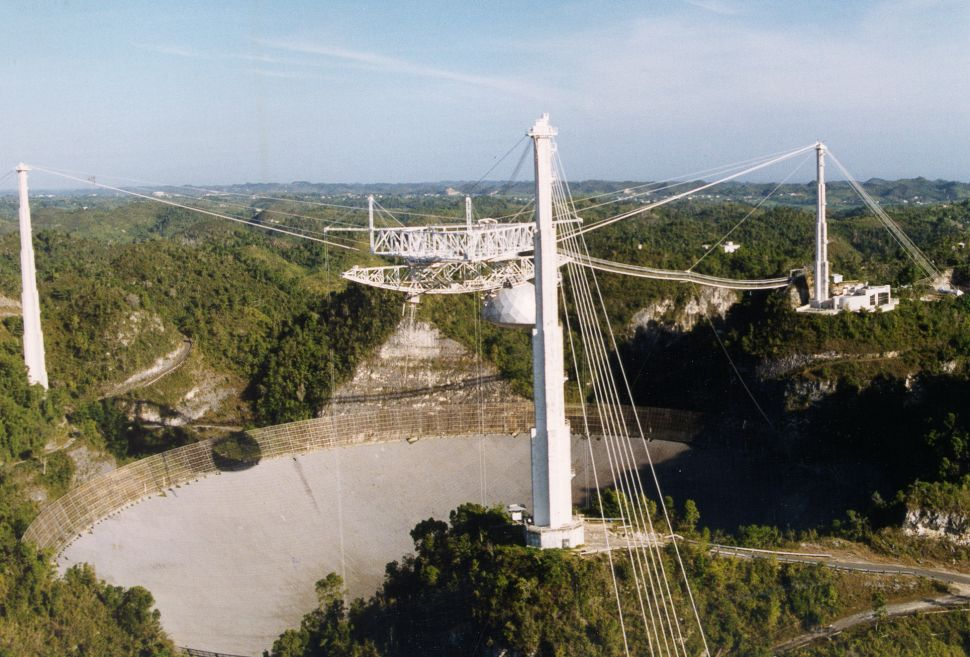
Arecibo Observatory
- One of the world's most recognizable ground-based telescopes has resided as a huge 1000-foot (305-meter) radio reflector dish near Arecibo, Puerto Rico since 1963. The Arecibo radio telescope still represents the largest single-aperture telescope ever constructed, with its spherical reflector consisting of 40,000 aluminum panels each 3 feet by 6 feet.
Atacama Large Millimeter/submillimeter Array (ALMA)
- One of the largest ground-based astronomy tools comes in the form of the 39-foot (12-meter) radio antennas that will total 66 by 2012, to make up ALMA's main array. Each antenna weighs more than 100 tons each and requires huge crawler vehicles to move it to Chile's Chajnantor plain at an altitude 3 miles up. This will ultimately help make ALMA the largest and most sensitive radio telescope ever, at least until a new contender emerges.
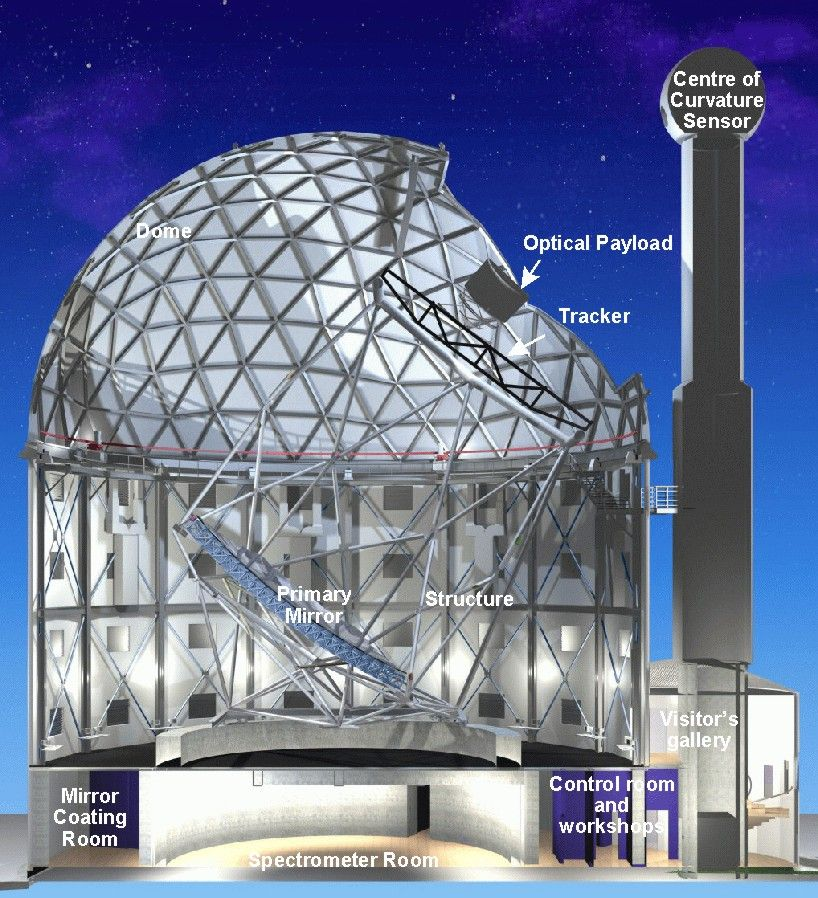
Giant Magellan Telescope (GMT)
- One of the next ground-based optical telescopes will take the form of the $1.1-billion Giant Magellan Telescope with an 80-foot (24.5-meter) main mirror that consists of seven segments. One 8.4-meter segment would sit in the middle, surrounded by the other six segments that have a unique curved shape not unlike that of a potato chip.
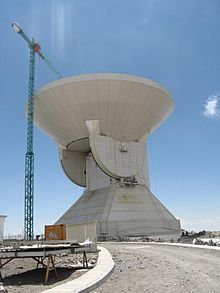
Large Milimeter Telescope Alfonso Serrano
- The Large Millimeter Telescope (LMT) (Spanish: Gran Telescopio Milimétrico, or GTM) -officially Large Milimeter Telescope Alfonso Serrano (Spanish: Gran Telescopio Milimétrico Alfonso Serrano)- is the world's largest single-aperture telescope in its frequency range, built for observing radio waves in the wave lengths from approximately 0.85 to 4 mm. It has an active surface with a diameter of 50 metres (160 ft) and 1,960 square metres (21,100 sq ft) of collecting area. It is located at an altitude of 4850 meters on top of the Sierra Negra, the fifth highest peak in Mexico and an extinct volcanic companion to Mexico's highest mountain, the Pico de Orizaba, inside the National Park Pico de Orizaba in the state of Puebla. It is a binational Mexican (80%) – American (20%) joint project of the Instituto Nacional de Astrofísica, Óptica y Electrónica (INAOE) and the University of Massachusetts Amherst.
Imágenes y archivos del mapa



Información
- Descripción
- Mapa Mental sobre Largest millimeter telescopes, creado por Diego Carreón el 13/04/2021.
- Creado por
- Diego Carreón
- Visitas
- 0
- Valoración