
Mapa mental
Electric Fields
Contenido del mapa
Electric Fields
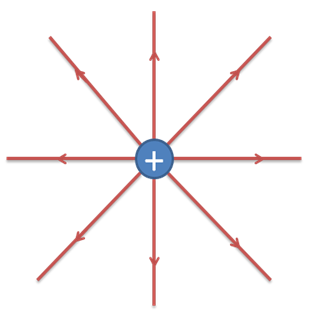
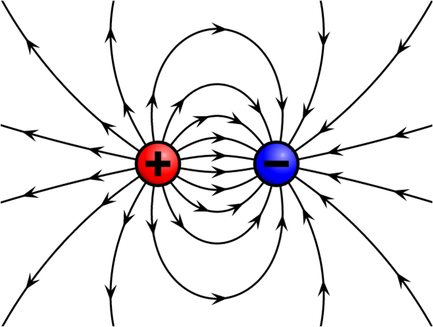
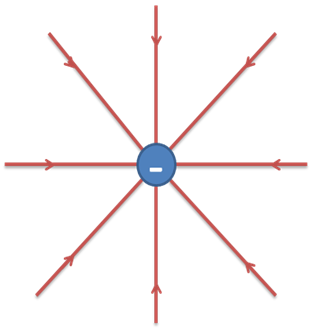
Electric Field Lines
- Positive
- Negative
- Positive -> Negative
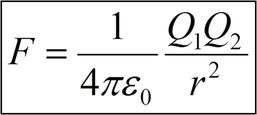
Coulomb's Law
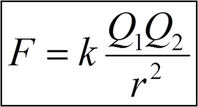
- The force between 2 charges (Q1 and Q2) at a distance, r is:
- This can be simplified by lumping the constants together into a single constant (k)
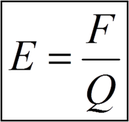
Electric Field Strength (E)
- An electric field is a region where forces act on charges. It is measured in Newtons per Coulomb
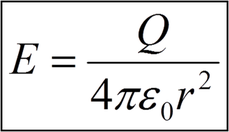
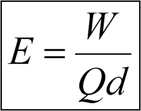
- Substituting the force from Coulomb's law you get the equation for Electric Field strength of a certain charge:
Electric Fields with more than one charge
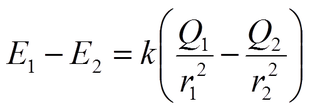
- All you need to do is take one away from the other to get a resultant field
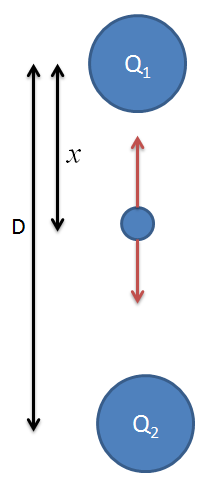
- 2 charges Q1 and Q2 exert forces on a test charge
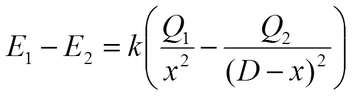
- In terms of D and x
- All you need to do is take one away from the other to get a resultant field
Electric Field between parallel Plates
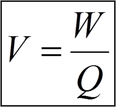
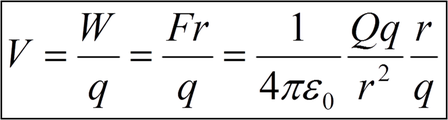
- Voltage is defined as the work done per unit charge
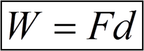
- Work done is calculated by doing the force multiplied by the distance moved in the force direction
- Since E = F/Q:
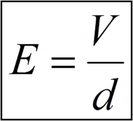
- And since V = W/Q that means electric field strength is also measured in Volts per metre
- Since E = F/Q:
- Work done is calculated by doing the force multiplied by the distance moved in the force direction
- Voltage is defined as the work done per unit charge
Electric Potential, V
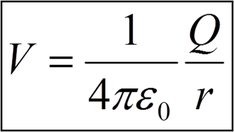
- The electric potential, V, at a point is the work done per unit positive charge on a positive test charge when moved from a point infinitely far away from any charges to that position.
- It can also be thought of as the amount of energy it would take to remove a negative charge from a positive field from that point
- The work done to move such a charge is the electric force (from Coulomb's law) x distance it moves, r.
- This then becomes:
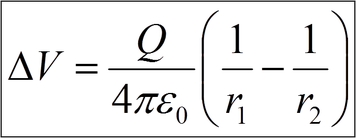
- Electric potential difference, ΔV
- The electric potential difference (ΔV) between two points is numerically equal to the work done (ΔW) in moving a unit positive charge from the point at the lower potential to the point at the higher potential.
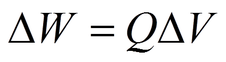
- The work done, ΔW, to move a charge, Q, from one potential to another, ΔV, is:
- The electric potential difference (ΔV) between two points is numerically equal to the work done (ΔW) in moving a unit positive charge from the point at the lower potential to the point at the higher potential.
- The electric potential, V, at a point is the work done per unit positive charge on a positive test charge when moved from a point infinitely far away from any charges to that position.
Equipotentials and Potential Gradients
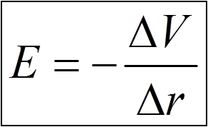
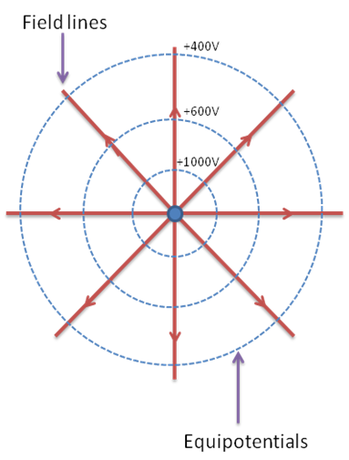
- Equipotentials are at perpendicular to the electric field lines. In a uniform field the equipotentials are parallel (e.g. in between 2 plates). The electric field strength, E, is equal to the negative of the potential gradient (ΔV/Δr):
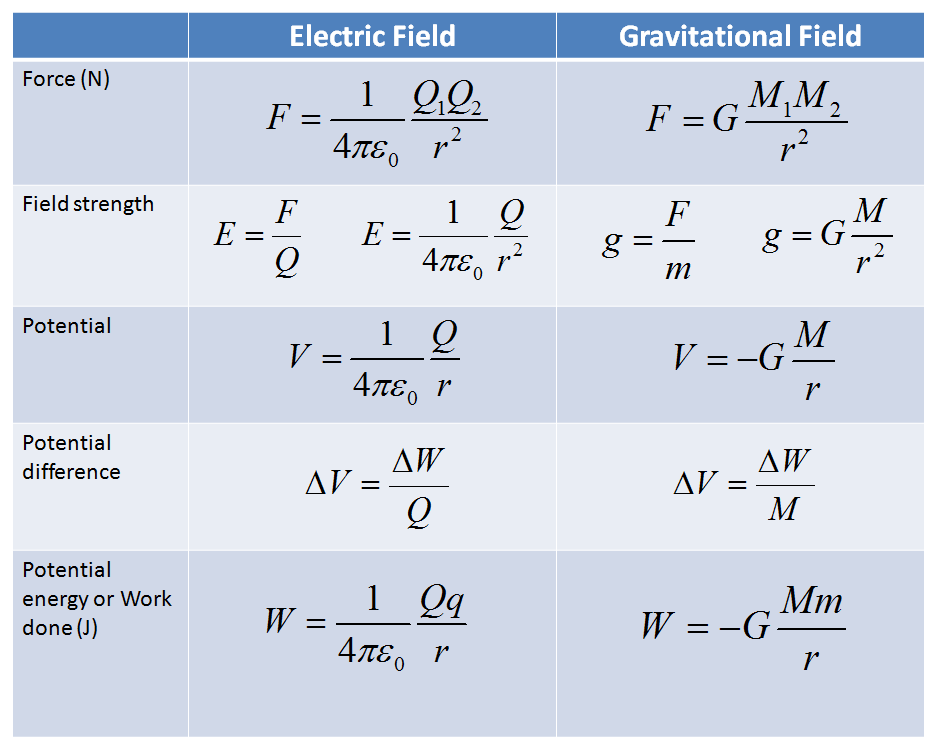
Comparing Electric and Gravity Fields
Imágenes y archivos del mapa
Información
- Descripción
- Mapa Mental sobre Electric Fields, creado por Nairners el 19/11/2015.
- Creado por
- Nairners
- Visitas
- 1
- Valoración