
Mapa mental
T cells +MHC
Contenido del mapa
T cells +MHC
Antigen recognition by T cells
- The adaptive immune system recognises two kinds of antigens : B cell antigens and T cell antigens (see S3 for difference between the two)
- Two types of TCRs (S5-8 )
Structure, function and expression of TCR
- The T cell receptor: TCRϒδ T cells= unusual – DO NOT recognise MHC- peptide complexes + don’t usually express CD4 or CD8. They recognise lipid + carbohydrate Ag. The dominant human type recognise a phospholipid expressed by Mycobacterium tuberculosis. The αβ T cell receptor (TCR) recognises antigen ONLY if it is shown to it (presented) by an MHC molecule on the surface of a cell (S7). TCR binding 2 peptide antigen presented on MHC results in activation of cell signalling pathways + gene expression resulting in: T cell activation, T cell proliferation, cytokine production
Structure, function + expression of MHC Class 1 and 2
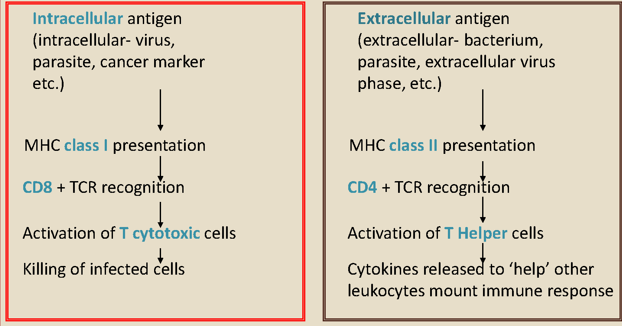
- Class 1 MHC: found on all body cells (except RBCs), presents INTRACELLULAR Ag, Interacts with CD8 on T-cells MHC class 1 expressed by ALL cells (except erythrocytes + neurones), MHC class 1 presents host’s own phenotype of protein molecules- which are continually synthesise + degraded in host cell. Each MHC 1 molecule displays a molecular fraction of host cells protein- like a meter indicating balance of proteins within the cell. If cell is infected with virus..Viral peptides will b presented on cell surface, MHC class 1 presents Ag to CD8+ T cells, Three MHC class 1 gene loci in human HLA –A, -B, -C, Also MHC class Ib HLA-E Class 2 MHC: Found only on antigen presenting cells (APCs), presents EXTRACELLULAR/ MEMBRANE Ag, Interacts with CD4 on T-cells, MHC class 2 expressed only by APCs (e.g. dendritic cells, macrophages+ B cells), presents Ag taken up from outside the cell, presents Ag to CD4+ T cells, 3 MHC class 2 gene loci in human HLA, -DP, -DQ, -DR
MHC-peptide- TCR binding
- MHC or HLA in humans MHC= receptors which interact with Ag + CD4/CD8 on T cells, 3 subgroups: class1, class2 & class 3, MHC= most polymorphic locus in mammals- many, many different alleles, Each MHC molecules can bind many dif peptides fragments via ANCHOR RESIDUES. Thus each MHC molecule has peptide binding motif. Contrast this to the Ab/BCR/TCR specificity to Ag.
- MHC or HLA in humans MHC= receptors which interact with Ag + CD4/CD8 on T cells, 3 subgroups: class1, class2 & class 3, MHC= most polymorphic locus in mammals- many, many different alleles, Each MHC molecules can bind many dif peptides fragments via ANCHOR RESIDUES. Thus each MHC molecule has peptide binding motif. Contrast this to the Ab/BCR/TCR specificity to Ag. CD4 is expressed on T helper cells + CD8 is expressed on T cytotoxic cells. It’s the relationship between MHC + CD4 or 8 which defines the type of immunological reaction which will take place (S20)
- Antigen processing is carried out by: Any nucleated cell via Endogenous pathway (of intracellular antigen) for presentation on MHC Class 1 Professional antigen presenting cells (APCs) via the Exogenous pathway (of extracellular antigen) for presentation on MHC Class 2) e..g macrophages, dendritic cells
Superantigens
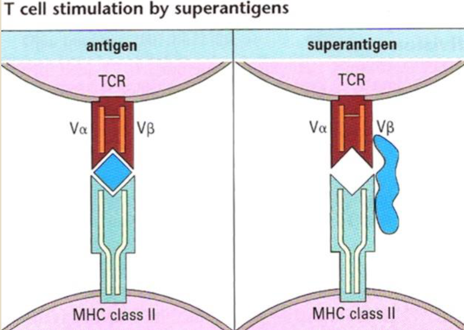
- Some pathogens can produce superantigens e.g. lectin mitogens, polysaccharides (e.g. LPS), which can activate T cells non-specifically- w/o a specific antigen binding 2 TCR. Results in POLYCLONAL Tcell activation + massive cytokine release e.g. IFNϒ, TNFα producing uncontrolled inflammation + widespread damage/ death from shock + multiple organ failure. These SAg-activated T cells ill eventually undergo deletion/ anergy- resulting in a severely compromised immune system
MHC polymorphism
- S26-31
Focus on cells of innate immune system- neutrophils
- FIRST LINE OF DEFENCE, neutrophils= type of granulocyte (along wiv basophils, mast cells + eosinophils). they can cause direct harm 2 pathogen by: phagocytosis + release of contents of their granules (also pro-inflammatory + tissue remodelling effects), spitting out neutrophil extracellular traps (NETs) onto extracellular pathogens (S33- end)
Imágenes y archivos del mapa
Información
- Descripción
- Mapa Mental sobre T cells +MHC, creado por mfbi20 el 04/06/2016.
- Creado por
- mfbi20
- Visitas
- 220
- Valoración