
Mapa mental
Integration Techniques
Contenido del mapa
Integration Techniques
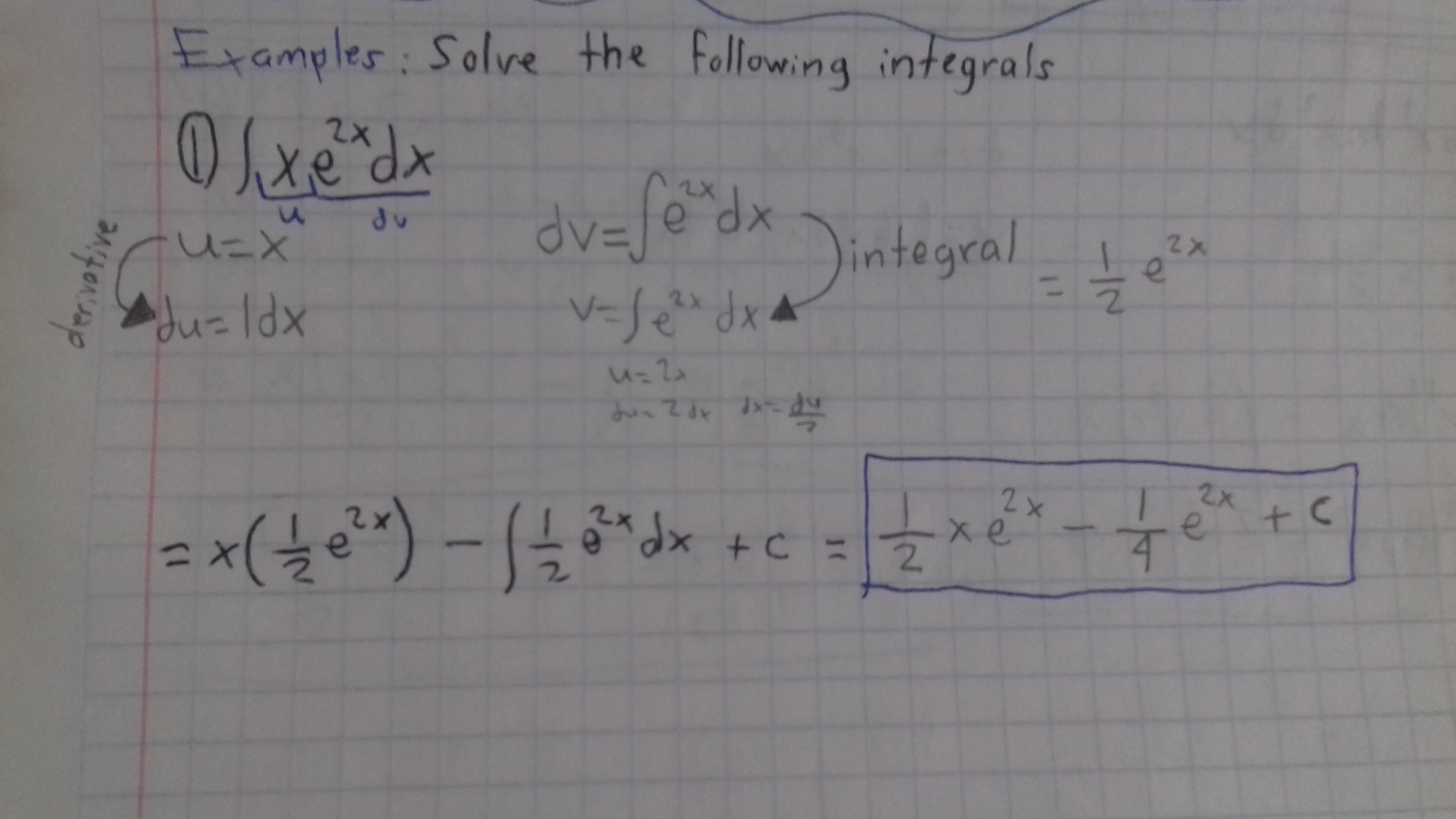
Integration by Parts
- Tabular Method
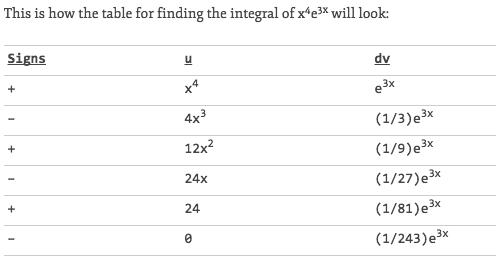
- The tabular method uses a convenient table with three columns. We can call the first column “Signs,” the second column “u” and the third column “dv.” Under the column called “Signs,” we list positive and negative signs in alternating order for as many times as the problem requires. The first entry in the column labeled “u” will be the part of the function we want to integrate which can be reduced to zero through successive differentiation. In integrating our sample function, x^(4)e^(3x), we will put x4 in the column labeled “u.” The subsequent entries in the “u” column will be the successive derivatives of the first entry — all the way to zero.
- The first entry in the column labeled “dv” includes the other part of the function we want to integrate. The subsequent entries in this column will be the successive integrals of the first entry. For our sample problem, the first entry in the “dv” column will be e^(3x)
- The tabular method uses a convenient table with three columns. We can call the first column “Signs,” the second column “u” and the third column “dv.” Under the column called “Signs,” we list positive and negative signs in alternating order for as many times as the problem requires. The first entry in the column labeled “u” will be the part of the function we want to integrate which can be reduced to zero through successive differentiation. In integrating our sample function, x^(4)e^(3x), we will put x4 in the column labeled “u.” The subsequent entries in the “u” column will be the successive derivatives of the first entry — all the way to zero.
- Using integration by parts ∫udv=uv-∫vdu
- To apply this integration technique it is necessary to identify the function "u" and the Differential "dv" To select which part of the given integral will be "u" we will use the following nemotechnique rule L (Logarithmic) A (Algebraic) T (Trigonometric) E (Exponential) = LATE The remaining elements will be "dv"
- Tabular Method
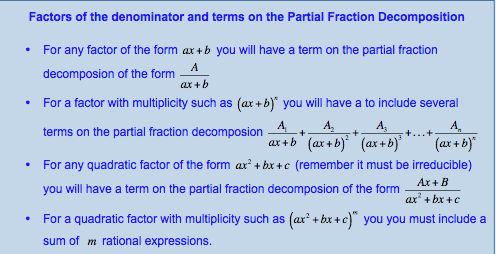
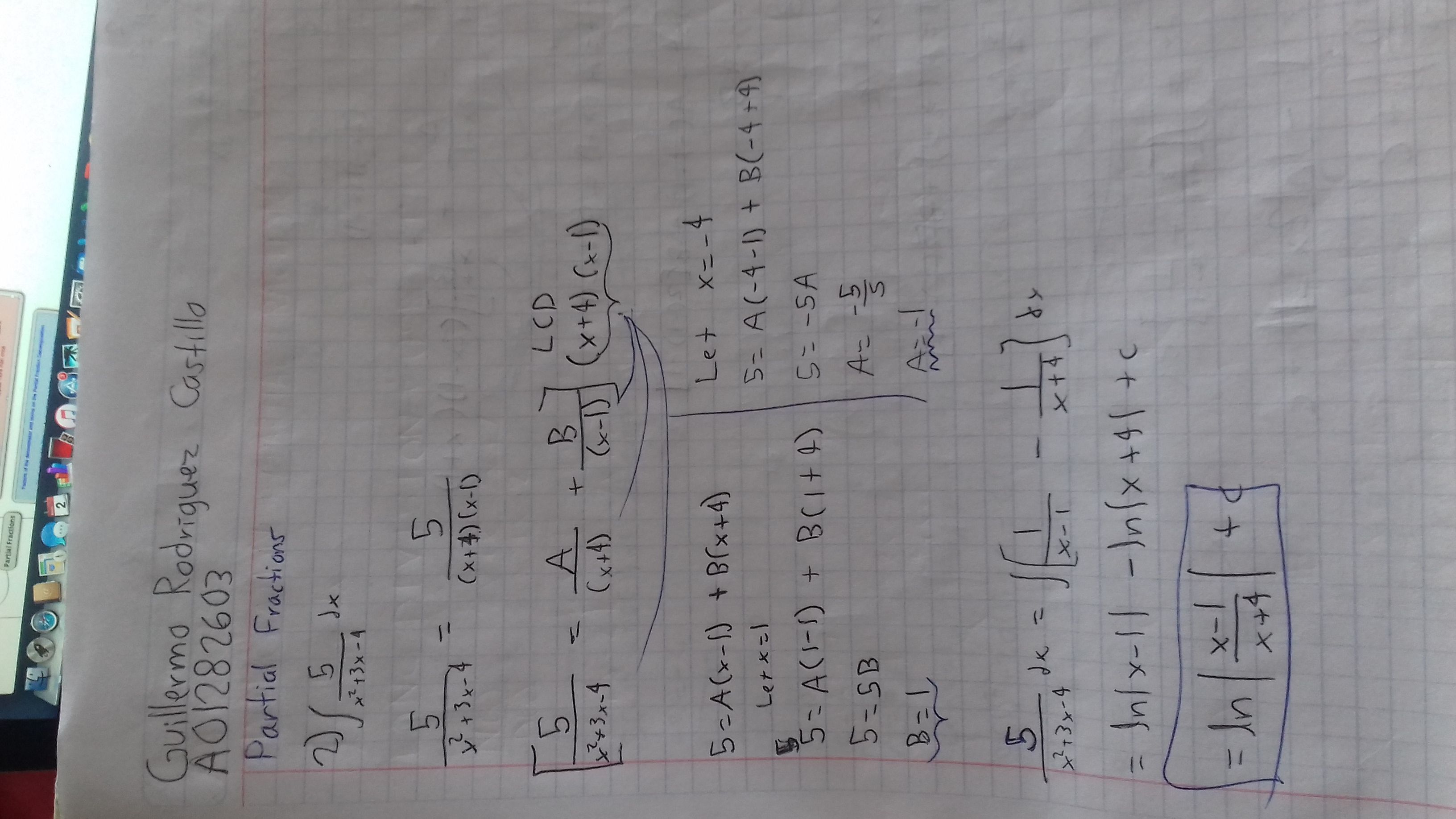
Partial Fractions
- • If it is an improper fraction (when the degree of the numerator is greater than or equal to the degree of the denominator) you must perform the division first. If that is the case the answer to this division will be a polynomial + another rational expression (that is NOT improper), you will work with this rational expression and decompose it into partial fractions
- • Now that we are sure that we have a proper fraction we must factor the denominator completely using linear and/or quadratic (irreducible) factors. Remember that any of this factors can appear more than once
- • If it is an improper fraction (when the degree of the numerator is greater than or equal to the degree of the denominator) you must perform the division first. If that is the case the answer to this division will be a polynomial + another rational expression (that is NOT improper), you will work with this rational expression and decompose it into partial fractions
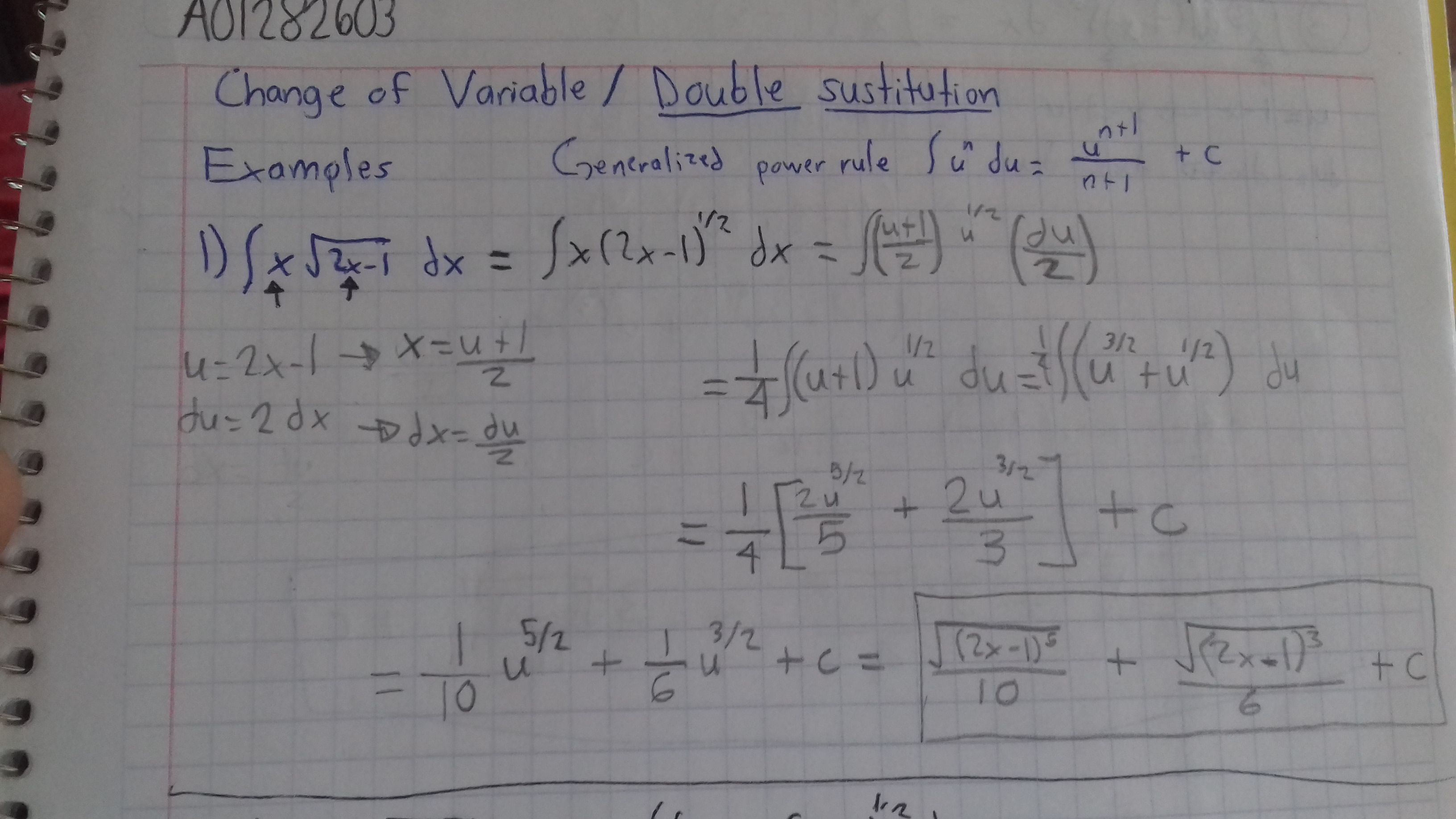
Double Substitution
- The method of u-substitution is a method for algebraically simplifying the form of a function so that its antiderivative can be easily recognized. This method is intimately related to the chain rule for differentiation.
Imágenes y archivos del mapa
Información
- Descripción
- Mapa Mental sobre Integration Techniques, creado por Guillermo Rodríguez Castillo el 02/05/2017.
- Creado por
- Guillermo Rodríguez Castillo
- Visitas
- 7
- Valoración