Apuntes
Cardiology
Contenido del apunte (2)
Página 1
ECG
Definition: a test that measures the electrical activity of the heart; records the heart's rhythm and activity on a moving strip of paper or a line on a screen
*The ECG does not tell you specifically about function of the cardiac chambers or the clinical state of the patient, but it is part of the comprehensive evaluation of a patient and the information obtained can be critical to the diagnosis and management of the patient
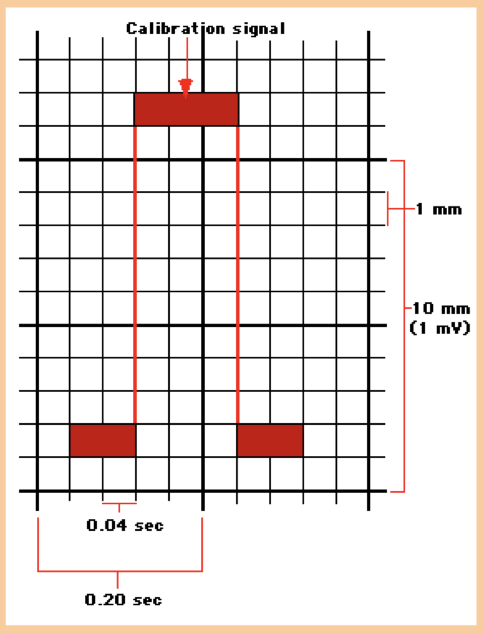
Calibration
The figure below shows the calibration and standardization of the ECG. The large boxes (heavy lines) are 0.5 cm in width and height. On the horizontal axis, each large box represents 0.2 seconds at the typical speed of 25 mm/sec. Large boxes are divided into five smaller boxes, each representing 0.04 seconds. On the vertical axis, each small box represents 1 mm in height, and 10 mm (two large boxes) equals 1 mV with standard calibration.
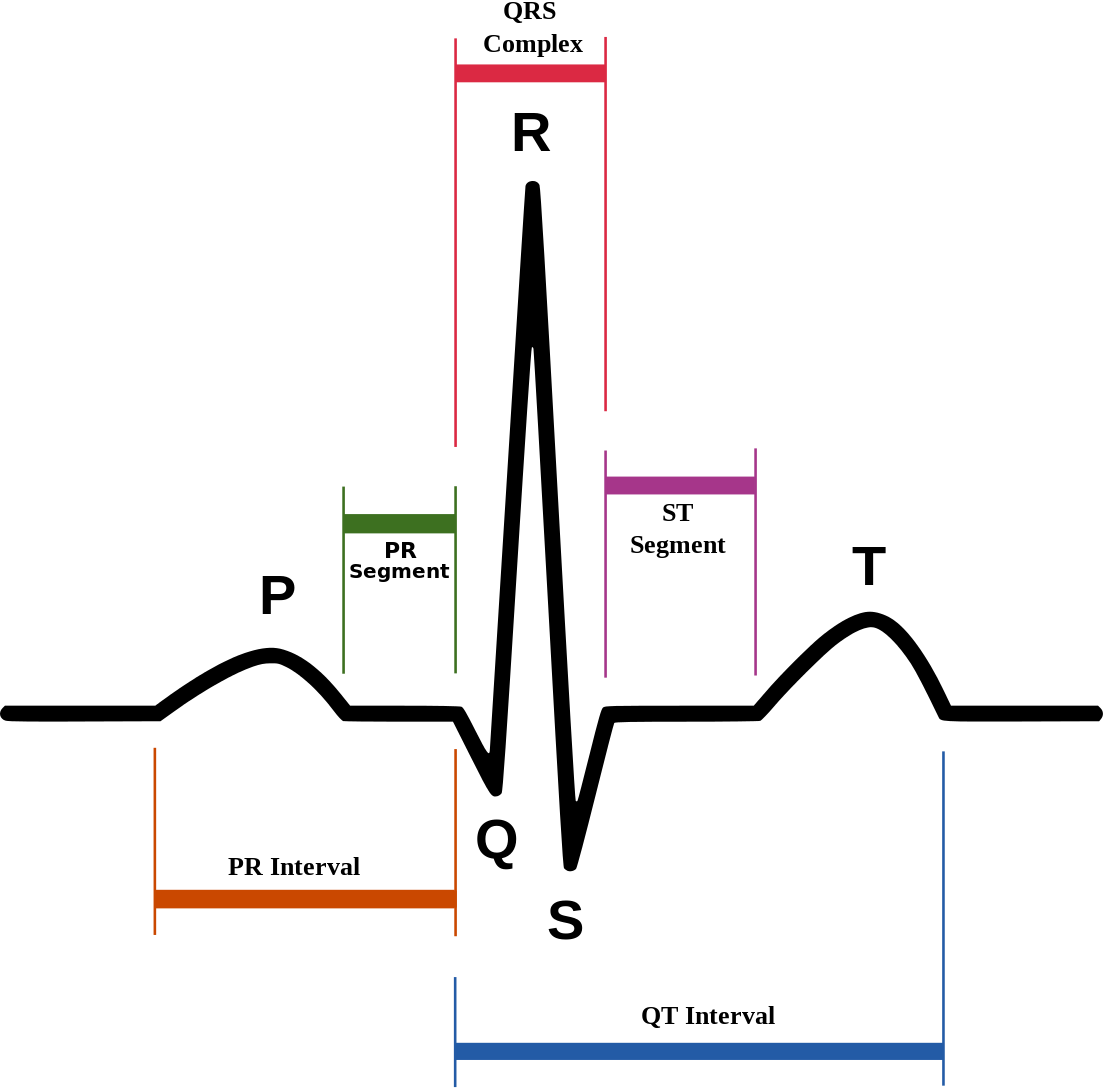
Normal ECG
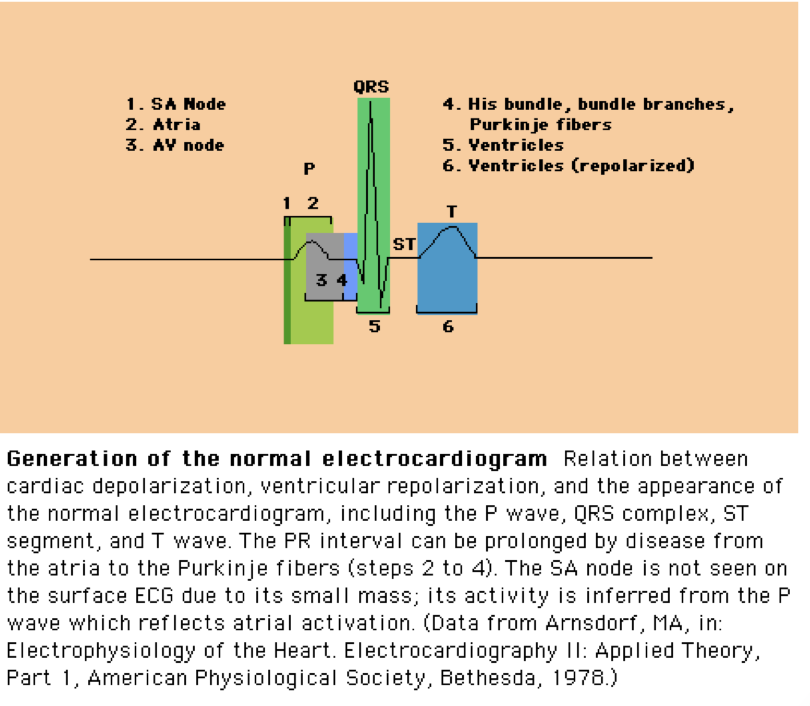
P wave- atrial depolarization
PR interval- time from initiation of atrial depolarization to initiation of ventricular depolarization
QRS complex- ventricular depolarization
QT interval- ventricular contraction
T wave- ventricular repolarization
ST segment- period when ventricles are depolarized and there are no currents toward leads