
Apuntes
Types of Conservatism
Contenido del apunte (6)
Página 1
Authoritarian Conservatism
Thomas Hobbes:
Writing during the horrors of the English Civil War
Viewed society through the lens of the social contract
This meant people needed protection in order to ensure life was not "brutish and short"
In return for this protection they would need to except restrictions of their freedoms and come under the direction and guidance of a Sovereign
Joseph de Maistre:
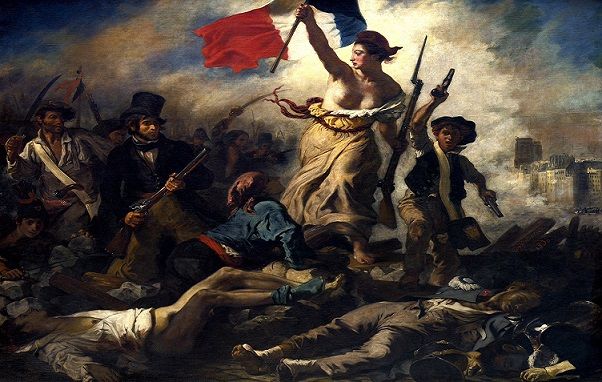
Maistre was a critic of the French revolution like Edmund Burke, however, he wanted to restore absolute power to the hereditary monarch
Maistre was reactionary and was not prepared to accept any form of ancient regime
His philosophy for politics was based on the idea of complete subordination to 'the master'
When revolution and reform occurs it weakens the chains that bond people; the end product is chaos and oppression
Página 2
Traditional Conservatism
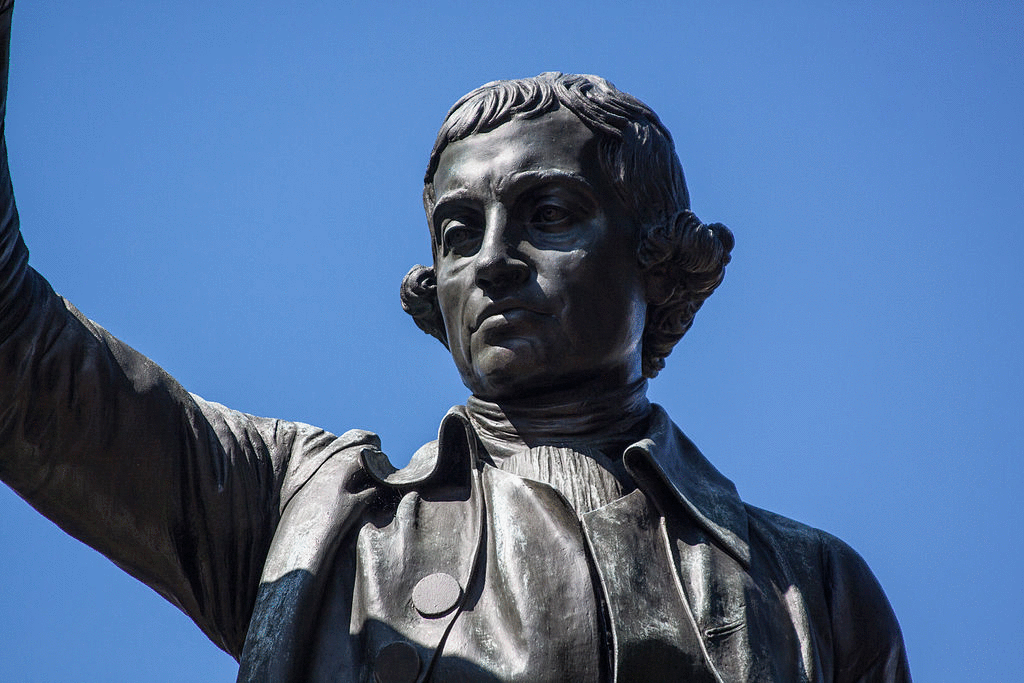
This form of conservatism is traced back to the key figure of Edmund Burke. It acknowledges that change can be natural or inevitable sometimes e.g. the French Revolution. Moreover, Burke would argue change should not be obstructed entirely: "a state without the means of some change is without the means of its conservation."
Traditional conservatism is both cautious and pragmatic
They believe in natural law (a philosophy asserting certain rights are inherent by virtue of human nature endowed traditionally by God) and moral order
Burke was a traditionalist who believed certain rights for humans were 'God-given'
Moreover, the values that are dear to the conservative heart (tradition, order, authority, property) can only be safe and secure when policy is developed in light of practical circumstances and experiences
Pragmatic conservatives will not support neither the state nor the individual, but are really prepared to support either, or in some cases both
Traditional conservatives favour their pragmatism over their principles; this is founded on the stance that humans are intellectually limited
Traditional conservatism is also hesitant and critical of abstract ideas and systems of thought that claim to comprehend
They wish to ground their ideas in their tradition, experience and history
Página 3
One Nation Conservatism
One Nation Conservatism was forwarded by former British Prime Minister Benjamin Disraeli. Disraeli emphasised the importance of social obligation in contrast to the extreme individualism present at the time.
Britain was divided into two nations: the Rich and the Poor
As social inequality fosters, ideas of revolution develop among the working classes
Reform is a sensible act to stem the tide of revolution, therefore, the Rich commit to changes such as extending the voting franchise e.g. Second Reform Act 1867
Moral values:
Drawing on the conservative belief that society is held together as the wealthy and privileged fulfil there social obligations towards one another
Inequalities regarding wealth and social status give rise to inequality of responsibilities
This is based on the principle of noblesse oblige ; the aristocracy in feudal times was obligated to be honourable and generous
Second Reform Act 1867 - introduced the right to vote for the working class and other reforms for the development of better housing conditions and hygiene
Lord Randolph Churchill who was the Chancellor of the Exchequer in 1886 for a number of months was an advocate of 'Tory Democracy'
'Tory' was meant to relate to pre-industrial, hierarchic and paternal values
There was also the need for traditional institutions to achieve a wider base of social support (i.e. win working class votes)
One nation conservatism resurfaced in recent times as 'compassionate conservatism'
Reminder that the purpose of one-nationism, as argued by Disraeli, is to consolidate the hierarchical nature of society but wish to improve the conditions of those less fortunate
This is mainly driven by the desire of the rich to ensure the poor do not threaten the established order of things
Página 4
New Right
This was a direct challenge to the Keynesian-welfarist beliefs that developed from the middle of the 20th century. It involved a unification of two supposedly contrasting ideological practices:
Classic Liberal economics - developed from the ideas of Adam Smith. There was the revival of criticism of 'large' government and economic and social intervention, called liberal new right/neoliberalism
Traditional and pre-Disraelian social theory - this involved the defence of order and authority in society, called conservative new right/neoconservatism
The Liberal New Right attempts to 'roll back' on interventionist government, while also dismissing tradition
Neoconservatives make an appeal to tradition and the worth that is found in 'traditional values'
Both of these views reflect back on a 'golden age' when the economy prospered and morality was the backbone of society

Página 5
Liberal New Right
The Liberal New Right adheres to libertarianism; the idea of upholding liberty and seeking to maximise autonomy and free choice of the individual (mainly economical)
Reflecting back on free-market thinking alongside classic liberalism; addresses the case for minimal state
Reminder of the popular statement 'private, good; public, bad'
Anti-statist (the state restricts and coerces):
The state restricts individual initiative
Faith should be in the individual and the market; self-reliance and rational choices are what people are capable of
The market acts as a mechanism through which the sum of all individual choices will lead to progress
The Liberal New Right revived the economic ideology of Smith, Ricardo, Hayek, Nozick
The market acts as the foundation of the economy, balancing the supply of good and services in relation to their demand
Reacting to unemployment in the 1970s, neoliberals argued the government was the cause of economic problems and not the cure
Inflation is a huge threat to the economy as people lose faith in currency and commit to less economic activity
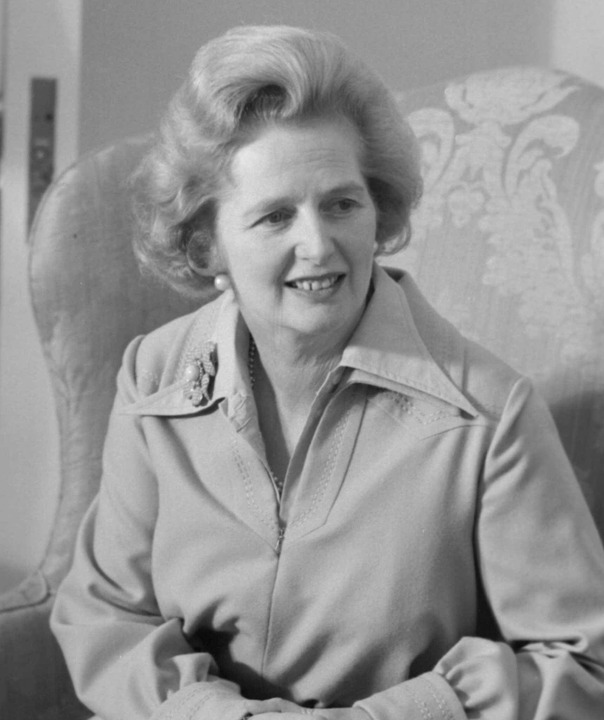
The solution to inflation lies in the control of the supply of money e.g. cutting public spending like Reagan and Thatcher
New Liberals are opposed to mixed economy and public ownership; industries should be private and nationalisation is overall inefficient
The government should encourage economic growth by developing conditions motivating producers to produce (e.g. having low taxes)
New Liberals are also committed to individual liberty
Remove external restraints of the individual e.g. the state and welfare
Welfare state = 'culture of dependency'
Nozick blamed welfare policies and redistribution as violations of property rights
Página 6
Conservative New Right
Attempts to strengthen leadership and authority within society; the conservative new right fears the social fragmentation brought about by liberal reform
Neoconservatives hold a belief in the fragility of society and emphasise authority, which demonstrates the conservative new right is rooted in traditional conservatism
This is not paternalistic like traditional conservatism though, neoconservatives aspire to strengthen community bonds via restoration of authority and disciplining society
Being permissive undermines the established structures within society, this is because people begin to question authority
The main domestic concerns relate to:
Law and order: people want security, and strong authority provides this. Adheres to a form of social authoritarianism, which involves a strengthening of the family unit. Further, state authoritarianism, which requires a tough stance on law and order.
Public morality: reassert the moral foundations of politics. If people have the freedom to choose their own morals this lends way to choice of immoral views.
Connection of domestic and foreign policy - this involves the desire to strengthen national identity in the face of threats, whether they be internal or external
The growth of multiculturalism is bad for the nation as it weakens bonds of nationhood, therefore, the needs to be stronger controls on immigration
Foreign policy is normally evident in the idea of the struggle between good and evil e.g. early foreign policy was defined by anti-communism aims
Neoconservatives were influenced by the 'Clash of civilisation' theory put forwarded by Samuel Huntington
Strong military, spread of democracy (like in the US), assertive, intervening with foreign policy to promote democracy
Información
- Descripción
- El usuario ha eliminado su información de asignaturas Apunte sobre Types of Conservatism, creado por Usuario eliminado el 26/07/2017.
- Creado por
- Usuario eliminado · jul 2017
- Actualizado
- 26 jul 2017
- Visitas
- 31
- Historial
-
- Creado por Andrew Burke · 21 jul 2017
- Copiado por Andrew Burke · 26 jul 2017
- Valoración