
Height of Tension - Vietnam War
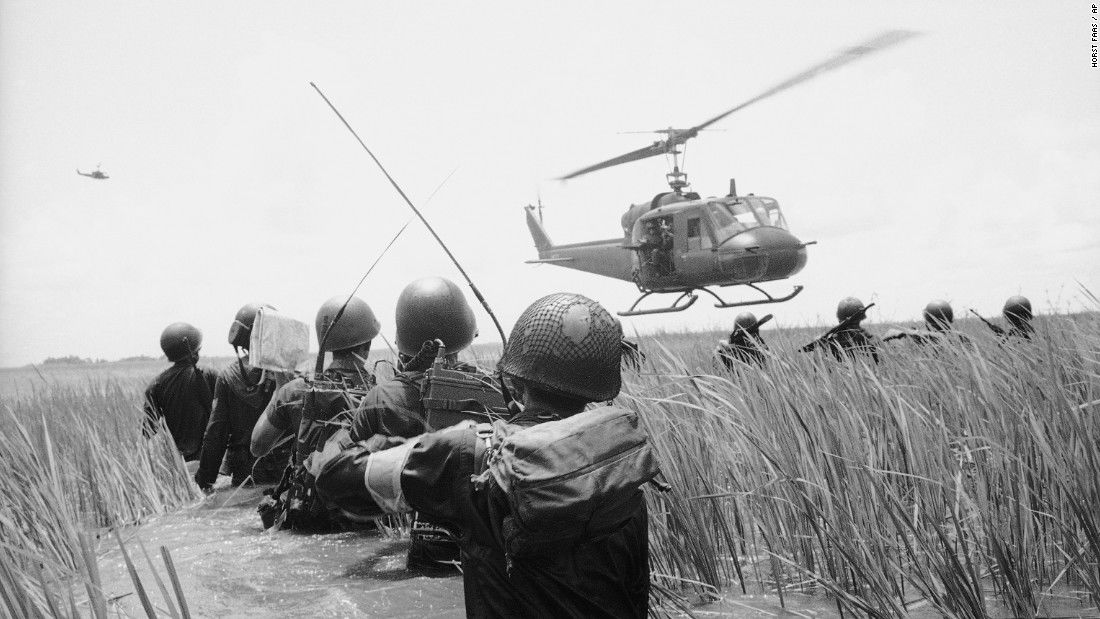
Diapositivas del conjunto (7)
-
-
- Vietnam in the 19th century was colonised by the French Empire
- In 1940, the French were defeated by Germany, and the French empire collapsed around the world
- Japan occupied Vietnam from here; Japanese resistance movement emerges under leadership of Ho Chi Minh (communist and nationalist)
- He inspired the Vietnamese to liberate themselves from the Japanese; Vietnam was declared independent after the war
- After the war, France wanted to retain and rule Vietnam again
- 9 years of war followed; Viet Minh controlled the north and the French the south
- 1946-1954 - the French fought against the Viet Minh, but the Communist party in Vietnam was hard to wear down
- USA wanted a strong France to withstand communism in both Europe and Asia
- USA supported the French war effort in Vietnam by paying 80% of the costs
- 1954 - Vietminh defeated the French at the battle of Dien Bien Phu ending French rule in the region
- 1954 Geneva Accord - recognised French withdrawal from Vietnam
- Partitioned Vietnam along the 17th parallel between North and South governments
- Recognised Laos and Cambodia as free independent states
- US refused to sign the accord
-
- Why did the US get involved?
- From 1949, Ho received support from communist China in terms of money, weapons and equipment
- Eisenhower acted for the US, funding the French war effort with $500 million a year
- Eisenhower was trying to stop the spread of communism, but the French pulled out in 1954
- A peace conference was held and Vietnam was divided North and South until elections could be held
- The US, fearing a take over of Vietnam by Ho's Communist Party, set up the Republic of South Vietnam under Ngo Dinh Diem
- Diem was an anti-communist and deeply unpopular
- He led a corrupt government that gave jobs to family members and refused elections at local level
- Diem was overthrown in 1963, and more unpopular governments followed
- Some historians argue that the US wanted war in the first place due to the military-industrial complex
- The government gave huge budgets to military commanders
- This money was spent on weapons made by big US manufacturers
- The US gets drawn in:
- By the early 1960s, the South Vietnamese government was losing control of the countryside to the National Front for the Liberation of South Vietnam (Viet Cong)
- Viet Cong - a communist led rebel movement attempting to overthrow Southern Vietnam regime
- The Viet Cong was supported by North Vietnam, China and the USSR
- USA supported the efforts of the Southern government but it remained corrupt
- The US was drawn in and Kennedy sent military 'advisers' to help the Southern regime
- Lyndon Johnson, who succeeded Kennedy, launched the Operation Rolling Thunder in February 1965
- This involved the bombing of North Vietnamese cities, factories and the Ho Chi Minh trail
- March 1965 - Johnson would order ground troops into Vietnam
-
- Johnson committed troops to Vietnam on the basis that the South Vietnamese government could not handle the Viet Cong. Further, he wanted to prevent a communist takeover.
- Bombing:
- Bombed Viet Cong strongholds and supply routes (Ho Chi Minh Trail)
- Bombing killed thousands of people and turned Vietnamese people against the US
- Search and destroy:
- US soldiers would surround villages and seek out Viet Cong forces
- Raids were based on poor information and often led to the killing of Vietnamese civilians
- Chemical weapons:
- There were two main types: agent orange (poisonous weed killer to defoliate the jungle) and napalm (would burn the jungle where the Viet Cong were located)
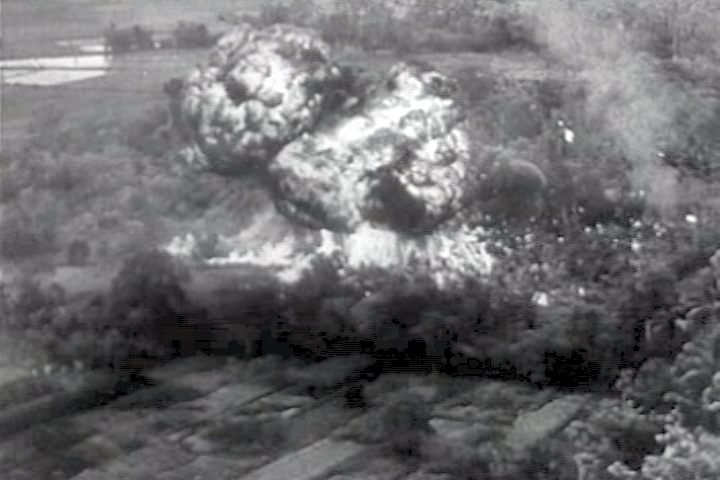
- Pie de imagen: Napalm burning the Vietnamese landscape
-
- Changing attitudes: Tet Offensive January 1968
- In the Tet New Year (January 1968), the Viet Cong attacked over 100 cities and military targets
- US and SVA forces took back the captured towns; around 10,000 Viet Cong died and huge amounts of artillery were used
- The city of Hue was destroyed and 116,000 civilians made homeless
- US citizens began to question the war; 500,000 troops were in Vietnam at the cost of $20 billion a year
- The Media:
- After the Tet Offensive many claimed that the war would require greater effort and more troops to win
- Negative attitudes began to develop within US media outlets
- The My Lai Massacre:
- Reporting grew more critical after the Tet Offensive
- Life magazine in December 1969 reported the atrocity committed by American troops in the village of My Lai in March 1968
- US forces killed between 300-400 civilians
- Some civilians were gunned down and others shot in a ditch
- Initially, the troops and commanding officers were praised for their actions which made the situation worse in the eyes of the US public
- The My Lai massacre challenged the view that the US was fighting for a just cause in Vietnam
-
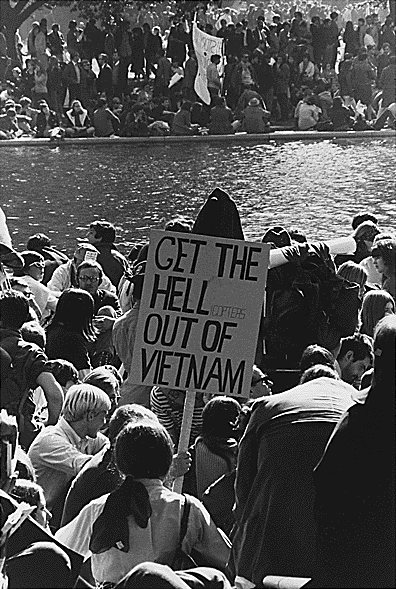
- With the death of so many young Americans and events of the Tet offensive, public opinion turned against the war:
- Cost: Martin Luther King pointed out that the US government was spending $500,000 to kill one enemy soldier while spending $53 a year to help poor US citizens
- Social inequality: military drafting exposed social and racial inequality in the US. 30% of African-Americans were drafted compared to 19% of White Americans. Casualty rates were higher among African-Americans. This led civil rights activists to criticise the war
- Media outlets exposed the horrors of Vietnam demonstrating the casual violence that occurred daily. Vietnam was no longer seen as a justified fight against communism, it had become a symbol of defeat and moral corruption. Anti-war protests, led by civil rights leaders and students peaked during 1968-1970. The largest occurred in November, 1969, when 700,000 anti-war protesters demonstrated at Washington, DC.
- Pie de imagen: Protesting against the War in Vietnam
-
- End of the Vietnam War:
- After the Tet Offensive, Johnson realised the war would not be won by force and explored possible peace talks
- However, Richard Nixon came to presidency towards the end of the war in November 1968
- 1969-73: Nixon's security adviser, Henry Kissinger, worked to end US involvement in Vietnam
- Process of 'Vietnamisation' began - handing war responsibilities to the South Vietnamese and withdrawing US troops
- April 1969-December 1971, around 400,000 US troops left Vietnam
- In January 1973, all parties signed a peace agreement
- End of March 1973, the US troops all left
- South Vietnam soon fell to the communists
- Impacts of the War:
- US failed militarily and failed to stop the spread of communism
- US failed politically as Vietnamese neighbours Laos and Cambodia established communist governments in 1975
- US failed ideologically and its troops actions damaged its reputation
- Congress introduces the War Powers Act 1973 to limit the president's ability to go to war
- Relationship with Soviet Union enters period of détente
- In 1972 the US and USSR agree the Strategic Arms Limitation Treaty (SALT) to reduce the amount of nuclear weapons being produced
- US foreign policy developed an new attitude; troops would only be involved in conflicts if it could be win quickly and convincingly
Información
- Descripción
- El usuario ha eliminado su información de asignaturas Diapositivas sobre Height of Tension - Vietnam War, creado por Usuario eliminado el 01/09/2017.
- Creado por
- Usuario eliminado · sep 2017
- Actualizado
- 1 sep 2017
- Visitas
- 34
- Historial
-
- Creado por Andrew Burke · 30 jun 2017
- Copiado por Andrew Burke · 3 jul 2017
- Copiado por Andrew Burke · 1 sep 2017
- Valoración