
Fichas
Giant Covalent Lattices
Fichas del conjunto (12)
- 1Complete the sentences: Giant covalent lattices are huge networks of ______________-bonded atoms (they're sometimes called __________________ structures). Carbon and silica atoms can form this type of structure as they can form ______ strong covalent bonds. Different forms of the same element in the same state are called ______________.Giant covalent lattices are huge networks of COVALENTLY-bonded atoms (they're sometimes called MACROMOLECULAR structures). Carbon and silica atoms can form this type of structure as they can form FOUR strong covalent bonds. Different forms of the same element in the same state are called ALLOTROPES.
- 2What are the 3 carbon allotropes?Graphite
Diamond
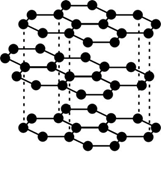
Graphene - 3Describe the structure of graphiteThe carbon atoms in graphite are arranged in sheets of flat hexagons covalently bonded with three bonds each. The fourth outer electron of each carbon atom is delocalised. The sheets of hexagons are bonded together by weak London forces
- 4Describe and explain the properties of graphiteSheets can slide over each other (weak forces between layers are easily broken)
Conducts electricity (delocalised electrons)
Low density (layers are quite far apart compared to the length of the covalent bonds)
Very high melting point (strong covalent bonds) - over 3900K
Insoluble in any solvent - 5What are the uses of graphite?Dry lubricant or pencils (sheets can slide over each other)
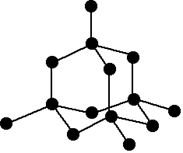
Strong, lightweight sports equipment (low density) - 6Describe the structure of diamondEach carbon atom is covalently bonded to four other carbon atoms. The atoms arrange themselves in a tetrahedral shape - it's crystal lattice structure
- 7Describe and explain the properties of diamondVery high melting point - over 3800K
Extremely hard
Good thermal conductor (vibrations travel easily through stiff lattice)
Cannot conduct electricity (all outer electrons are held in localised bonds)
Insoluble in any solvent - 8What are the uses of diamond in industry?Drills and saws
- 9TRUE OR FALSE: Silicon makes a crystal lattice structure like diamond and has similar propertiesTRUE
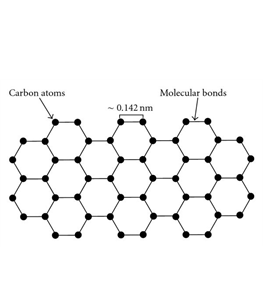
Each silicon atom can also form four strong, covalent bonds - 10Describe the structure of grapheneGraphene is just one layer of graphite. The sheet is one atom thick, making it a 2D compound
- 11Describe and explain the properties of grapheneBest known electrical conductor (delocalised electrons can move quickly above and below the sheet without layers)
Extremely strong (delocalised electrons strengthen the covalent bonds between carbon atoms)
Transparent and incredibly light (single layer) - 12What are the uses of graphene?Potential applications in high-speed electronics and aircraft technology (high strength, low mass and good electrical conductivity)
Potentially useful material for touchscreens on smartphones and other electrical devices (flexibility and transparency)
Información
- Descripción
- El usuario ha eliminado su información de asignaturas Fichas sobre Giant Covalent Lattices, creado por Usuario eliminado el 05/03/2018.
- Creado por
- Usuario eliminado · mar 2018
- Actualizado
- 5 mar 2018
- Visitas
- 15
- Historial
-
- Creado por Yinka F · 3 mar 2018
- Copiado por Yinka F · 5 mar 2018
- Valoración