
Test
BVetMed3: Recognition and Management of CV Disease
Preguntas del test (16)
1What is the most common feline cardiomyopathy?
- AHypertrophic
- BDilated
- CRestrictive
- DArrhythmogenic RV
2Which of the following is NOT a reason for hypertrophic cardiomyopathy to cause the left ventricle to thicken?
- APressure overlad
- BDisruption of cardiomyocyte arrangement
- CAbnormal sarcomeres
3Which of the following is NOT a typical clinical effect of cardiomyopathy in cats?
- APulmonary oedema
- BIntra-cardiac thrombus
- CArrhythmia
- DAscites
4Pulsus paradoxus refers to
- Ajugular distension
- Bdecreasing femoral pulse strength on inspiration
- Clowered heart rate on inspiration
- Dan irregularly irregular heart rate
5Systolic Anterior Motion of the mitral leaflet specifically refers to
- Aobstruction of outflow from the left ventricle
- Bobstruction of flow into the left atrium
- Cdegeneration of the mitral valve
- Dobstruction of outflow into the aorta
6Systolic anterior motion of the mitral leaflet is associated with
- AHypertrophic cardiomyopathy
- BAtrial fibrillation
- CDilated cardiomyopathy
- DPercardial effusion
7Which of the following is/are major biomarker(s) for heart disease in cats?
- Acardiac troponin-1
- Bcreatine kinase
- Clactate dehydrogenase (LDH)
- DNT-proBNP
8Which of the following can specifically treat angina associated with dynamic left ventricular outflow tract obstruction?
- Aatenolol
- Bpimobendan
- CACE inhibitor
- Dfurosemide
9Which of the following would cause a volume overload?
- Aventricular septal defect
- Bpulmonary stenosis
- Caortic stenosis
10Where would you hear a murmur associated with a ventricular septal defect?
- Aleft side at the apex
- Bleft side at the base
- Cleft side at the sternal border
- Dright side at the sternal border
- Eright side, cranial aspect
11Ventricular septal defects are normally
- Aleft-to-right shunts except in cases of pulmonary hypertension
- Bright-to-left shunts except in cases of aortic hypertension
- Cleft-to-right shunts
- Dright-to-left shunts except in cases of pulmonary hypertension
- Eright-to-left shunts
12Which of the following is most likely to cause cyanosis?
- Apatent ductus arteriosus
- Bhypertrophic cardiomyopathy
- Cventricular septal defect
- Dventricular septal defect alongside pulmonary stenosis
13The circled area of the radiograph is characteristic of
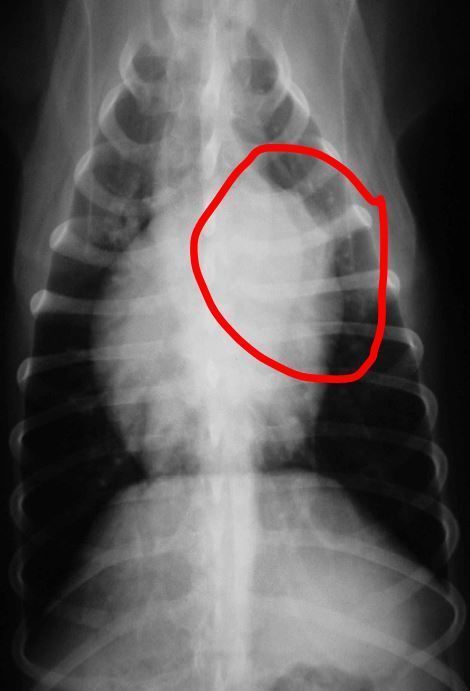
- Apatent ductus arteriosus
- Bventricular septal defect
- Chypertrophic cardiomyopathy
- Dpulmonary stenosis
- Edilated cardiomyopathy
- Fdegenerative mitral valve disease
14Balloon valvuloplasty can be used to treat
- Apatent ductus arteriosus
- Bpulmonic stenosis
- Chypertrophic cardiomyopathy
- Ddilated cardiomyopathy
- Edegenerative mitral valve disease
15Which of the following is often an incidental finding and rarely requires treatment?
- Aatrial septal defects
- Bventricular septal defects
- Cvascular ring anomalies
- Dpulmonic stenosis
16Which of the following can cause this abnormality?
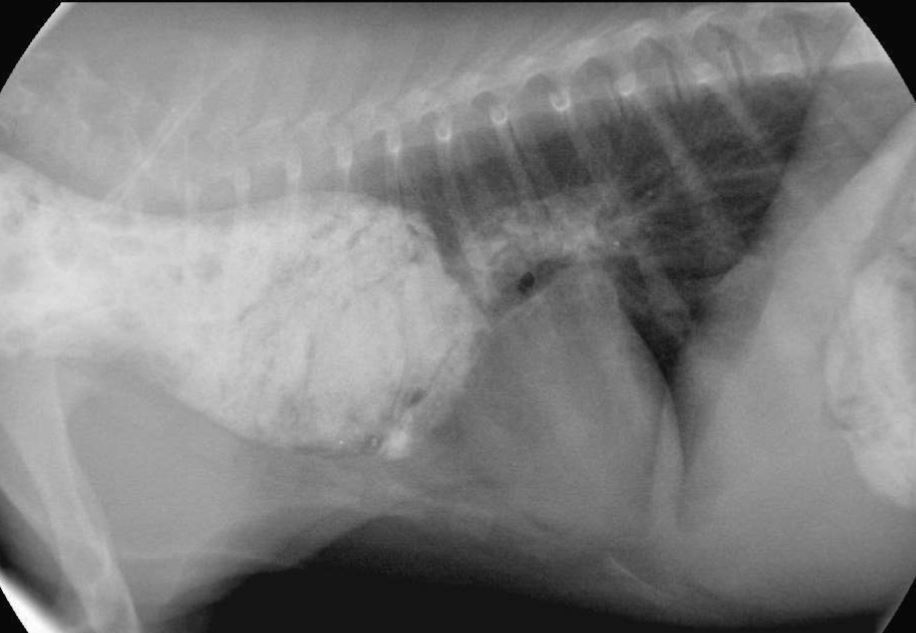
- Apersistent right aortic arch
- Bventricular septal defect
- Catrial septal defect
- Dhypertrophic cardiomyopathy
Información
- Descripción
- El usuario ha eliminado su información de asignaturas Test sobre BVetMed3: Recognition and Management of CV Disease, creado por Usuario eliminado el 13/04/2019.
- Autor
- Usuario eliminado
- Idioma
- English
- Visitas
- 11
- Historial
- Creado el 13 abr 2019 · actualizado el 13 abr 2019
- Etiquetas
- Valoración
- Aún sin valoraciones Valora este test