
Test
Session II Assessment
Este test tiene tipos de pregunta que se abren en el reproductor de siempre.
Preguntas del test (15)
1This is an example of the naming convention of an option. Identify the standards of an option by dragging and dropping the correct label.

- AUnderlying Security
- BTechnology
- CCompany
- DPurchase Date
- EExpiration Date
- Fstock price
- Gstrike price
- Hoption type
- Ioption market
- Jpremium
- Kcommission
2Select the option that lists the differences between stocks and options.
- AOptions are securities, Options are derivatives, & Options trade on national SEC (Securities Exchange Commission)-regulated exchanges.
- BOption orders are transacted through market makers and retail participants with bids to buy and offers to sell and can be traded like any other security.
- COptions trade on national SEC (Securities Exchange Commission)-regulated exchanges, Options have an expiration date, and There is no limit to the number of options that can be traded on an underlying stock.
- DOptions are derivatives, Options have an expiration date, and Options exist only as “book entry,” which means they are held electronically.
3Label the advantages and disadvantages of options.
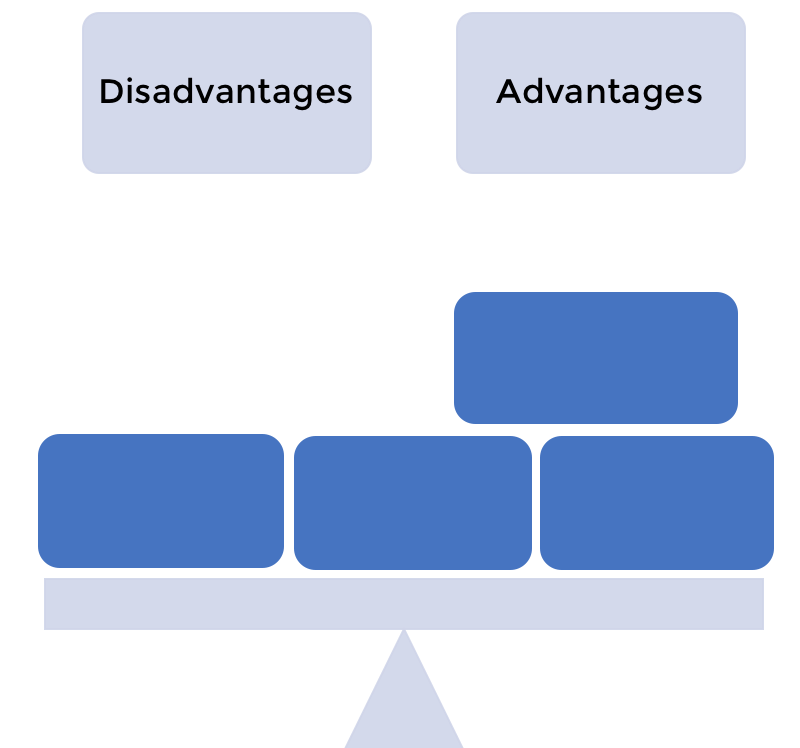
- ALeverage
- BChoices
- CExpiration
- DNot legally enforceable.
- EFixed Risk
- FUnlimited Risk
- GLimited reward.
- HUnlimited reward.
4The goal of any option strategy is to buy high and sell low.
- AVerdadero
- BFalso
5When does a call buyer benefit?
- AWhen the underlying security goes down.
- BWhen the market is negative.
- CWhen the market is positive.
- DWhen the underlying security price rises
6When does a put option buyer benefit?
- AWhen the underlying security's price rises.
- BWhen the stock market rises.
- CWhen the stock market declines.
- DWhen the underlying security's price declines.
7A put seller benefits when the stock price trades [blank_start]above[blank_end] the option's strike price.
- Aabove
- Bbelow
- Cnear
- Dfar from
8The [blank_start]call[blank_end] option becomes more valuable when the stock price [blank_start]increases[blank_end] higher above the call's strike price.
- Aincreases
- Bdecreases
- Ccall
- Dput
9The [blank_start]call[blank_end] option becomes [blank_start]more[blank_end] valuable when the stock price increases higher above the [blank_start]strike[blank_end] price.
- Acall
- Bput
- Cmore
- Dless
- Estrike
- Fstock
10An option's [blank_start]strike[blank_end] price indicates the purchase/sale price of [blank_start]100[blank_end] shares of stock (per option contract) in the event that the option buyer [blank_start]exercise[blank_end]s, or the option expires [blank_start]in-the-money[blank_end].
- Astrike
- Bstock
- C100
- D1
- Eexercise
- Fsells
- Gin-the-money
- Hout-the-money
11It is said that time decay is an option [blank_start]seller's[blank_end] best friend and option [blank_start]buyer's[blank_end] worst enemy.
- Aseller's
- Bmarket
- Cbuyer's
- Dchain's
12Please fill in the blanks for each section marked. Do not include the dollar sign. Enter in the following format: 0.00
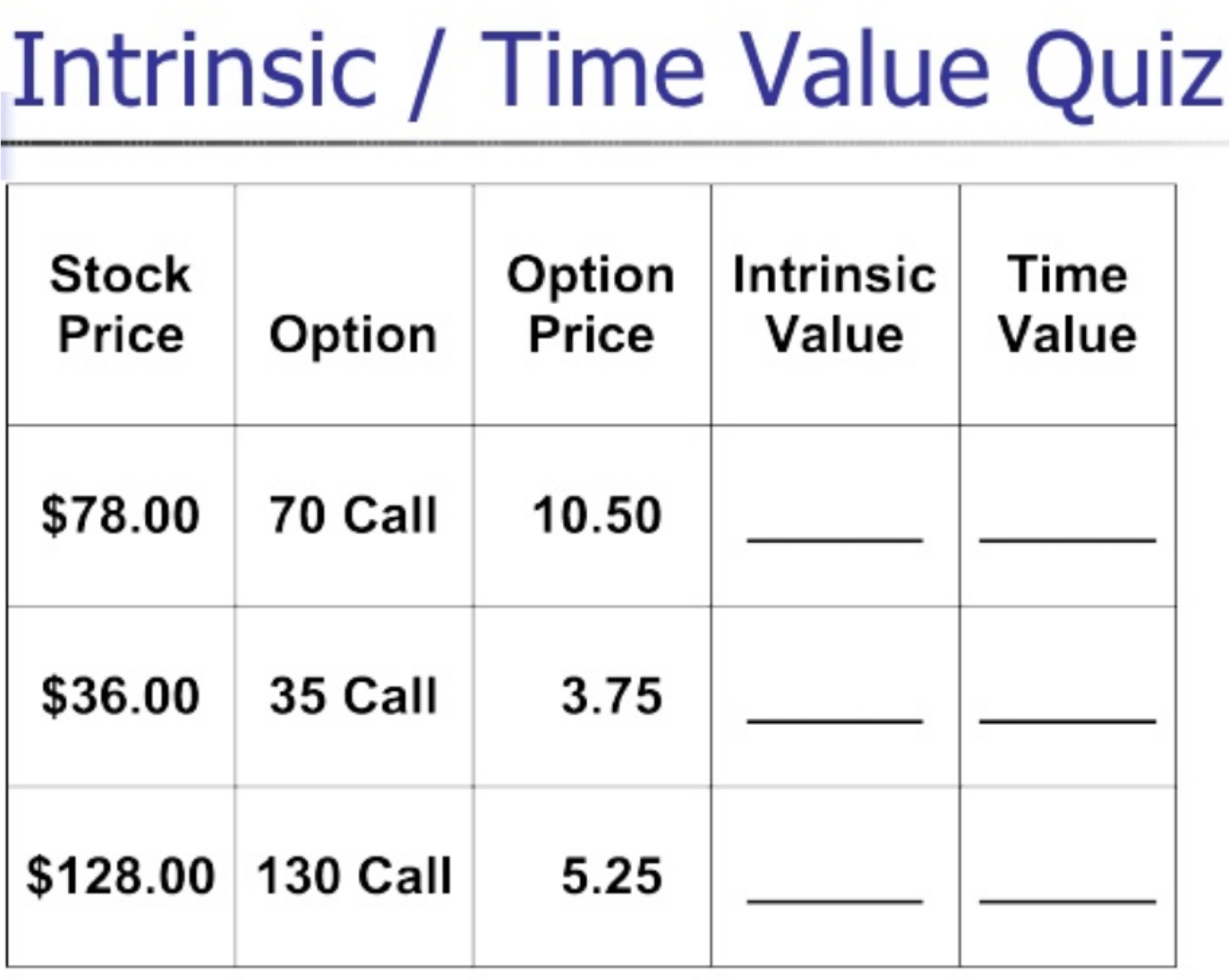
- A8.00
- B2.50
- C1.00
- D2.75
- E0.00
- F5.25
13On an option chain, the calls are usually on the [blank_start]left[blank_end] and the puts are on the [blank_start]right[blank_end].
- Aleft
- Bright
14[blank_start]ITM[blank_end] options are always going to be more conservative, but also more [blank_start]expensive[blank_end] since they will always have some real value priced into the option. [blank_start]OTM[blank_end] options will always be cheaper but more [blank_start]aggressive[blank_end] since the entire price of the option is based on time value.
- AITM
- BOTM
- Caggressive
- Dexpensive
15In The Money: Any option with [blank_start]intrinsic value[blank_end] (real value)
At The Money OR Near The Money: An option with a strike price that is [blank_start]closest[blank_end] to the current stock price
Out The Money: An option that only has [blank_start]extrinsic value[blank_end] (time value)- Aintrinsic value
- Bno value
- Cclosest
- Dfarthest
- Eextrinsic value
- Fmarket value
Información
- Descripción
- Options Series Session II Assessment
- Autor
- Usuario eliminado
- Idioma
- English
- Visitas
- 9
- Historial
- Creado el 15 may 2019 · actualizado el 15 may 2019
- Etiquetas