
Fichas
Vision
Fichas del conjunto (31)
- 1SensationAny physical stimulus that reaches our sense organs
- 2TransductionProcess of converting a physical stimulus into an electrical/chemical neural signal
- 3PerceptionOur interpretation of sensations
- 4PsychophysicsMeasuring the relationship between sensation and perception
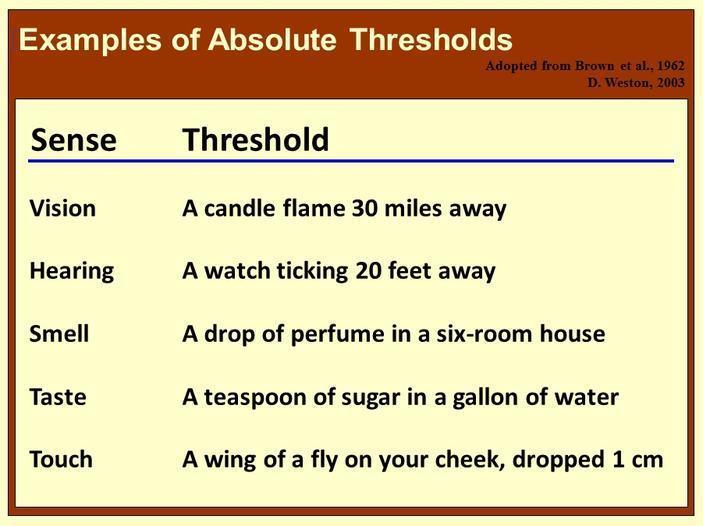
- 5Absolute ThresholdThe minimum amount of a stimulus needed to detect it at least 50% of the time
- 6Difference ThresholdThe minimum amount of change that you can detect
Just Noticeable Difference (JND)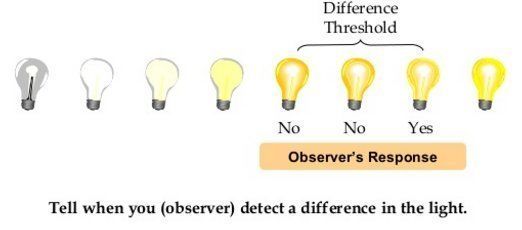
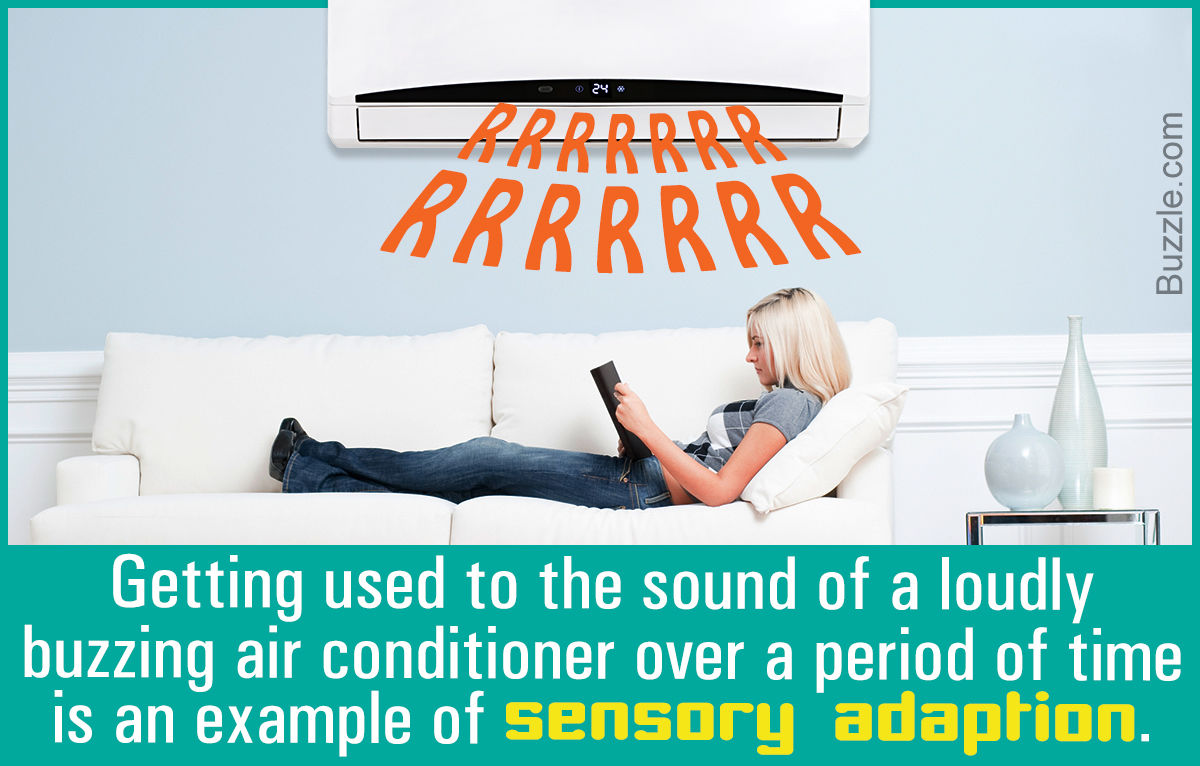
- 7Sensory AdaptationOver time you become desensitized to stimuli that are constantly present and require more to stimulate
- 8Additive ColorsAdding wavelengths together creates the color spectrum
White light = full spectrum = all colors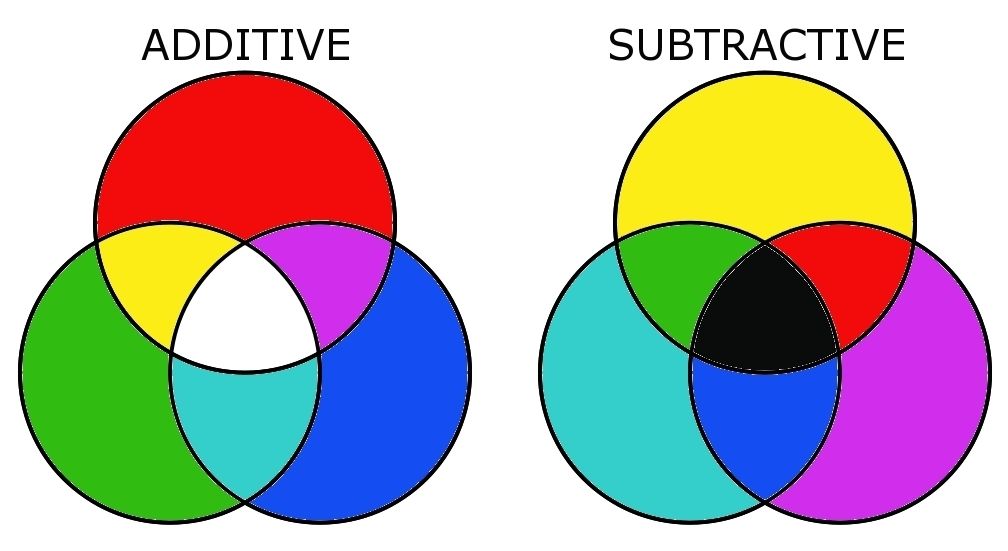
- 9Subtractive ColorsAdding filters to white light reduces reflected light (removes wavelengths before they reach our eye)
- 10What are the two light sensitive cells?1) Rods
2) Cones - 11ConesFocus on color, center, and acuity (sharpness)
- 12RodsSensitive to light
- 13Where are rods and cones located?Back of the retina
- 14Photopic VisionUses cones
We can see what we look directly at, but require well lit conditions for details - 15Scotopic VisionUses rods
Allows us to pick up information from the edges (peripheral vision; black/white) and see in poorly lit conditions - 16Color Vision3 types of cones (RGB)
Each type of cone responds to different light wavelengths
The combination of cone activations determines the color we perceive - 17What are the two theories of color vision?1) Trichromatic theory
2) Opponent processes theory - 18Trichromatic TheoryAll the colors we see can be derived from combination of RGB
- 19Opponent Processes TheoryWorks through a process of excitatory and inhibitory responses, with the two components of each mechanism opposing each other
Afterimage effects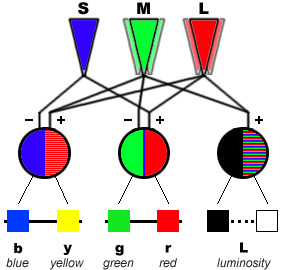
- 20What are the three types of cues that give us depth perception?1) Monocular (one-eyed) cues
2) Binocular (two-eyed) cues
3) Motion cues - 21Monocular (one-eyed) CuesSometimes called pictorial cues (used to indicate depth in pictures)
Interposition
Texture gradient
Relative size
Linear perspective
Atmospheric perspective - 22InterpositionInterposition occurs in instances where one object overlaps the other, which causes us to perceive depth (the object being covered must be further away)
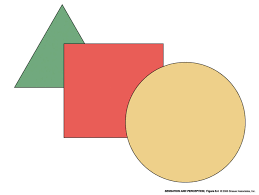
- 23Texture GradientThe more detailed an object is, the closer it must be. "Fuzzier" objects must be further away

- 24Relative SizeIf two objects are roughly the same size, the object that looks the largest will be judged as being the closest to the observer.
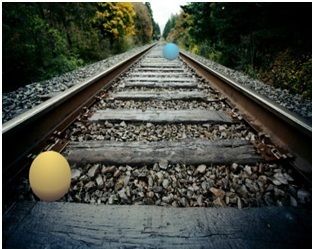
- 25Linear PerspectiveA depth cue that is related to both relative size and texture gradient.
Parallel lines that recede into the distance appear to get closer together or converge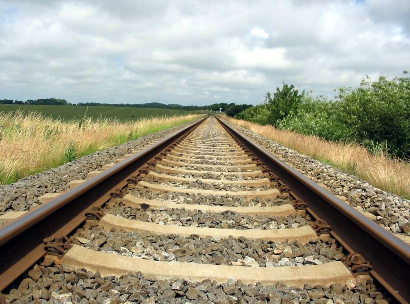
- 26Atmospheric PerspectiveThe tendency of faraway objects to appear hazy or slightly blurred as a result of the atmosphere

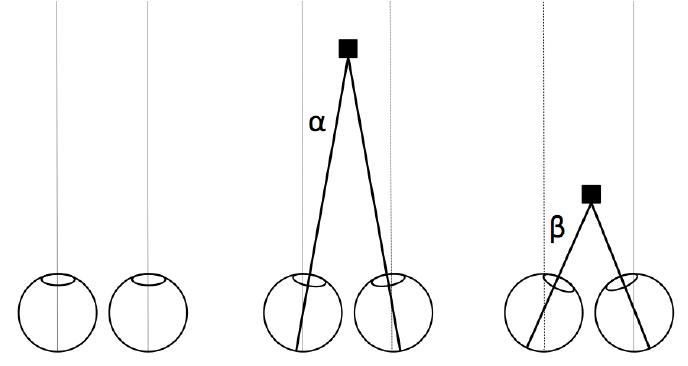
- 27Binocular (two-eyed) CuesEach eye receives a slightly different bit of information since they are not in the same place
Convergence - 28ConvergenceThe angle that your eyes must make changes depending on the distance to the object
- 29Motion CueParallax
- 30ParallaxCloser objects appear to move faster than objects further away
- 31The two processes we use to understand the world1) Bottom-up processing
2) Top-down processing
Información
- Descripción
- El usuario ha eliminado su información de asignaturas Fichas sobre Vision, creado por Usuario eliminado el 03/07/2019.
- Creado por
- Usuario eliminado · jul 2019
- Actualizado
- 3 jul 2019
- Visitas
- 10
- Historial
-
- Creado por Thomas Davis · 1 jul 2019
- Copiado por Thomas Davis · 3 jul 2019
- Valoración