
Fichas
Lecture 2 - Endocrine: Hypothalamus & Pituitary
Fichas del conjunto (22)
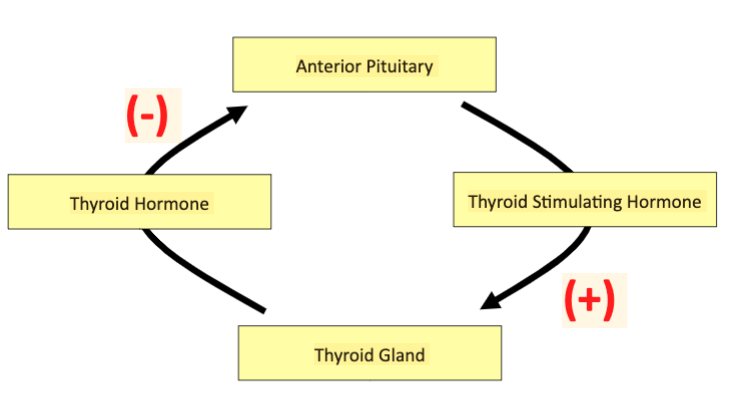
- 1Secretion of Hormones: NEGATIVE Feedback Output of a system ___ the input Operates to maintain levels of a hormone at a given “__-__”opposes
set-point - 2Secretion of Hormones Positive feedback control: ____ the initial effect of hormone Neuroendocrine reflexes: Produces sudden ___ in hormone secretion Rhythms: ->____ – about hourly ->____ – about 24 hr ->____ – about 1 year ->____ – day/nightAmplifies
increase
circahoral
circadian
circannual
diurnal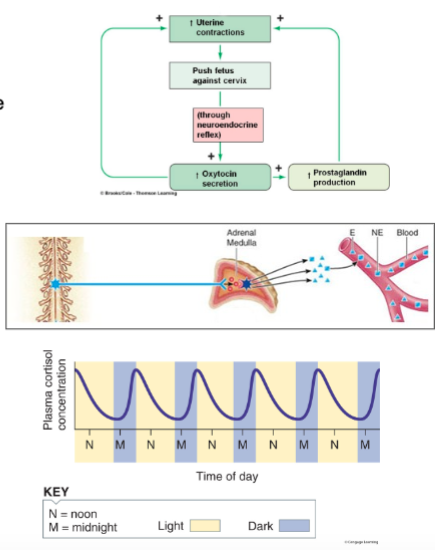
- 3Circadian Rhythm ->Biological clocks: Approximately __ hour cycles for body functions (Ex: Temperature, gene expression, behavior, hormone secretion) ->Master clock = ___ ___ (__) –Cluster of neuron cell bodies above the optic chiasm –Clock proteins = “__-___” genes of SCN neurons -> synthesis of proteins –Accumulate over course of day –Eventually, ___ own transcription –Degrade -> ___ genes from block –Cycle slower than 1 day (~ 25 hours) ***Fluctuating levels -> ______ (Leads to ∆ in effector organs) ->Synchronization of biological clock with environment: –If not adjusted, individuals circadian rhythms fall progressively out of ___ with day/night (free running) –SCN is reset daily by ___ cues (∆ in light intensity, i.e. day-night cycle)24
Suprachiasmatic nucleus (SCN)
"Self-starting"
block
Release
***leads to: cyclical ∆ in SCN output
sync
external - 4PINEAL GLAND LIGHT PATHWAY Different than for vision –Specialized retinal ___ cells (1-2% of total) •Melanopsin responds to ____ -> retino-hypothalamic tract ->SCN->->->pineal gland–Pineal Gland responds with ∆ in ____ MELATONIN –Indoleamine –Secreted during periods of ___ •Light/dark cycle entrains biological rhythms Proposed ROLES of melatonin: •Can induce natural ___ •Inhibits __ hormones –Puberty initiated by drop in melatonin levels •In other species -> seasonal breeding, hibernation, migration cycles •Birth control (High levels shut down ___) •Antioxidant •Slows aging process •Enhances immunity –Also slows regression of ___illumination
ganglion
melatonin
darkness
sleep
sex
ovulation
thymus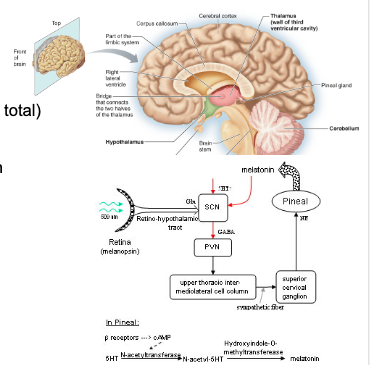
- 5Endocrine disorders ____secretion –1° = _ secretion due to ___ abnormality •Genetic •Dietary •Chemical/toxicity •Immunologic •2nd to another disease process •Iatrogenic •idiopathic –2° = ↓ secretion as result of _ stimulus by ___ hormone *Hypothyroidism = simply leads to ___ __ & feeling __, & slow ___ *Picture is showing: ___Hypo
↓
glandular
↓
tropic
weight gain
feeling cold
slow metabolism
*goiter (can be assoc. w/both hypothyroidism & hyperthyroidism)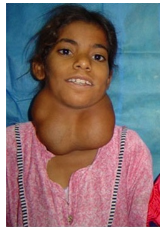
- 6Endocrine Disorders ___secretion: –1° = __ secretion due to glandular abnormality –2° = ↑ secretion due to _ stimulation of gland –Possible causes: •Tumors (Constant “__”) •Immunologic factors (Ex. Antibodies that mimic ___) •Substance abuse (pharmacologic) Picture is showing: ___Hyper
↑
↑
"on"
TSH
bulging eyes / Graves Disease (hyperthyroidism)
-autoimmune disease
*Goiter assoc. w/ both hyperthyroidism & hypothyroidism
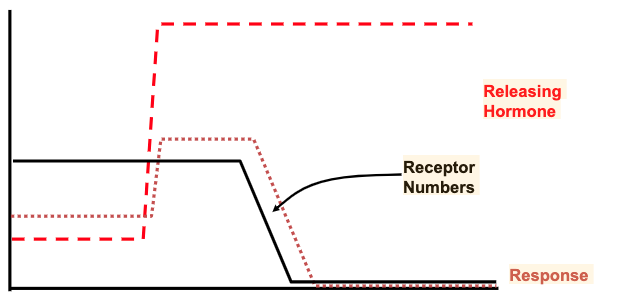
- 7Target Tissue Responsiveness: Receptors 1.) Absence of receptors: ___ ___ syndrome – lack of receptors for testosterone 2.) Receptor down-regulation (Ex: Chronic ↑ insulin -> ↓ receptors -> ↑ [Glucose] blood)Testicular feminization
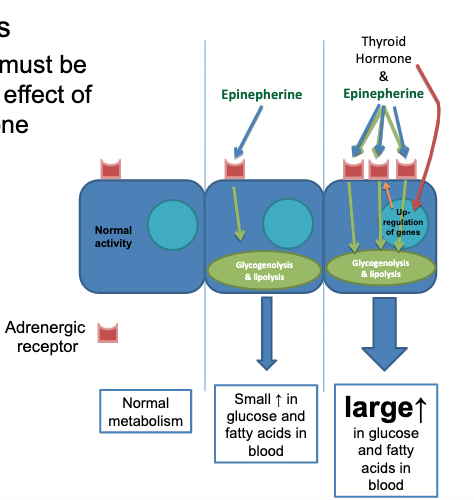
- 8Interaction of Hormones _______ : One hormone must be present for full effect of another hormonePermissiveness
- 9Interaction of Hormones _______ : Several hormones are complimentary ->Combined effect greater than that of either by ___Synergism
itself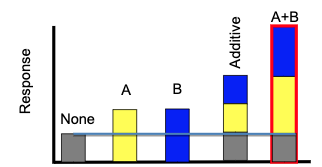
- 10Interaction of Hormones _______ : One hormone reduces the effectiveness of anotherAntagonism
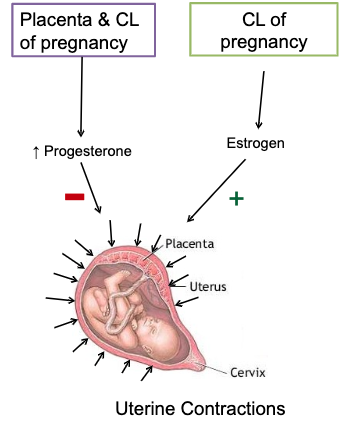
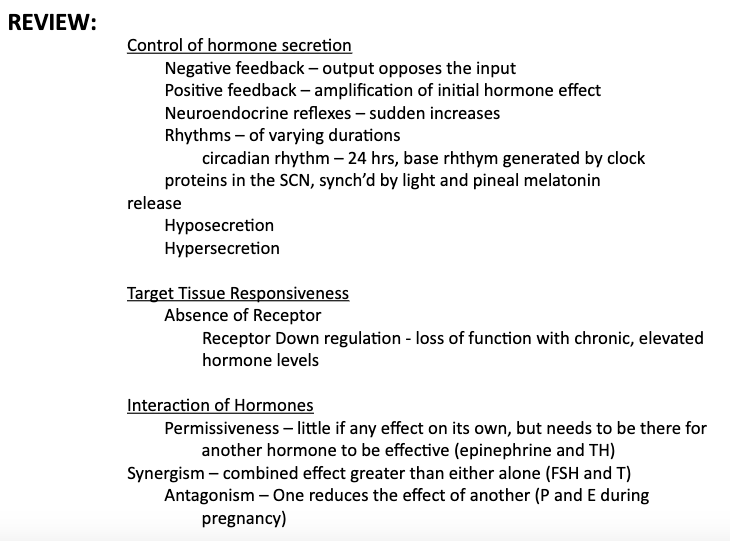
- 11REVIEW Control of hormone secretion: ->Negative feedback – output opposes the input ->Positive feedback – amplification of initial hormone effect ->Neuroendocrine reflexes – sudden increases ->Rhythms – of varying durations (circadian rhythm – 24 hrs, base rhythm generated by clock proteins in the SCN, synch’d by light and pineal melatonin release) ->Hyposecreton ->Hypersecretion Target Tissue Responsiveness: ->Absence of Receptor ->Receptor Down regulation - loss of function with chronic, elevated hormone levels Interaction of Hormones: ->Permissiveness – little if any effect on its own, but needs to be there for another hormone to be effective (epinephrine and TH) ->Synergism – combined effect greater than either alone (FSH and T) ->Antagonism – One reduces the effect of another (P and E during pregnancy)
- 12Endocrine: Hypothalamus and Pituitary Objectives:•Examine the anatomical and functional relationship between the hypothalamus and pituitary gland
•Examine the two hormones released from the posterior pituitary
•Detail the role of the hypothalamic-hypophyseal portal system
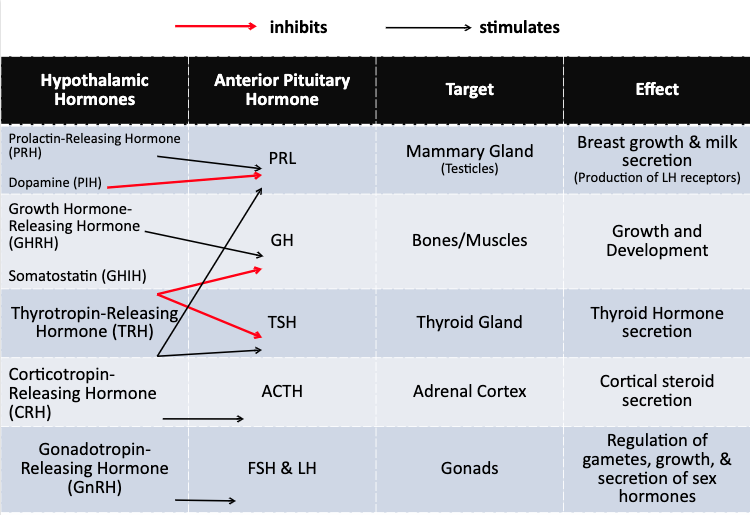
•Examine the six major anterior pituitary hormones and the hypothalamic hormones that trigger, or inhibit, their release
•Review control of hypothalamic and pituitary hormone secretion
**See Table 18-2 for a summary of major hormones - 13Hypothalamus _____ center: –Body temperature –Thirst and urine output –Appetite –Anterior pituitary hormones –Posterior pituitary hormones –Uterine contraction and milk ejection –ANS coordinating center –Emotions and behaviors –Sleep-wake cycles Conduit to endocrine system: –Stimulates or inhibits ____ pituitary hormone secretion via releasing - and inhibiting hormones –Synthesizes ____ pituitary hormonesIntegration
anterior
posterior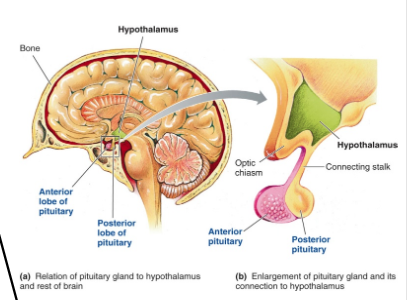
- 14Pituitary Gland, A.K.A _____ _____– greek origin, meaning outgrowth or to grow beneath •Two separate tissues of distinct neuroanatomical origins: 1) ____ Lobe: •True glandular tissue – ___hypophysis (___ means “glandular") 2) ____ Lobe: •Extension of hypothalamus– ___hypophysisHypophysis
Hypophysis
Anterior
Adeno
adeno
Posterior
Neuro - 15Neurohypophysis (___ lobe of pituitary gland) Two populations of neurosecretory neurons–1) ____ Nucleus (__) 2) ____ Nucleus (__) Terminals in posterior lobe of pituitary (Supported by glial _____) Hormones: ->_____ ->_____ (both structurally similar) **SON and PVN contain neurons that produce ___ peptide hormones BUT, only ___ hormone produced per cell.posterior
Supraoptic (SON)
Paraventricular (PVN)
PITUICYTES
Vasopressin
Oxytocin
both
one - 16VASOPRESSIN (a.ka. ___ Hormone) Release triggered by: •Hypothalamic ____ (dominant factor) •Left atrial volume receptors (if large _ in vol./pressure) •Pain, trauma and other stressors -> inappropriate H2O ____ in case of potential blood loss •Physical exertion in __ environment TARGETS: •Kidney (nephron’s distal and collecting tubules) –V2 receptors -> Gs -> AC -> cAMP (insertion of ____) –↑ __ permeability -> enhance ____ of H2O –Normal regulator of H2O loss/balance •Arteriolar ___ muscle –V1 receptors -> Ca2+/PLC *___ effect (causes contraction) –Crucial during hemorrhageAntidiuretic
osmoreceptors
↓
retention
hot
aquaporins
H2O
retention
smooth
Pressor - 17OXYTOCIN Release triggered by: •Stimulation of cervical mechanoreceptors •Stimulation of mechanoreceptors in nipple –Actions: •At uterus -> __ threshold potential (large dose -> prevent repolarization -> ___ –Can be used therapeutically to prevent post-partum ___ •At breast -> Effects via IP3/Ca2+/DAG ->__ myoepithelial tone •E2 increases, catecholamines ___ actions •Paracrine role: corpus luteum (CL) ____ –Also influences behaviors •Maternal bonding↓
tetany (muscular spasms)
bleeding
↑
block
termination - 18Adenohypophysis (____ pituitary) AP Hormone secretion regulation: –Hypophysiotropic hormones: •Hypothalamic Releasing Hormones–____ release of hormone from anterior pituitary cells •Hypothalamic Inhibiting Hormones–____ release of hormone from anterior pituitary cells •Secreted in ____ •Induce effects via cAMP, Ca2+, and phosphatidylinositol, JAK/STAT products: (Stimulate or inhibit transcription, modulate translation, & stimulate or inhibit secretion of target AP hormones) Hypothalamic-Hypophyseal Portal System: •Capillary-to-capillary link –___ route from hypothalamus to pituitary •Neurosecretory neurons ___ on the capillaries of portal system TROPIC hormone: •____ an endocrine tissue to: 1.) ___ 2.) ___ that gland’s hormone *originates from the ___ pouchanterior
Stimulates
Inhibits
pulses
Direct
terminate
Stimulates
Grow
Secrete
Rathke's pouch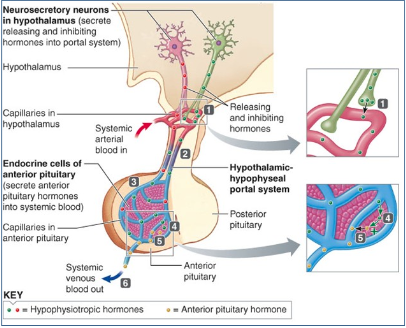
- 19Multiple INPUTS regulate hypophysiotropic hormones –Can be either ____ or ____ •Neural connections w/other portions of brain: Environmental factors & Emotions •Chemical signals: Hypothalamic regions unprotected by ___ (Easy to measure chemical changes in blood) –Typically, target gland hormones ___ secretion of tropic hormone that is driving it •NEGATIVE FEEDBACK CONTROL: –Once a hormonal system is activated, it’s secretion does NOT continue ___ –Diurnal rhythms ____stimulatory or inhibitory
BBB
suppress
unabated (without reduction in intensity)
superimposed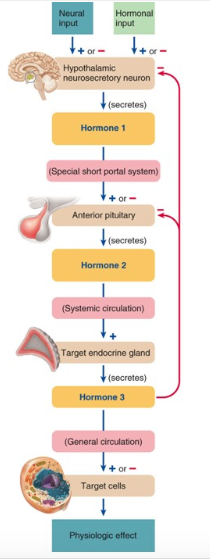
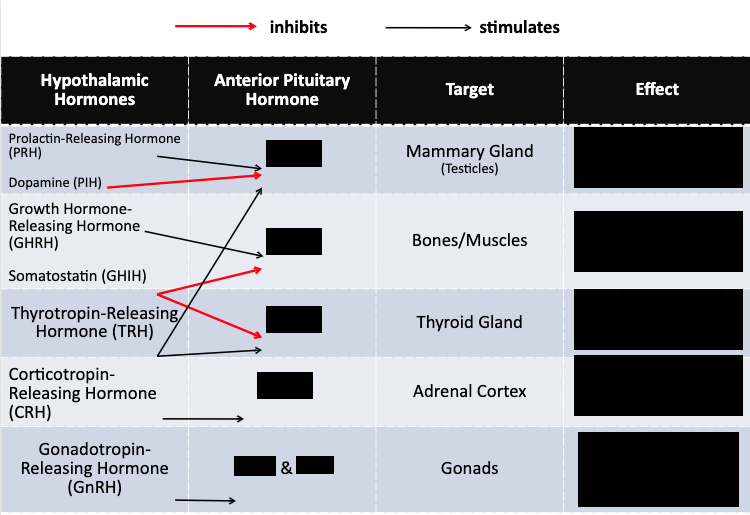
- 20FIVE cell populations produce 6 major hormones: 1) Lactotropes = ___ (__) (Protein, similar to GH) 2) Somatotropes = ___ ___ (_) –Protein that acts via peptide mediators (insulin-like growth factors, IGFs) 3) Thyrotropes = ___ ___ ___ (__) (Glycoprotein w/ α and β subunits) 4) Corticotropes = ___ ____ (__) –Peptide from precursor POMC –Other products: melanocyte-stimulating hormone and endorphin 5) Gonadotropes = ___ ___ ___(__) & ___ ___ (__) (Glycoproteins w/ common α, but distinctive β subunits)Prolactin (PRL)
Growth Hormone (GH)
Thyroid Stimulating Hormone (TSH)
Adrenocorticotropic Hormone (ACTH)
Follicle Stimulating Hormone (FSH)
Luteinizing Hormone (LH) - 21—
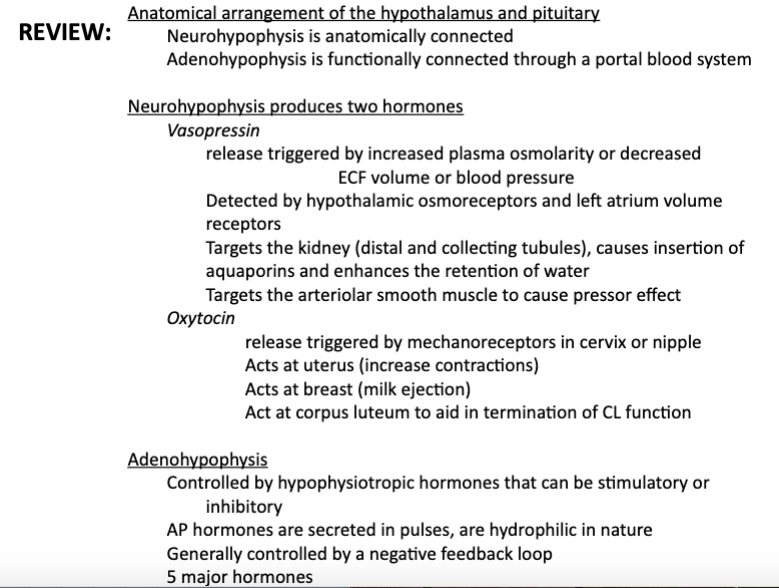
- 22REVIEW: Anatomical arrangement of the hypothalamus and pituitary: ->Neurohypophysis is anatomically connected ->Adenohypophysis is functionally connected through a portal blood system Neurohypophysis produces 2 hormones: 1) Vasopressin release triggered by increased plasma osmolarity or decreased ECF volume or blood pressure -Detected by hypothalamic osmoreceptors and left atrium volume receptors -Targets the kidney (distal and collecting tubules), causes insertion of aquaporins and enhances the retention of water -Targets the arteriolar smooth muscle to cause pressor effect 2) Oxytocin release triggered by mechanoreceptors in cervix or nipple -Acts at uterus (increase contractions) -Acts at breast (milk ejection) -Act at corpus luteum to aid in termination of CL function Adenohypophysis: ->Controlled by hypophysiotropic hormones that can be stimulatory or inhibitory ->hormones are secreted in pulses, are hydrophilic in nature ->Generally controlled by a negative feedback loop 6 major hormones: (PRL, LH, FSH, GH, TSH, ACTH)
Información
- Descripción
- El usuario ha eliminado su información de asignaturas Fichas sobre Lecture 2 - Endocrine: Hypothalamus & Pituitary, creado por Usuario eliminado el 07/11/2019.
- Creado por
- Usuario eliminado · nov 2019
- Actualizado
- 7 nov 2019
- Visitas
- 10
- Historial
-
- Creado por Marissa Alvarez · 30 oct 2019
- Copiado por Marissa Alvarez · 7 nov 2019
- Valoración