
Mapa mental
Ionic Bonding
Contenido del mapa
Ionic Bonding
Ionic Bonding – Transferring electrons
- In Ionic Bonding, atoms lose or gain electrons to form charged particles (called ions) which are strongly attracted to one another (because of the opposite changes + and -)
- A shell with just one electron is well keen to get rid of it extra one electron to complete it shell
- Become a positive change (E.g. Na+)
- A nearly full shell is well keen to get that extra electron from another atom that has an extra electron the it ‘wants’ to get rid of, so it can have an complete shell
- Become a Negative change
- A shell with just one electron is well keen to get rid of it extra one electron to complete it shell
- In Ionic Bonding, atoms lose or gain electrons to form charged particles (called ions) which are strongly attracted to one another (because of the opposite changes + and -)
Ionic compound has a regular lattice structure
- Ionic compound always have giant ionic lattices
- Ions form a closely packed regular lattice arrangement
- Electrostatic forces of attraction between oppositely charge ions, in all directions.
Ionic compounds all have similar properties
- They all have:
- High melting point
- High boiling point due to strong attraction between the ions
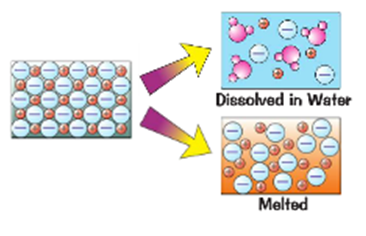
- Ions are free to move
- Carry electric current
- Dissolve easily in water
- They all have:
Imágenes y archivos del mapa
Información
- Descripción
- Facts about Ionic Bonding. Comment below if this helps you :)
- Creado por
- Usuario eliminado · jun 2021
- Actualizado
- 10 jun 2021
- Visitas
- 16
- Etiquetas
- Historial
-
- Creado por Evangeline Taylor · 11 may 2014
- Copiado por Francesca gore · 10 jun 2021
- Valoración