
Test
Lec exam (6,7,part of 8)
Este test tiene tipos de pregunta que se abren en el reproductor de siempre.
Preguntas del test (60)
1Check all the functions of the skeletal system
- Asupport
- Bbears weight
- Cmovement of body
- Dmovement of organs
- Elipid storage
- Fenergy storage
- Gprotection of organs
- Hstores calcium and phosphate
- Ihemopoesis
- Jreaction to stimuli
2the intracellular matrix of cartilage is made up of collagen and proteoglycans
- AVerdadero
- BFalso
3the function of proteoglycans is to [blank_start]store water[blank_end]
- Astore water
4Hyaline cartilage
Location: [blank_start]ends of the long bone[blank_end]
Function: [blank_start]firm support[blank_end] ; [blank_start]smooth articular cartilage[blank_end]
Fibrocartilage
Location: [blank_start]intervertebral disks[blank_end], [blank_start]pubic symphysis[blank_end]
Function: [blank_start]cushions[blank_end]- Aends of the long bone
- Bfirm support
- Csmooth articular cartilage
- Dintervertebral disks
- Epubic symphysis
- Fcushions
5match the cells with their function
Osteoblasts: [blank_start]bone builders[blank_end]
Osteocytes: [blank_start]mature bone cell[blank_end] [blank_start](trapped in lancunae)[blank_end] - [blank_start]maintains the bone[blank_end]
Osteoclasts: [blank_start]dissolve bone[blank_end]
[blank_start]osteoclasts[blank_end] [blank_start]remove[blank_end] old, worn-out bone so [blank_start]osteoblasts[blank_end] can move in [blank_start]produce[blank_end] new bone- Abone builders
- Bmature bone cell
- C(trapped in lancunae)
- Dmaintains the bone
- Edissolve bone
- Fosteoclasts
- Gosteoblasts
- Hremove
- Iproduce
6Collagen
source: secreted by [blank_start]osteoblasts[blank_end]
function: [blank_start]decrease[blank_end] the [blank_start]brittleness[blank_end] of the bone; adds [blank_start]flexible strength[blank_end]
Bone Minerals: [blank_start]hydroxyapatite crystals[blank_end]
[blank_start]calcium[blank_end]/[blank_start]phosphate[blank_end] crystals
Function: [blank_start]compressive[blank_end]/[blank_start]weight-bearing strength[blank_end]- Aosteoblasts
- Bdecrease
- Cbrittleness
- Dflexible strength
- Ehydroxyapatite crystals
- Fcompressive
- Gweight-bearing strength
- Hcalcium
- Iphosphate
7Intramembranonus ossification
Location: [blank_start]skull[blank_end]
Process: bone tissue forms [blank_start]directly[blank_end] in [blank_start]dense connective tissue[blank_end]- Askull
- Bdirectly
- Cdense connective tissue
8endochondral ossification
location: [blank_start]long bones/most of the skeleton[blank_end]
Process:
1.) [blank_start]hyaline cartilage model forms[blank_end]
2.) [blank_start]bone collar forms around model[blank_end]
3.) [blank_start]cartilage within model calcifies[blank_end] [blank_start]and dies[blank_end]
4.) [blank_start]blood vessels and osteoblasts[blank_end] [blank_start]enter dying cartilage at diaphysis[blank_end]
5.) [blank_start]secondary ossification centers[blank_end] [blank_start]form at epiphysis[blank_end]
6.) [blank_start]remodeling occurs as needed[blank_end]
- [blank_start]spongy bone remodeled into compact bone[blank_end]- Along bones/most of the skeleton
- Bskull
- Cscapula
- Dsternum
- Ebones of middle ear
- Fhyaline cartilage model forms
- Gbone collar forms around model
- Hcartilage within model calcifies
- Iand dies
- Jblood vessels and osteoblasts
- Kenter dying cartilage at diaphysis
- Lsecondary ossification centers
- Mform at epiphysis
- Nremodeling occurs as needed
- Ospongy bone remodeled into compact bone
9What two processes make up prenatal ossification?
[blank_start]intramembranous[blank_end] and [blank_start]endochondral[blank_end] ossification- Aintramembranous
- Bendochondral
10Growth in length:
occurs at the [blank_start]epiphyseal plate[blank_end]
Process:
1.) [blank_start]chondrocytes mitose[blank_end] and [blank_start]lay cartilage in epiphyseal plate[blank_end]
2.) [blank_start]older cartilage calcified[blank_end] and [blank_start]chondrocytes die[blank_end]
3.) [blank_start]blood vessels and osteoblasts enter[blank_end]
4.) [blank_start]osteoblasts lay down collagen[blank_end] [blank_start]which causes length of diaphysis to[blank_end] [blank_start]increase[blank_end]
5.) [blank_start]calcification occurs[blank_end]
6.) [blank_start]results in spongy bone[blank_end]
closure of [blank_start]epiphyseal plate[blank_end] results in [blank_start]epiphyseal line[blank_end]
effect: [blank_start]no[blank_end] additional growth happens at [blank_start]end[blank_end] of puberty- Aepiphyseal plate
- Blay cartilage in epiphyseal plate
- Colder cartilage calcified
- Dchondrocytes mitose
- Echondrocytes die
- Fblood vessels and osteoblasts enter
- Gosteoblasts lay down collagen
- Hwhich causes length of diaphysis to
- Iincrease
- Jdecrease
- Kremain the same
- Lepiphyseal line
- Mcalcification occurs
- Nresults in spongy bone
- Othe epiphyseal plate
- Pthe epiphyseal line
- Qno
- Rlots of
- Sextra
- Ta small amount of
- Uend
- Vbeginning
- Wmiddle
11Growth in diameter
role of osteoclasts
-marrow cavity [blank_start]grows[blank_end]
-the thickness of compact bone is [blank_start]unchanged[blank_end]- Agrows
- Bunchanged
12what are the three most important things for bone nutrition and homeostasis
- Acalcium
- Bphosphorus
- Cmagnesium
- DVitamin C
- EVitamin A
- FVitamin D
- GVitamin K
- Hprotein
13-Calcium is the [blank_start]number 1[blank_end] nutrition
Source: [blank_start]diet[blank_end] ([blank_start]dairy and vegetable[blank_end])
Absorption: requires [blank_start]vitamin D[blank_end]
-Vitamin C is needed to [blank_start]form collagen[blank_end]
-Vitamin D is needed to [blank_start]absorb calcium[blank_end]
-Vitamin A is needed to [blank_start]form proteins[blank_end]
-Phosphorus is the [blank_start]number 2[blank_end] nutrient
-Vitamin K [blank_start]enables[blank_end] the formation of [blank_start]clotting proteins[blank_end]
-Magnesium is the [blank_start]number 3[blank_end] nutrient
-Protein is needed for [blank_start]collagen production[blank_end]- Anumber 1
- Bdiet
- Cdairy and vegetable
- Dvitamin D
- Eform collagen
- Fabsorb calcium
- Gform proteins
- Hnumber 2
- Ienables
- Jclotting proteins
- Knumber 3
- Lcollagen production
14Osteoporosis
-[blank_start]porous[blank_end] bone ; [blank_start]decreased[blank_end] bone mass
- more common in [blank_start]women[blank_end]
-prevention: diet high in [blank_start]calcium[blank_end], avoid [blank_start]smoking[blank_end], [blank_start]weight-bearing[blank_end] exercise- Aporous
- Bdecreased
- Cwomen
- Dcalcium
- Esmoking
- Fweight-bearing
15homeostasis
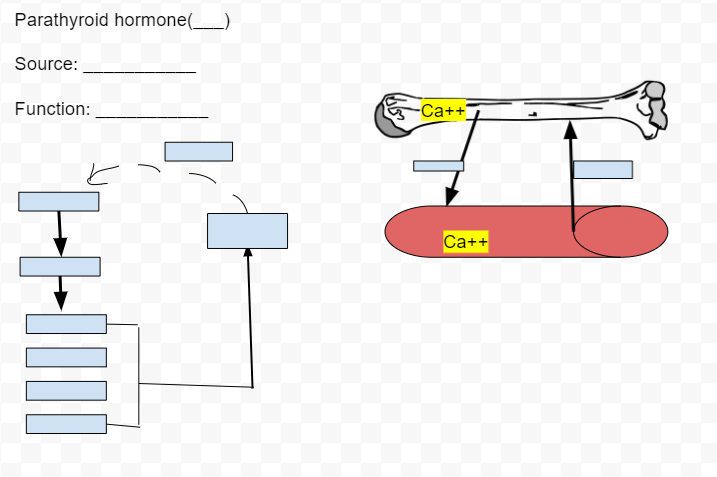
- APTH
- BParathyroid gland
- Cincreased blood calcium
- Dnegative
- Edecreased blood Ca++
- Fincreased osteoclastic activity
- Gincreased Ca++ reabsorption
- Hfrom kidneys into blood
- Iincreased vitamin D formation
- Jpromotes calcium ion absorbtion
- Kincreased Ca++ absorption from intestine
- Lincreased blood Ca++
- MPTH
- NCalcitonin
- Oparathyroid gland
- Pincreased PTH
16homeostasis
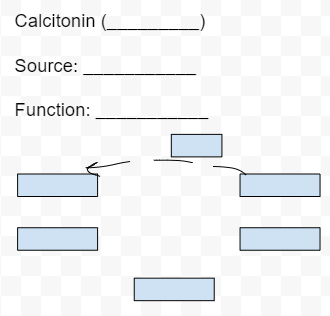
- Acalcify, adds calcium to bone
- Bthyroid gland
- Cdecreases blood calcium
- Dnegative
- Ehigh blood Ca++
- Fthyroid gland
- Gincreases calcitonin
- Hdecreases osteoclastic activity
- Idecreases blood calcium
17Growth hormone:
Source: [blank_start]anterior pituitary gland[blank_end] : known as the [blank_start]master gland[blank_end]
Function:
-Bone: [blank_start]increases osteoblastic[blank_end] activity
-Cartilage: [blank_start]increased chondroblastic[blank_end] activity
-Overall effect: growth is [blank_start]increased[blank_end]
Hyposecretion of GH (childhood)
hypo=[blank_start]too little[blank_end]
a.) pituitary [blank_start]dwarfism[blank_end]
b.) [blank_start]rapid[blank_end] calcification of [blank_start]epiphyseal plate[blank_end]
Hypersecretion of GH
Hyper=[blank_start]too much[blank_end]
a.) childhood: [blank_start]giantism[blank_end]
b.) adulthood: [blank_start]thickened bones[blank_end]- Aanterior pituitary gland
- Bmaster gland
- Cincreases osteoblastic
- Dincreased chondroblastic
- Eincreased
- Ftoo little
- Gdwarfism
- Hrapid
- Iepiphyseal plate
- Jtoo much
- Kgiantism
- Lthickened bones
18Thyroid hormone aka [blank_start]Thyroxin[blank_end]
Source: [blank_start]thyroid gland[blank_end]
effect of hypothyroidism (childhood):
-[blank_start]cretinism[blank_end] : type of [blank_start]dwarfism[blank_end] with [blank_start]mental retardation[blank_end]- AThyroxin
- Bthyroid gland
- Ccretinism
- Dmental retardation
- Edwarfism
19Reproductive hormones
Estrogen - [blank_start]female[blank_end]
-Source: [blank_start]ovary and body fat[blank_end]
-Effect on bone: [blank_start]increase osteoblastic[blank_end] activity & [blank_start]rapid calcification[blank_end] of [blank_start]epiphyseal plates[blank_end]
-result: [blank_start]rapid growth spurt[blank_end] at [blank_start]puberty[blank_end]
-menopause: [blank_start]decrease[blank_end] in estrogen may lead to [blank_start]osteoporosis[blank_end]
Progesterone - [blank_start]maintains pregnancy[blank_end]- Afemale
- Bovary and body fat
- Cincrease osteoblastic
- Drapid calcification
- Eepiphyseal plates
- Frapid growth spurt
- Gpuberty
- Hdecrease
- Iosteoporosis
- Jmaintains pregnancy
20Testosterone - [blank_start]male[blank_end]
source: [blank_start]testes[blank_end]
Effects on bone: [blank_start]increase osteoblastic[blank_end] activity & [blank_start]slow calcification[blank_end] of [blank_start]epiphyseal plate[blank_end]
result: men grow for a [blank_start]longer[blank_end] period of time than women- Amale
- Btestes
- Cincrease osteoblastic
- Dslow calcification
- Eepiphyseal plate
- Flonger
21Bone remodeling
def: removal of [blank_start]existing[blank_end] bone by [blank_start]osteoclasts[blank_end] and [blank_start]deposition[blank_end] of [blank_start]new[blank_end] bone by [blank_start]osteoblasts[blank_end]
Functions
1.) change bone [blank_start]shape[blank_end]
2.) maintain [blank_start]calcium ion homeostasis[blank_end]
3.) Bone [blank_start]repair[blank_end] after [blank_start]fracture[blank_end]
4.) Convert [blank_start]spongy[blank_end] bone to [blank_start]compact[blank_end] bone
5.) Replace worn [blank_start]collagen[blank_end] and [blank_start]mineral[blank_end] - [blank_start]bone salts[blank_end]
6.) increase or decrease [blank_start]mass[blank_end] as [blank_start]stress[blank_end] demands- Aexisting
- Bosteoclasts
- Cdeposition
- Dnew
- Eosteoblasts
- Fshape
- Gcalcium ion homeostasis
- Hrepair
- Ifracture
- Jspongy
- Kcompact
- Lcollagen
- Mmineral
- Nbone salts
- Omass
- Pstress
22Role of bone cells
1.) osteoblasts: [blank_start]lay down new[blank_end] bone
2.) osteoclasts: [blank_start]phagocytosis of old[blank_end] bone
-secrete acid - [blank_start]dissolve[blank_end] bone salts
-secrete proteolytic enzymes - [blank_start]collagen digestion[blank_end]
-capable of [blank_start]phagocytosis[blank_end]- Alay down new
- Bphagocytosis of old
- Cdissolve
- Dcollagen digestion
- Ephagocytosis
23Role of stress in bone remodeling
def: [blank_start]compressive force[blank_end]
increase stress ----> [blank_start]increase osteoblastic[blank_end] activity
decreased stress ------> [blank_start]decreased osteoblastic[blank_end] activity
[blank_start]osteoclastic[blank_end] activity is affected by [blank_start]hormones[blank_end]- Acompressive force
- Bincrease osteoblastic
- Cdecreased osteoblastic
- Dosteoclastic
- Ehormones
24select all the examples of the role of stress on bone
- Aweight-lifting
- Bmarathon running
- Ctuberosities of the bone
- Dosteoporosis
- Eorthodontics
- Fpoorly set bone
- Gwalking casts
- Hbed ridden patients
- Ihaving a bad diet
- Jjumping
25put the step of bone repair in order
1.) [blank_start]clot forms[blank_end]
2.) [blank_start]callus of cartilage form[blank_end]
3.) [blank_start]osteoblasts lay spongy bone[blank_end]
4.) [blank_start]bone remodeling occurs[blank_end]- Aclot forms
- Bcallus of cartilage form
- Costeoblasts lay spongy bone
- Dbone remodeling occurs
26Muscle tissue is specialized for:
- [blank_start]contraction[blank_end] - physical [blank_start]shortening[blank_end]
- [blank_start]excitability[blank_end] - [blank_start]responds to a stimulus[blank_end] with a [blank_start]membrane signal[blank_end] called [blank_start]action potential[blank_end]
-[blank_start]extensibility[blank_end] - can be [blank_start]passively[blank_end] stretched out
- [blank_start]elasticity[blank_end] - [blank_start]springs back[blank_end] after stretching
-but [blank_start]not mitosis[blank_end] except [blank_start]smooth[blank_end] muscle- Acontraction
- Bshortening
- Cexcitability
- Dresponds to a stimulus
- Emembrane signal
- Faction potential
- Gextensibility
- Hpassively
- Isprings back
- Jelasticity
- Knot mitosis
- Lsmooth
27Select all that is true about skeletal muscles
- Astriated
- Bnonstriated
- Csingle nucleus
- Dmulti nucleus
- Evoluntary
- Finvoluntary
- Gattached to bone
- Hfound in the heart
- Ifound in hollow organs
28Select all that is true about cardiac muscles
- Astriated
- Bnonstriated
- Csingle nucleus
- Dmulti nucleus
- Evoluntary
- Finvoluntary
- Gattached to bone
- Hfound in the heart
- Ifound in hollow organs
29Select all that is true about smooth muscles
- Astriated
- Bnonstriated
- Csingle nucleus
- Dmulti nucleus
- Evoluntary
- Finvoluntary
- Gattached to bone
- Hfound in the heart
- Ifound in hollow organs
30Match the muscle with its function
Skeletal: [blank_start]Movement[blank_end], [blank_start]posture[blank_end], [blank_start]heat production[blank_end], [blank_start]breathing, speech[blank_end]
Cardiac: [blank_start]pump blood through body via contractions[blank_end]
Smooth: [blank_start]moves fluid along tubes[blank_end]- Apump blood through body via contractions
- BMovement
- Cposture
- Dheat production
- Ebreathing, speech
- Fmoves fluid along tubes
31label - some terms may be used more than once
note: the dot in the center of the second image represents the area from 6 to 6 on the diagram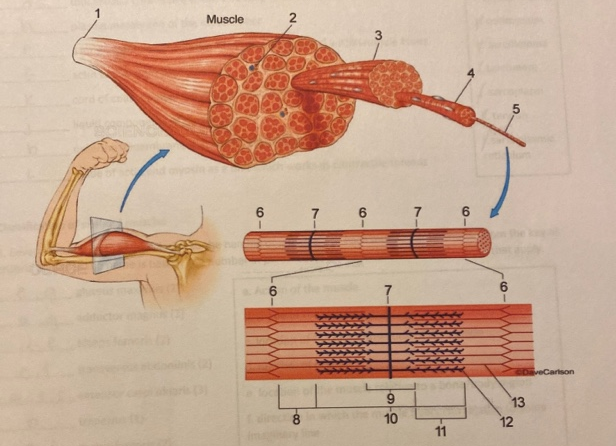
- Aepimysium
- Bperimysium
- Cfascicle
- Dmuscle fiber
- Eendomysium
- Fperimysium
- Gmyofibril
- Htendon
- Isarcomere
- JZ disk
- KH zone
- LI band
- MA band
- Nmyosin
- Oactin
32label - some terms may be used more than once
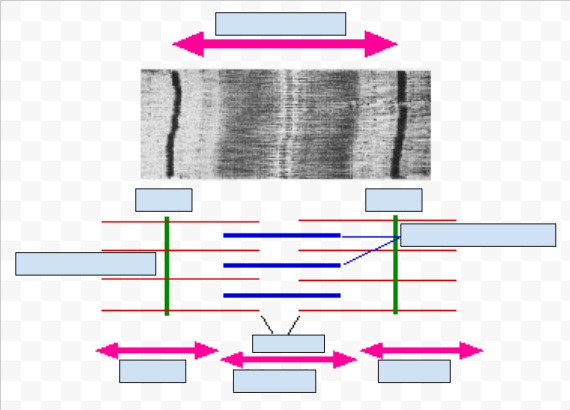
- Asarcomere
- BZ disk
- CZ disk
- DMyosin
- Eactin
- FH zone
- GA band
- HI band
- II band
33Myofilaments - [blank_start]contractile organelle[blank_end]
Myosin- [blank_start]thick[blank_end] actin- [blank_start]thin[blank_end]
Bands/Zones:
A band - [blank_start]entire length of myosin[blank_end]
I band - [blank_start]actin only[blank_end]
H zone - [blank_start]myosin only[blank_end]
Thick and thin myofilaments [blank_start]do not[blank_end] shorten. Actin is the [blank_start]only[blank_end] thing that moves, myosin [blank_start]does not[blank_end] move.
1.) [blank_start]Crossbridges[blank_end] on myosin [blank_start]ratchet[blank_end] actin along (uses much [blank_start]ATP[blank_end])
2,) Actin moves [blank_start]closer[blank_end] together
3.) Sarcomeres [blank_start]shorten[blank_end]; myofibril [blank_start]shorten[blank_end]
4.) during contraction:
Z disks move [blank_start]closer together[blank_end] , I bands [blank_start]narrow[blank_end] , H zone [blank_start]narrows[blank_end] , A bands [blank_start]do not change in length[blank_end]- Acontractile organelle
- Bthick
- Cthin
- Dentire length of myosin
- Eactin only
- Fmyosin only
- Gdo not
- Hdoes not
- Ionly
- JCrossbridges
- Kratchet
- LATP
- Mcloser
- Nshorten
- Oshorten
- Pcloser together
- Qnarrow
- Rnarrows
- Sdo not change in length
34Motor neuron
Def: [blank_start]nerve cells[blank_end] that carry [blank_start]action potential[blank_end] to [blank_start]muscle fibers[blank_end] / [blank_start]nerve cell[blank_end] that [blank_start]stimulates[blank_end] muscle
The neuromuscular junction - where [blank_start]nerve cell[blank_end] and [blank_start]muscle fiber[blank_end] meet
Neurotransmitter
-Acetylcholine ([blank_start]ACh[blank_end]) - always [blank_start]stimulates[blank_end]
-Function: [blank_start]excites[blank_end] muscle to [blank_start]contact[blank_end]
Inactivation of ACh - Acetylcholinesterase ([blank_start]ACh-ase[blank_end])
-Function: ensure that [blank_start]one presynaptic[blank_end] action potential produces [blank_start]one postsynaptic[blank_end] action potential- Anerve cells
- Baction potential
- Cmuscle fibers
- Dnerve cell
- Estimulates
- Fnerve cell
- Gmuscle fiber
- HACh
- Istimulates
- Jexcites
- Kcontract
- LACh-ase
- Mone presynaptic
- None postsynaptic
35Motor units
-Def: [blank_start]one motor neuron[blank_end] and all the muscle fibers it [blank_start]innervates[blank_end]
Small Motor unit
ex: [blank_start]one[blank_end] neuron innervating [blank_start]ten[blank_end] fibers: [blank_start]fine[blank_end] control. ex: [blank_start]eye movement[blank_end]
Large motor unit
ex: [blank_start]one[blank_end] neuron innervating [blank_start]1000[blank_end] fibers: [blank_start]gross[blank_end] control. ex: [blank_start]large muscle movement[blank_end]
Recruitment of motor units: [blank_start]more[blank_end] motor units are [blank_start]stimulated[blank_end] which [blank_start]increases[blank_end] the [blank_start]number[blank_end] of muscle fibers [blank_start]contracting[blank_end] -> muscle [blank_start]contracts[blank_end] with [blank_start]more[blank_end] force- Aone motor neuron
- Binnervates
- Cone
- Dten
- Efine
- Feye movement
- Gone
- H1000
- Igross
- Jlarge muscle movement
- Kmore
- Lstimulated
- Mincreases
- Nnumber
- Ocontracting
- Pcontracts
- Qmore
36[blank_start]An action potential on the motor neuron[blank_end] causes
[blank_start]the release of ACh[blank_end] which causes
[blank_start]a second action potential[blank_end] to occur on the [blank_start]muscle fiber[blank_end]
the muscle [blank_start]action potential goes down the T-tubule[blank_end] and causes
[blank_start]calcium to be released[blank_end] [blank_start]from the sarcoplasmic reticulum[blank_end]
At rest: [blank_start]tropomyosin is blocking[blank_end] [blank_start]actions binding site for myosin[blank_end]
after impulse: [blank_start]Ca binds to troponin[blank_end] [blank_start]causing tropomyosin to move and[blank_end]
[blank_start]expose actions binding site for myosin[blank_end]
[blank_start]A cross bridge can now form[blank_end] [blank_start]between the actin and myosin head[blank_end]
[blank_start]ATP already stored in the myosin allows[blank_end] [blank_start]the myosin head to "spring forward"[blank_end] [blank_start](the power stroke)[blank_end] and [blank_start]actin is pulled past myosin[blank_end]
[blank_start]ATP is broken down to ADP+P[blank_end] [blank_start]by the head of the myosin[blank_end]. [blank_start]The energy released is used to[blank_end] [blank_start]break the actin-myosin cross bridge[blank_end], and [blank_start]to pull the myosin head into[blank_end] [blank_start]its original position[blank_end], and [blank_start]to provide energy for[blank_end] the [blank_start]next cross bridge formation and movement[blank_end]
The [blank_start]sarcomeres shorten as cross bridges[blank_end] [blank_start]form,move, break and reform[blank_end]. This [blank_start]process is repeated throughout as long[blank_end] [blank_start]as calcium and ATP are available[blank_end]- AAn action potential on the motor neuron
- Bthe release of ACh
- Ca second action potential
- Dmuscle fiber
- Eaction potential goes down the T-tubule
- Fcalcium to be released
- Gfrom the sarcoplasmic reticulum
- Htropomyosin is blocking
- Iactins binding site for myosin
- JCa binds to troponin
- Kcausing tropomyosin to move and
- Lexpose actions binding site for myosin
- MA cross bridge can now form
- Nbetween the actin and myosin head
- OATP already stored in the myosin allows
- Pthe myosin head to "spring forward"
- Q(the power stroke)
- Ractin is pulled past myosin
- SATP is broken down to ADP+P
- Tby the head of the myosin
- UThe energy released is used to
- Vbreak the actin-myosin cross bridge
- Wto pull the myosin head into
- Xits original position
- Yto provide energy for
- Znext cross bridge formation and movement
- AAsarcomeres shorten as cross bridges
- ABform,move, break and reform
- ACprocess is repeated throughout as long
- ADas calcium and ATP are available
37a.) calcium to be released from the sarcoplasmic reticulum
b.) a second action potential to occur on the muscle fiber
c.) the muscle action potential goes down the T-tubule and causes
d.) an action potential on the motor neuron causes the release of ACh which causes
Correct order (seperated by commas): [blank_start]d,b,c,a[blank_end]
Within Myofibril
e.) At rest: tropomyosin is blocking actions binding site for myosin
f.) ATP is broken down to ADP+P by the head of the myosin.
g.) expose actions binding site for myosin
h.)ATP already stored in the myosin allows the myosin head to "spring forward" (the power stroke) and
i.) A cross bridge can now form between the actin and myosin head
j.) The sarcomeres shorten as cross bridges form,move, break and reform. This process is repeated throughout as long as calcium and ATP are available
k.)after impulse: Ca binds to troponin causing tropomyosin to move and
l.) The energy released is used to break the actin-myosin cross bridge,
m.)actin is pulled past myosin
n.) and to pull the myosin head into its original position, and
o.) to provide energy for the next cross bridge formation and movement
Correct order (seperated by commas): [blank_start]e,k,g,i,h,m,f,l,n,o,j[blank_end]- Ad,b,c,a
- Be,k,g,i,h,m,f,l,n,o,j
38the [blank_start]motor neuron[blank_end] must [blank_start]stop sending action potentials[blank_end]
[blank_start]ACh is broken down by[blank_end] [blank_start]ACh-ase in the motor neuron[blank_end].
[blank_start]the muscle action potential stops[blank_end].
[blank_start]without the muscle action potential,[blank_end] the [blank_start]sarcoplasmic reticulum actively[blank_end] [blank_start](need ATP)[blank_end] [blank_start]transports calcium back into[blank_end] the [blank_start]sarcoplasmic reticulum.[blank_end]
[blank_start]Without calcium tropomyosin[blank_end] again [blank_start]blocks actin's binding site for myosin[blank_end] [blank_start]so that new cross bridges cannot form[blank_end]
[blank_start]without crossbridges the muscle is[blank_end] [blank_start]relaxed[blank_end] and [blank_start]can be passively stretched out by[blank_end] [blank_start]another muscle to by gravity[blank_end]- Amotor neuron
- Bstop sending action potentials
- CACh is broken down by
- DACh-ase in the motor neuron
- Ethe muscle action potential stops
- Fwithout the muscle action potential,
- Gsarcoplasmic reticulum actively
- H(need ATP)
- Itransports calcium back into
- Jsarcoplasmic reticulum.
- KWithout calcium tropomyosin
- Lblocks actin's binding site for myosin
- Mso that new cross bridges cannot form
- Nwithout crossbridges the muscle is
- Orelaxed
- Pcan be passively stretched out by
- Qanother muscle or by gravity
39a.) the muscle action potential stops
b.) ACh is broken down by ACh-ase in the motor neuron.
c.) the motor neuron must stop sending action potentials
d.) Without calcium tropomyosin again blocks actin's binding site for myosin so that new cross bridges cannot form
e.) without the muscle action potential, the sarcoplasmic reticulum actively (need ATP) transports calcium back into the sarcoplasmic reticulum.
f.) without cross bridges the muscle is relaxed and can be passively stretched out by another muscle or by gravity
Correct order (separated by commas): [blank_start]c,b,a,e,d,f[blank_end]- Ac,b,a,e,d,f
40label
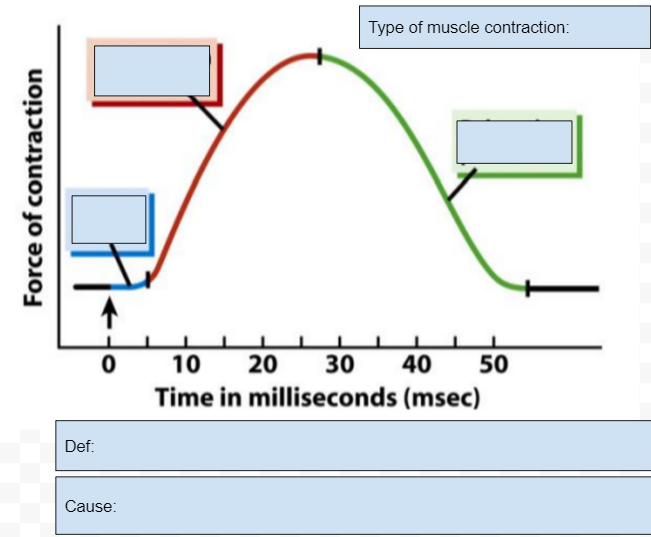
- Alag phase
- Bsingle stimulus
- Ccontraction phase
- Drelaxation phase
- Etwitch contraction
- Fbrief contraction/relaxation
- Gbrief threshold (just enough) stimulus
41label
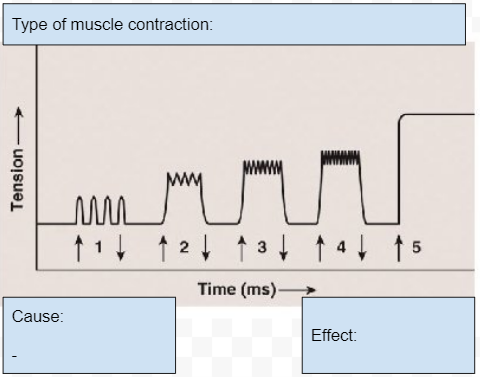
- Amultiple wave summation
- Btwitch
- Cincomplete tetanus
- Dincomplete tetanus
- Eincomplete tetanus
- Fcomplete tetanus
- Gincreasing the rate of stimulation
- Hnot enough time for Ca into SR
- Icomplete: strong, sustained contraction
42label using
^ for increase and v for decrease
stim = stimulus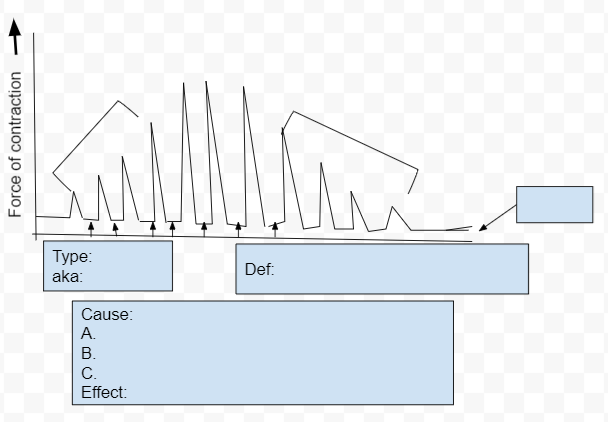
- Atreppe
- Bwarm-up
- C^response to same size/frequency of stim
- D^ heat (enzymes work faster)
- E^ blood flow (more o2 & nutrients)
- F^ Ca avalibility
- G^ response improves muscle efficiency
- Hstim of constant strength
- Idoesnt completely relax - not enough ATP
- Jtreppe
- Kfatigue
43Muscle fatigue
def: [blank_start]decreased ability to do work[blank_end]
cause: [blank_start]muscle fibers use ATP faster[blank_end] than [blank_start]they produce it[blank_end]
effect: [blank_start]muscle contractions become weaker[blank_end]- Adecreased ability to do work
- Bmuscle fibers use ATP faster
- Cthey produce it
- Dmuscle contractions become weaker
44label
^ increases, v decreases
DN: does not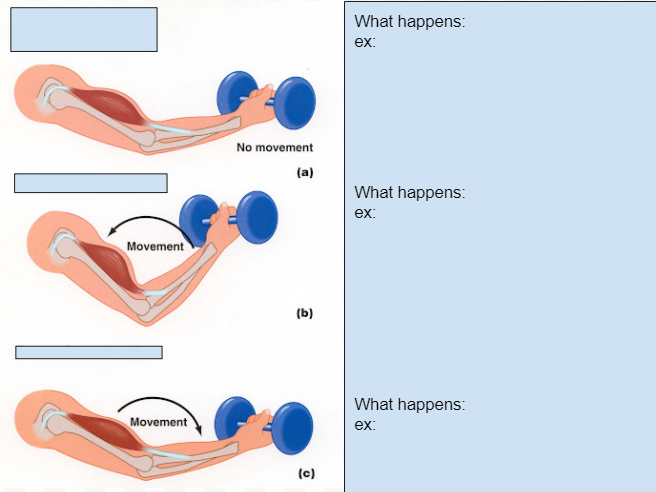
- Aisometric contraction
- Bmakes crossbridge, ^ tension, DN shorten
- Cdoes not shorten
- Dpostural muscle when standing upright
- Eisotonic contraction
- Fmakes crossbridges, shortens, moves
- Gany limb movement
- Hconcentric
- Iisotonic contraction
- Jeccentric
- Kmakes crossbridges, muscle lengthens
- Lslowly lowering heavy weight
45muscle tone
state of [blank_start]partial contraction[blank_end] of a [blank_start]whole muscle[blank_end]
ex: [blank_start]postural muscles[blank_end]
[blank_start]decreases[blank_end] during sleep
if lost muscle grows [blank_start]smaller[blank_end]: [blank_start]atrophy[blank_end]- Apartial contraction
- Bwhole muscle
- Cpostural muscles
- Ddecreases
- Esmaller
- Fatrophy
46Creatine phosphate: stored in [blank_start]skeletal muscle[blank_end] during [blank_start]resting conditions[blank_end]
a.) [blank_start]Creatine P[blank_end] +[blank_start]ADP[blank_end] ----> [blank_start]ATP[blank_end] + [blank_start]creatine[blank_end]
b.) type of exercise: [blank_start]vigorous[blank_end]
c.) rate of ATP formation: [blank_start]fast[blank_end]
d.) time of availability: [blank_start]brief[blank_end]
e.) result: [blank_start]short burst of energy[blank_end]
Anaerobic respiration: [blank_start]without[blank_end] oxygen
a.) [blank_start]1 glucose[blank_end] ---> [blank_start]pyruvic acid[blank_end] -----> [blank_start]lactic acid[blank_end] ([blank_start]waste product[blank_end] that causes [blank_start]fatigue[blank_end]) + [blank_start]2 ATP[blank_end]
b.) type of exercise: [blank_start]vigorous[blank_end]
c.) rate of ATP formation: [blank_start]rather fast[blank_end]
d.) time of availability: [blank_start]up to 3 min[blank_end]
e.) result: [blank_start]fast ATP formation[blank_end] but [blank_start]inefficient[blank_end]
Aerobic respiration: [blank_start]with[blank_end] oxygen
a.) [blank_start]1 glucose[blank_end] + [blank_start]6 O2[blank_end] ------> [blank_start]CO2[blank_end] + [blank_start]H2O[blank_end] + [blank_start]38 ATP[blank_end]
b.) [blank_start]Fatty acids[blank_end] +[blank_start]o2[blank_end] ------> [blank_start]co2[blank_end] +[blank_start]h2o[blank_end] + [blank_start]129 ATP[blank_end]
c.) types of exercise: [blank_start]at rest and aerobic exercise[blank_end] ([blank_start]sustained, vigorous exercise[blank_end])
d.) rate of ATP formation: [blank_start]slow[blank_end]
e.) result: able to form [blank_start]large amounts of ATP[blank_end] for [blank_start]long periods of time[blank_end]- Askeletal muscle
- Bresting conditions
- CCreatine P
- DADP
- EATP
- Fcreatine
- Gvigorous
- Hfast
- Ibrief
- Jshort burst of energy
- Kwithout
- L1 glucose
- Mpyruvic acid
- Nlactic acid
- Owaste product
- Pfatigue
- Q2 ATP
- Rvigorous
- Srather fast
- Tup to 3 min
- Ufast ATP formation
- Vinefficient
- Wwith
- X1 glucose
- Y6 O2
- ZCO2
- AAH2O
- AB38 ATP
- ACFatty acids
- ADo2
- AEco2
- AFh2o
- AG129 ATP
- AHat rest and aerobic exercise
- AIsustained, vigorous exercise
- AJslow
- AKlarge amounts of ATP
- ALlong periods of time
47Oxygen deficit - amount of [blank_start]oxygen[blank_end] that cells [blank_start]need[blank_end] to [blank_start]replenish ATP[blank_end] after exercise
During vigorous exercise
a.) insufficient O2 delivery favors [blank_start]anaerobic[blank_end] respiration
b.) [blank_start]glycogen[blank_end] is broken down to [blank_start]glucose[blank_end]
c.) [blank_start]glucose[blank_end] ---> [blank_start]pyruvic acid -[blank_end]--> [blank_start]lactic acid[blank_end] + [blank_start]ATP[blank_end]
d.) [blank_start]lactic acid[blank_end] diffuses out of [blank_start]skeletal[blank_end] muscle and is taken up by the [blank_start]liver[blank_end]
After exercise
a.) [blank_start]lactic acid[blank_end] is converted to [blank_start]glucose[blank_end] by the [blank_start]liver[blank_end]
b.) [blank_start]ATP[blank_end] and [blank_start]creatine phosphate[blank_end] are [blank_start]resynthesized[blank_end]
c.) oxygen is restored to [blank_start]blood[blank_end] and [blank_start]muscle[blank_end]
Effect of cool-down exercise - [blank_start]pay off[blank_end] oxygen debt
Fatigue
1.) Physiological contracture - due to [blank_start]depleted ATP[blank_end] resources, muscles [blank_start]cannot[blank_end] function; cannot [blank_start]relax[blank_end]. [blank_start]cannot[blank_end] be overcome
2.) psychological fatigue - [blank_start]very[blank_end] common, your own [blank_start]perception[blank_end], muscle [blank_start]still[blank_end] function, [blank_start]can[blank_end] be overcome- Aneed
- Breplenish ATP
- Coxygen
- Danaerobic
- Eglycogen
- Fglucose
- Gglucose
- Hpyruvic acid
- Ilactic acid
- JATP
- Klactic acid
- Lskeletal
- Mliver
- Nlactic acid
- Oglucose
- Pliver
- QATP
- Rcreatine phosphate
- Sresynthesized
- Tblood
- Umuscle
- Vpay off
- Wdepleted ATP
- Xcannot
- Yrelax
- Zcannot
- AAvery
- ABperception
- ACstill
- ADcan
48match
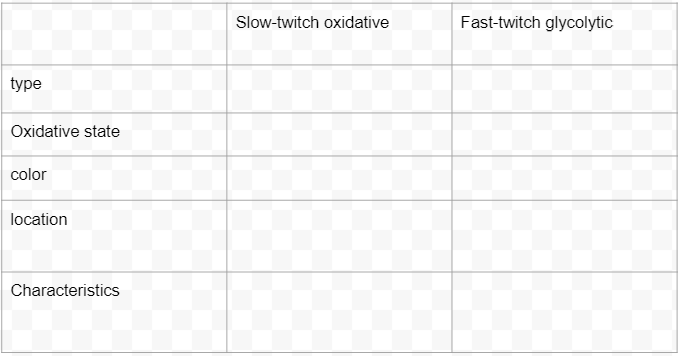
- AType I
- BType IIb
- Chigh oxidative
- Dlow oxidative
- Ered
- Fwhite
- Gpostural muscles
- Hlower limb
- Ichest
- Jupper limb
- Kmany mitochondria
- Llots of ATP
- Mvery vascular
- Nlots of O2
- Omyoglobin (O2 storing protein)
- Plittle glycogen storage
- Qfatigue resistant
- Rgood marathon
- Sfew mitochondria
- Tless vascular
- Ulittle myoglobin
- Vmuch glycogen storage
- Wrapid fatigue
- Xgood sprinter
- Ylittle ATP
- Zlittle O2
49Effect of aerobic exercise
A. [blank_start]Increase[blank_end] mass - [blank_start]hypertrophy[blank_end] - number of muscle fibers [blank_start]does not[blank_end] change
1.) [blank_start]increase[blank_end] blood supply
2.) [blank_start]increase[blank_end] mitochondria ([blank_start]ATP[blank_end])
3.) [blank_start]increase[blank_end] Myofibrils - [blank_start]strength[blank_end]
-2&3 - [blank_start]increase[blank_end] the number of organelles in cells
Fiber type [blank_start]cannot[blank_end] change- AIncrease
- Bhypertrophy
- Cdoes not
- Dincrease
- Eincrease
- Fincrease
- GATP
- Hstrength
- Iincrease
- Jcannot
50Functions of nervous system
1.) [blank_start]senses environment[blank_end]
a.) external - [blank_start]5 senses[blank_end]
b.) internal - ex: [blank_start]receptor for blood pressure[blank_end]
2) CNS processes ([blank_start]interprets[blank_end]) the above
3.) responds to interpretation by [blank_start]initiating response[blank_end] in [blank_start]effector[blank_end] ([blank_start]muscle or gland[blank_end])
4.) nervous system makes [blank_start]rapid homeostatic adjustments[blank_end]- Asenses environment
- B5 senses
- Creceptor for blood pressure
- Dinterprets
- Einitiating response
- Feffector
- Gmuscle or gland
- Hrapid homeostatic adjustments
51label the reflex arc
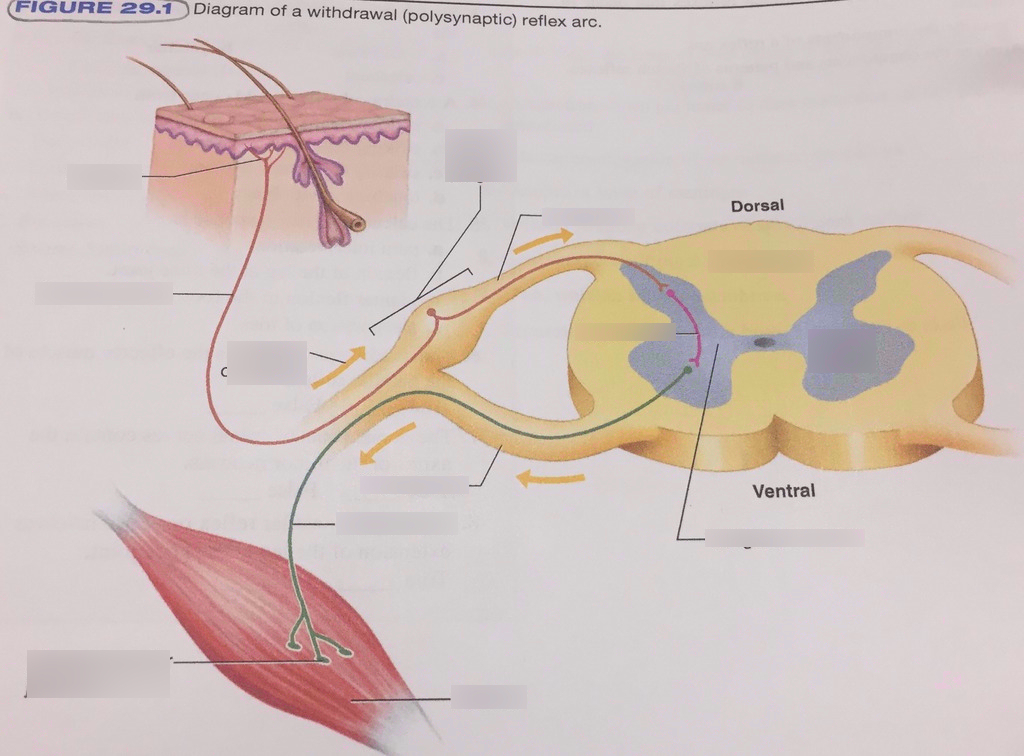
- Astimulus detector (receptor)
- Brelay to central (afferent/incoming)
- Ccentral control (CNS)
- Drelay to effector (efferent/outgoing)
- Eeffector
52label
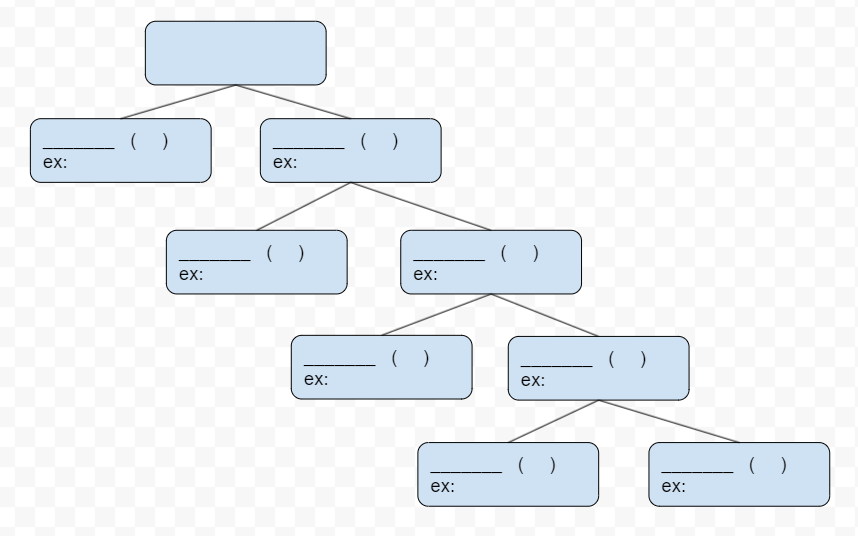
- Anervous system
- Bcentral nervous system
- CCNS
- Dbrain & spinal cord
- Eperipheral nervous system
- FPNS
- Gcranial and spinal nerves
- Hsensory
- Iafferent
- Jincoming
- Kmotor
- Lefferent
- Moutgoing
- Nsomatic nervous system
- OSNS
- Pto skeletal muscle ; voluntary control
- Qautonomic nervous system
- RANS
- Ssmooth/cardiac muscle/glands;involuntary
- Tsympathetic
- Ufight/flight
- Vparasympathetic
- Wrest/digest
53Nervous system cells
Neurons: [blank_start]one way street[blank_end]
specialized for:
a.) excitability: [blank_start]responds[blank_end] to a [blank_start]stimulus[blank_end] with a [blank_start]signal[blank_end]: [blank_start]action potential[blank_end]
b.) transmission: sends a message [blank_start]neuron to neuron[blank_end] "[blank_start]conduction[blank_end]"
c.) but not for [blank_start]mitosis[blank_end]- Aone way street
- Bresponds
- Cstimulus
- Dsignal
- Eaction potential
- Fneuron to neuron
- Gconduction
- Hmitosis
54label
the dot at the bottom not linked to a letter refers to the area between c and f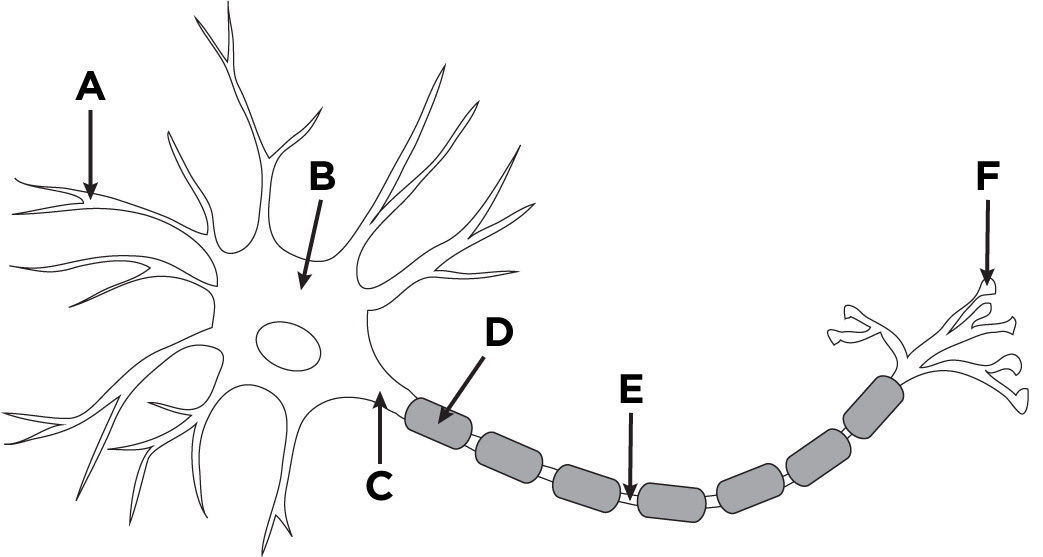
- Adendrite
- Bcell body
- Caxon hillock
- Dmyelin sheath
- Enode of ranvier
- Fpresynaptic terminal
- Gaxon
55Myelin sheath
structure: wrapping of [blank_start]plasma membrane[blank_end] of [blank_start]schwann cell[blank_end] (pns) or [blank_start]oligodendrocyte[blank_end] (cns) cell around [blank_start]axon[blank_end]
Function: [blank_start]insulates[blank_end] axon, causing [blank_start]rapid conduction[blank_end] of [blank_start]action potential[blank_end] from [blank_start]node of ranvier[blank_end] to [blank_start]node of ranvier[blank_end]
axons may also be unmyelinated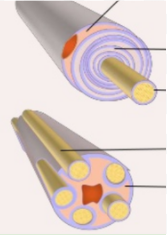
- Aplasma membrane
- Bschwann cell
- Coligodendrocyte
- Daxon
- Einsulates
- Frapid conduction
- Gaction potential
- Hnode of ranvier
- Inode of ranvier
56structural classification of neurons
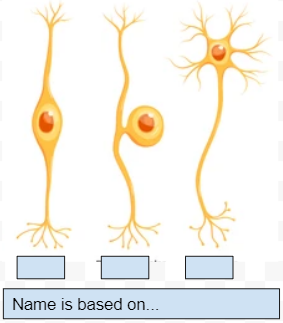
- Abipolar
- Bpseudo-unipolar
- Cmultipolar
- Dnumber of processes coming off cell body
57Sensory ([blank_start]afferent[blank_end]) - [blank_start]incoming[blank_end] - transmits action potential from [blank_start]receptor to CNS[blank_end]
Interneuron ([blank_start]Association[blank_end]) - transmits action potentials [blank_start]within CNS[blank_end]
Motor ([blank_start]efferent[blank_end]) - transmits action potentials from [blank_start]CNS to muscle or gland[blank_end]- Aafferent
- Bincoming
- Creceptor to CNS
- DAssociation
- Ewithin CNS
- Fefferent
- GCNS to muscle or gland
58Gray matter: [blank_start]neuron cell bodies[blank_end] and [blank_start]unmyelinated[blank_end] axons
White matter: [blank_start]myelinated[blank_end] bundles of [blank_start]parallel[blank_end] axons
Ganglia: neuron cell bodies in [blank_start]PNS[blank_end] ([blank_start]gray[blank_end] matter)
Nerves: [blank_start]bundles[blank_end] of axons in [blank_start]PNS[blank_end]
-Function classification
*Sensory: carry [blank_start]incoming only[blank_end]. ex: [blank_start]optic nerve[blank_end]
*Motor: carry [blank_start]outgoing only[blank_end]
*Mixed: [blank_start]incoming and outgoing[blank_end] - carries both [blank_start]sensory and motor[blank_end]
Tract: [blank_start]bundles[blank_end] of axons in [blank_start]CNS[blank_end] ([blank_start]white[blank_end] matter)- Aneuron cell bodies
- Bunmyelinated
- Cmyelinated
- Dparallel
- EPNS
- Fgray
- Gbundles
- HPNS
- Iincoming only
- Joptic nerve
- Koutgoing only
- Lsensory and motor
- Mincoming and outgoing
- Nbundles
- OCNS
- Pwhite
59label with name (in box) and function (in bottom corner)
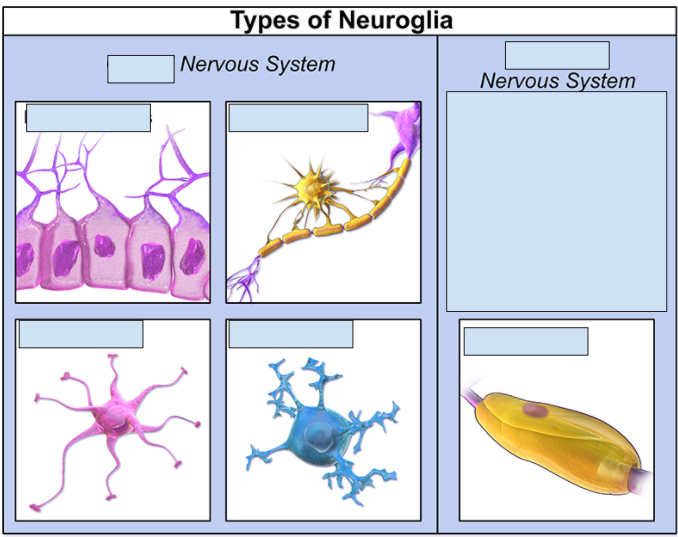
- Acentral
- Bependymal
- Cproduce/circulate cerebrospinal fluid
- Doligodendrocytes
- Eform myelin sheaths, insulate axon CNS
- Fastrocytes
- Gforms blood-brain barrier, most abundant
- Hmicroglial
- Ihelp remove bacteria/debris from CNS
- Jstar-shaped
- Kphagocytic
- Lperipheral
- MSchwann
- Nform myelin sheaths, insulate axon PNS
60match the similarities and differnces of the pns and cns
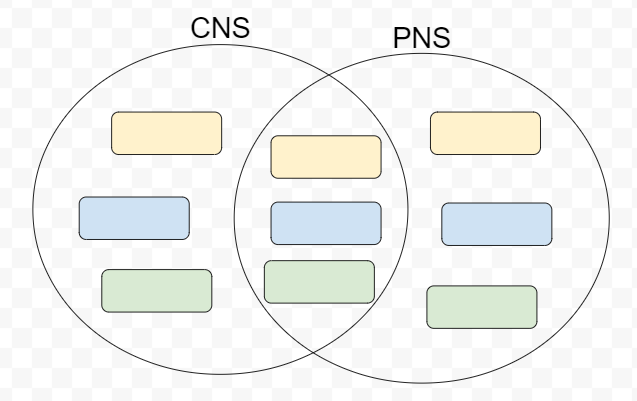
- Aogliodendrocytes
- Bproduce myelin sheath
- CSchwann cell
- Dnerve tract
- Ecollection of axons
- Fnerves
- GNuclei
- Hcollection of cell bodies
- Iganglion
Información
- Descripción
- El usuario ha eliminado su información de asignaturas Test sobre Lec exam (6,7,part of 8), creado por Usuario eliminado el 06/11/2021.
- Autor
- Usuario eliminado
- Idioma
- English
- Visitas
- 14
- Historial
- Creado el 6 nov 2021 · actualizado el 6 nov 2021
- Etiquetas
- Valoración
- Aún sin valoraciones Valora este test