
69. The Brain Responds Uniquely to People You Know Personally
Diapositivas del conjunto (6)
-
69. The Brain Responds Uniquely to People You Know Personally.
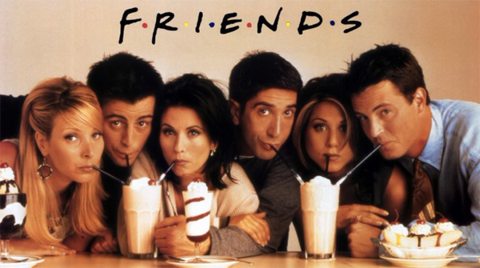
- This chapter is all about what happens to the brain when you interact with people you're close to, and when you interact with those you're unfamiliar with.
- (I swear, it's kind of interesting)
- pg.157
- Pie de imagen: …does Netflix count?
-
- The general theory that this chapter revolves around started as a question formed from this hypothetical situation. You're at a party where both friends and family are present. There's also plenty of people you don't know at the party. As you talk to the other party goers, both strangers and those familiar to you, you quickly learn that with both groups of people there are those you share things in common with and those you do not. (This is illustrated by the chart.)

-
- Does the brain react differently in these four different situations?
- Do you make judgments on people based on how similar they are to you? Or, is it more about how familiar they are to you?
- Does your brain respond the same way to someone you don't know, but have a lot in common with, as it would to someone you DO know?
-

- Ok, this researcher, Fenna Krienen did a who bunch of tests using an fMRI scan and found that the Medial Prefrontal Cortex (MPFC)- the part of the brain that perceives value and regulates social behavior- would light up when people answered questions about friends and family, regardless of wether or not they felt similar to them. When people thought about others they didn't know, but had common interests, the MPFC didn't light up! People place more importance on the people they're familiar with, and familiarity takes precedence over similarity.
-
Facebook v. Twitter and the MPFC

- Because Facebook is primarily composed of friends and family members, using it activates the MPFC when you check it. Since Twitter is more about connecting you with new people, it doesn't usually activate the MPFC when in use.
- Social Media around friends and family will be more motivating and garner more loyalty.
-
- *All social media are not alike. You've got to take that into account when using it for marketing purposes.
- * People are programmed to pay special attention to friends and relatives. They also place more value in what these people have to say.
Información
- Descripción
- Diapositivas sobre 69. The Brain Responds Uniquely to People You Know Personally, creado por crupe000 el 24/09/2015.
- Creado por
- crupe000 · sep 2015
- Actualizado
- 19 feb 2016
- Visitas
- 72
- Valoración